
There is something quietly thrilling about wrapping your fingers around a chilled coupe glass, the amber or blush liquid catching the light just so, and knowing that the drink inside has made people swoon for over a century. Vintage cocktails carry a kind of magic that no trend-chasing concoction can replicate. They are steeped in stories, perfected by decades of bartenders, and built on a philosophy that the best things in a glass require patience, quality ingredients, and a little theatrical flair.
- 15 Vodka Watermelon Cocktails You’ll Absolutely Obsess Over This Summer Updated 10/2026
- 15 Valentines Gin Cocktails Gorgeous Enough to Make Cupid Swoon This February Updated 10/2026
- 18 Sweet Vermouth Cocktails You Will Absolutely Adore Sipping This Season Updated 10/2026
- 18 Tea Cocktails You Must Try For An Absolutely Dreamy And Unforgettable Evening Updated 10/2026
- 15 Captain Morgan Cocktails That Will Transform Your Summer Into Pure Magic Updated 10/2026
Whether you are hosting a dinner party, unwinding after a long week, or simply craving something that feels intentional rather than instant, vintage cocktails are the answer. They slow you down in the most delicious way, inviting you to appreciate the ritual of mixing, pouring, and sipping rather than simply gulping. And right now, these gloriously old-fashioned drinks are having a spectacular moment.
You Are Watching: 15 Vintage Cocktails Masterfully Timeless for a Gloriously Glamorous Night Updated 10/2026
The Timeless World of Vintage Cocktails: History, Culture, and Why They Never Go Out of Style
The history of the cocktail stretches back further than most people realize. The word “cocktail” itself appeared in print as early as 1806 in The Balance and Columbian Repository, where it was defined as a stimulating liquor composed of spirits, bitters, water, and sugar. That description sounds remarkably familiar because it is essentially the blueprint for the Old Fashioned, one of the most beloved vintage cocktails still poured today. By 1862, legendary bartender Jerry Thomas had published Bartender’s Guide: How to Mix Drinks, the world’s first printed cocktail recipe book, cementing mixology as a craft worthy of documentation and reverence.
The golden age of cocktail culture blossomed between the 1920s and the 1950s, an era of speakeasies, jazz clubs, ocean liners, and Hollywood glamour. Prohibition, which ran from 1920 to 1933 in the United States, paradoxically fueled the cocktail’s rise rather than extinguishing it. With bootleg spirits of wildly varying quality flooding underground bars, clever bartenders began masking rough edges with citrus, sugar, vermouth, and bitters, producing the layered, sophisticated flavor profiles that define the vintage cocktail canon. It was during this era that drinks like the Sidecar, the Bees Knees, and the Last Word were born behind the closed doors of speakeasies, their recipes passed between bartenders like closely guarded secrets.
Culturally, vintage cocktails have always been more than drinks. They are props in great literature. Ernest Hemingway wrote entire passages around the Daiquiri and the Absinthe Death in the Afternoon. F. Scott Fitzgerald’s characters swirled their Gin Rickeys and Mint Juleps as symbols of wealth and social aspiration. The Cosmopolitan became shorthand for a certain kind of New York femininity through Sex and the City, while the Manhattan has long signified quiet authority in film noir. These drinks carry narrative weight that no energy drink or seltzer can dream of.
What is particularly exciting is that vintage cocktails are surging back into the mainstream right now. Industry data confirms the trend: according to CGA by NIQ’s On-Premise Measurement Impact Report, while overall spirits sales dipped slightly in 2023, ultra-premium spirits grew by 3.5%, reflecting a clear consumer shift toward quality over quantity. Craft cocktail culture is at the center of this shift. Bartenders at some of the world’s best bars are reimagining Old Fashioneds with smoked syrups, resurrecting the Boulevardier from near-obscurity, and offering carbonated Negronis alongside their original counterparts. As one industry report put it, vintage recipes with a twist are among the defining trends of the current era, catering to both purists who want authenticity and adventurers who want to be surprised.
For women who love to entertain, who appreciate craft and beauty in equal measure, and who want their home bar cart to feel like an extension of their personal aesthetic, vintage cocktails offer everything. They are gorgeous. They photograph beautifully. They taste extraordinary. And they tell stories worth sharing over a candlelit table.
Essential Tools for Making Vintage Cocktails at Home
- Cocktail shaker (cobbler or Boston style)
- Bar mixing glass (preferably crystal, 750ml)
- Hawthorne strainer
- Fine mesh cocktail strainer (julep strainer)
- Bar spoon (twisted handle, long stem)
- Jigger (dual-sided, 1oz/2oz)
- Muddler (wooden or stainless steel)
- Citrus hand juicer or press
- Cocktail picks and garnish tongs
- Coupe glasses, Nick and Nora glasses, and rocks glasses
15 Gloriously Timeless Vintage Cocktail Recipes to Master
The Old Fashioned

The original, the untouchable, the one that started it all.
The Old Fashioned is the cocktail against which all others are measured. Its history traces to 1862 when it appeared in Jerry Thomas’s seminal guide, and by the turn of the century it had already earned its name because drinkers tired of overly fussy, adulterated drinks began requesting their whiskey mixed “the old-fashioned way.” It is a drink of extraordinary simplicity and extraordinary depth.
Read More : 18 Swedish Cocktails You’ll Absolutely Crave for a Dreamy Nordic Summer Updated 10/2026
Ingredients:
- 2 oz bourbon whiskey (preferably high-proof)
- 1 sugar cube (or 1 tsp plain simple syrup)
- 2 dashes Angostura bitters
- 1 dash orange bitters
- 1 large ice cube
- Orange peel and Luxardo cherry for garnish
Instructions:
- Place the sugar cube in the bottom of a rocks glass. Saturate with both bitters and add a splash of cold water.
- Muddle until the sugar is mostly dissolved and a fragrant paste forms.
- Add the bourbon and stir gently to combine.
- Place one large, crystal-clear ice cube in the glass.
- Express the orange peel over the glass by holding it skin-side down and twisting firmly so the oils spray across the surface of the drink.
- Drop the peel into the glass and add a Luxardo cherry.
The vibe: Amber, smoldering, and impossibly sophisticated. The Old Fashioned is a drink for quiet evenings with a good book, a low fire, and no particular rush to be anywhere. It is autumn in a glass.
The Manhattan
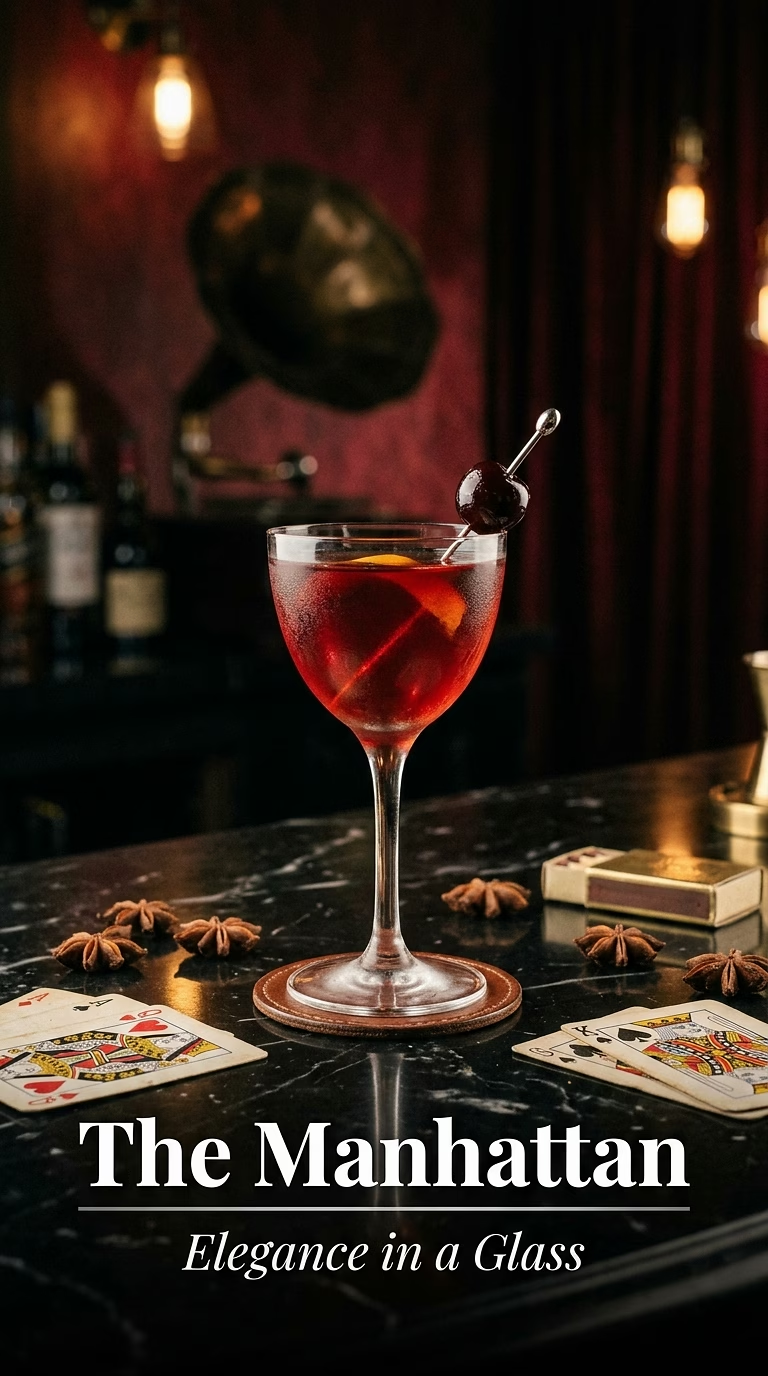
Silk and smoke, bottled in a coupe.
Said to have been created at the Manhattan Club in New York City in the 1880s (though its precise origin is contested, as are so many great things), the Manhattan is everything the Old Fashioned is, but turned slightly toward the romantic and the European, thanks to sweet Italian vermouth.
Read More : 18 Swedish Cocktails You’ll Absolutely Crave for a Dreamy Nordic Summer Updated 10/2026
Ingredients:
- 2 oz rye whiskey or bourbon
- 1 oz sweet vermouth (Carpano Antica is exceptional here)
- 2 dashes Angostura bitters
- 1 dash orange bitters
- Luxardo cherry for garnish
Instructions:
- Fill a mixing glass generously with ice.
- Add the rye, sweet vermouth, and both bitters.
- Stir steadily for about 30 seconds until the drink is well-chilled and properly diluted.
- Strain into a chilled coupe or Nick and Nora glass.
- Garnish with a Luxardo cherry dropped in with a small splash of its syrup if you prefer a touch sweeter.
The vibe: Garnet-dark and gleaming, crowned with a single jewel of a cherry. The Manhattan is a pre-dinner drink for a woman who knows what she wants and orders it without hesitation.
The Sidecar
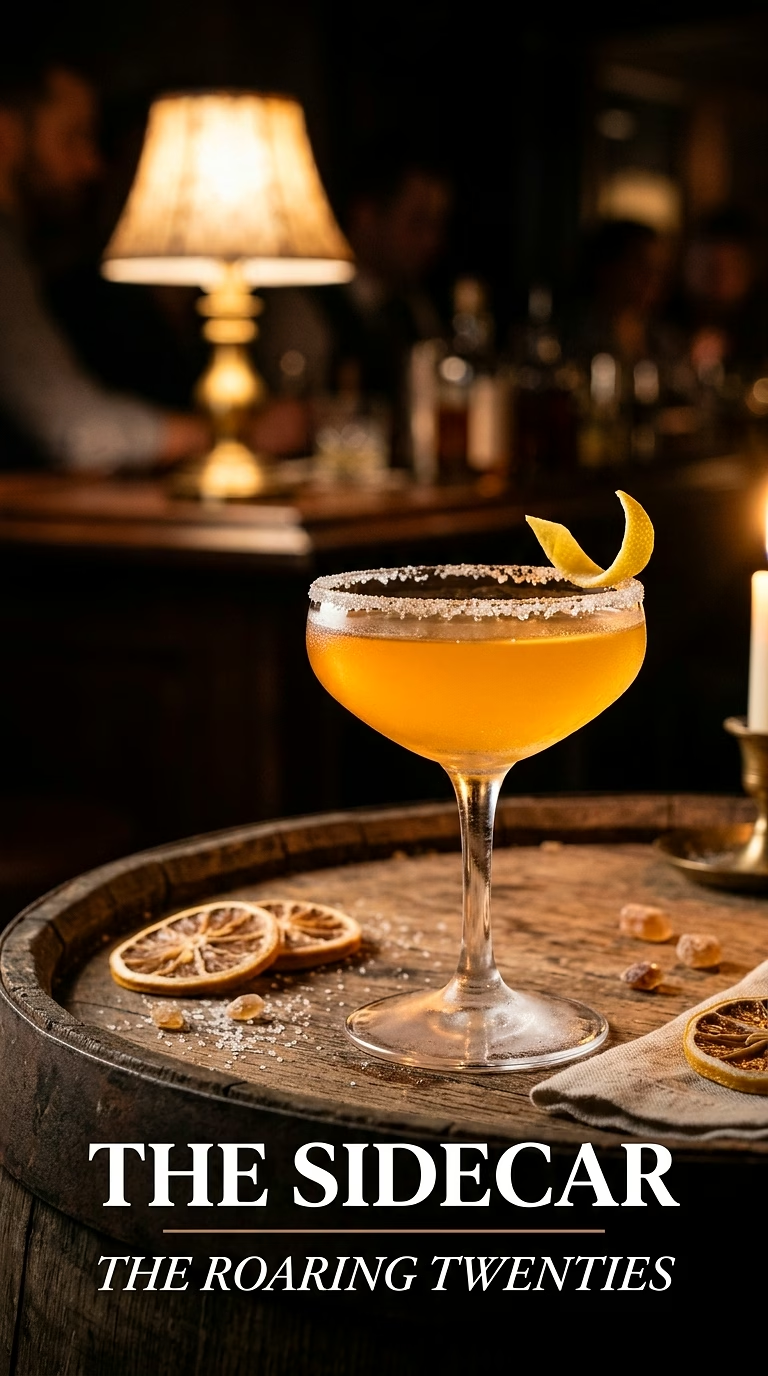
Paris in a glass, warm and golden.
One of the great drinks of the 1920s, the Sidecar first appeared in print in 1922 and is commonly associated with The Ritz Hotel in Paris. It is Cognac at its most approachable: bright with citrus, balanced with orange liqueur, and softened by the elegance of a sugar rim.
Read More : 18 Swedish Cocktails You’ll Absolutely Crave for a Dreamy Nordic Summer Updated 10/2026
Ingredients:
- 2 oz Cognac (VSOP or above)
- 3/4 oz Cointreau or triple sec
- 3/4 oz fresh lemon juice
- 1/4 oz simple syrup (optional, for balance)
- Sugar for rimming
- Lemon twist for garnish
Instructions:
- Rim a chilled coupe glass by running a lemon wedge around the edge and dipping it in fine sugar.
- Combine Cognac, Cointreau, lemon juice, and simple syrup in a shaker filled with ice.
- Shake vigorously for 12 to 15 seconds.
- Double-strain into the prepared coupe.
- Garnish with a long, elegantly twisted lemon peel.
The vibe: Warm gold with a glittering sugar rim, the Sidecar is a cocktail-party hostess dream. It is cheerful, refined, and just boozy enough to make the conversation sparkle.
The French 75
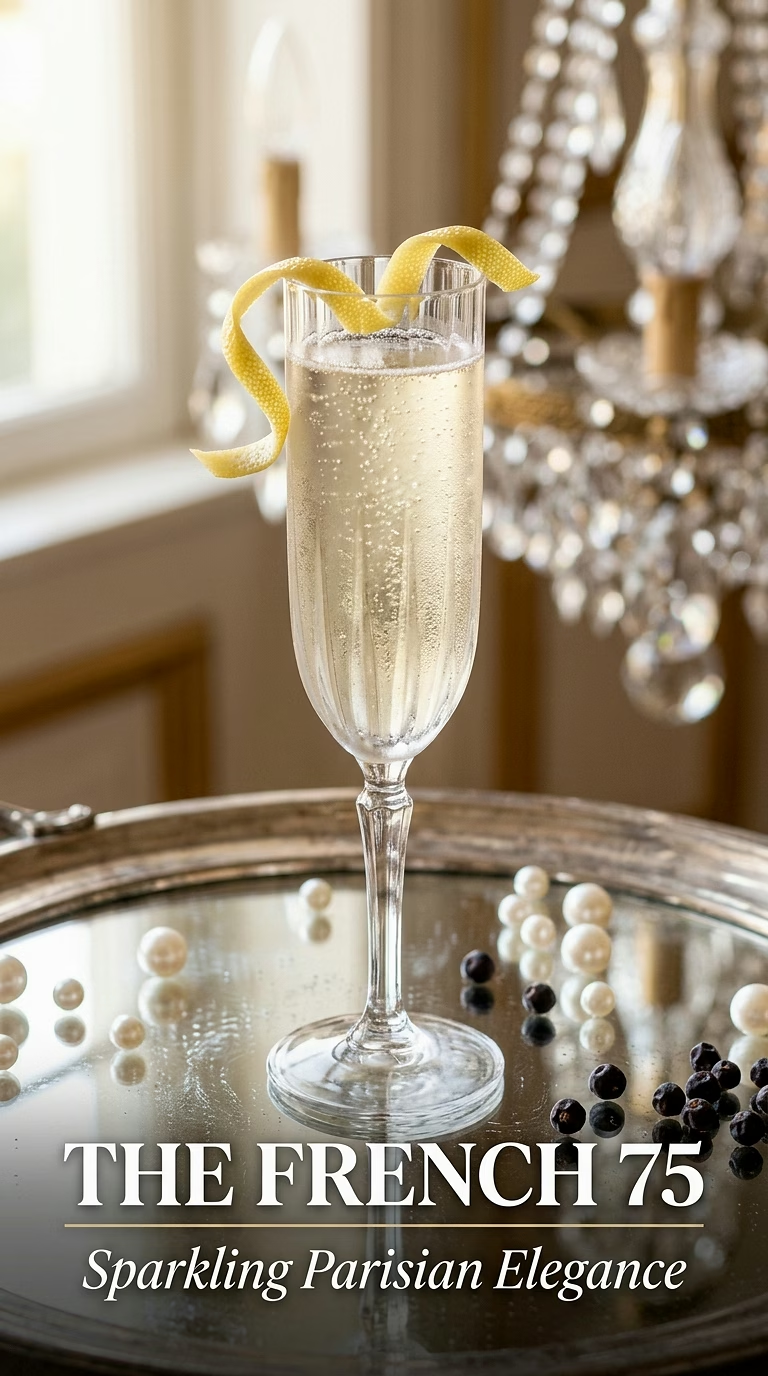
Champagne and gin dressed for celebration.
Named after the legendary French 75mm artillery piece used in World War I, this cocktail first appeared in print in 1915 and became a Prohibition-era favorite. It combines the botanical crispness of gin with lemon brightness, finished with a generous pour of Champagne that gives it an almost theatrical effervescence.
Read More : 18 Swedish Cocktails You’ll Absolutely Crave for a Dreamy Nordic Summer Updated 10/2026
Ingredients:
- 1.5 oz London Dry gin
- 3/4 oz fresh lemon juice
- 1/2 oz simple syrup
- 3 oz chilled brut Champagne or sparkling wine
- Lemon twist for garnish
Instructions:
- Combine gin, lemon juice, and simple syrup in a shaker filled with ice.
- Shake until very cold, about 12 seconds.
- Strain into a chilled Champagne flute or coupe.
- Gently top with Champagne, pouring slowly so the bubbles cascade beautifully.
- Garnish with a long spiral of lemon peel draped elegantly over the rim.
The vibe: Pale gold, fizzing with fine bubbles, and absolutely fit for a toast. The French 75 is the cocktail equivalent of getting dressed up with nowhere to go and deciding that is perfectly wonderful.
The Negroni
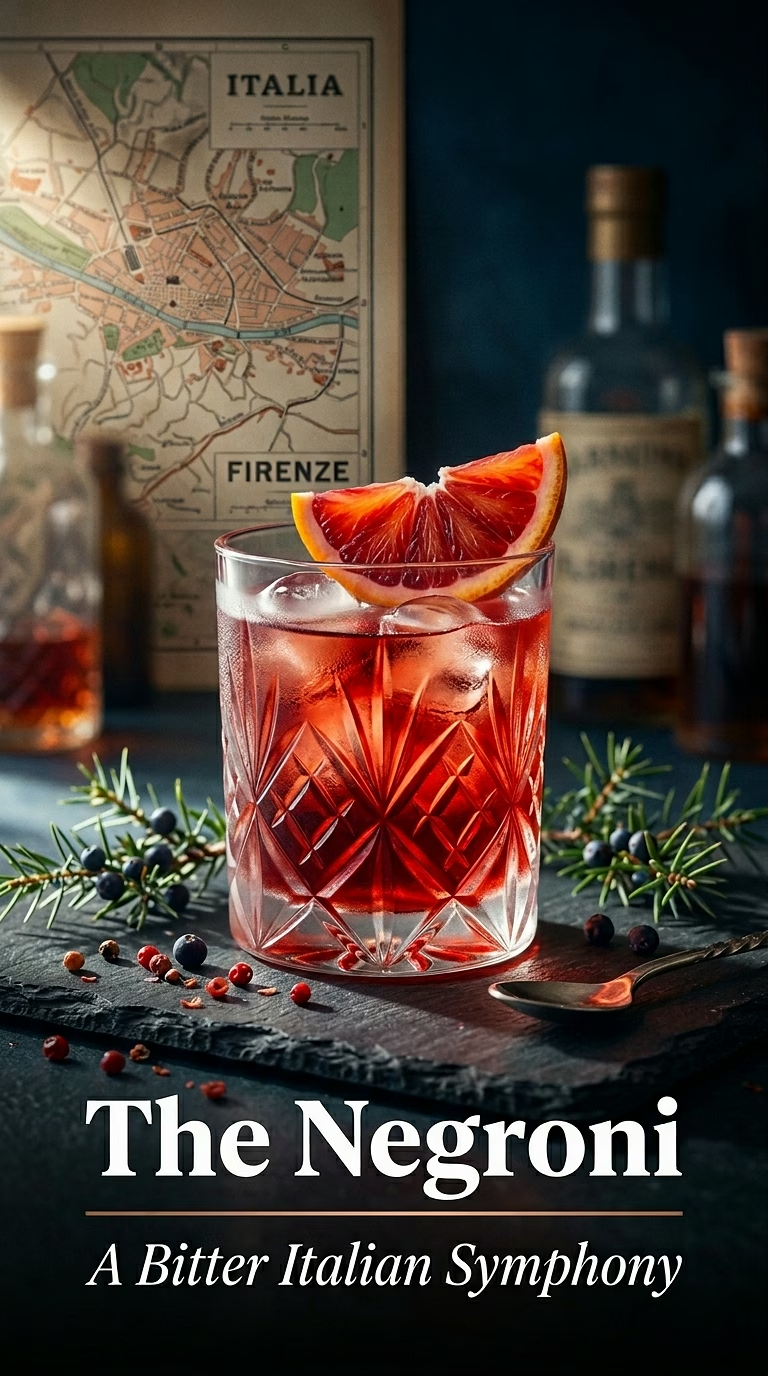
The most elegant bitter thing you will ever taste.
Created in Florence in 1919 when Count Camillo Negroni allegedly asked his bartender to strengthen his Americano by replacing the soda water with gin, the Negroni has become one of the most celebrated cocktails in the world. In 2023, it was named one of the most popular gin cocktails ever ordered. Its beauty lies in its absolute equality: equal parts, perfectly balanced, never wavering.
Read More : 18 Swedish Cocktails You’ll Absolutely Crave for a Dreamy Nordic Summer Updated 10/2026
Ingredients:
- 1 oz gin
- 1 oz Campari
- 1 oz sweet vermouth (Punt e Mes adds a lovely bitter depth)
- Large ice cube
- Orange peel for garnish
Instructions:
- Combine gin, Campari, and sweet vermouth in a mixing glass filled with ice.
- Stir for 25 to 30 seconds until properly chilled and diluted.
- Strain over a large ice cube in a rocks glass.
- Express an orange peel over the surface and either drop it in or drape it over the rim.
The vibe: Deep ruby red, almost jewel-like in its color. The Negroni is bitter and sweet and complex all at once, a drink that rewards the adventurous palate and grows more seductive with every sip.
The Bee’s Knees

Prohibition honey, still sweet after all these years.
The phrase “the bee’s knees” was 1920s slang for something extraordinary and excellent. The cocktail lives up to its name. Created during Prohibition to mask the harsh taste of bathtub gin, it relies on honey syrup and lemon juice to do the heavy lifting, and the result is a drink of surprising elegance and floral warmth.
Read More : 18 Swedish Cocktails You’ll Absolutely Crave for a Dreamy Nordic Summer Updated 10/2026
Ingredients:
- 2 oz London Dry gin
- 3/4 oz fresh lemon juice
- 3/4 oz honey syrup (1:1 honey and warm water, stirred until combined)
- Lemon peel or edible flower for garnish
Instructions:
- Prepare your honey syrup in advance and allow it to cool completely.
- Combine gin, lemon juice, and honey syrup in a shaker filled with ice.
- Shake hard for 12 to 15 seconds.
- Double-strain into a chilled coupe.
- Garnish with a delicate lemon peel or a single edible flower floating on the surface.
The vibe: Pale gold and luminous, like sunlight through a jar of wildflower honey. The Bee’s Knees is a spring and summer cocktail at heart, ideal for an afternoon garden party or a bridal shower that deserves something beautiful.
The Last Word

Equal parts mysterious and magnificent.
The Last Word was created at the Detroit Athletic Club around 1915 and then largely forgotten for decades before being dramatically revived in the early 2000s by bartender Murray Stenson in Seattle. Its equal-parts formula is unusual and polarizing in the best possible way. Green Chartreuse gives it an herbal intensity that is genuinely unlike anything else in the cocktail world.
Read More : 18 Swedish Cocktails You’ll Absolutely Crave for a Dreamy Nordic Summer Updated 10/2026
Ingredients:
- 3/4 oz gin
- 3/4 oz green Chartreuse
- 3/4 oz Maraschino liqueur (Luxardo brand)
- 3/4 oz fresh lime juice
- Lime wheel or cherry for garnish
Instructions:
- Combine all four ingredients in a shaker filled with ice.
- Shake vigorously for 12 seconds.
- Double-strain into a chilled coupe.
- Garnish simply with a lime wheel or a single Maraschino cherry.
The vibe: Pale green and slightly translucent, the Last Word looks like a forest at dusk captured in glass. It is a cocktail that announces itself confidently and lingers on the palate in the most intriguing way.
The Classic Gimlet
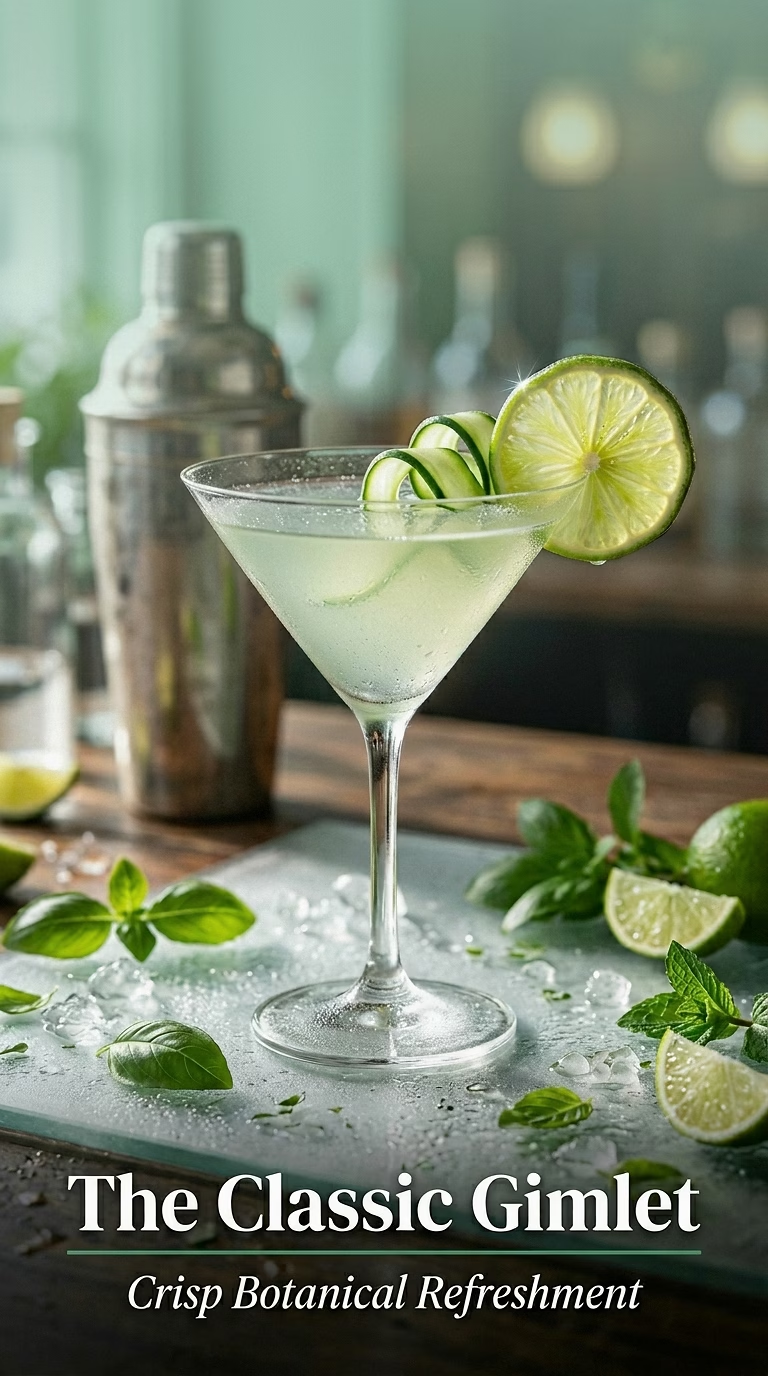
Minimal, perfect, and impossibly cool.
The gimlet’s naval origins date to the British Royal Navy in the 19th century, when sailors mixed gin with bottled lime juice to prevent scurvy. Raymond Chandler immortalized it in 1953 in The Long Goodbye, where Philip Marlowe described a real gimlet as half gin and half Rose’s lime juice and nothing else. The fresh lime version below is slightly more refined while keeping that same piercing tartness.
Read More : 18 Swedish Cocktails You’ll Absolutely Crave for a Dreamy Nordic Summer Updated 10/2026
Ingredients:
- 2 oz London Dry gin (or vodka for a vodka gimlet)
- 3/4 oz fresh lime juice
- 3/4 oz simple syrup
- Lime wheel or cucumber ribbon for garnish
Instructions:
- Combine gin, lime juice, and simple syrup in a shaker filled with ice.
- Shake firmly for 12 seconds.
- Strain into a chilled coupe or Nick and Nora glass.
- Garnish with a precise lime wheel balanced on the rim, or a curled ribbon of cucumber for something a little more whimsical.
The vibe: Green-tinged and brilliantly clear, the gimlet is a cocktail of pure economy. No frills, no fuss, just crisp perfection in a glass that would feel equally at home in a 1950s Hollywood bungalow or a modern rooftop bar.
The Tom Collins

Summer in a tall glass, circa 1874.
First documented in Jerry Thomas’s 1874 expanded Bartender’s Guide, the Tom Collins is a simple pleasure elevated by quality gin and the satisfying fizz of soda water. It was one of the most fashionable drinks of the Victorian era and retains every bit of its refreshing charm today.
Read More : 18 Swedish Cocktails You’ll Absolutely Crave for a Dreamy Nordic Summer Updated 10/2026
Ingredients:
- 2 oz Old Tom gin (or London Dry)
- 1 oz fresh lemon juice
- 3/4 oz simple syrup
- 3 to 4 oz club soda
- Lemon slice and Maraschino cherry for garnish
Instructions:
- Combine gin, lemon juice, and simple syrup in a shaker with ice.
- Shake until cold, about 12 seconds.
- Strain into a tall Collins glass filled with ice.
- Top gently with cold club soda and give one slow, gentle stir.
- Garnish with a lemon slice slipped onto the rim and a cherry dropped inside.
The vibe: Pale, effervescent, and endlessly refreshing, the Tom Collins is a long summer afternoon in a glass. It is the cocktail equivalent of a linen dress and bare feet, effortless and completely satisfying.
The Martinez

The grandfather of the Martini.
Before the Martini existed, there was the Martinez. First documented in the early 1880s, possibly by Jerry Thomas himself, it combines gin with sweet vermouth and Maraschino liqueur in a formula that is richer, sweeter, and more complex than the drier Martini that eventually replaced it in popular culture. The Martinez is having a beautiful revival in the craft cocktail world right now, and for very good reason.
Read More : 18 Swedish Cocktails You’ll Absolutely Crave for a Dreamy Nordic Summer Updated 10/2026
Ingredients:
- 1.5 oz Old Tom gin or a botanically expressive gin
- 1.5 oz sweet vermouth
- 1/4 oz Maraschino liqueur
- 2 dashes orange bitters
- Lemon twist for garnish
Instructions:
- Add gin, sweet vermouth, Maraschino liqueur, and bitters to a mixing glass filled with ice.
- Stir for 30 seconds until well chilled.
- Strain into a chilled coupe.
- Express a long strip of lemon peel over the surface, run it along the rim, and drop it in.
The vibe: Rich amber-amber, glossy and slightly mysterious. The Martinez is for an evening when you want something that feels discovered rather than ordered, a drink that makes you feel like you are in on a secret.
The Corpse Reviver No. 2
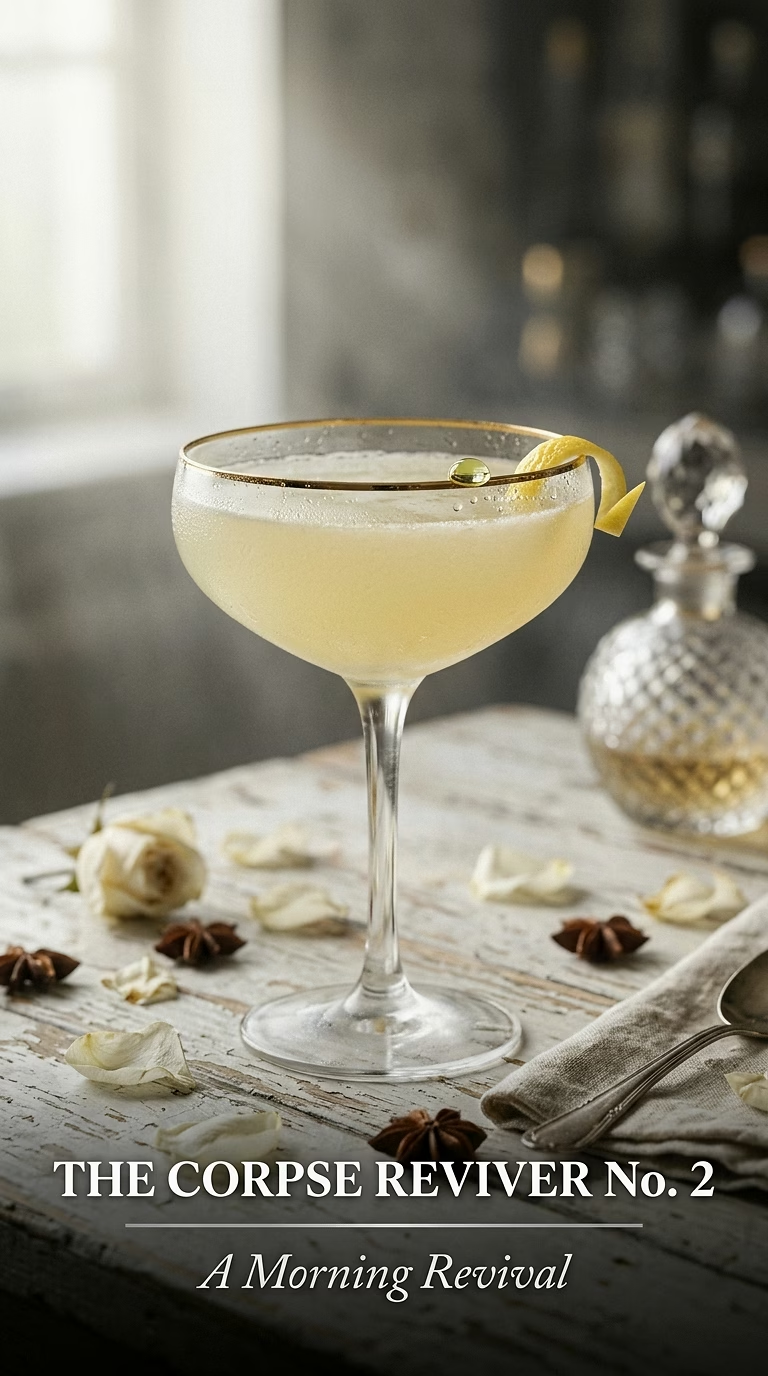
A Prohibition-era cure for the morning-after, elevated to an evening ritual.
Read More : 20 Cognac Cocktails Guaranteed to Make Every Night Feel Like Pure Luxury Updated 10/2026
Originally designed as a hangover remedy, the Corpse Reviver No. 2 appeared in Harry Craddock’s legendary 1930 Savoy Cocktail Book with the wry note that four of them consumed in quick succession would “un-corpse” the most determined sufferer. Today, it is enjoyed purely for its extraordinary balance of citrus, botanicals, and the whisper of absinthe.
Read More : 18 Swedish Cocktails You’ll Absolutely Crave for a Dreamy Nordic Summer Updated 10/2026
Ingredients:
- 3/4 oz London Dry gin
- 3/4 oz Cointreau
- 3/4 oz Lillet Blanc (or Cocchi Americano)
- 3/4 oz fresh lemon juice
- 1 rinse of absinthe
- Lemon twist for garnish
Instructions:
- Rinse a chilled coupe with a small amount of absinthe, swirling it to coat the glass, then discard the excess.
- Combine gin, Cointreau, Lillet Blanc, and lemon juice in a shaker filled with ice.
- Shake hard for 12 to 15 seconds.
- Double-strain into the absinthe-rinsed coupe.
- Garnish with a precisely cut lemon twist.
The vibe: Pale and ethereal, faintly golden, with the ghost of absinthe lingering on the nose. The Corpse Reviver No. 2 is a cocktail that seems gentle but has quiet, confident depth. It is an aperitif that doubles as a conversation starter.
The Mary Pickford

A golden-age Hollywood tribute in every sip.
Named for the celebrated silent film actress, producer, and writer Mary Pickford, this cocktail was born in Cuba in the 1920s. The original recipe appeared in printed form during an era when Pickford was one of the most famous and powerful women in the world, which gives this cocktail a quietly feminist elegance.
Read More : 18 Swedish Cocktails You’ll Absolutely Crave for a Dreamy Nordic Summer Updated 10/2026
Ingredients:
- 2 oz white rum
- 1 oz fresh pineapple juice
- 1/4 oz Maraschino liqueur
- 1 tsp grenadine (preferably homemade pomegranate grenadine)
- Maraschino cherry and pineapple slice for garnish
Instructions:
- Combine rum, pineapple juice, Maraschino liqueur, and grenadine in a shaker filled with ice.
- Shake vigorously for 15 seconds.
- Double-strain into a chilled coupe.
- The grenadine will settle slightly, creating a beautiful gradient from pink to pale gold.
- Garnish with a cherry and a small triangle of fresh pineapple on the rim.
The vibe: Blush-pink with a golden shimmer, tropical and romantic at once. The Mary Pickford is an instantly beautiful drink that photographs like a dream and tastes like a vacation you have been promising yourself.
The Boulevardier

The Negroni’s American cousin, whiskey-warm and wonderful.
One of the great rediscovered vintage cocktails of the modern era, the Boulevardier dates to the 1920s and was first published in Erskine Gwynne’s 1927 cocktail book. It is a Negroni made with bourbon instead of gin, and that single substitution transforms the character of the drink entirely, adding caramel depth and a warmth that makes it a natural choice for autumn and winter evenings.
Read More : 18 Swedish Cocktails You’ll Absolutely Crave for a Dreamy Nordic Summer Updated 10/2026
Ingredients:
- 1.5 oz bourbon whiskey (high-rye works beautifully)
- 1 oz Campari
- 1 oz sweet vermouth
- Large ice cube
- Orange peel and optional Luxardo cherry for garnish
Instructions:
- Combine bourbon, Campari, and sweet vermouth in a mixing glass filled with ice.
- Stir for 25 to 30 seconds.
- Strain into a rocks glass over one large ice cube.
- Express an orange peel over the surface with a firm twist, then drop it in.
- Add a Luxardo cherry alongside if you want a touch of sweetness.
The vibe: Deep mahogany with a ruby glow, the Boulevardier is a fireplace drink through and through. Rich, bittersweet, and endlessly warming, it is the cocktail equivalent of a cashmere blanket on a rainy evening.
The Clover Club
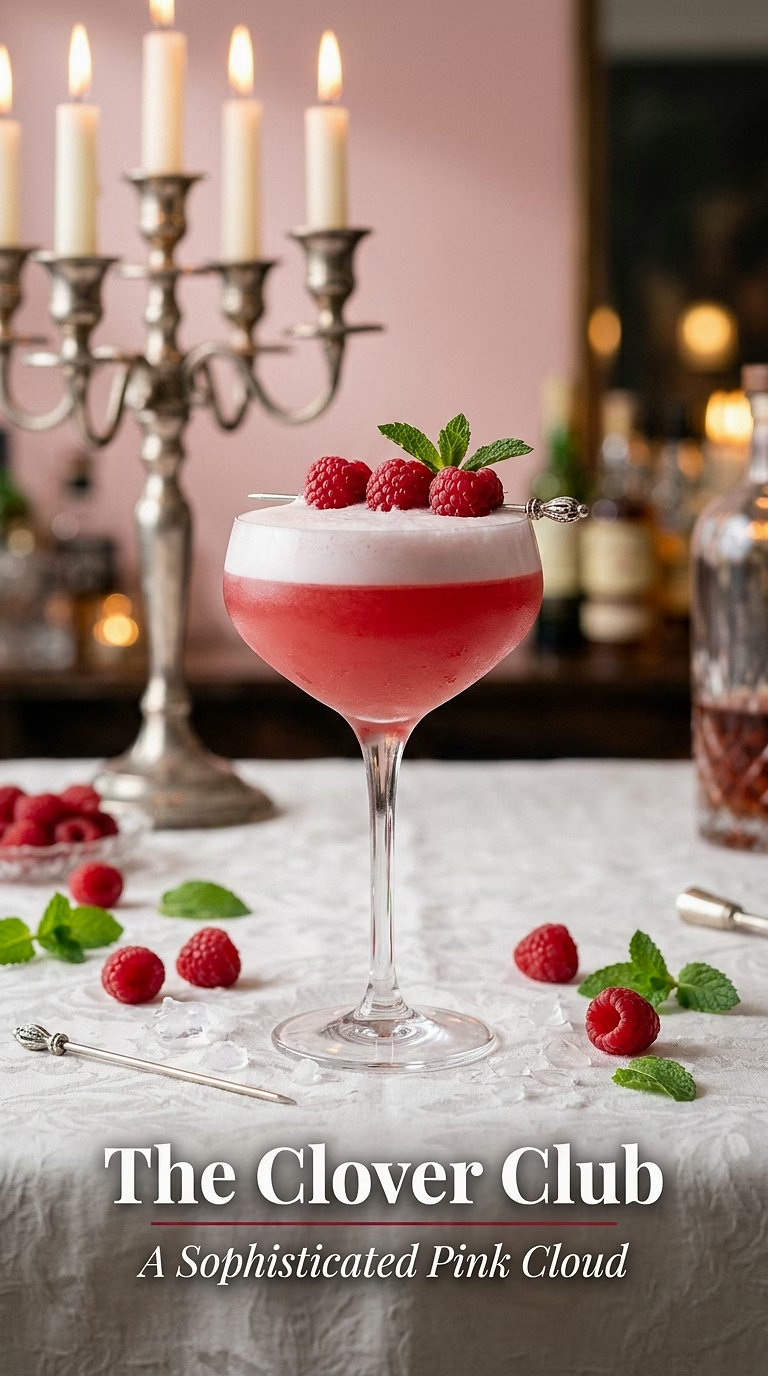
A pre-Prohibition pink drink with genuine sophistication.
The Clover Club predates Prohibition, originating at Philadelphia’s Bellevue-Stratford Hotel around 1900, where a club of journalists and literary men gathered regularly. It is a gin sour enriched with egg white and brightened with raspberry, and it is the kind of drink that silences a room when you walk in carrying it.
Read More : 18 Swedish Cocktails You’ll Absolutely Crave for a Dreamy Nordic Summer Updated 10/2026
Ingredients:
- 2 oz London Dry gin
- 3/4 oz fresh lemon juice
- 3/4 oz simple syrup
- 1/2 oz raspberry syrup (or 4 to 5 fresh raspberries muddled)
- 1 egg white (or 1 oz aquafaba for a vegan alternative)
- Fresh raspberry and lemon wheel for garnish
Instructions:
- Combine all ingredients in a shaker without ice (this is the dry shake, crucial for building foam).
- Shake vigorously for 15 seconds.
- Open the shaker, add ice, and shake again for another 12 seconds.
- Double-strain into a chilled coupe.
- Allow the foam to settle for a moment before garnishing with a single raspberry pressed gently into the foam and a thin lemon wheel.
The vibe: Pale rose pink topped with a cloud of velvety white foam, the Clover Club is a stunning drink in every sense. It is simultaneously feminine and bold, delicate and complex, and absolutely perfect for a celebration.
The Mint Julep
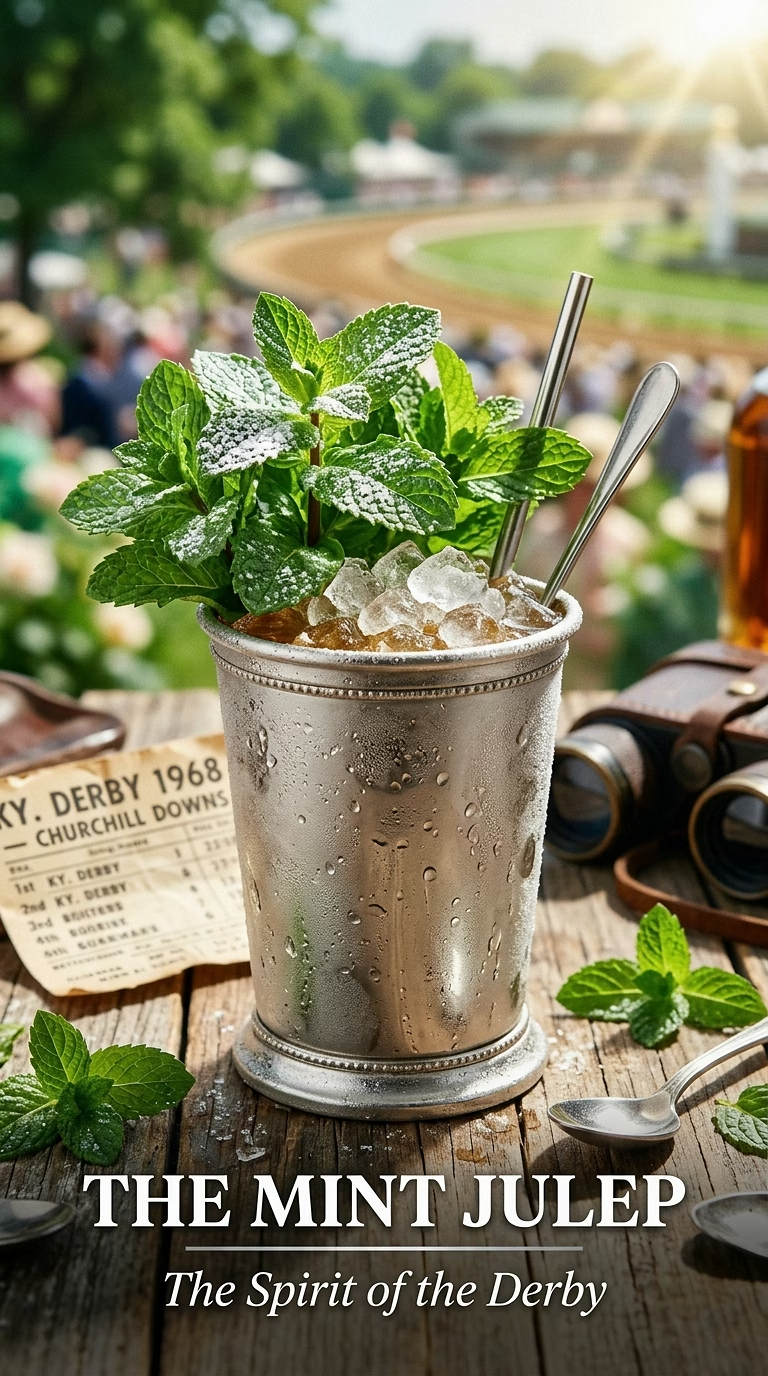
The official drink of Southern elegance.
The Mint Julep’s first mention in print occurred in London in 1803, where it was noted as a Virginia original. Made with mint, sugar, and crushed ice mixed with spirits (traditionally rum or cognac before bourbon became dominant), it became so culturally significant that it has served as the official drink of the Kentucky Derby since 1938. Served in a special silver or pewter cup that frosts beautifully on the outside, it is a sensory experience before the first sip.
Read More : 18 Swedish Cocktails You’ll Absolutely Crave for a Dreamy Nordic Summer Updated 10/2026
Ingredients:
- 2.5 oz bourbon whiskey
- 1/2 oz simple syrup
- 8 to 10 fresh mint leaves, plus a mint sprig for garnish
- Crushed ice (generous amount)
- Powdered sugar for finishing (optional)
Instructions:
- Add the mint leaves and simple syrup to the bottom of a julep cup or rocks glass.
- Gently press the mint with a muddler or bar spoon just enough to bruise the leaves and release the oils. Do not shred the mint.
- Add the bourbon and fill the cup completely with crushed ice, mounding it above the rim.
- Stir gently until the outside of the cup begins to frost.
- Add more crushed ice to maintain the mound, then garnish with a large sprig of fresh mint pressed right up against the rim so it perfumes every sip. Dust lightly with powdered sugar if desired.
The vibe: Impossibly lush and green against the frosty silver of the cup, the Mint Julep is quintessential Southern elegance. It is a derby hat, a wraparound porch, and a warm afternoon all condensed into a single, deeply satisfying glass.
The Art of Serving Vintage Cocktails at Home
Mastering vintage cocktails at home is as much about atmosphere as technique. Chill your glassware in the freezer for at least 15 minutes before serving. Use the best ice you can manage: large, clear cubes for spirit-forward drinks and crushed ice for juleps and swizzles. Invest in quality vermouth and replace it regularly, since vermouth is wine and oxidizes quickly once opened. Store it in the refrigerator and treat it with the same care you would a good white wine.
Garnishes are not decoration. The expressed oils from a citrus peel change the aroma of a drink entirely. The brine from a Luxardo cherry adds depth to a Manhattan. Fresh herbs release essential oils that transform the first impression of a sip. Take the extra thirty seconds, and it will make a genuine difference.
Beyond the technique, vintage cocktails reward curiosity. Keep a notebook of what you make and what you adjust. Read the original recipes in their historical context. Understand why a Bee’s Knees used honey (to mask rough spirits) or why the French 75 pairs gin with Champagne (the acidity cuts through richness beautifully). The more you understand the logic behind these drinks, the more confidently you will improvise and adapt them to your own taste.
These fifteen vintage cocktails represent not just recipes but an entire philosophy of drinking: intentional, elegant, and built to last. They have survived wars, Prohibition, the rise of mass-market spirits, and every fleeting trend that has come and gone in the intervening decades. They will survive whatever comes next, too. And every time you shake one up or stir one down, you are participating in something that stretches back across a century of shared pleasure, a history that fits, quite perfectly, in the palm of your hand.
Drink beautifully, always.
Sources: https://chesbrewco.com
Category: Cocktails
