Whether you’re stocking the home bar before a game night, grabbing something for a road trip cooler, or just trying to figure out if you’re getting ripped off at the liquor store, the question of how much a pint of vodka costs is more nuanced than it might seem. The answer depends on the brand, your state, where you buy it, and even the time of year. This guide breaks it all down so you walk in knowing exactly what to expect, and walk out with the right bottle at the right price.
- South American Liquor Updated 10/2026
- What Is Lillet? The French Aperitif Every Serious Drinker Should Know Updated 10/2026
- What Is Dry Vermouth? Everything You Need to Know About the Cocktail World’s Most Underrated Bottle Updated 10/2026
- How Long Does Whiskey Last Updated 10/2026
- Why Vodka Causes Less Hangovers Updated 10/2026
What Exactly Is a Pint of Vodka?
Before we talk dollars, let’s clear up a persistent source of confusion: a pint of vodka in the liquor world is not the same as a true liquid pint.
A traditional liquid pint equals 16 fluid ounces (473 ml). However, a pint of liquor holds 375 milliliters, which works out to about 12.7 ounces, yielding roughly eight standard shots from the bottle. So why the discrepancy?
The measurement causes confusion because a metric pint is 16 fluid ounces, while a pint liquor bottle is typically listed at 12.7 ounces. This is because the fifth size was established first to represent a fifth of a gallon (25.4 ounces). The “pint” label was given to the bottle that was half the size of a fifth prior to metric standardization. In this case, the pint is more of a nickname to identify the half size rather than a true metric measurement.
Interestingly, this bottle size is referred to as an American metric pint in the US, a Mickey in Canada, and simply a pint in India.
So when you walk into a liquor store and ask for a pint of vodka, you are asking for a 375 ml bottle, sometimes also called a “half-bottle” or “demi.” Knowing this prevents any confusion at the register.
How Much Does a Pint of Vodka Cost?
Here’s the part everyone came for. The short answer: expect to pay anywhere from $7 to $30 for a 375 ml pint of vodka at a retail liquor store, depending entirely on the brand you choose.
The prices will differ from state to state due to varying taxation rates and other factors. That said, the following price ranges give a solid national average to work from:
- Budget/well vodkas: $7 to $11 per pint
- Mid-range vodkas: $12 to $20 per pint
- Premium/top-shelf vodkas: $20 to $30+ per pint
On average in many parts of the United States, expect to pay anywhere from $10 to $20 for a pint at your local bar. This price may include mixers if you’re ordering it as part of a cocktail; otherwise, neat pours might be slightly less expensive depending on happy hour specials or promotions.
Pint Prices by Brand: A Detailed Breakdown
The table below compares approximate retail prices for popular vodka brands in their 375 ml (pint) format, based on current market data across major U.S. retailers.
| Brand | Tier | 375 ml (Pint) Price | 750 ml (Fifth) Price | ABV |
|---|---|---|---|---|
| Smirnoff | Budget | ~$7–$9 | ~$14–$15 | 40% |
| New Amsterdam | Budget | ~$7–$10 | ~$13–$15 | 40% |
| SVEDKA | Budget | ~$8–$11 | ~$13–$16 | 40% |
| Absolut | Mid-Range | ~$12–$15 | ~$21–$24 | 40% |
| Tito’s Handmade | Mid-Range | ~$13–$16 | ~$21–$24 | 40% |
| Ketel One | Mid-Range | ~$14–$17 | ~$22–$25 | 40% |
| Skyy | Mid-Range | ~$11–$14 | ~$18–$22 | 40% |
| Grey Goose | Premium | ~$18–$22 | ~$27–$35 | 40% |
| Belvedere | Premium | ~$20–$25 | ~$32–$40 | 40% |
| Cîroc | Premium | ~$20–$26 | ~$30–$40 | 40% |
| Chopin | Premium | ~$22–$28 | ~$35–$45 | 40% |
Prices are national retail averages and will vary by state, retailer, and sales events.
The 375 ml bottle of Smirnoff costs about $7, while Tito’s 375 ml bottle is priced around $15. With only a few dollar difference, you can already enjoy the smooth and balanced taste of Tito’s vodka. That difference may seem small, but over time it adds up, and the quality gap between these two is real.
Understanding All the Bottle Sizes (So You Always Buy Smart)
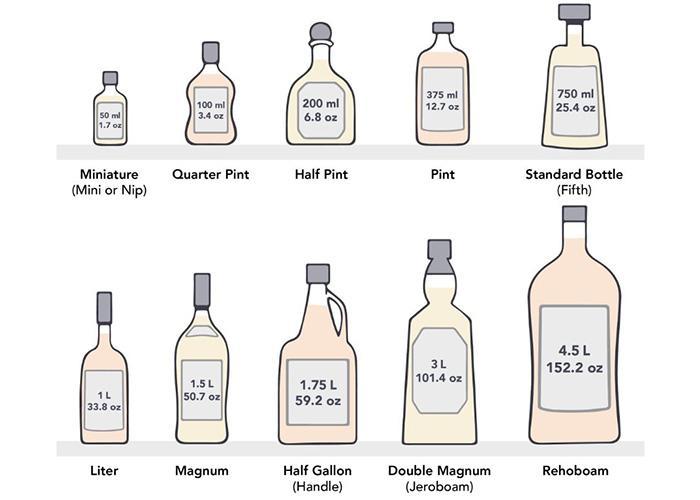
A pint is just one stop on a full spectrum of vodka bottle sizes. Alcohol bottles come in a variety of sizes. The standard size is 750 ml, also known as a fifth (one-fifth of a gallon). Other common sizes include 50 ml, 100 ml, 200 ml, 375 ml, 1 L, and 1.75 L.
Here’s a full breakdown of every size you’ll encounter:
| Name | Volume | Ounces | Shots (1.5 oz each) | Best For |
|---|---|---|---|---|
| Nip / Mini | 50 ml | 1.7 oz | ~1 | Travel, sampling |
| Quarter Pint | 100 ml | 3.4 oz | ~2 | On-the-go, trial |
| Half Pint | 200 ml | 6.8 oz | ~4 | Personal use |
| Pint | 375 ml | 12.7 oz | ~8 | Small gatherings, gifts |
| Fifth (Standard) | 750 ml | 25.4 oz | ~17 | Home bar staple |
| Liter | 1,000 ml | 33.8 oz | ~22 | Mid-size entertaining |
| Handle | 1,750 ml | 59.2 oz | ~39 | Parties, events |
Most cocktail recipes call for 1.5 to 2 ounces of liquor per drink. A 750 ml (fifth) bottle can make about 17 standard cocktails. A 1.75 L (handle) bottle can make about 39 standard cocktails.
Knowing these numbers helps you plan. If you’re hosting eight people and each person will have two drinks, a single pint will not be enough. You’ll want at least a full fifth, if not a liter.
Why the Pint Is a Smart Choice
Despite the fact that larger bottles offer better value per ounce, the pint has some distinct advantages:
- It’s commitment-free. Trying a new brand? A pint lets you experiment without committing to a full $25–$40 fifth.
- It travels well. At under 13 ounces, a pint fits easily into a backpack, cooler, or tote bag.
- It’s right-sized for two. A pint of vodka yields eight shots, which is enough for a solid night of mixed drinks for two people, assuming two to three cocktails each.
- It’s a great gift. Paired with some mixer bottles or fancy garnishes, a pint makes a thoughtful, affordable gift for any occasion.
Read More : Smirnoff Vodka Review Updated 10/2026
The 375 ml bottle is a popular choice for premium craft spirits and limited editions, and represents a noticeable improvement in value compared to smaller bottles.
Why Prices Vary So Much Across the Country
If you’ve ever crossed a state line and noticed vodka prices suddenly drop or spike, you’re not imagining it. State taxes are the single biggest driver of price variation in the American spirits market.
Control States vs. License States
Control states, also known as Alcoholic Beverage Control (ABC) states, delegate control over the sale and distribution of alcohol to the state government, which may operate a monopoly of state-controlled liquor stores. In these states, the government can set prices and limit sales to specific outlets. Examples of strict control states include Pennsylvania, Utah, and North Carolina.
On the other hand, open states allow sales by private retailers without government intervention in pricing or brand selection. As of 2024, there were 17 control states and 33 open states.
The difference in price can be meaningful. The average liquor price across 74 brands was found to be approximately two dollars lower (6.9%) in license states compared to control states.
The States Where You’ll Pay the Most (and Least)
Year after year, Washington holds the title of the most expensive state to buy alcohol. The state levies an astronomical excise tax on spirits, plus a secondary tax on top of that. Oregon and Alaska are also consistently among the most expensive due to high taxes and, in Alaska’s case, high shipping costs.
On the flip side, budget-friendly drinkers should look toward New England’s tax haven:
New Hampshire’s model for cheap spirits is built on a few key pillars: the state government is the sole wholesaler and retailer of spirits, buying in massive quantities directly from distillers and passing the savings on. New Hampshire is also one of the few states with no statewide sales tax, and the state makes its money from the markup in its stores rather than by adding a separate per-gallon tax on top of the price.
Distilled spirits are taxed at the highest rates of all alcoholic beverages. The tax rates reflect a combination of greater alcohol content in spirits than wine or beer and higher tax rates applied on alcohol content with spirits.
The practical takeaway: if you live near a state border, it’s worth knowing your neighbor’s rates. A quick trip to New Hampshire if you’re in Massachusetts, or to Missouri if you’re in Illinois, can save you real money over time, especially if you entertain frequently.
Breaking Down the Popular Brands: What Are You Actually Paying For?
Budget Tier: Under $10 for a Pint
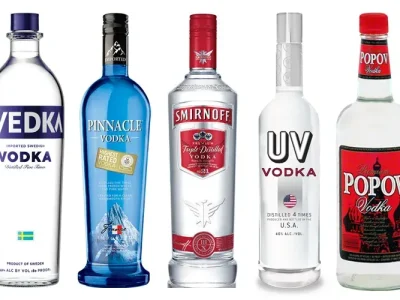
Smirnoff is the granddaddy of budget vodka. Today Smirnoff is the world’s best-selling vodka. It is made from corn, triple distilled for 24 hours and filtered 10 times for 8 hours through seven tons of charcoal, before being cut down to drinking proof with demineralised water. For mixing into strong cocktails like Bloody Marys or Moscow Mules, it absolutely gets the job done. At around $7 to $9 for a pint, it’s the budget king.
New Amsterdam and SVEDKA round out this tier, both offering reliably clean, neutral profiles that work well in mixed drinks. If you’re making punch for a party and need to stretch a dollar, these are your bottles.
Mid-Range: $12–$18 for a Pint
This is where the conversation gets interesting, and where most American drinkers find their sweet spot.
Tito’s Handmade Vodka is arguably the most beloved vodka in America right now. Tito’s is famous for its taste, which comes from being distilled six times in old-fashioned pot stills, and its founder Bert “Tito” Beveridge is famous for his epic story, having maxed out 19 credit cards to the tune of about $88,000 to produce what became Texas’s oldest legal distillery. Tito’s is corn-based, gluten-free, and smooth enough to sip straight. At around $13–$16 for a pint, it delivers remarkable value.
Absolut, the Swedish classic, is produced using a continuous distillation process and is made from winter wheat sourced from the Åhus region of Sweden. It possesses a neutral flavor profile, which means it does not have strong distinct flavors or aromas, and carries a subtle underlying sweetness. Absolut is the go-to for anyone who wants a clean, reliable spirit for cocktails.
Ketel One is the choice of the home bartender who takes their craft seriously. Ketel One has been around for more than 300 years. It doesn’t really matter what you’re looking for in a vodka, as Ketel One will have you covered: something to take to a dinner party, something to keep on hand for those nights you feel like making fancy cocktails, something to pour over ice with a splash of tonic. Distilled from wheat in the Netherlands, it’s crisp with subtle citrus notes that make it exceptional in a Vodka Tonic or Cosmopolitan.
Premium Tier: $18–$30+ for a Pint
Grey Goose is the gold standard of premium vodka in American bars. Grey Goose is crafted in the legendary tradition of the Cognac region, under the watchful eye of the Maitre de Chai (or Master of the Cellar), who uses a proprietary five-step distillation process to transform fine French wheat and pure artesian spring water into the spirit. At $18–$22 for a pint, you’re paying for provenance, prestige, and a genuinely smooth pour.
Belvedere is the rye enthusiast’s choice, offering a slightly more complex and full-bodied profile. At $20–$25 for a pint, it rewards those who prefer sipping their vodka neat or with just a single large ice cube.
Cîroc holds a unique position in the market. Unlike most other big brands, Cîroc is made from grapes instead of more common bases like potatoes or grains, which gives it a slightly different flavor profile. Its classic vodka is citrusy on the nose, with a hint of sweetness from the grapes once it hits your palate. This makes Cîroc particularly interesting in fruit-forward cocktails.
Is Expensive Vodka Actually Better?
Read More : Is Stella Rosa Real Wine Updated 10/2026
This is one of the great debates in the spirits world, and the science is genuinely interesting. In blind taste tests, some affordable vodkas perform just as well as expensive ones. The difference often lies in texture and purity rather than flavor intensity. Vodka’s smoothness comes from how it’s distilled and filtered. Premium vodkas typically undergo multiple distillations and advanced filtration, through charcoal, quartz, or even diamonds, to remove impurities and harsh notes.
The practical conclusion: if you’re mixing, the brand matters less. A $9 pint of Smirnoff in a Screwdriver with fresh-squeezed orange juice will taste fantastic. If you’re sipping straight or on the rocks, the quality of filtration and distillation becomes far more noticeable, and spending $18–$25 on a pint of Grey Goose or Belvedere genuinely pays off.
For smooth sipping, Belvedere or Chopin lead the pack. For versatile mixing, Tito’s or Ketel One deliver balance and affordability. And for gifting or celebrating, Crystal Head and Grey Goose make unforgettable statements.
How to Get the Best Value from a Pint of Vodka
Buy Bigger When You Can
The per-ounce cost of vodka decreases significantly as the bottle size increases. Let’s do the math with Tito’s as an example:
- Pint (375 ml): ~$15 = about $0.40/oz
- Fifth (750 ml): ~$22 = about $0.29/oz
- Handle (1.75L): ~$37 = about $0.20/oz
If you drink the same vodka regularly, moving from a pint to a fifth cuts your per-ounce cost by nearly 30%. Moving to a handle cuts it in half.
That said, the pint is the right choice when you want to try something new, when you’re travelling, or when you genuinely only need a smaller amount for a specific recipe.
Shop Strategically
- State-run vs. private stores: In states like Pennsylvania, all liquor must be purchased from state-run Fine Wine & Good Spirits stores, and prices are fixed. In open states, shop around between Total Wine, BevMo, local liquor stores, and warehouse clubs like Costco, which often carries handles at exceptional prices.
- Watch for sales: Many states allow retailers to discount spirits. Major holidays (Fourth of July, Thanksgiving, New Year’s) often bring significant sales on popular vodka brands.
- Check online: Many states now allow online ordering with in-store pickup or delivery. Sites like Drizly, Total Wine’s website, and ReserveBar let you compare prices across local stores instantly.
- Try store brands: Several large retailers and state liquor monopolies carry house-brand or private-label vodkas that are often produced at the same distilleries as name brands. They can be 30–40% cheaper.
The “Cost per Cocktail” Way of Thinking
Here’s a more practical way to think about value. A classic Vodka Soda uses about 1.5 oz of vodka. A pint of Tito’s ($15) yields about 8 shots, meaning each drink costs roughly $1.88 in vodka alone at home. The same drink at a bar will typically run you $8–$14, depending on the city.
That’s why most serious home drinkers agree: building a home bar even with a mid-range pint is far more cost-effective than a single bar outing, and the experience can be just as enjoyable.
How Many Drinks Can You Make with a Pint?
Pint bottles contain 375 ml, about 12.7 ounces or 8.5 shots. This size is commonly found in bars and liquor stores, and is suitable for moderate consumption often used for spirits like whiskey, vodka, and rum.
Here’s what that translates to in real cocktails:
| Cocktail | Vodka Per Drink | Drinks from One Pint |
|---|---|---|
| Vodka Soda | 1.5 oz | ~8 |
| Moscow Mule | 1.5–2 oz | 6–8 |
| Screwdriver | 1.5 oz | ~8 |
| Vodka Martini | 2–2.5 oz | 5–6 |
| Cosmopolitan | 1.5 oz | ~8 |
| Bloody Mary | 1.5 oz | ~8 |
| White Russian | 1.5 oz | ~8 |
| Espresso Martini | 1.5–2 oz | 6–8 |
The takeaway: a pint is a two-person bottle for a casual evening. If you’re hosting more than two people or plan on having more than three or four drinks each, pick up a fifth instead.
Where to Buy a Pint of Vodka
Liquor Stores
Your best bet for selection, price, and knowledgeable staff. Independent liquor stores often carry a wider variety of craft and regional brands that big-box stores skip. In control states, you’re required to visit a state-run store, but these often have surprisingly competitive prices on national brands.
Grocery Stores
In many states (California, Florida, Texas, Nevada, and others), grocery stores are allowed to sell spirits alongside beer and wine. This is convenient but often comes with a smaller selection and slightly higher prices than dedicated liquor stores.
Warehouse Clubs
Costco’s Kirkland Signature vodka is one of the worst-kept secrets in the spirits world. At around $20 for a 1.75L handle, it’s widely believed to be produced by a well-known premium brand, and it consistently scores high in blind taste tests. If you drink vodka regularly, a Costco membership pays for itself on spirits alone.
Online and Delivery
Apps like Drizly (now merged with Uber Eats), Minibar Delivery, and Total Wine’s delivery service make it easy to order a pint of vodka straight to your door in states where it’s legal. Prices are often comparable to in-store, though delivery fees and tips apply.
A Quick Note on Drinking Responsibly
Vodka at 40% ABV (80 proof) is a potent spirit. In the United States, “a drink” contains 0.6 ounces of pure alcohol, equivalent to 1.5 ounces of 80-proof distilled spirits or liquor (40% alcohol proof). A pint of vodka contains the equivalent of roughly eight standard drinks, which is a meaningful quantity.
The legal drinking age in the United States is 21. Drinking moderately, pacing yourself with water between cocktails, and never drinking before driving are not just legal obligations but the habits that let you enjoy good spirits for a lifetime. Vodka is best appreciated when you’re having fun and staying in control.
Final Thoughts: What Should You Pay for a Pint of Vodka?
Here’s the bottom line, distilled down to exactly what you need to know:
- A pint of vodka is a 375 ml bottle yielding about 8 standard shots.
- Expect to pay $7–$11 for budget brands, $12–$18 for quality mid-range options, and $18–$30+ for premium labels.
- Tito’s at around $14–$16 per pint offers the best combination of quality and value for most American drinkers.
- State taxes and control laws can add several dollars to the price, so knowing your state’s system helps you budget and shop smarter.
- Bigger bottles are always better value per ounce, but the pint shines for trying new brands, smaller occasions, travel, and gifting.
Whether you’re the person who grabs a pint of Smirnoff for your Saturday morning Bloody Marys, the enthusiast who wants a pint of Grey Goose for an elegant martini night, or someone new to building a home bar and curious where to start, understanding what a pint of vodka costs and what you get for your money puts you firmly in charge of every purchase.
Cheers, and drink well.
Sources: https://chesbrewco.com
Category: Wine