If you’ve ever walked through the beverage aisle of a Latin grocery store, spotted a golden-yellow bottle labeled “Cola Champagne,” and wondered what on earth it could possibly taste like, you are far from alone. The name is, at best, a magnificent red herring. It doesn’t taste like cola. It doesn’t taste like champagne. And somehow, impossibly, it still manages to be one of the most compelling, conversation-starting drinks in the world.
For beer drinkers, wine lovers, and cocktail enthusiasts who pride themselves on knowing their flavors, Cola Champagne presents a genuinely interesting challenge: a soda so difficult to describe that even people who’ve been drinking it for decades still can’t fully pin it down. It’s bubblegum. It’s cream soda. It’s butterscotch. It’s a melted snow cone. It’s none of those things. It’s all of those things at once.
You Are Watching: What Is The Flavor Of Cola Champagne? The Tropical Soda That Defies Every Expectation Updated 10/2026
This is the full story of what Cola Champagne actually tastes like, where it comes from, how it stacks up against similar drinks around the world, and why it has earned a devoted following that stretches across continents and over a century.
The Name Is a Beautiful Lie (And That’s What Makes It Interesting)
Let’s start with the obvious question: if you named a drink “Cola Champagne,” what would you expect it to taste like?
Most Americans would picture something like a Coke mixed with a splash of sparkling wine. Maybe something sophisticated, slightly dry, a little fizzy. Something you’d sip from a flute at a fancy party while pretending to understand the cheese board.
You would be completely wrong, and that’s the beauty of it.
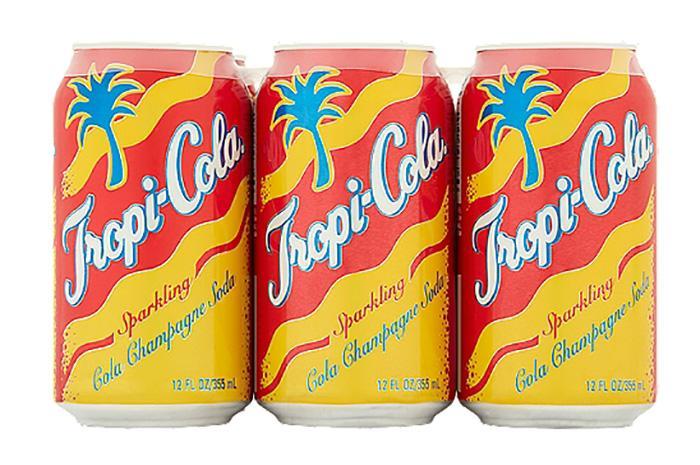
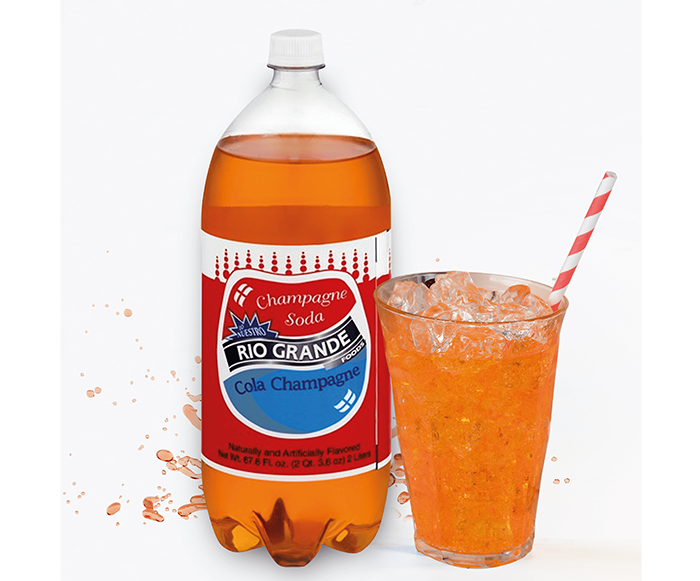
Cola Champagne is typically dark yellow to light brown in color, with a flavor comparable to bubblegum or cream soda, with no connection to cola at all. The name “champagne” in this context refers entirely to the drink’s carbonation level and golden color, a visual nod to the French wine it cosmetically resembles. In many countries, “cola” is used as a general term for all soft drinks, which is how the drink ended up with such a misleading name.
So when someone hands you a bottle of Goya Cola Champagne or OK Kola Champagne and says “try it,” be prepared for a completely different sensory experience than anything the label suggests.
Breaking Down the Flavor: What Does Cola Champagne Actually Taste Like?
This is the question every first-timer asks, and the answer is genuinely complicated, in the most delicious way possible.
The Primary Flavor: Bubblegum With Purpose
The dominant note in most Cola Champagne varieties is bubblegum, specifically the sweet, almost candy-like quality of classic pink bubblegum. Not the chewed-down, flavorless kind, but the initial burst you get from unwrapping a fresh piece of Bazooka.
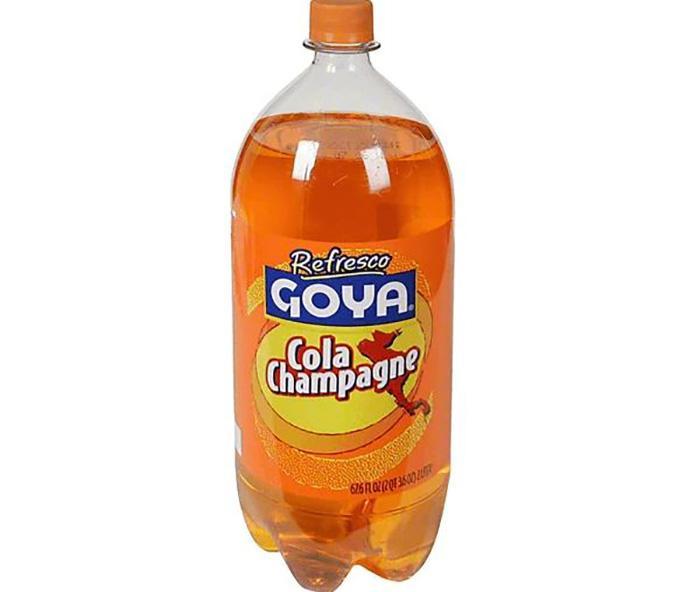
Goya Cola Champagne tastes like neither cola nor champagne, but instead like carbonated sugar water with strong notes of bubblegum and hints of orange cough syrup. It is described as very Bazooka Joe-ish on the nose, which adds to the bubblegum sensation while drinking it.
The majority flavor in C&C Champagne Cola is certainly bubblegum, followed somewhat distantly by cream soda, with cola bringing up the reariest of rears. For drinkers who are used to the sharp, caramel-forward bite of a standard Coca-Cola or the bitter herbal edge of a craft beer, the sweetness of Cola Champagne can initially feel overwhelming, almost childlike. But give it a moment. The flavor is more nuanced than that first sip suggests.
The Secondary Layer: Cream Soda’s Quieter Cousin
Underneath the bubblegum sits a cream soda quality that becomes more apparent as you drink. It’s softer, rounder, and slightly vanilla-adjacent, though no one would call it definitively vanilla. The soda tastes sweet and very much like rich cream soda but with a faint citric taste, so it was closer to being like a piña colada.
The cream soda comparison is so common that some regional brands actually market their Kola Champagne as a cream soda variant. In some markets, Kola Champagne is used as the regional name for cream soda. It’s not the same drink, but the flavor overlap is genuine enough that the two are frequently confused.
The Hidden Depths: Butterscotch, Citrus, and Something You Can’t Quite Name
The most accurate description of Cola Champagne, if one were pressed, would acknowledge all the following at once.
Is it giving hints of cream soda, only less “creamy”? Are there subtle notes of butterscotch? Are there undertones of Hubba Bubba bubble gum? It is certainly not the “Kola” that Americans have been gastronomically groomed to accept, whether that’s R.C. Cola, Pepsi-Cola, or Coca-Cola. And it’s certainly not the champagne you toast with on New Year’s Eve.
The citric acid used in most formulations adds a gentle brightness that lifts the sweetness without introducing any real sourness. This is what separates Cola Champagne from being a pure sugar bomb. The fizz is typically lively, enthusiastic even, creating a mouthfeel that feels more celebratory than your average soda.
The flavor of cola champagne is intensely sweet and effervescent with a distinct bubblegum vibe that appeals to fans of nostalgic, candy-like sodas. Unlike classic colas, it lacks the sharpness or spiced depth associated with kola nuts, instead offering a more cream soda-esque experience with hints of fruit and vanilla undertones. Many describe its taste as similar to an ice-cold melted snow cone or bubblegum ice cream due to its sugary, smooth quality.
For wine drinkers, think of it as the non-alcoholic equivalent of a Moscato d’Asti: intensely sweet, effervescent, slightly fruity, with zero pretension. For beer people, imagine the opposite of a dry, bitter IPA. For cocktail lovers, picture a sweet mixer that could hold its own against rum, vodka, or even a light tequila.
The Ingredients Behind the Flavor
Understanding what goes into Cola Champagne helps explain why it tastes the way it does.
Read More : German Liquor Updated 10/2026
Cola Champagne features a distinctive light yellow to brown hue and a sweet, fruity flavor often compared to cream soda, bubble gum, or butterscotch, achieved through ingredients like carbonated water, high fructose corn syrup or cane sugar, citric acid, artificial flavors, and food colorings such as FD&C Yellow #5 and #6.
There are no kola nuts. There is no champagne wine. There are no “mystery spices” in the tradition of Coca-Cola’s legendary recipe secrecy. The flavor comes almost entirely from artificial and natural flavoring agents, citric acid for brightness, and a sweetener, whether that’s high fructose corn syrup in most American market versions or cane sugar in some premium and international variants.
The yellow color is cosmetic, a product of food dye rather than any inherent ingredient, and it serves the important function of visually distinguishing Cola Champagne from the dark browns of standard colas and the clear of ginger ale.
Nutritionally, a standard 12-ounce serving of Goya Cola Champagne contains approximately 200 calories, 47 grams of carbohydrates, and 45 grams of sugar, with zero fat, zero protein, and 60 milligrams of sodium. It has about the same amount of sugar as a single 355ml can of Coca-Cola, but almost half the amount of sodium.
A Soldier, a Soda Factory, and a Drink That Outlived an Empire
The story of how Cola Champagne came to exist is one of the more remarkable origin tales in the history of soft drinks.
Captain Ángel Rivero Méndez was a Puerto Rican soldier, writer, journalist, and businessman who is credited with inventing the “Kola Champagne” soft drink. As a soldier in the Spanish Army, Rivero fired the first shot against the United States in Puerto Rico in the Spanish-American War.
After the war ended and Puerto Rico transitioned to American governance, Rivero Méndez made an unexpected pivot. He turned down military offers from both the American and Spanish governments and instead became an entrepreneur. In 1902, a few years after the end of the Spanish-American War, Rivero Méndez founded El Polo Norte Fábrica de Sodas (The North Pole Soda Factory) where he created Kola Champagne, which became a popular soft drink in Puerto Rico. While developing the drink, he worked on his book, Chronicle of the Spanish-American War in Puerto Rico.
There, he commercialized the beverage as “Kola Champagne,” drawing on the effervescent appeal of imported French champagne while incorporating local flavors to create a sweetened, carbonated soda.
That (slightly crumbling) building still stands on a sliver of cobblestone street in Old San Juan. The ornate tilework in canary yellow, indigo, and pastel blue that dominates its facade features intricate images, such as a polar bear in a butler’s jacket and a bottle of Kola Champagne.
It is a remarkable thought: a man who fired the first shot of a war then created one of the Caribbean’s most enduring drinks. The soda factory outlasted the empire it was born in, and more than 120 years later, Cola Champagne remains a staple of Puerto Rican identity.
Where Cola Champagne Is Made and Sold Today
What started in Old San Juan in 1902 has spread across the globe in various forms, with each region putting its own spin on the original formula.
| Country/Region | Brand Name | Producer | Notable Details |
|---|---|---|---|
| Puerto Rico | OK Kola Champagne | Refrescos de Puerto Rico | The original birthplace brand |
| Puerto Rico | Santurce Kola Champagne | Santurce Soda Water, Inc. | Classic local variety |
| United States | Cola Champagne | Goya Foods (NJ) | Widely distributed in Latin grocery stores |
| United States | Kola Champagne Soda | Good-O Beverage (Bronx, NY) | Offered in regular, diet, and golden varieties |
| Jamaica | Kola Champagne | D&G (Desnoes & Geddes) | Same producer as Red Stripe beer |
| Trinidad & Tobago | Kola Champagne / Solo | S.M. Jaleel and Co. | Diet version also available |
| El Salvador | Kolashampan | Panamerican (La Cascada) | National soda of El Salvador |
| French Caribbean | Kampane (formerly Cola Champagne) | Royal Soda | Renamed due to French labeling laws |
| Colombia | Colombiana | Postobón | Marketed as “Colombian style cola champagne” |
| Canada | Kola Champagne | Grace Island Soda | Sold in glass bottles |
| Pakistan | Kooler Saudi Champagne | Various | Popular regional variant |
In the French Caribbean territories, including Martinique, Guadeloupe, Saint-Martin, and French Guiana, Cola Champagne by Royal Soda is an iconic beverage introduced in 1950. However, due to French regulations requiring strict transparency regarding food composition, and because the beverage did not contain kola nut, Royal Soda was required to remove the term “Cola” from its name. As a result, Cola Champagne was renamed Kampane, while retaining its original recipe.
In the continental United States, your best bets for finding Cola Champagne are Latin grocery stores (particularly those catering to Caribbean or Central American communities), international food markets like Bravo Supermarkets, and online retailers like Amazon.
Cola Champagne vs. The World: How Does It Compare?
For drinkers with a point of reference for other sodas, here’s how Cola Champagne sits in the landscape of sweet, unusual sodas.
Cola Champagne vs. Inca Kola (Peru)
Inca Kola has a sweet, fruity flavor that somewhat resembles its main ingredient, lemon verbena. Americans compare its flavor to bubblegum or cream soda, and it is sometimes categorized as a champagne cola.
The two drinks are genuinely similar in their broad profiles: both are sweet, both are golden-colored, and both baffle people expecting a traditional cola. The key difference is that Inca Kola has a “tutti frutti” profile that is often compared to champagne cola, with a distinct herbal finish from the Lemon Verbena. Inca Kola has a more defined, slightly herbaceous backbone. Cola Champagne is purer in its candy-sweetness, with no identifiable botanical note to give it edge.
Cola Champagne vs. Standard Cream Soda
Cream soda is probably the closest thing in a typical American’s flavor vocabulary to what Cola Champagne offers. But there are real differences. Cream soda is typically clearer or pinkish, has a strong vanilla character, and feels slightly richer. Cola Champagne is yellower, fizzier, and leads with bubblegum rather than vanilla. Cream soda is comfortable. Cola Champagne is interesting.
Cola Champagne vs. Irn-Bru (Scotland)
Similar products to Cola Champagne include the Peruvian Inca Kola and the Scottish Irn-Bru. Irn-Bru is another beloved soda that nobody can quite describe, orange-tinted, sweet, slightly medicinal, utterly unique. The comparison is apt: both drinks occupy that rare space where flavor defies easy categorization and becomes part of their cultural mystique.
Why Drinkers Who Love Beer, Wine, and Cocktails Should Pay Attention
You might be thinking: this is a soda. Why does it matter to someone whose usual drink is a Negroni or a barrel-aged stout?
Fair point. But Cola Champagne is actually more interesting to discerning drinkers than to people who just want a Sprite with their burger. Here’s why.
First, the flavor complexity is real. Anyone who appreciates the layered character of a good beer or a nuanced wine will find Cola Champagne a fascinating flavor exercise. The way bubblegum, cream soda, and faint citrus interact without any one note dominating is genuinely sophisticated, even if the drink itself is aggressively non-sophisticated.
Second, it’s a surprisingly effective mixer. Good-O Kola Champagne soda has a dry finish while being a sweet fizzy beverage, despite its sweetness. That combination, sweet up front, drier on the finish, is exactly what you want in a cocktail mixer. It works beautifully with white rum, the way a Cuba Libre works with standard cola, but with an entirely different flavor character.
Third, the cultural story is worth knowing. A trip to any Jamaican spot without Kola Champagne is a lackluster experience, same as how a visit to a favorite taqueria would be diminished without Jarritos. Understanding Cola Champagne means understanding a piece of Caribbean and Latin American identity that doesn’t get nearly enough attention in mainstream American food culture.
Cola Champagne as a Cocktail Ingredient
Read More : What Is Drambuie Updated 10/2026
For those who want to take Cola Champagne beyond the bottle, it functions remarkably well as a cocktail base or mixer. Its sweetness, carbonation, and that hard-to-place fruity character make it a natural partner for several spirits.
White Rum: The most natural pairing. Cola Champagne with white rum is effectively a Caribbean Cuba Libre with a more festive, tropical personality. The sweetness of the soda balances the rum’s sugarcane notes while the fizz keeps the drink lively.
Coconut Rum: For a drink that leans fully into the tropical fantasy that Cola Champagne already suggests, coconut rum deepens the fruity character without overwhelming it.
Light Tequila (Blanco): The grassy, slightly herbal quality of a blanco tequila provides a welcome contrast to Cola Champagne’s sweetness. Add a squeeze of lime and you have something genuinely interesting.
Vodka: The most neutral option for those who want the Cola Champagne flavor to lead without any spirit interference.
For those who want to impress at their next cookout, try this simple approach: 2 oz white rum, 4 oz Cola Champagne, a squeeze of fresh lime, served over crushed ice with a mint sprig. It requires almost no bartending skill and delivers something that most of your guests will have never tasted before.
The Cultural Weight of a Sweet Yellow Soda
It would be easy to dismiss Cola Champagne as simply another sugary soda from a region full of sugary sodas. That would be a mistake.
Cuzcatlan cola champagne has become more than just a soft drink; it’s a cultural icon. Its sweetness pairs excellently with popular Salvadoran dishes like pupusas, tamales, and fried snacks, providing a refreshing contrast to savory or spicy flavors.
In Trinidad and Tobago, Solo Kola Champagne was launched in 1949 by founder Joseph Charles, who adapted an existing brand name for his line of soft drinks including the iconic red kola champagne. The brand commands a notable share of the Trinidadian soft drink market and is also exported to the United Kingdom to cater to the Trinidadian diaspora community.
In each of these communities, Cola Champagne isn’t just a beverage. It’s a marker of home, a taste that connects people to specific kitchens, specific celebrations, and specific moments in childhood. For the growing Caribbean and Latin American diaspora in American cities, spotting a bottle of Goya Cola Champagne or Good-O Kola Champagne on a grocery shelf is the kind of small joy that carries significant weight.
That’s an experience that wine drinkers, beer enthusiasts, and cocktail lovers understand deeply: the way a specific flavor can bypass the rational mind and go straight to memory and emotion. Cola Champagne does exactly that, just for a different set of memories than most Americans grew up with.
The Brands Worth Trying First
If you’re new to Cola Champagne and want to experience the range of what this category offers, here are the most accessible starting points in the U.S. market.
Goya Cola Champagne is the easiest to find and serves as a reliable baseline. It’s widely distributed in Latin supermarkets and available on Amazon. The flavor leans heavily bubblegum with a fairly assertive sweetness. It’s an honest representation of the category.
OK Kola Champagne from Puerto Rico is widely considered closer to the original vision. It carries a slightly more complex profile than the Goya version and has the credibility of being made in the drink’s birthplace.
Good-O Kola Champagne Soda from the Bronx offers regular, diet, and “golden” varieties, making it a good option for those who want to explore different iterations. The golden variety in particular has a slightly different character worth trying.
Cuzcatlan Cola Champagne from El Salvador represents the Central American tradition of the drink and is beloved by Salvadoran communities across the U.S. It is extremely sweet, with no specific standout flavor, described by some as a carbonated version of a melted snow cone. This description, offered critically by one reviewer, is embraced as a selling point by devotees.
D&G Kola Champagne from Jamaica brings the Caribbean brewery tradition (D&G also makes Red Stripe beer) to the format, and tends to have a slightly cleaner, less cloying sweetness than some other varieties.
Answering the Question That Started All Of This
So: what is the flavor of Cola Champagne?
It is sweet, unapologetically so, in a way that makes Sprite taste understated by comparison. It is bubbly, with an effervescence that feels more animated than the average carbonated drink. It is candy-forward, specifically bubblegum-adjacent, with a warm, slightly creamy secondary note that evokes vanilla without committing to it. It has a faint citric brightness that keeps the sweetness from turning cloying, and a ghost of something unidentifiable underneath all of it, something butterscotch-adjacent, something tropical-adjacent, something that hasn’t quite been captured in a single English adjective yet.
At this point, rather than going down a rabbit hole of what Kola Champagne is, or isn’t, or could be, the best approach is simply to hand over the bottle. That look of befuddled amazement will never get old.
That pretty much covers it.
Conclusion
There’s a running joke among food writers that the most interesting things to drink are the ones that don’t fit neatly into a box. Single malt Scotch doesn’t taste like grain. Orange wine doesn’t taste like what you’d expect. And Cola Champagne, this golden bottle from a Puerto Rican soda factory opened by a war veteran in 1902, doesn’t taste like cola or champagne.
What Cola Champagne does taste like is possibility: the possibility that a flavor outside your experience can still feel immediately, strangely, right. The next time you’re at a Latin market and see that yellow bottle, pick one up. Take a sip before you decide anything about it. And then try to explain it to someone who’s never had it. We’ll wait.
Sources: https://chesbrewco.com
Category: Wine