You’ve seen the bottle behind the bar. That elegant amber-gold label, the understated French script, the quiet confidence of something that doesn’t need to shout. Maybe a bartender dropped it into your drink and you thought, what exactly is that? Or maybe James Bond said the name in a movie and it stuck in the back of your head. Either way, if you drink beer, wine, or cocktails and you haven’t figured out Lillet yet, you’re missing one of the most interesting and versatile bottles in the game.
This isn’t a drink for people who want something complicated. It’s a drink for people who appreciate quality, history, and a flavor that works in more situations than almost anything else behind the bar. Here’s everything you need to know.
What Lillet Actually Is
Lillet (pronounced lee-LAY) is a French wine-based aperitif produced in the village of Podensac, in the Gironde department of southwestern France, less than 25 miles south of Bordeaux. Under EU law, it’s classified as an aromatised wine, which puts it in the same legal category as vermouth but makes it a very different animal in the glass.
It is a blend of 85% Bordeaux region wines and 15% macerated liqueurs, mostly citrus liqueurs made from the peels of sweet oranges from Spain and Morocco and bitter green oranges from Haiti. The mix is then stirred in oak vats until blended with French brandy. During the aging process, Lillet is handled as a Bordeaux wine, undergoing fining, racking, filtering, and all the other techniques used in serious winemaking.
The result is something that sits at 17% ABV (34 proof), landing right between a standard table wine (12–14%) and a light spirit like port or sherry. It’s lower in alcohol than a cocktail, more complex than a glass of wine, and far more interesting than most things you can buy for the same price.
A 750 ml bottle costs about $20, making it one of the best-value bottles you can keep in your refrigerator.
The History: From Bordeaux to Bond
Brothers Raymond and Paul Lillet, liqueur makers and fine wine and spirit merchants, founded the Maison Lillet in Podensac in 1872. It was in 1887 that they created Bordeaux’s first and truly unique aperitif: Lillet.
The story behind that original recipe has roots that go deeper than 19th-century France. The idea of making aperitifs in Bordeaux came from Father Kermann, a doctor who left Brazil at the beginning of Louis XVI’s reign. He returned to France and made Bordeaux his home, where he created liqueurs and fortifiers using herbs like quinine. Bordeaux had become one of the most important places for the European wine business and was France’s main harbour for products imported from the Caribbean islands.
Quinine, the antimalarial compound derived from the bark of the cinchona tree in Peru, was a key ingredient in the original formulation. The original product was called Kina Lillet, with the “Kina” being a reference to the quinquina, a family of bitter, quinine-laced aperitifs popular in 19th-century France. The quinine-rich cinchona bark was originally intended to help prevent malaria in French Foreign Legion soldiers.
During the 1920s, Lillet exports greatly increased in Europe and Africa. The brand also became famous in France thanks to advertising campaigns. At the same time, Lillet was served on transatlantic liners, part of the reason for its success with high society in New York. American bartenders used it for making fashionable cocktails.
Then came James Bond.
This was the world that gave rise to The Vesper, James Bond’s legendary cocktail based on Lillet. Author Ian Fleming discovered the aperitif in a cocktail creation and included it in his book Casino Royale. The year was 1953, and in that novel, Bond orders what he calls the Vesper: three parts Gordon’s gin, one part vodka, and half a measure of Kina Lillet. He asks for it shaken, not stirred, served in a deep champagne goblet with a large thin slice of lemon peel. The drink put Lillet on the map for an entirely new generation of drinkers.
In the early part of the 1970s, Maison Lillet removed “Kina” from the brand name, calling it simply Lillet. Then, in 1985, Lillet was reformulated after close work with the Bordeaux University’s Institute of Oenology, applying modern oenology. Both the quinine bitterness and corresponding sweetness were reduced.
In 2011, Lillet Rosé was launched, building on the success of rosé wines.
The Three Versions of Lillet
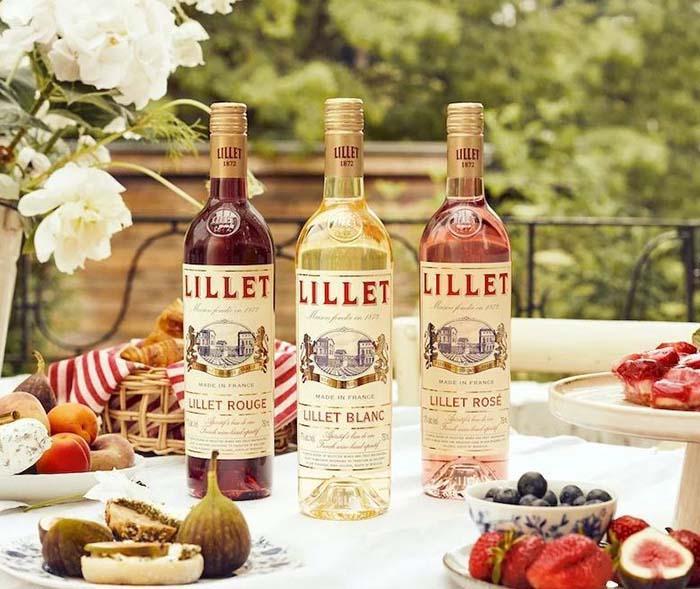
Lillet comes in three expressions, each built on a different wine base and offering a meaningfully different flavor profile. Understanding the differences will help you pick the right bottle for the right moment.
| Expression | Wine Base | Color | Key Flavors | ABV | Best Use |
|---|---|---|---|---|---|
| Lillet Blanc | Sémillon + Sauvignon Blanc | Golden yellow | Honey, candied orange, pine, fresh mint | 17% | Spritz, Vesper, Corpse Reviver |
| Lillet Rosé | Merlot, Cab. Sauv. + Sémillon | Pink | Berries, orange blossom, grapefruit | 17% | Spritz, summer sipping |
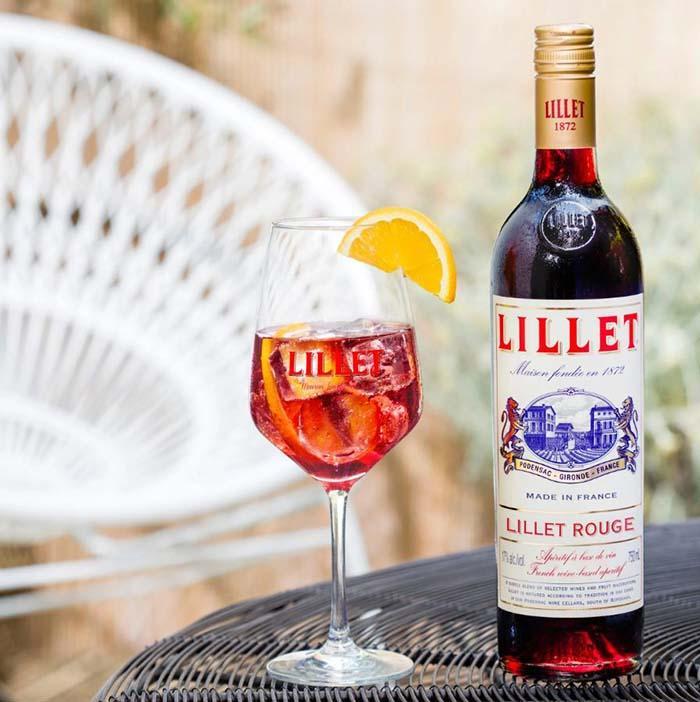
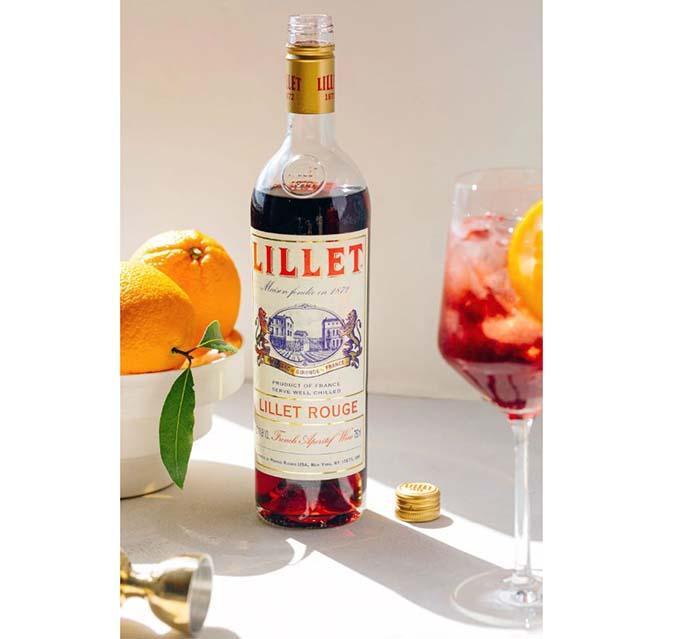
| Lillet Rouge | Merlot + Cabernet Sauvignon | Ruby red | Dark fruit, orange zest, spice | 17% | Stirred cocktails, sipping neat |
Lillet Blanc
This is the one that started it all, and it’s still the most important bottle in the lineup. Its appearance is a yellow color, with floral and citrus aromas, and a taste of candied oranges, honey, pine resin, and exotic fruits.
On the nose, you get fresh citrus notes of orange and lemon zest, followed by honeyed white flowers like elderflower and acacia, with light herbal hints of mint and pine needles. On the palate, it’s smooth and medium-bodied with a balance of sweetness and bitterness, with flavors of candied orange peel, quinine, and white grape juice complemented by subtle spices like coriander and green cardamom. A touch of vanilla rounds out the taste. The finish is long and refreshing with lingering citrus and herbal notes and a gentle bitterness reminiscent of grapefruit pith.
Read More : Is Stella Rosa Real Wine Updated 03/2026
Lillet Blanc is the go-to expression for classic cocktails and the one every home bar needs.
Lillet Rosé
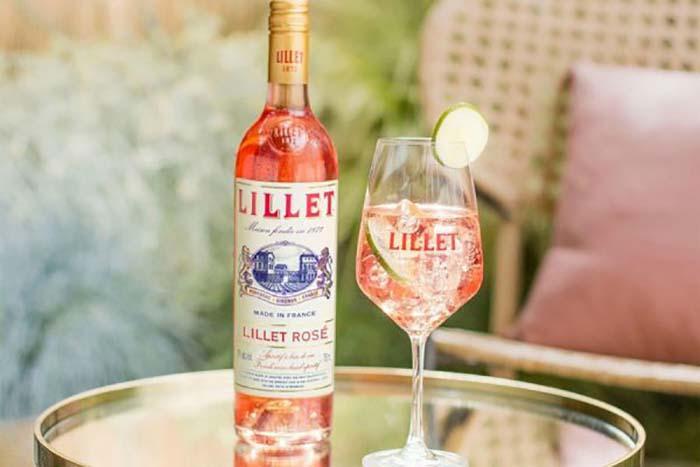
Launched in 2011, the Rosé was built for warm-weather drinking. It boasts notes of berries, orange blossom, and grapefruit, making it a perfect choice for summer gatherings and light, refreshing cocktails. It’s the most approachable of the three, easy enough for someone who doesn’t normally drink aperitifs, and interesting enough for someone who does.
Lillet Rouge
In 1962, Pierre Lillet, grandson of Raymond, keen to capitalize on America’s growing taste for red wine, created Lillet Rouge for the American market. At 17% alcohol by volume, Lillet Rouge strikes an ideal balance between wine and spirit strength, making it versatile enough for both neat sipping and creative cocktail applications. The dominant Merlot and Cabernet Sauvignon grape base provides a robust foundation, while macerations of sweet and bitter orange peels and cinchona bark containing natural quinine round out the profile.
How Lillet Is Made
The production process at Maison Lillet has changed very little in its fundamentals since the 19th century.
Lillet is a subtle blend of wines and fruit infusions, the result of traditional craftsmanship and expertise dating back nearly 150 years. The Bordeaux region’s winemaking heritage, together with the fruit infusions at the heart of Maison Lillet’s expertise, ensure the excellent quality of the aperitifs. In preparing Lillet, they take particular care over the sourcing of ingredients, selecting wines from vineyards that use environmentally friendly practices.
The fruits and fruit peels are infused separately by being slowly cold-soaked in alcohol. After several weeks, once the flavor has been extracted, the liquid is run off and the fruits are pressed. The latter are then recycled and taken for composting less than thirty kilometres away.
Following the Bordelaise tradition, Lillet is also aged in oak so that it acquires its soft and rich character.
One of the more remarkable facts about the operation: the Lillet company employs a master wine taster with a nose insured for over €1 million. This expert ensures the consistency and quality of every batch, tasting up to 200 samples per day without ever swallowing a drop.
The entire production team at Maison Lillet numbers only about 10 people, making this a true artisan operation despite its global recognition.
Lillet vs. Vermouth: What’s the Difference?
This is the question that trips up most people, including plenty of bartenders. The short answer: they’re related but not the same, and the distinction matters.
Both Lillet and vermouth are aromatised, fortified wines, which means they start with a wine base and have spirits and botanical ingredients added. But there are critical differences.
Lillet Blanc is often mistaken for vermouth, but it’s not, as it doesn’t contain wormwood, which is where the name “vermouth” comes from. Wormwood is what gives dry vermouth its distinctive herbal bitterness. Lillet gets its bitter notes from quinine instead, which produces a cleaner, more citrus-forward bitterness.
Lillet has a subtle, bittersweet flavor with fruity notes. It’s somewhere between an orange liqueur, unaged brandy, and vermouth.
Out of the entire category of white quinquina, Lillet Blanc has the lowest ABV and the least amount of sugar, which makes it effective at cutting through heavier liqueurs.
The practical upshot: if a cocktail calls for dry vermouth and you’re out of it, Lillet Blanc makes a solid substitute. But the reverse is also true. Just know the flavor profile will shift toward something brighter, fruitier, and less herbal.
Lillet Compared to Similar Bottles
| Product | Origin | Base | Bitterness Agent | ABV | Flavor Profile |
|---|---|---|---|---|---|
| Lillet Blanc | France | Sémillon/Sauv. Blanc | Quinine (cinchona) | 17% | Citrus, honey, floral, light bitter |
| Dry Vermouth | France/Italy | Various white wine | Wormwood | 18% | Herbal, dry, botanical |
| Cocchi Americano | Italy | Moscato | Gentian + quinine | 16.5% | Sweeter, more bitter, earthier |
| Dubonnet | France | Red wine | Quinine | 14.8% | Sweet, spiced, medicinal |
| Aperol | Italy | Wine/spirits | Rhubarb, cinchona | 11% | Bitter orange, herbal |
The closest competitor to Lillet Blanc is Cocchi Americano, an Italian aperitif. Cocchi Americano has been around since the 1890s, and it’s made from a sweeter Moscato grape base, primarily bittered by gentian rather than quinine. Many a bartender and seasoned drinker swear that it is closer in flavor to what the original Kina Lillet was than what current Lillet Blanc is. If you want the old-school Bond-era flavor profile, Cocchi Americano is worth trying alongside modern Lillet.
How to Drink Lillet
Here is where Lillet separates itself from most bottles in the aperitif category. It’s genuinely versatile in a way that few drinks are.
Straight Over Ice
In France, Lillet is usually served on ice with a slice of orange, or a lemon or lime peel. This is the simplest and most honest way to understand the drink. Fill a wide-mouthed wine glass with a few large ice cubes, pour in about three ounces of well-chilled Lillet Blanc, and add a large orange slice. Sip it before dinner. That’s it. Lillet is an aperitif wine intended to be served well chilled at 6–8 °C (43–46 °F). Don’t let it warm up.
The Lillet Vive
In Germany, Austria, and Switzerland, Lillet Blanc is more often served as a Lillet Vive, a Lillet Blanc long drink: 5cl Lillet Blanc, 10cl tonic water, a slice of cucumber, a strawberry, and mint leaves. Think of it as a more sophisticated gin and tonic without the gin. Light, herbal, refreshing, and low in alcohol.
The Lillet Spritz
A Lillet Spritz is a two-ingredient cocktail in which white or rosé Lillet is mixed with sparkling water and garnished with mint, berries, cranberries, or thyme sprigs. If you drink Aperol Spritzes, try this version instead. It’s cleaner, less sweet, and far more interesting.
Classic Cocktails That Use Lillet
Read More : Shochu Vs Soju Updated 03/2026
This is where Lillet earns its keep. Some of the greatest classic cocktails ever invented call for it by name.
The Vesper
The most famous Lillet cocktail in history. From Ian Fleming’s Casino Royale (1953):
3 oz gin, 1 oz vodka, 0.5 oz Lillet Blanc. Shaken with ice until very cold. Strained into a chilled cocktail glass. Garnished with a large lemon peel.
Note: the original recipe called for Kina Lillet, which had more quinine bitterness than today’s Lillet Blanc. If you want a closer approximation of what Bond actually drank, substitute Cocchi Americano for the Lillet, or add a small dash of gentian bitters to your Lillet Blanc.
The Corpse Reviver No. 2
A golden-age classic from Harry Craddock’s Savoy Cocktail Book (1930). The humorous name indicates that the strength of the drink was enough to bring a body back from the grave.
1 oz gin, 1 oz Cointreau, 1 oz Lillet Blanc, 1 oz lemon juice, 1 rinse of absinthe. Shaken with ice, strained into a coupe. The absinthe rinse is key, don’t skip it.
The White Negroni
A modern classic invented in London in the early 2000s. Wayne Collins replaced the Campari in a classic Negroni with the gentian-forward French aperitif Suze, and replaced sweet red vermouth with Lillet Blanc. The gin element stayed in place, but the proportions were tweaked.
1.5 oz gin, 1 oz Suze, 0.75 oz Lillet Blanc. Stirred with ice, strained into a rocks glass over a large ice cube. Expressed lemon peel garnish.
The 20th Century
A Prohibition-era gem. 1.5 oz gin, 0.75 oz Lillet Blanc, 0.75 oz crème de cacao, 0.75 oz fresh lemon juice. Shaken with ice, double-strained into a chilled coupe. One of the most underrated classic cocktails you’ve never heard of.
The Lillet Gin and Tonic
Throw convention aside. 2 oz gin, 1 oz Lillet Blanc, 3 oz quality tonic water. Build over ice in a tall glass. Garnish with cucumber and a lime wedge. It adds a layer of honeyed citrus complexity that makes a standard G&T feel flat by comparison.
Food Pairings That Work
Lillet was designed as an aperitif, meaning its job is to stimulate the appetite before a meal, not overwhelm it. That gives it a natural affinity with lighter, acidic, and briny foods.
Seafood, particularly shellfish like oysters and mussels, pairs perfectly with Lillet, as the wine’s citrus flavors complement the brininess of the seafood. Salads, especially those with citrus-based dressings, also pair well with Lillet, as the wine’s acidity cuts through the richness of the greens.
If you’re throwing a backyard spread, keep a bottle of Lillet Blanc on ice and pour it alongside shrimp cocktail, smoked salmon, light cheeses, charcuterie, and olives. It works better than beer for those first thirty minutes when people are arriving and the grill is still warming up.
Lillet Rouge works particularly well with cured meats, aged cheeses, and anything with a slight char on it.
Where to Buy Lillet and What to Expect
Lillet is widely available in the United States at most major liquor retailers, Whole Foods wine sections, and online through retailers like Total Wine and BevMo. The price point is one of the best in the aperitif category.
| Product | Size | Avg. Price (US) | ABV |
|---|---|---|---|
| Lillet Blanc | 750ml | $20–$26 | 17% |
| Lillet Rosé | 750ml | $20–$26 | 17% |
| Lillet Rouge | 750ml | $20–$28 | 17% |
Once opened, store Lillet in the refrigerator and consume within two to three weeks for best flavor. It’s a wine-based product, and like wine, it will oxidize and lose complexity over time. The good news: at this price point and with this many uses, finishing a bottle quickly isn’t a problem.
Why This Bottle Deserves a Spot in Your Refrigerator
Here’s the thing about Lillet that most people don’t realize until they’ve owned a bottle for a few weeks. It doesn’t just do one thing. Lillet is a refreshing aperitif with a smooth, fruity taste that earned 93 points (Excellent, Highly Recommended) at the Ultimate Beverage Challenge in 2011.
You can pour it over ice before dinner. You can use it in a Bond Vesper when you want something that sounds like you know what you’re doing. You can mix it into a Spritz when the weather is warm. You can add it to a White Negroni when someone asks you to impress them. You can drop it into tonic water on a Tuesday night when you want something that isn’t beer but also isn’t a full production.
For $20–$25, no other bottle in the aperitif category gives you that kind of range. Vermouth comes close, but Lillet is more food-friendly and less polarizing. Aperol is more widely known, but it’s one-dimensional by comparison.
In France, the evening meal doesn’t begin until the apéro hour is finished. This pre-dinner ritual, during which aperitifs and light bites are served, is a cherished tradition that helps people transition from the hustle and bustle of the day to a relaxing evening meal ahead. Americans don’t have a version of that ritual, but Lillet is as good a reason as any to start one.
Pick up a bottle. Chill it down. Pour it over ice with an orange slice. You’ll figure out the rest from there.
Sources: https://chesbrewco.com
Category: Wine