- What Is St Germain? The French Liqueur Every Serious Drinker Needs to Know Updated 09/2026
- Filtering Cheap Vodka With A Brita Updated 09/2026
- What Is Hot Sake Updated 09/2026
- Does Whiskey And Red Bull Mix Updated 09/2026
- What Is Southern Comfort? The Complete Guide Every Drinking Man Should Read Updated 09/2026
There is a bottle sitting on bar shelves across America that gets picked up, mishandled, and put back down more than almost any other spirit. It gets lit on fire at college parties. It gets dismissed as “that licorice stuff.” It gets poured down the drain after a bad first experience. And yet, in its homeland of Italy, it has commanded an 85% share of the entire on-trade market for decades. Bartenders in Rome sip it in espresso. Federico Fellini had it at his table. Frank Sinatra loved it so much that he wrote a personal letter to its makers declaring his admiration.
That bottle is sambuca — and if you’ve written it off, you’ve been missing out on one of the most misunderstood and genuinely rewarding spirits on the planet.
What Sambuca Actually Is
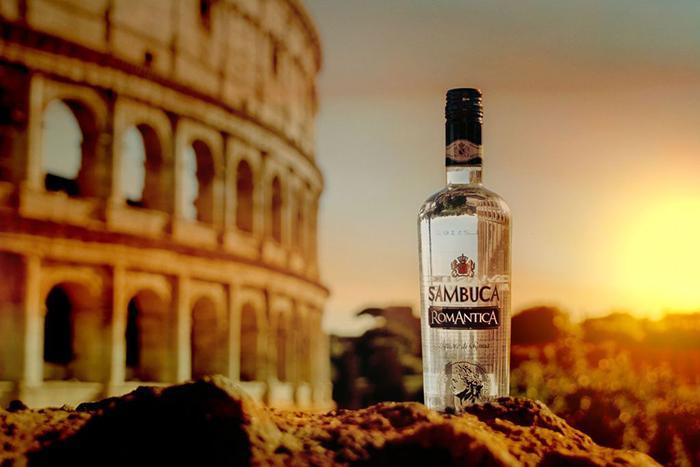
Sambuca is a traditional Italian anise-flavored liqueur made primarily from the essential oils of star anise or green anise, combined with sugar, alcohol, and a blend of other botanicals that typically includes elderflower, fennel, and licorice. It is normally clear in appearance — the variety most people know is called white sambuca — though black and red versions also exist with their own distinct character.
By legal definition, sambuca must be bottled at a minimum of 38% alcohol by volume (ABV). In practice, most commercial bottles land between 40% and 42% ABV, making it a genuinely strong spirit that sits comfortably alongside whiskey and rum in terms of potency, even if the sweetness can make it feel more approachable.
The flavor profile is bold and immediately recognizable. The dominant note is anise, which many people describe as black licorice. Beneath that comes a rush of sweetness — sambuca contains up to 350 grams of sugar per liter, which is why it qualifies as a liqueur rather than a straight spirit. Underneath the sweetness and anise are herbal undertones from the elderflower and fennel, and sometimes a gentle warmth from the alcohol that builds at the back of the palate. It is rich, aromatic, and assertive — the kind of drink that announces itself.
Where Sambuca Comes From
The origin story of sambuca reaches back to 1851, in the small coastal town of Civitavecchia, a port city about 45 miles northwest of Rome. It was here that Luigi Manzi, a distiller from the Neapolitan isle of Ischia, began producing the first commercial version of the liqueur. Manzi himself described it as a fine anise spirit that was “very good for the stomach after a meal” — essentially positioning it as a digestif from day one.
Even the name carries a fascinating debate. The most commonly cited theory traces it to the Latin word sambucus, meaning “elderberry,” which is the genus name for the elder tree. This makes sense given that elderflower and elderberries appear in many sambuca recipes. But the Oxford Companion to Spirits & Cocktails argues that the name may actually derive from sambuchelli, the young water sellers who used to work the docks between Ischia and Naples, selling a mixture of water and green anise. A third theory, maintained by the Molinari company itself, points to the Arabic word zammut, a name for an anise-flavored drink that arrived at the port of Civitavecchia via trade ships from the Middle East.
All three theories point to the same essential truth: sambuca is a drink born at the crossroads of cultures, where the Arab world’s love of anise-flavored beverages met Italian craft distillation and became something entirely its own.
For nearly a century after Manzi’s first batch, sambuca remained a regional Italian specialty. Then came 1945 and Angelo Molinari.
The Man Who Turned Sambuca Into a Global Icon
Angelo Molinari was, by trade, an expert perfumer with an instinctive understanding of how botanicals interacted with each other. In 1945, fresh off the end of World War II, he began working on a new sambuca recipe from his base in Civitavecchia. What he produced — Molinari Extra Sambuca — would become one of the most recognized Italian spirits in the world.
The recipe, built around star anise imported from Asia rather than the local green anise used by competitors, remains a closely guarded secret to this day. Molinari and his children worked the bars of Rome’s Via Veneto — the street that gave the world the La Dolce Vita lifestyle — putting their bottles in front of the most influential people in post-war Italian society. Actors, politicians, directors, and celebrities all found themselves with a shot of Molinari in their hands.
The coffee bean ritual was born on those same sidewalks. According to Molinari family legend, Federico Fellini and his circle of actors were sipping sambuca at a Via Veneto bar when one of them dropped a coffee bean into a glass and jokingly shouted “Una mosca!” — “A fly!” The name and the ritual stuck.
The celebrity endorsements kept coming. Frank Sinatra became one of sambuca’s most famous fans, personally writing a letter to the Molinari family to tell them how much he admired their liqueur. The Italian government eventually recognized Molinari’s exceptional quality by granting the brand exclusive rights to use the word “Extra” after its name — a designation no other sambuca producer is permitted to use.
Read More : How Many Calories In A Monaco Cocktail Tequila Lime Crush Updated 09/2026
By the 1970s, demand had grown so large that Molinari built a second factory in Colfelice capable of producing 60,000 bottles per day. Today, Molinari is distributed in 70 countries and holds more than a 69% market share in Italy and over 30% worldwide. The global sambuca market, as of 2024, was valued at $1.2 billion and is projected to reach $2.1 billion by 2033, growing at a compound annual rate of about 6.3%.
How Sambuca Is Made
Understanding how sambuca is produced makes you appreciate what you’re drinking. The process starts with a base of pure neutral alcohol, typically distilled from grain or occasionally molasses. The key flavoring agents — primarily the essential oils of star anise — are then extracted through steam distillation from the anise seeds.
Those extracted oils are intensely concentrated and aromatic. They are combined with a solution of sugar, water, and additional botanicals that vary by producer but commonly include:
- Elderflower for a soft floral note
- Fennel seeds for herbal depth
- Licorice root for body and bitterness
- Green anise or star anise as the primary flavoring agent
The mixture is then left to mature, allowing the flavors to integrate. The exact ratio of botanicals, the source of the anise, and the maturation process are what differentiate one brand from another. Molinari uses star anise from Asia; other producers favor green anise from the Mediterranean. These choices produce noticeably different flavor profiles in the finished product.
One fascinating property of sambuca emerges when you add water or ice: the liqueur turns milky white. This is called the ouzo effect or louching, and it happens because the essential oils in anise — specifically a compound called anethole — are soluble in alcohol but not in water. When the alcohol concentration drops below roughly 30% ABV after dilution, the oils come out of solution and form tiny droplets, creating that characteristic hazy appearance. It’s science in a glass, and it’s one of sambuca’s most distinctive visual signatures.
The Three Varieties You Should Know
Not all sambuca is the same. The category divides into three main expressions, each with its own character.
White Sambuca is the original and most widely available. Clear in color, primarily flavored with star anise, sweetened generously with sugar, and typically bottled at around 38% to 40% ABV. It is the version you’re most likely to encounter at any American bar, and it’s the baseline experience for understanding what sambuca is. The flavor is boldly anise-forward with strong sweetness and a clean finish.
Black Sambuca is the most dramatically different from white. Despite the name, black sambuca is rarely fully opaque black — it tends toward a deep blue-violet hue, similar to ink. It is made with the fruit of the witch elder bush and licorice rather than star anise as the primary flavoring, giving it a richer, more complex profile with more pronounced licorice notes and a slightly bitter undertone. Black sambuca typically runs slightly higher in alcohol — up to 42% ABV — and is often served in a snifter rather than a shot glass. It is less sweet than the white variety, making it more appealing to drinkers who like their spirits with some edge.
Red Sambuca is the newest entry in the category. Made with red elderberries and natural fruit extracts, it has a genuinely fruity character and a visually striking crimson color. The anise backbone is present but lighter, making red sambuca arguably the most approachable entry point for people who find the intensity of white sambuca overwhelming. Antica Distilleria Quaglia, with over 100 years of distilling experience, is among the leading producers of red sambuca.
How to Drink It the Right Way
The most traditional Italian way to drink sambuca is neat, at room temperature, with three floating coffee beans. This serving style is called con la mosca — “with the fly” — and those three beans carry specific meaning: health, happiness, and prosperity. You are not supposed to chew them immediately. The idea is to let them infuse subtle bitterness and roasted coffee notes into the sambuca as you drink, and then bite into them at the end for a contrasting flavor hit.
Other serving traditions include seven coffee beans in the glass, which represents the seven hills of Rome, or a single bean, called con una mosca. Some bartenders briefly ignite the sambuca before serving, which caramelizes the sugars on the surface, warms the spirit, and lightly toasts the coffee beans for an added layer of flavor. If you do this at home, extinguish the flame before drinking.
On the rocks is another solid option, particularly in warm weather. The ice slows down the anise intensity and changes the texture from dense and syrupy to lighter and more refreshing. Expect that louche effect to kick in as the ice melts.
In coffee is arguably sambuca’s most practical and underappreciated use in the American context. In Italy, adding a splash of sambuca to espresso — a preparation called caffè corretto or “corrected coffee” — replaces sugar entirely while adding an aromatic depth that plain sugar can’t match. For American drinkers who prefer their coffee strong and with a kick, this is a serious adult upgrade. Just add about half an ounce to a fresh espresso and skip the sugar.
As a straight digestif after a heavy meal, sambuca performs exactly the function its creator intended. The anise compounds, particularly anethole, are genuinely carminative — meaning they have a relaxing effect on the digestive tract, reducing bloating and easing discomfort. The Ancient Greeks used anise medicinally for exactly this purpose. Sipping sambuca slowly after dinner is both pleasurable and physiologically sensible.
Where Sambuca Fits in the Wider World of Anise Spirits
Sambuca sits within a broader family of anise-based spirits that spans the entire Mediterranean. Understanding where it fits helps you navigate the category with confidence.
Ouzo (Greece) is probably the closest relative. Both are anise-flavored, both produce the louche effect when diluted, and both originated in the mid-19th century. But key differences separate them. Ouzo is traditionally served as an aperitif before a meal with ice-cold water; sambuca is a digestif consumed after. Ouzo is dry and less sweet; sambuca is heavily sweetened. The base botanicals differ too, which means the flavor profiles, while sharing that anise character, end up in different places.
Pastis (France) is another Mediterranean anise spirit, born largely in the wake of absinthe’s prohibition in the early 20th century. It tends to be drier than sambuca, less sweet, and typically served in a tall glass with a lot of water.
Read More : What Is Ipa Updated 09/2026
Absinthe is the wild cousin — high-alcohol, significantly more complex botanically, and defined by wormwood (which contains thujone) in addition to anise. The ban on absinthe in the early 1900s arguably helped sambuca’s popularity, as drinkers looking for an anise-forward experience in respectable establishments turned to the Italian option.
Arak (Middle East) and raki (Turkey) round out the family. All of these spirits share the same foundational love of anise that stretches from the Levant through the Mediterranean and into Italy. Sambuca is simply the sweetest, most accessible, and most cocktail-friendly member of this ancient family.
Sambuca in Cocktails
Here is where American drinkers might find sambuca most relevant to their daily bar experience. The liqueur is more versatile as a cocktail ingredient than its reputation suggests, and the craft cocktail movement has started to recognize that.
The Sambuca Sour is the most direct entry point. Two ounces of white sambuca, three-quarters of an ounce of fresh lemon juice, and half an ounce of simple syrup (though you may want to reduce or skip the syrup given sambuca’s existing sweetness) shaken hard with ice and strained into a rocks glass. Optionally add a half ounce of egg white for a silky foam. The sour format’s acidity cuts the sweetness beautifully and makes sambuca significantly more approachable.
The Manbuca takes the classic Manhattan template and runs it through an Italian lens. A measure of rye whiskey, sweet vermouth, and a few dashes of bitters get joined by a splash of sambuca. The result is a cocktail where the whiskey’s spice, the vermouth’s wine character, and sambuca’s anise warmth form a genuinely interesting three-way tension.
For something impressive to make at home, the Espresso Martini with a Sambuca float has become a cocktail bar favorite. Build a standard espresso martini — espresso, vodka, coffee liqueur — then float half an ounce of sambuca on top. The anise perfume rises out of the glass on every sip and makes the whole drink more aromatic and alive.
Sambuca and ginger beer is the underrated simple serve for warm evenings. Fill a highball glass with ice, add two ounces of white sambuca, squeeze in half a lime, and top with ginger beer. The spice of the ginger anchors the anise, and the lime’s acidity keeps everything bright. Think of it as a Mediterranean Mule.
Black Sambuca with cream is a serious after-dinner option. Pour two ounces of black sambuca into an ice-filled rocks glass and add one ounce of heavy cream. The result is a dark, silky drink with licorice, herbal bitterness, and the richness of dairy — a more grown-up version of a cream-based dessert cocktail.
The Flaming Sambuca is worth doing at least once. Pour two ounces of white sambuca into a small snifter, drop in three coffee beans, and carefully ignite it with a long match or lighter. Let the flame caramelize the surface and toast the beans for about ten seconds, then cover the glass with a coaster to extinguish. Wait a moment, remove the coaster, and drink. The sugar has caramelized, the coffee beans have toasted, and the whole experience is a level up from a standard shot.
The Brands Worth Knowing
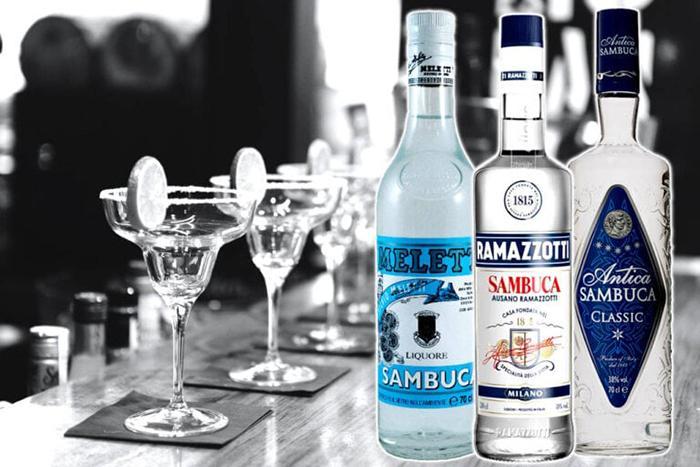
Molinari Extra remains the gold standard and the obvious starting point for anyone serious about exploring the category. It is available in most well-stocked American liquor stores, typically priced between $20 and $30 for a 750ml bottle, and it is the reference point against which all other sambucas are measured. Its flavor is assertively anise-forward with excellent balance between sweetness and spirit.
Romana Sambuca is the most widely distributed sambuca in the United States and is what most Americans encounter first at bars. It is slightly lighter in character than Molinari and more consistently available, making it a reliable option when Molinari is not on the shelf.
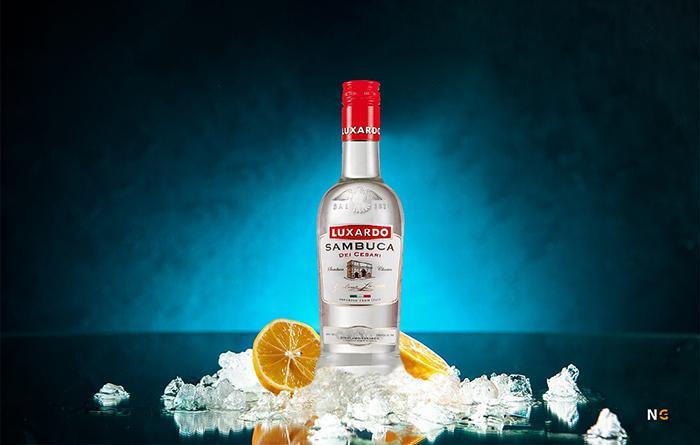
Luxardo Sambuca comes from one of Italy’s most respected distilling families, the same people behind Maraschino liqueur. Their sambuca is crafted with particular attention to botanical balance and offers a slightly more nuanced, less aggressively sweet profile that works exceptionally well in cocktails.
Antica Sambuca is worth seeking out for its range — the company produces white, black, and red versions — as well as a series of flavored sambucas including apple, raspberry, and vanilla. For drinkers who want to experiment beyond the classic anise profile, Antica is one of the better gateways.
Opal Nera is a particularly interesting black sambuca made with Arabica coffee beans in addition to the standard botanicals, which gives it an aromatic complexity that is genuinely unique. It drinks more like an after-dinner sipping spirit than a party shot.
Why Americans Haven’t Fully Embraced It
Sambuca is not perceived as a particularly common drink in the United States, and there are real reasons for that. The American palate has historically been cool on strong licorice and anise flavors — it’s why absinthe remains a niche product here despite its cultural revival, and why ouzo rarely appears outside Greek restaurants. The combination of intense anise and heavy sweetness can be polarizing, especially when sambuca’s first encounter for many Americans is a cheap flaming shot at a bar that isn’t paying attention to how the spirit is supposed to work.
But consumer preferences are shifting. The same premiumization trend driving interest in small-batch bourbon, craft gin, and aged mezcal is beginning to pull American drinkers toward Italian aperitivo culture and the digestif traditions that have been standard in Europe for generations. The global sambuca market’s projected growth rate of 6.3% annually reflects real demand, and craft sambuca brands are emerging to meet a more curious, flavor-forward consumer.
There is also the simple fact that sambuca is one of the most honest spirits on the bar shelf. It does not try to be something else. It tastes like anise, it smells like anise, and it performs the function it was designed for — to settle the stomach and extend the pleasure of a good meal — with remarkable consistency. For a man who takes his drinking seriously, that kind of integrity in a bottle is worth exploring.
Put three coffee beans in a glass, pour two ounces over them, and give it a proper chance. What you might find is what Frank Sinatra, Federico Fellini, and several generations of Romans already knew: sambuca is better than you thought.
Sources: https://chesbrewco.com
Category: Wine