So the night is still young, the cooler needs restocking, or you just realized you forgot to grab a bottle of wine before dinner. Whatever the situation, one question pops up fast: exactly how late can you buy alcohol in Washington? The answer is both simple and layered with nuances that can catch you off guard, especially if you’re new to the Evergreen State or just visiting from somewhere with different rules.
Washington is not your average state when it comes to alcohol. It has one of the most interesting regulatory histories in the country, a privatized liquor market that shocked the nation in 2012, and a tax structure on spirits that leaves every other state in the dust. Getting familiar with how the system works, and when it works, can save you from making a last-minute run only to find locked doors.
You Are Watching: How Late Can You Buy Alcohol In Washington Updated 10/2026
The Bottom Line: Washington’s Official Alcohol Sale Hours
Let’s start with the rule that covers every bar, restaurant, liquor store, grocery store, gas station, and wine shop across the state.
Under Washington Administrative Code (WAC) 314-11-070, alcohol can only be sold between 6:00 AM and 2:00 AM, seven days a week. That window applies to both on-premises establishments (bars, restaurants, taverns) and off-premises retailers (liquor stores, grocery stores, convenience marts). There are no special restrictions on Sundays, no holiday blackout periods imposed at the state level, and no overnight “dry hour” between midnight and morning, except for that hard 2 AM cutoff.
That means last call in Washington is 2 AM, and the earliest you can legally purchase alcohol is 6 AM the same morning. The 20-hour window is generous by many states’ standards, and it applies 365 days a year.
The Washington State Liquor and Cannabis Board (WSLCB, also referred to as the LCB) is the agency responsible for setting, enforcing, and updating these regulations. They oversee every license type in the state, from your neighborhood craft brewery to the big-box grocery chain selling wine next to the cereal aisle.
Where You Can Buy Alcohol in Washington and When
The when matters a lot less if you don’t know the where. Washington is surprisingly flexible about where alcohol can be sold, partly because of a landmark ballot initiative that fundamentally rewrote the rules over a decade ago.
Liquor Stores and Spirits Retailers
Before 2012, the state of Washington ran all liquor stores itself. In November 2011, voters passed Initiative 1183, which privatized spirits sales entirely and closed every state-run liquor store by June 1, 2012. That was a massive shift. Suddenly, private retailers, large grocery chains, and warehouse stores could sell hard liquor.
Today, private liquor stores like Total Wine, BevMo, and independent spirits shops operate across the state. They are permitted to sell until 2 AM under state law, but in practice, most private liquor stores close much earlier. Typical hours for dedicated spirits retailers run from around 9 AM to 9 or 10 PM. You’re not likely to find a BevMo open at 1:45 AM waiting to ring up your whiskey. If late-night spirits are your priority, a 24-hour grocery store with a spirits license is a better bet than a standalone liquor shop.
Grocery Stores and Supermarkets
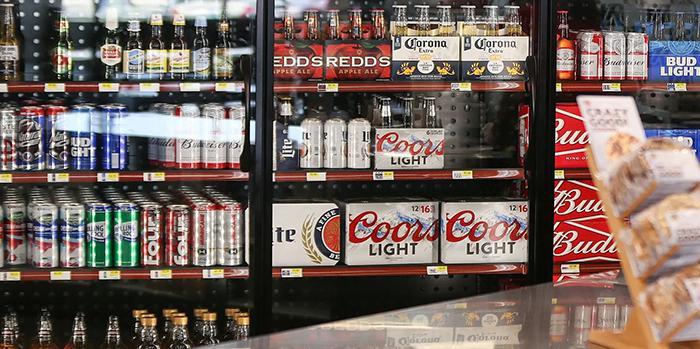
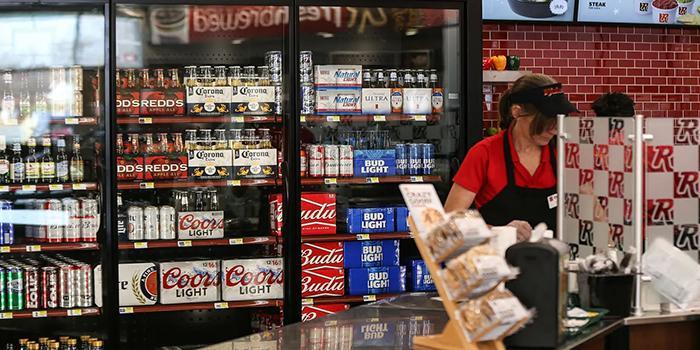
This is where Washington gets genuinely convenient. Grocery stores in Washington can sell beer, wine, and spirits between 6 AM and 2 AM, every day of the week. Large chain stores with the appropriate spirits endorsement, such as Safeway, QFC, Fred Meyer, and Costco, can sell hard liquor on top of beer and wine.
If you’re doing a late-night grocery run at a 24-hour store, you can legally pick up a six-pack or a bottle of bourbon alongside your chips and soda, right up until 2 AM. After that, the alcohol section is off-limits, even if the store itself stays open.
Bars, Restaurants, and Taverns
Bars and restaurants operate within the same 6 AM to 2 AM window, though most don’t open at 6 in the morning. The key thing to know is that last call is 2 AM statewide with no exceptions for on-premises establishments at the state level. When the clock strikes 2:00, service stops. Many bars will announce last call around 1:30 to 1:45 AM to give staff time to process final orders.
If you’re out at a bar-restaurant hybrid, keep in mind that bars attached to restaurants sometimes close when the restaurant does, which could be well before 2 AM.
Gas Stations and Convenience Stores
Yes, you can buy beer and wine at gas stations in Washington. Convenience stores and gas stations with the proper beer and wine license can sell from 6 AM to 2 AM, any day of the week. Beer, wine, and hard ciders are fair game. Whether the specific station near you actually carries alcohol depends on whether they’ve applied for and received a license, which many, though not all, have.
Breweries, Wineries, and Taprooms
Washington is home to a thriving craft scene, with hundreds of breweries and wineries operating across the state. Many allow on-site consumption and sales during their business hours. Taprooms and tasting rooms are popular destinations, but their hours vary widely. State law still caps alcohol service at 2 AM, so even if a taproom is hosting a late event, 2:00 is the cutoff.
How Local Governments Can Change the Rules
Here’s something that trips up even long-time Washington residents: the state’s 6 AM to 2 AM window is the maximum, not the minimum. Local governments, meaning cities, towns, and counties, have the legal authority to impose stricter hours within their jurisdictions.
Under WAC 314-11-070, a local government subdivision may fix later opening hours or earlier closing hours than those specified in the rule, as long as those hours apply uniformly to all licensed premises within that jurisdiction. What they cannot do is extend the hours beyond what state law allows, so no city in Washington can legally permit alcohol sales past 2 AM.
The City of Seattle actually tried to push for extended late-night hours. City officials petitioned the WSLCB to allow local governments to request extended alcohol service beyond 2 AM. The board denied the petition in a 2-1 split decision, citing public safety concerns. For now, 2 AM remains the hard stop everywhere in Washington state.
This means if you’re traveling around the state, it pays to know the local landscape. A smaller town may have earlier closing ordinances. An area with significant community concerns about alcohol may have tighter restrictions on what can be sold and when.
Alcohol Impact Areas: When the Rules Tighten Even Further
Read More : Is Gatorade Frost A Clear Liquid With Updated 10/2026
Washington has a designation called an Alcohol Impact Area (AIA), a geographic zone within a city, town, or county that has been officially recognized as adversely affected by chronic public inebriation or illegal activity linked to alcohol sales or consumption.
Within these areas, the LCB and local authorities can place special conditions or restrictions on off-premises sales, including limiting which types of products can be sold and at what hours. The goal is to reduce the availability of high-alcohol-content, low-cost products that are frequently connected to problematic drinking patterns in those specific zones.
As of current regulations, mandatory Alcohol Impact Areas exist within the cities of Everett, Olympia, Seattle, and Tacoma. If you’re buying alcohol at a store located inside one of these designated zones, the products available and the hours of sale may be more limited than what state law would otherwise allow. Seattle, for instance, has both a Central Core AIA and a North AIA, each with specific boundaries and product restrictions.
If you’re in one of these cities and notice a store carrying a notably restricted selection of cheap, high-proof products, that’s likely the AIA restrictions at work.
The Yakama Nation: Washington’s Only Dry Area
Washington is not technically a dry state, but it does contain one significant dry zone. The Yakama Nation reservation in south-central Washington is completely dry. The Confederated Tribes and Bands of the Yakama Nation banned alcohol sales on their approximately 1.2-million-acre reservation, a decision that has faced legal complexity given the mix of tribal and privately owned land within the reservation’s borders.
The ban covers tribal lands, the tribal casino, convenience stores, and other reservation facilities. For anyone passing through that part of Yakima and Klickitat counties, be aware that you will not find alcohol for sale on the reservation itself. Plan accordingly before you head into that region.
Sunday Sales: No Restrictions Anymore
If you’ve heard that Washington has Sunday alcohol restrictions, that’s outdated information. Washington allows full alcohol sales on Sundays from 6 AM to 2 AM, the same as any other day of the week. This changed from older laws that significantly limited or banned Sunday alcohol sales. There are no state-level restrictions requiring stores to delay opening or close early on Sundays.
Some individual stores may choose to open later on Sundays based on their own business decisions, but that’s a store policy, not a legal requirement.
Cocktails To-Go: A Permanent Perk
One of the more exciting changes in recent Washington alcohol law is the permanent legalization of cocktails to-go. Washington made this a permanent policy in 2023, becoming the 20th state in the country to codify what started as a pandemic-era emergency measure.
Here’s how it works: if you’re ordering food from a restaurant that has the appropriate license, you can add a sealed cocktail, mixed drink, or wine drink to your takeout order. There are conditions, namely:
- You must purchase food with your takeout alcohol
- Drinks must be in sealed containers
- The restaurant must hold the proper licensing endorsement
This is a genuine quality-of-life win for anyone who enjoys cracking open a restaurant-quality cocktail at home with their takeout order. It’s a benefit worth knowing about, especially when you’re ordering delivery from your favorite bar-restaurant, though it’s worth noting that alcohol delivery itself was discontinued.
No More Alcohol Delivery: A 2025 Change That Affects Everyone
If you’ve been relying on alcohol delivery services, this matters a lot. As of July 1, 2025, alcohol delivery is no longer permitted in Washington state. Senate Bill 5448 had temporarily allowed certain businesses to deliver alcohol during and after the COVID-19 pandemic, but that authorization expired and was not renewed.
What this means practically: you cannot order beer, wine, or spirits from a restaurant or liquor retailer and have it brought to your door. Apps and services that offered this functionality in Washington have had to discontinue that feature. You will need to pick up your alcohol in person, either at the store, the restaurant, or via curbside pickup where that’s offered.
Age, ID, and Serving Rules You Should Know
Washington’s legal drinking age is 21, consistent with every other state in the country. However, there are a couple of nuances worth knowing.
Under Washington law, a minor may drink alcohol in a private residence if a parent or legal guardian is present and provides the alcohol. This exception is narrow: it does not apply in bars or restaurants, even if the parent gives permission. The minor must be with their parent, in a home setting.
For identification, state law does not technically require businesses to check ID on every sale, but employees have the right to request a valid ID from anyone, and they absolutely will for anyone who appears to be under 40. A valid government-issued ID, such as a driver’s license, passport, or state ID card, is the standard. If you refuse to show ID when asked, the store has every right to refuse the sale.
Employees between the ages of 18 and 20 can legally sell and handle alcohol in Washington, provided a supervisor who is 21 or older is on the premises. For bars and on-premises service, workers between 18 and 20 can serve beer or wine to tables and open bottles under a Class 13 Servers permit, but cannot mix drinks or draw beer from a tap. Bartenders who are 21 or older and hold a Class 12 Mixologist permit handle the mixing and tap work.
All alcohol servers in Washington must complete MAST (Mandatory Alcohol Server Training) within 60 days of being hired.
Washington’s Alcohol Tax: You’re Paying the Highest Rate in the Nation
If you’ve ever felt like your bottle of spirits is disproportionately expensive in Washington compared to neighboring Oregon or Idaho, you’re not imagining it. Washington levies the highest excise tax on distilled spirits of any state in the nation, a distinction it has held for well over a decade.
Here’s a snapshot of the tax landscape:
| Alcohol Type | Washington Excise Tax | Notes |
|---|---|---|
| Distilled Spirits | $36.98 per gallon | Highest in the U.S. |
| Wine | $0.87 per gallon | Standard rate |
| Beer | $0.26 per gallon | Standard rate |
| Spirits Sales Tax (Consumer) | 20.5% | On top of excise |
| Spirits Sales Tax (On-Premises) | 13.7% | Restaurants, bars |
For context, the second-highest spirits excise tax belongs to Oregon at approximately $22.85 per gallon, meaning Washington’s rate is roughly 60% higher than its nearest competitor. Wyoming and New Hampshire, by contrast, have some of the lowest effective spirits taxes in the country.
Washington achieves this towering figure through a combination of three separate taxes on spirits: a spirits sales tax, a spirits liter tax, and the standard excise tax. The result is that every cocktail, every bottle of vodka, and every pour of whiskey in Washington carries a noticeably heavier tax burden than in almost any other state you could visit.
Read More : What Is Yogurt Soda Updated 10/2026
This has real-world effects. Local craft distillers have publicly noted that rising prices are pushing consumers away from Washington-made spirits, reducing sales and hurting revenue for small producers even as the state collects less overall from spirits taxes than it once did because volume is declining.
Open Container Laws and Drinking in Public
Just because you can buy alcohol late into the evening doesn’t mean you can drink it wherever you please. Washington has clear rules about where alcohol consumption is permitted.
Drinking alcohol in public is prohibited in Washington. This includes parks, sidewalks, parking lots, and public transit. Some exceptions exist for licensed outdoor event areas and specific permitted events, but the general rule is: public drinking is not allowed.
Open container laws apply in vehicles as well. It is illegal for both drivers and passengers to possess an open container of alcohol in a vehicle. An “open container” means any container with a broken seal or one that has been partially consumed. Alcohol being transported should be in a sealed, unopened container in the trunk or in a location inaccessible to both driver and passengers. Breaking this law can result in fines up to $250, community service, or jail time if a minor passenger was involved.
The BAC limit for driving in Washington is .08%, and for drivers under 21, it drops to just .02%, which is effectively zero tolerance. Refusing a breathalyzer test results in automatic license suspension and enhanced DUI penalties, treated the same as if you had tested over the legal limit.
How Washington Compares to Neighboring States
It helps to have context when you’re traveling or just curious how the Evergreen State stacks up.
| State | Last Call | Sunday Sales | Notable Difference |
|---|---|---|---|
| Washington | 2:00 AM | Yes, full hours | Highest spirits tax in U.S. |
| Oregon | 2:30 AM | Yes | State-controlled liquor stores |
| Idaho | 1:00 AM | Restricted | Earlier last call |
| California | 2:00 AM | Yes | Similar hours, lower taxes |
| Nevada (Las Vegas) | No closing time | Yes | 24-hour alcohol sales |
Oregon’s 2:30 AM last call is notably more generous than Washington’s 2:00 AM. Idaho’s 1:00 AM cutoff makes Washington feel relatively permissive by comparison. Nevada, with its casino-driven culture, has no statewide closing time for alcohol sales in many jurisdictions.
Growlers, Craft Beer, and Fill Stations
Washington has a robust craft beer culture, and growlers are perfectly legal throughout the state. A growler is a resealable jug, typically 32 or 64 ounces, that can be filled with draft beer from a taproom or participating retailer.
Bars, breweries, restaurants, and certain grocery stores can fill growlers during their normal business hours, subject to the standard 6 AM to 2 AM rule. Some locations fill only their own branded growlers, while others will fill any clean growler you bring in. Washington law allows employees who fill growlers at grocery stores to do so under the same MAST training requirements as other alcohol handlers.
Tips for Buying Alcohol Late in Washington
If you need to make a late-night purchase and want to avoid frustration, here are some practical points to keep in mind:
Know your store. Chain grocery stores with 24-hour operations are your best bet for late-night alcohol purchases, since they’re open until 2 AM by state law and many operate around the clock.
Don’t wait until 1:55 AM. Retailers stop ringing up alcohol at 2:00 AM sharp. Staff are trained and required to cut off sales exactly at that moment. Arriving in the final minutes does not guarantee you’ll complete your purchase.
Check the AIA status of your neighborhood. If you’re shopping in parts of Seattle, Everett, Tacoma, or Olympia, the product selection at off-premises retailers may be more restricted than you’d expect, particularly for high-alcohol-content, low-cost beverages.
Spirits-specific stores close earlier. If you need a particular bottle of spirits late at night, a 24-hour grocery chain with a spirits endorsement is a more reliable destination than a standalone liquor retailer, most of which close by 9 or 10 PM regardless of what state law permits.
No delivery. As of July 2025, alcohol cannot be delivered to your home in Washington. Pick up only.
Cocktails to-go are real. If you’re ordering from a licensed restaurant, ask whether they offer sealed cocktails with takeout. You might be surprised how many do.
Recent Changes and What to Watch in 2025 and Beyond
Washington’s alcohol laws have been in motion. The July 1, 2025 end of alcohol delivery was the biggest recent shift, catching many consumers off guard after a few years of growing used to having beer or wine show up at the door.
The WSLCB updated MAST training requirements in 2025 to provide clearer guidance on which employees need certification and when. New provisions also allow expanded outdoor alcohol service during special events, with major civic campuses in cities like Seattle gaining permissions tied to events such as the FIFA World Cup.
Seattle’s effort to push for extended bar hours beyond 2 AM was officially rejected by the WSLCB in a split decision, maintaining the statewide hard cutoff for the foreseeable future. That fight is not entirely closed at the political level, so it’s worth keeping an eye on as urban advocacy groups continue to push for later last call times in line with cities like Portland or Chicago.
Conclusion
There’s something quietly telling about a state that holds the record for the highest spirits tax in the country while also maintaining one of the more flexible daily purchase windows in the Pacific Northwest. Washington doesn’t make drinking cheap, but it does make the legal framework for buying and enjoying a cold beer, a glass of local Riesling, or a well-crafted cocktail refreshingly clear.
The 6 AM to 2 AM rule is your anchor. Everything else, the local ordinances, the AIA restrictions, the private store hours, the dry reservation, and the new cocktail-to-go culture, layers on top of it. If you know that window and stay aware of where you are in the state, you’ll never be caught empty-handed when the sun goes down over the Cascades.
Drink smart, drink within the hours, and maybe pour a local craft spirit while you still can.
Sources: https://chesbrewco.com
Category: Drink