If you’ve ever scanned the back shelf of a well-stocked bar, you’ve likely spotted that distinctive silhouette bottle with Napoleon’s profile on the label. That’s Courvoisier, one of the most recognized names in the spirits world and the cognac that emperors, royalty, Charles Dickens, and hip-hop royalty have all raised a glass of. But what exactly is Courvoisier, why does it carry so much prestige, and should you be pouring it into your cocktail or sipping it straight? Whether you’re a craft beer enthusiast curious about branching out, a cocktail lover looking for a new base spirit, or a wine drinker ready to explore something a little more complex, this guide covers everything you need to know.
What Is Courvoisier, Exactly?
Courvoisier is a brand of cognac, a specific type of brandy produced in the Cognac region of southwestern France. To understand what makes Courvoisier special, you first need to understand the spirit it belongs to.

Cognac is not just any brandy. It is a double-distilled, barrel-aged grape spirit that must be produced within a legally defined geographic area in the Charente department of France. The production process, the grape varieties, the distillation method, and the aging requirements are all tightly regulated by the Bureau National Interprofessionnel du Cognac (BNIC). If a brandy does not meet every one of those requirements, it simply cannot call itself cognac, no matter how good it tastes.
Courvoisier sits at the very top of this exclusive world. It is one of the “Big Four” cognac houses, alongside Hennessy, Rémy Martin, and Martell. Together, these four houses account for roughly 85% of all global cognac sales. Of the four, Courvoisier is the youngest and the smallest in terms of production volume, but calling it “small” is purely relative: the house exported approximately 1.4 million nine-liter cases of cognac in 2019 alone. It is also, perhaps, the most historically storied of the four, carrying a Napoleon Bonaparte connection that has defined the brand’s identity for over two centuries.
Today, Courvoisier is owned by the Campari Group, which completed its acquisition in May 2024. Its headquarters remain in the town of Jarnac, located in the Charente region of France, roughly ten minutes from the town of Cognac itself.
A History Unlike Any Other: Napoleon, Emperors, and the Eiffel Tower
The story of Courvoisier is practically a history of France in a bottle.
It begins in 1796, when Emmanuel Courvoisier and Louis Gallois (who happened to be the mayor of the Parisian suburb of Bercy) established a wine and spirits company on the outskirts of Paris. Because the business sat outside the city walls, it wasn’t subject to city taxes, giving the founders an early commercial advantage. More importantly, Gallois had cultivated connections with the upper reaches of Napoleon Bonaparte’s imperial army, relationships that would soon prove historic.
In 1811, the Emperor Napoleon himself paid a visit to the Courvoisier and Gallois warehouses in Bercy. The visit was documented in a painting by artist Etienne Bouhot. Legend holds that Napoleon was so impressed by the quality of the cognac that he ensured several barrels came with him on his military campaigns and, later, took a supply with him to the island of St. Helena during his exile. The English officers aboard the ship were reportedly captivated by the spirit, naming it “The Cognac of Napoleon”, a nickname that has never gone away.
It is worth noting that Napoleon Bonaparte died in 1821, before Felix Courvoisier and Jules Gallois (sons of the original founders) formally merged the two businesses and established the Courvoisier Company in 1834. Regardless, the emperor’s documented visit and his association with the cognac are well-supported by historical record, and the brand’s connection to the Napoleon family only deepened from there.
In 1869, Napoleon III personally bestowed upon the house the prestigious title of “Official Supplier to the Imperial Court”, a distinction still displayed at the Courvoisier museum in Jarnac today.
The 19th century continued to be kind to Courvoisier. A stash of 216 bottles of Courvoisier cognac was found in Charles Dickens’ cellar when the novelist died, each initialed “F. Courvoisier,” making it the largest quantity of any single spirit in his collection. In 1889, Courvoisier was selected as the cognac of choice for the opening celebrations of the Eiffel Tower, earning the brand the prestigious Médaille d’Or international prize.
The English Simon family took over ownership in 1909 and are credited with building the Courvoisier brand as it is widely recognized today. They adopted the slogan “The Brandy of Napoleon” and, in 1950, introduced the Josephine bottle, named after Napoleon’s first wife. That distinctive silhouette, with a thin neck and wide base, has become one of the most recognizable bottle shapes in the spirits world. In 1951, the iconic Josephine bottle officially launched, and its shape, whether it mimics Josephine’s love of corsets or an inverted replica of early brandy glasses, is still the subject of charmed debate.
Read More : Types Of Irish Liquor Updated 09/2026
The company passed through several more hands: Canadian company Hiram Walker acquired it in 1964, followed by Allied Domecq in the 1990s, then Beam Global (later Beam Suntory), and most recently Campari Group in 2024.
In 1983, Courvoisier became the first cognac ever to receive the Prestige de la France, one of the highest honors bestowed by the French government, and to this day it remains the only cognac to have received it.
How Courvoisier Is Made: Terroir, Grapes, and the Art of Blending
To appreciate what’s in your glass, it helps to understand how it got there.
Cognac production starts in the vineyard. The grapes used must include at least 90% from three permitted varieties: Ugni Blanc, Folle Blanche, and Colombard. Ugni Blanc dominates production across all major cognac houses because of its high acidity and low alcohol content, qualities that translate beautifully after distillation and aging.
Courvoisier sources its eaux-de-vie (literally “water of life,” the raw distilled grape spirit) from four of the Cognac region’s finest growing zones, called crus: Grande Champagne, Petite Champagne, Borderies, and Fins Bois. The word “Champagne” here has nothing to do with sparkling wine; it refers to the chalky, limestone-rich soils of specific subregions that produce exceptionally aromatic eaux-de-vie.
One feature that truly sets Courvoisier apart from its Big Four peers is its emphasis on the Borderies cru. Borderies is the rarest terroir in the entire Cognac region, covering only 4% of the total growing area. Cognacs made from Borderies grapes are known for their distinctive floral, violet, and iris notes, which lend Courvoisier its signature aromatic elegance. This is why seasoned tasters often describe Courvoisier as lighter and more floral than Hennessy or Rémy Martin.
The harvest season begins in October, followed by distillation from November through March. Courvoisier’s eaux-de-vie are aged in barrels handmade from 200-year-old oak sourced from the Tronçais forest in central France. Tronçais oak is prized for its tight grain, which imparts subtle vanilla, spice, and wood notes without overwhelming the delicate fruit character of the cognac.
What makes Courvoisier uniquely unusual among the Big Four is this: it controls every step of the production process but does not own its own distilleries or any vineyards. Instead, it works with a curated network of smaller, family-run producers who have supplied the house for generations. This allows the house to adjust its process for different vintages and regional variations in eaux-de-vie, something its rivals do not do to the same degree.
The master blender at Courvoisier is a position of enormous artistry. Patrice Pinet held the role from 2009, having joined the house in 1989. Blending involves assembling dozens or even hundreds of individual eaux-de-vie of different ages and origins into a final expression that is consistent, complex, and recognizably “Courvoisier” year after year.
Decoding the Bottle: The Courvoisier Product Lineup
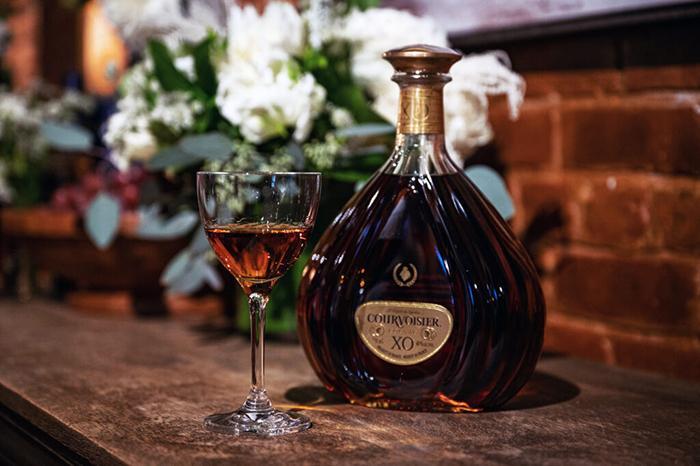
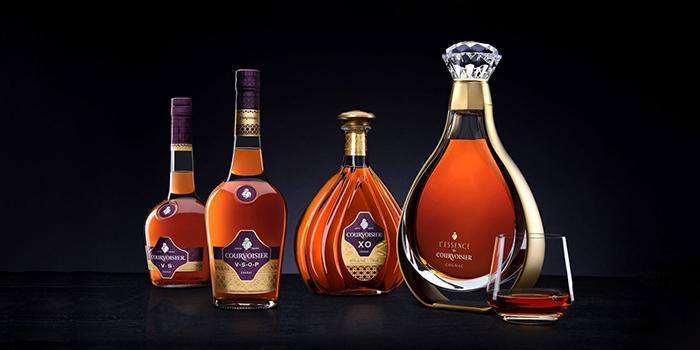
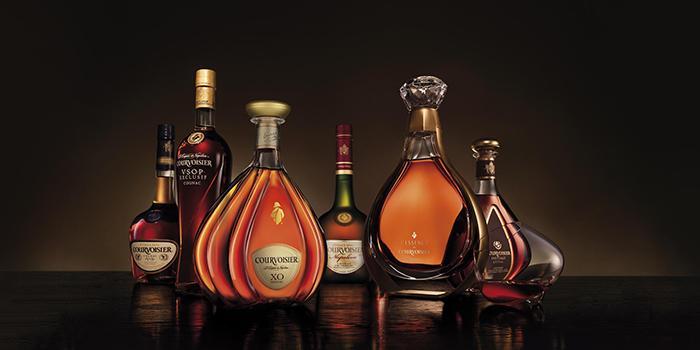
Walk into any well-stocked American liquor store and you’ll find several expressions of Courvoisier on the shelf. Here’s what those letters and designations actually mean:
VS (Very Special): The youngest expression, made from eaux-de-vie aged for a minimum of two years, though typically between three and seven years. Courvoisier VS delivers fresh fruit and floral notes with a hint of subtle oak. It’s the most approachable and affordable entry point, retailing around $30 to $35 for a 750ml bottle. It’s an ideal mixer for cocktails.
Read More : What Does Baileys Taste Like Updated 09/2026
VSOP (Very Superior Old Pale): The youngest eaux-de-vie in a VSOP blend must be aged at least four years, though the master blender often incorporates significantly older cognacs to add depth. Courvoisier VSOP is celebrated for its smooth texture and elegant bouquet, with notes of peach, toasted almond, and jasmine. It retails in the $40 to $50 range and is versatile enough to sip neat, over ice, or in cocktails.
VSOP Exclusif: A more refined VSOP expression aged approximately 12 years, blending eaux-de-vie from all four premier crus. Popular with bartenders and mixologists, it was a co-winner of tasting competitions and retails slightly above the standard VSOP.
Napoleon: An unofficial but widely understood classification that falls between VSOP and XO. Courvoisier was widely accepted as the first cognac to establish the Napoleon standard. This expression sits in the $70 to $90 range.
XO (Extra Old): As of 2018, XO regulations require the youngest eaux-de-vie to be aged at least ten years. In practice, XO blends often include cognacs aged 15 to 25 years or more. Courvoisier XO is described by tasters as lighter and more approachable than other Big Four XOs, with a delicate bouquet of fruit, flowers, and subtle spices. Expect to pay $120 to $150 for a 750ml bottle, making it one of the more competitively priced XOs among the Big Four.
Josephine: The crown jewel of the standard Courvoisier lineup, this expression bottles in the iconic Josephine silhouette and reaches into truly premium territory, with certain expressions retailing for $3,500 or more. It is a blend of over 100 rare eaux-de-vie from Grande Champagne and Borderies, including special Paradis reserves drawn from the oldest and most precious stock in the house’s cellars.
L’Essence de Courvoisier: One of the most rarefied expressions in the entire cognac world, drawing from very old eaux-de-vie and retailing at prices approaching £2,000 and beyond.
Here is a quick comparison of the core Courvoisier expressions:
| Expression | Minimum Age | Typical Flavor Notes | Approx. U.S. Price (750ml) | Best Enjoyed |
|---|---|---|---|---|
| VS | 2 years (typically 3-7) | Fresh fruit, floral, light oak | $30 to $35 | Cocktails, over ice |
| VSOP | 4 years (often older) | Peach, almond, jasmine, toffee | $40 to $50 | Neat, on ice, cocktails |
| VSOP Exclusif | ~12 years | Chocolate, caramel, vanilla, fruit | $55 to $65 | Neat or premium cocktails |
| Napoleon | ~6 to 10 years | Dried fruit, spice, light wood | $70 to $90 | Neat or with a splash of water |
| XO | 10+ years (often 15-25) | Fruit, florals, subtle spice, delicate wood | $120 to $150 | Neat, after dinner |
| Josephine | Very old reserves | Rich, complex, layered fruit and flowers | $3,500+ | Neat, for special occasions |
How Does Courvoisier Taste?
The flavor profile of Courvoisier is shaped by two defining characteristics: its Borderies cru influence and its Tronçais oak aging.
At the VS level, expect bright, youthful aromas of fresh fruit, ripe pear, and spring blossoms. The palate brings caramel and vanilla with just a hint of spice. There is a freshness here that makes it an excellent cocktail ingredient. Some drinkers note a slightly sharp finish at this level, which is typical of younger cognacs.
The VSOP smooths out considerably, introducing toasted almond, peach, and jasmine, with a rounder mouthfeel and a longer, more satisfying finish. The floral character that defines the house style becomes more apparent at this level.
At XO, the experience deepens dramatically. Tasters consistently describe Courvoisier XO as the most approachable of the Big Four XOs, lighter and brighter than Hennessy or Martell XO, with a drier, cleaner profile. It dispenses with the heavy, richer, more muscular notes you might find in competitor XOs, making it an ideal entry point for someone exploring aged cognac for the first time.
Courvoisier vs. The Big Four: How Does It Compare?
For American drinkers deciding which cognac house to explore, here’s a side-by-side breakdown:
| House | Founded | Style | Signature Character | Best Known For |
|---|---|---|---|---|
| Hennessy | 1765 | Bold, rich | Woody, nutty, vanilla-forward, robust | World’s #1 selling cognac; dominates the U.S. market |
| Martell | 1715 | Elegant, delicate | Fruity, floral, nutty, refined | Oldest of the Big Four; lightest in style |
| Rémy Martin | 1724 | Full-bodied, complex | Fruity, woody, lees-distilled richness | Exclusively Fine Champagne grapes; no VS expression |
| Courvoisier | 1828 | Floral, approachable | Violet, iris, lighter fruit, clean | Napoleon’s cognac; Borderies specialist; hip-hop icon |
Key insight: If you love big, oak-forward, bold flavors in your whiskey or beer, Hennessy’s VS may suit you best. If you prefer something lighter, more floral, and elegant, Courvoisier is your house. If complexity and terroir depth are what you’re after, Rémy Martin’s Fine Champagne expressions deliver.
Sources: https://chesbrewco.com
Category: Wine