You’ve probably seen that bottle. Tall, oddly elegant, shaped like something a French count might have kept in his cellar during the Belle Époque. Maybe a bartender poured a splash of it into your cocktail without you asking. Maybe you noticed it sitting next to the bourbon and the gin at a craft bar and wondered what exactly it was doing there. St. Germain is one of those bottles that looks ancient but is actually younger than most smartphones. And once you understand what it is and what it can do, you’ll wonder how you ever built cocktails without it.
This isn’t a liqueur for people who don’t drink. It’s for the guy who already has a well-stocked home bar, who knows the difference between rye and bourbon, and who wants to understand why bartenders across America reach for this particular bottle constantly. Let’s break it down from the ground up.
You Are Watching: What Is St Germain? The French Liqueur Every Serious Drinker Needs to Know Updated 03/2026
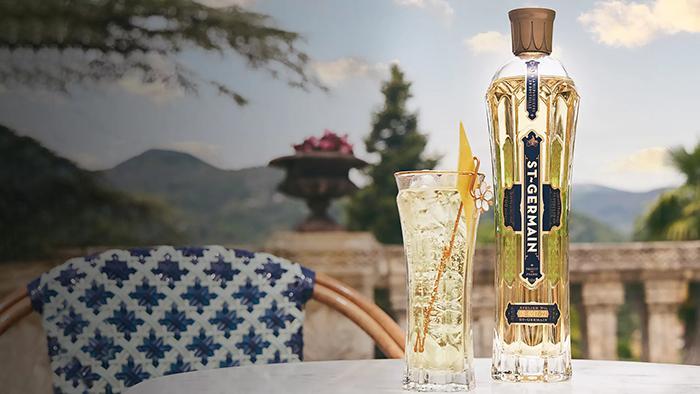
What Is St. Germain, Exactly?
At its core, St. Germain is a French elderflower liqueur, specifically the world’s first commercially produced elderflower liqueur, launched in 2007. It’s made from the flowers of the Sambucus nigra elderberry tree, hand-harvested once a year in a narrow three-to-four-week window in late spring in the foothills of the French Alps, in the Haute-Savoie region.
The flavor is genuinely unlike anything else behind a bar. It has hints of pear, peach, and grapefruit, but this description doesn’t really do it justice because elderflower has a distinctive and subtle taste all of its own. Think: sweetly floral, lightly citrusy, delicate but present. It’s not perfume-y or cloying. It’s the kind of complexity that makes the person sitting next to you ask, “What is that?” after tasting your drink.
St. Germain has an ABV of 20% and a higher sugar content than leading spirits like bourbon, rum, or gin. That lower proof means it’s a modifier, not a base spirit. Its job is to enhance, not to dominate.
The Story Behind the Bottle
The history of St. Germain is actually a pretty good underdog story, which makes it more interesting than most bottles on your back bar.
The brand was created by Robert Cooper, the son of Chambord inventor Norton “Sky” Cooper. The Cooper family has been heavily involved in the spirits industry since the early 1900s, when Maurice J. Cooper, a merchant of imported food and beverage, partnered with the Charles Jacquin et Cie cordial business. The partnership, finalized in 1933, helped transform Jacquin’s into one of the world’s leading producers of liqueurs and cordials.
In the early 2000s, Robert Cooper was visiting a London bar where he ordered a cocktail that featured elderflower syrup as a sweetening agent. Though he had never viewed elderflower as a cocktail ingredient, the floral concoction changed his perspective.
When he went back to his father with the idea of building an elderflower liqueur from scratch, the reaction was less than enthusiastic. His father was hesitant to allow Robert to use their company’s resources to produce the spirit. When Cooper responded by leaving the family business behind, his father allegedly told him, “I’ll hire you back in a year when you fail.” As his luck would have it, he did not fail. Instead, a year after its release, St. Germain was already a staple on bartenders’ back bars.
The timing was perfect. At the same time St. Germain Elderflower Liqueur was first hitting markets, cocktails and cocktail bars were undergoing a massive renaissance in major cities like New York. Two such cutting-edge cocktail bars (PDT and Death & Co.) had just opened, and bartenders at each were itching to experiment with new ingredients. Cooper had essentially created the right product at exactly the right moment.
The New York Times called it something remarkable for the industry: St. Germain had “almost single-handedly invigorated the moribund liqueur category.”
In 2013, the company was sold to Bacardi, and Robert Cooper agreed to work with Bacardi as a “brand guardian” and spokesperson. In 2016, Robert Cooper died at the age of 39. His death at such a young age was a genuine loss to the spirits world. The brand he built has outlasted him and continues to be one of the most recognized liqueurs in modern bartending.
How St. Germain Is Actually Made
This is where the bottle earns its price tag.
The elderflowers are handpicked usually early in the morning, when the temperature is cooler. This ensures the flowers are just opening and the aroma and flavor of the blossoms are at their peak. The process is a labor of love and delicate precision, as only the highest quality blossoms will find their way into a bottle of St. Germain.
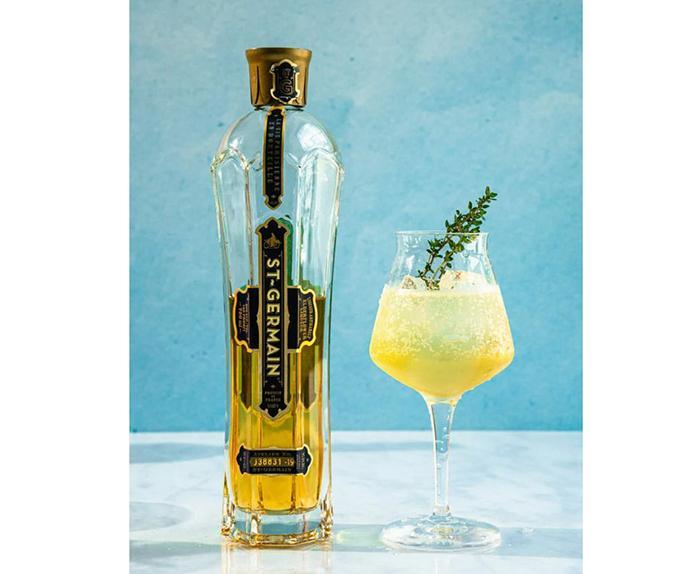
From the moment of picking, speed becomes everything. The hand-picked elderflower petals are macerated in grape neutral spirit within 48 hours of being picked. Any delay and the delicate aromatic compounds start breaking down, taking the flavor with them. Local French farmers in the Haute-Savoie region handle the harvest, and historically, petals are often transported by bicycle to collection points to avoid damaging the petals and thus affecting the flavor.
Each bottle contains the refreshing essence of up to 1,000 fresh elderflowers, each bursting with a fresh, natural sweetness and hints of honeysuckle and pear.
After maceration, the elderflower-infused spirit is blended with 180 grams of sugar per litre. The resulting liquid is clear and pale golden, with clean and delicately fragrant integrated fruit notes of peach, pear, grapefruit, and tinned lychee. Lightly syrupy on the palate with floral elderflower, balanced with assertive citric acidity and lemon zest. Notes of lemon meringue pie, pear, passion fruit, and sweet pastry with a long elderflower finish with gooseberry and lingering citric acidity.
St. Germain gets its signature golden hue from pollen and contains no artificial coloring or flavoring. That golden color you see in the bottle isn’t added dye. It’s the natural result of thousands of pollen-loaded blossoms being macerated in spirit.
Each bottle is also numbered with the year the petals were collected, making it something of a vintage product. Not unlike wine, it.
Why Bartenders Call It “Bartender’s Ketchup”
If you’ve spent time around serious cocktail bars, you’ve heard this phrase. St. Germain quickly became a staple in craft cocktail bars around the world. So much so that the liqueur earned the nickname “bartender’s ketchup.”
The idea is simple: just as ketchup makes almost any food taste better, St. Germain makes almost any cocktail better. Splash it into a whiskey sour. Add it to your gin and tonic. Pour a small measure into a glass of Champagne. It works, almost without exception.
Read More : What Is Chartreuse Updated 03/2026
According to Tess Anne Sawyer, a St. Germain brand ambassador, “You can make any cocktail delicious with the addition of St. Germain. It truly is an incredibly diverse flavor profile that mixes well with any spirit.”
That said, not every professional agrees the ketchup comparison does it justice. According to mixologist Vincenzo Marianella, this comparison, though widely used, does not really capture its premium quality. Fair point. There’s nothing quite like premium ketchup either, but you get the idea.
St. Germain’s lower ABV also lends itself to modern tastes, particularly the growing demand for lighter, low-alcohol cocktails like spritzes. This trend is part of a broader shift in drinking culture, where people are increasingly seeking out drinks that are refreshing, easy to sip, and less likely to result in overconsumption.
The Flavor Profile: What You’re Actually Tasting
Understanding what’s happening on your palate when you drink St. Germain makes you a better bartender. Or at least a more informed one.
The base note is elderflower, obviously. But elderflower is not a single flavor. It has a rose-like aroma with citrus, pear, lychee, tropical, and even grassy notes. It’s delicate but layered. That’s why it pairs with such a wide range of spirits. Each spirit pulls out a different facet of the elderflower.
With gin: The botanicals in gin and the floral character of St. Germain amplify each other. Juniper becomes more aromatic. The citrus peel notes in gin harmonize with the grapefruit and lemon in St. Germain. This is probably the most natural pairing.
With bourbon or rye whiskey: The sweetness of St. Germain fills in where corn-forward bourbon can be blunt, and the citrus cuts through the oak. It softens whiskey without hiding it. Irish mixologist Ben Goodwin, known as The Rusty Bartender, highlights its transformative effect: “It has the ability to change a drink just by adding a little.”
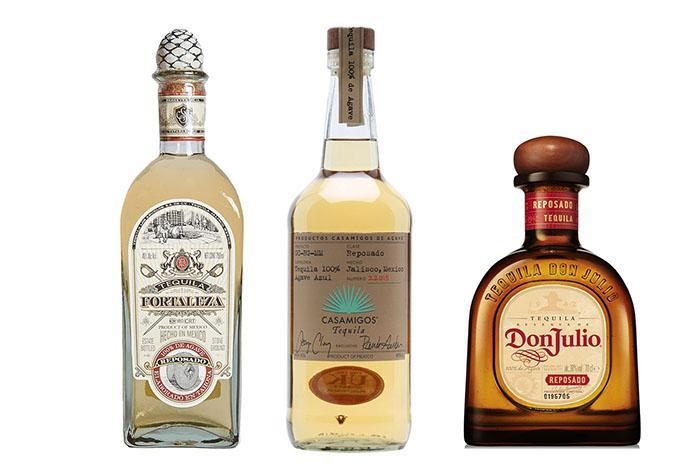
With tequila: The floral notes contrast beautifully against agave’s earthiness. A small pour of St. Germain in a margarita elevates it from standard to something worth paying $18 for at a nice bar.
With Champagne or sparkling wine: St. Germain mixes well with all white fruits, particularly apple, pear, and white grapes. The acidity of white wine also balances St. Germain, and the grassy, gooseberry notes of Sauvignon Blanc work particularly well with the delicate floral notes of the liqueur.
With vodka: Vodka’s neutral character is essentially a blank canvas. St. Germain becomes the flavor. This is the easiest and most approachable combination for someone just getting started with the liqueur.
The Bottle Itself: Why It Looks the Way It Does
Before you even taste what’s inside, the bottle makes an impression. The name St. Germain is a tip of the proverbial hat to the historic Parisian cultural district of St. Germain-des-Prés, made famous by the literary icons and artists who lived and worked there during the Belle Époque. The bottle’s design is an elegant testament to the Art Deco movement of the same period.
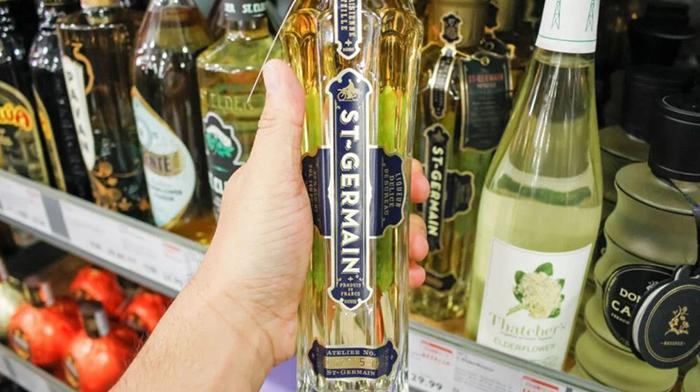
It looks like something excavated from a Hemingway-era Paris café. Tall, narrow, with ridged glass that catches light. People have been known to keep empty bottles just because they look good on a shelf. The design is deliberate: it communicates craftsmanship and European heritage even before the cap comes off.
The irony, of course, is that it’s a product born in a London bar in 2001 and launched from New York in 2007. With its beautiful vintage bottle, it looks like a liqueur that’s been produced for centuries by French monks like Chartreuse. But turns out, it’s a lot more modern than you might expect.
How to Drink St. Germain: Practical Guide for the Home Bar
You don’t need a $15 cocktail at a trendy bar to get the most out of St. Germain. Here’s how to use it effectively at home.
The St. Germain Spritz (The Signature)
This is the cocktail the brand was essentially built around. The Hugo is a modern classic and variation on the signature St. Germain Spritz, a refreshing Italian aperitivo made with St. Germain elderflower liqueur, Prosecco, sparkling water, and mint. It’s extremely easy to make, crushingly refreshing on a hot afternoon, and genuinely impressive to serve to guests who’ve never had it.
- 2 oz St. Germain
- 3 oz Prosecco or Champagne
- 2 oz sparkling water or club soda
- Fresh mint, lemon wheel to garnish
Build over ice in a wine glass. Stir gently. Done.
The French Gimlet
Take a classic gin gimlet (gin, lime, a touch of sweetener) and replace the simple syrup with St. Germain. The elderflower cuts through the lime’s sharpness and adds a layer of complexity that turns a $5 cocktail into something that tastes like you planned it. Use 2 oz gin, ¾ oz St. Germain, and ¾ oz fresh lime juice. Shake with ice, strain into a chilled coupe.
St. Germain Old Fashioned
Pour 2 oz bourbon, ½ oz St. Germain, and 2 dashes Angostura bitters over a large ice cube. Stir for 30 seconds. Express an orange peel over the top and drop it in. The elderflower plays with the vanilla and caramel notes of the bourbon in a way that feels like the cocktail was always meant to be made this way.
The Bourbon-Elderflower Highball
Read More : What Is Southern Comfort? The Complete Guide Every Drinking Man Should Read Updated 03/2026
One of the most drinkable and underrated combos: 2 oz bourbon, ½ oz St. Germain, ½ oz fresh lemon juice, topped with ginger beer. Add 2 dashes Angostura bitters floating on top. Cold, bubbly, complex. Perfect for warm weather or watching a game.
The Elderflower Margarita
Replace the triple sec in a standard margarita with St. Germain. Use 2 oz blanco tequila, 1 oz St. Germain, and ¾ oz fresh lime juice. Shake, strain over a salted rim. The floral element softens the tequila edge and makes it far more interesting than your standard bar margarita.
How Much Does St. Germain Cost and Where Do You Get It?
St. Germain is quite expensive, with prices hovering around the $40 mark. For a 750ml bottle, that puts it firmly in the premium tier for liqueurs, though it’s cheaper than many aged spirits. Given how little you use per drink, typically ½ oz to 1.5 oz, a bottle lasts a long time, which makes the math work out better than it first appears.
You can find it at most well-stocked liquor stores, Total Wine, BevMo, and online through retailers like Drizly or ReserveBar. It is widely distributed across the U.S., which wasn’t always the case. In the early days after its 2007 launch, supply was extremely limited because production is capped by the annual harvest window.
How to store it: Keep it in a cool, dark place. No refrigeration required before opening. As a natural liqueur made with fresh flowers, the color may slowly change over time due to natural oxidation caused by light and air. Consuming St. Germain within 6 months after opening is recommended, keeping the bottle in a dry, cool space and away from bright light.
If you open a bottle and you’re not using it regularly, store it in the refrigerator after the first pour. The flavor deteriorates faster than many spirits because there are no artificial preservatives.
Is St. Germain Worth It for a Home Bar?
The honest answer: yes, if you actually use it.
Unlike a lot of specialty bottles that gather dust after one cocktail experiment, St. Germain earns its place because of that versatility. It doesn’t require a specific recipe or a particular spirit. This is a very versatile spirit that mixes with everything from Champagne and white wine as well as gin, vodka, and whiskey.
If your home bar currently has whiskey, gin, vodka, and some basic citrus, adding a bottle of St. Germain immediately expands your cocktail range without requiring additional purchases. It functions as a sweetener (replacing simple syrup), a flavor modifier, and a bridge ingredient that ties disparate flavors together.
Its versatility makes it a great tool for the world’s best bartenders and a must-have in your home bar. That’s marketing copy, obviously, but in this case it happens to be accurate.
The one caveat: if you only drink straightforward, no-frills drinks: beer by the can, bourbon straight. St. Germain isn’t going to add much to your life. It’s a cocktail ingredient, and a fairly specialized one at that. But if you mix drinks even occasionally, this is one of the better investments you can make in a single bottle.
Alternatives to St. Germain
If $40 feels steep or you can’t find it, there are options.
St. Elder by New Holland Spirits is the most commonly cited budget alternative, retailing around $15–20. The flavor is less complex and slightly more one-dimensional, but it works well in spritz-style drinks.
Drillaud Elderflower Liqueur is another affordable option found at Total Wine and similar stores.
Bols Elderflower is available at some specialty retailers and hits a middle ground in both price and flavor.
Elderflower liqueur is NOT the same as elderflower syrup or elderflower cordial. Both the syrup and cordial contain no alcohol. If a recipe calls for St. Germain and you use elderflower cordial instead, you’re adding flavor without ABV. It can work in some contexts, but you’ll need to adjust the sweetness level in your recipe and the overall balance of the drink will shift.
The Cultural Footprint of St. Germain
It would be easy to dismiss St. Germain as a boutique product that got lucky with timing, but its cultural reach is broader than that.
St. Germain is now one of the most commonly used liqueurs in the world and even garnered media attention after Prince Harry and Meghan Markle announced their lemon elderflower wedding cake. That royal endorsement, even indirectly, pushed elderflower into mainstream American consciousness in a way no advertising campaign could have managed.
More practically, the rise of the Hugo Spritz across Europe and now the U.S. has been a major driver of St. Germain’s visibility. The Hugo originated in 2005 in South Tyrol, Italy, created by bartender Roland Gruber using elderflower syrup, Prosecco, sparkling water, and mint. As elderflower became synonymous with St. Germain globally, the brand became the default ingredient in American versions of the drink.
The brand’s recognition in professional circles is also significant: St. Germain won the Grand Gold Medal at the Monde Selection in 2007, 2008, 2009, 2010, and 2012, and the “Chairman’s Award” in the Liqueur category at the Ultimate Spirits Challenge 2010. Five Grand Gold medals in six years is a level of sustained critical recognition that very few spirits of any kind achieve.
The Bottom Line
St. Germain is a French elderflower liqueur made from hand-harvested blossoms in the Haute-Savoie region of France, bottled at 20% ABV, and priced around $40 for a 750ml bottle. It was invented in 2007 by Robert Cooper, earned the nickname “bartender’s ketchup” for its near-universal cocktail compatibility, and was eventually acquired by Bacardi in 2013. Up to 1,000 elderflower blossoms go into every single bottle, the harvest lasts only three to four weeks per year, and no artificial coloring or flavoring is used.
For the man who takes his drinking seriously, it’s one of those rare additions that doesn’t just collect dust on a shelf. It actually gets used: in your gin cocktails, your bourbon builds, your spritz setups on the back porch. It works with Champagne at a party and with rye whiskey on a Tuesday night.
The bottle looks like it belongs in a Paris café circa 1925. The contents taste like late spring in the Alps. And once you start using it, you’ll understand exactly why every bar worth going to has one sitting behind the counter.
Sources: https://chesbrewco.com
Category: Wine