If you’ve stood at a bar, squinted at that amber bottle sitting between Jim Beam and Jack Daniel’s, and thought, “Is that whiskey or not?” — you’re not alone. Southern Comfort, known to most guys as just SoCo, is one of the most misunderstood bottles in the American liquor aisle. It looks like whiskey, it’s often shelved next to whiskey, and it even smells vaguely like whiskey. But the truth is more interesting than a simple yes or no.
This is the full breakdown: what Southern Comfort actually is, how it was born in a New Orleans bar over 150 years ago, what it tastes like, how the formula has changed over the decades, and how to drink it in a way that doesn’t leave you cringing the next morning.
You Are Watching: What Is Southern Comfort? The Complete Guide Every Drinking Man Should Read Updated 10/2026
Southern Comfort Is a Whiskey Liqueur, Not a Straight Whiskey
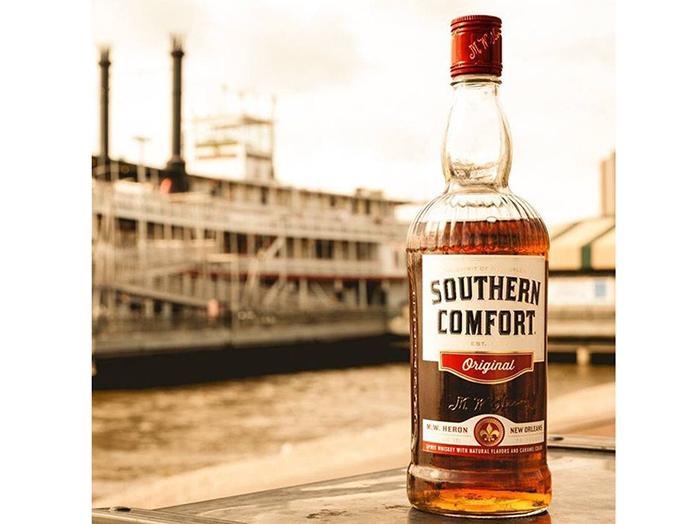
Let’s get this out of the way first, because it matters. Southern Comfort is classified as a whiskey liqueur, not a straight whiskey, bourbon, or Tennessee whiskey. The legal definition makes a sharp distinction: straight whiskey must meet strict standards around grain mash, barrel aging, and additives. Liqueurs, on the other hand, are defined by the addition of fruit, spices, sweeteners, and flavorings.
Southern Comfort is an American naturally fruit-flavored whiskey liqueur with fruit and spice accents. That means the bottle in your hand contains a whiskey base that has been infused with peach, citrus, spice, and sweeteners — not just aged grain spirit poured straight from a barrel.
This distinction also explains why SoCo is so much smoother and sweeter than bourbon or rye. It was designed to be approachable. The burn has been intentionally dialed down. The sweetness has been intentionally dialed up. Whether that makes it “less serious” as a spirit is entirely up to you. But it does make it more useful in a cocktail glass, and that’s been the whole point since 1874.
The Origin Story: A New Orleans Bartender with a Problem to Solve
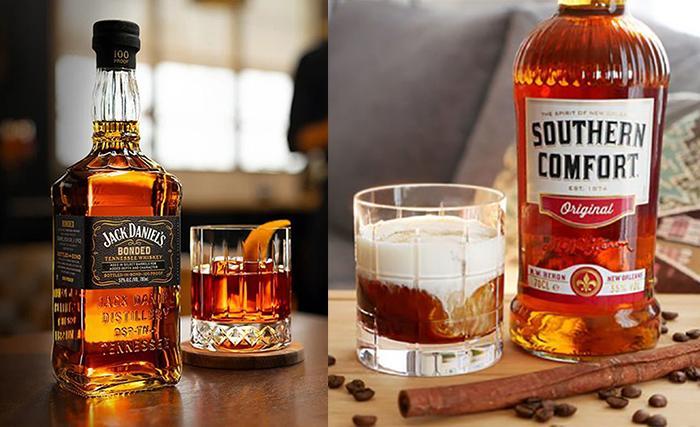
The story of Southern Comfort began in the late 19th century in New Orleans, Louisiana. Martin Wilkes Heron, a bartender at the time, felt that traditional whiskey was too harsh and rough on the throat. The American South in the post-Civil War era was flooded with cheap, unaged whiskey that steamboats carried down the Ohio and Mississippi rivers from Kentucky and Tennessee. The quality was rough. Heron, working the bar at McCauley’s Tavern in what is now the Lower Garden District of New Orleans, decided to fix that.
Southern Comfort was created by bartender Martin Wilkes Heron (1850–1920), the son of a boat-builder, in 1874 at McCauley’s Tavern in the Lower Garden District, two miles (3 km) south of the French Quarter of New Orleans, Louisiana.
His original recipe was meticulous. According to spirits historian Chris Morris, Heron would add: “An inch of vanilla bean, about a quarter of a lemon, half of a cinnamon stick, four cloves, a few cherries, and an orange bit or two. He would let this soak for days. And right when he was ready to finish, he would add his sweetener: he liked to use honey.”
The result was a drink that was smoother, sweeter, and far more pleasant than anything else being poured at the time. He originally called it Cuffs & Buttons. Depending on which version of history you believe, this was either a reference to the ingredients he used for the infusion — citrus peel (cuffs) and cloves (buttons) — or a nod to another popular liqueur of the time.
The drink became wildly popular. Heron moved to Memphis, Tennessee in 1889, patented his creation, and began selling it in sealed bottles with the slogan “None Genuine But Mine” and “Two per customer. No Gentleman would ask for more.” He renamed it Southern Comfort, and that name stuck for good reason: it captured exactly what the drink delivered.
Southern Comfort won the gold medal at the 1904 World’s Fair in St. Louis, Missouri. Before Prohibition shut it down, the brand was already an American institution.
A Timeline of Ownership, Formula Changes, and a WWII Bomber
Southern Comfort’s ownership history reads like a thriller novel, and it directly affected what’s been inside the bottle at different points in its life. Here’s how it broke down:
| Era | Owner | Key Change |
|---|---|---|
| 1874–1920 | Martin Wilkes Heron | Original whiskey-based formula with fruits and spices |
| 1920–1933 | Prohibition | Brand closed; Heron died in 1920 |
| 1934–1979 | Francis Fowler / Midlands Distilleries | Brand revived post-Prohibition in St. Louis |
| 1979–2016 | Brown-Forman | Whiskey base replaced by neutral grain spirit |
| 2016–present | Sazerac Company | Whiskey base restored; current formula |
The brand changed hands multiple times after Heron died in 1920. Brown-Forman purchased the brand in 1979. In January 2016, Brown-Forman sold it to Sazerac Company, along with Tuaca, as part of a $543.5 million deal.
The most controversial period was the Brown-Forman era. From the 1980s until 2017, it was made with a neutral grain spirit base. Essentially, the whiskey was taken out and replaced with vodka-like grain spirit, while whiskey flavor was added back in trace amounts just to maintain the label claim. For longtime fans, this was a betrayal. For casual drinkers who just wanted something sweet and mixable, they barely noticed.
Since March 1, 2016, the brand has been owned by Sazerac. Sazerac announced that Southern Comfort’s formula would be changed in 2017 to restore whiskey spirit as the base spirit, as the original formula used. This was a significant move, returning SoCo to something closer to its 1874 roots.
One of the more remarkable footnotes in Southern Comfort’s history has nothing to do with bars. Homesick World War II pilot Colonel Thomas J. Barr named his B-17G bomber Southern Comfort in honor of his favorite liqueur. Barr and his crew even painted the name on their plane, hoping the company might send them a few free bottles. He had to wait more than 60 years. In 2015, the brand finally presented Barr with a case of special-label Southern Comfort during a ceremony recognizing his war efforts.
What Does Southern Comfort Actually Taste Like?
This is where SoCo earns its defenders — and its critics. The flavor profile is distinctive enough that you’ll know it’s Southern Comfort within about two seconds of your first sip.
Read More : Types Of Mezcal Updated 10/2026
Southern Comfort tastes like a sweet, smooth, and fruity liqueur with prominent notes of peach, apricot, and a warm, subtle spice finish reminiscent of cinnamon and vanilla. Unlike a traditional whiskey, its sweetness is forward, making the whiskey base smoother and less aggressive on the palate.
Breaking it down by tasting stage:
- On the nose: Sweet peach with soft spice and a touch of vanilla. There’s a mild orange note underneath, like marmalade without the bitterness.
- On the palate: Fruity and smooth, with peach forward, light caramel, and a grain spirit backbone. The sweetness is real but not cloying when served at the right proof.
- On the finish: Herbal and spiced, with lingering cinnamon, a suggestion of crème brûlée, and a fade of orange zest.
Compare this to drinking a neat bourbon or Tennessee whiskey and the difference is stark. A standard bourbon hits you with oak, char, vanilla, and heat. SoCo hits you with peach and sweetness first, then a gentle whiskey warmth second. That’s the whole point of the formula.
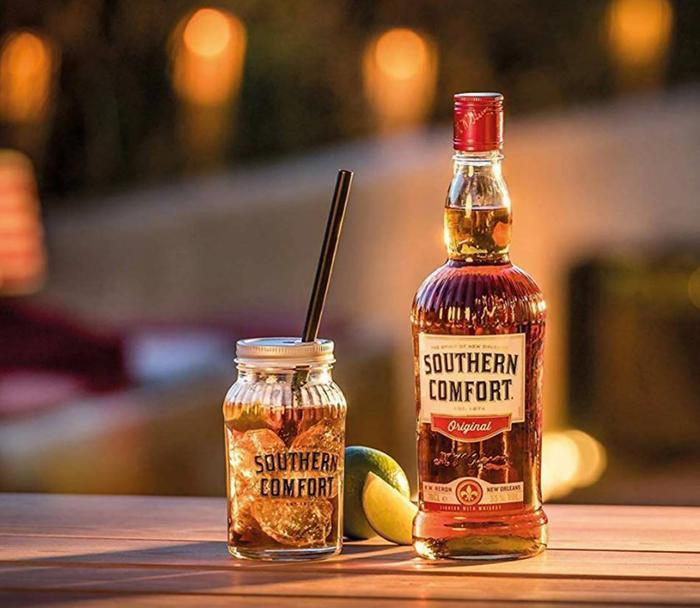
The Different Versions: Proof, Strength, and Which One to Buy
In the United States, Southern Comfort is available as 42 U.S. proof (21% ABV), 70 U.S. proof (35% ABV), 80 US proof (40% ABV), and 100 U.S. proof (50% ABV). These are meaningfully different drinking experiences, not just marketing variations.
| Product | Proof | ABV | Best For |
|---|---|---|---|
| SoCo 42 | 42 proof | 21% | Easy sipping, low-key occasions |
| SoCo Original | 70 proof | 35% | Most cocktails, the classic choice |
| SoCo 80 | 80 proof | 40% | When you want whiskey-level strength |
| SoCo 100 | 100 proof | 50% | Serious cocktails, neat sipping, bold palates |
| SoCo Black | Higher proof | ~40% | Whiskey drinkers; more prominent oak and spice |
SoCo 70 Proof is the standard that most people know. It’s the bottle that’s been behind the bar since the 1970s and the one that forms the basis of every classic SoCo cocktail recipe. The sweetness is present but manageable, and the fruit and spice notes come through cleanly.
SoCo 100 Proof is the one worth trying if you’re coming from a whiskey background. At 100 proof (50% ABV), it’s a bolder, more robust expression, perfect for those seeking a stronger kick in their cocktails or enjoying neat. The sweetness is still there, but the extra alcohol lifts the spice notes and gives it more presence on the palate.
Southern Comfort Black was introduced in early 2018 with the slogan “Smoky Spiced Smooth.” Southern Comfort Black was introduced for those who enjoy the classic SoCo flavor but want a more prominent whiskey character. It uses real whiskey in its blend and sits closer to an actual whiskey-adjacent product than the original. If you normally drink bourbon but want something with SoCo’s smoothness, Black is the bridge between those two worlds.
Southern Comfort vs. Whiskey: What’s the Real Difference?
This comparison comes up constantly, and it’s worth laying out clearly. Many bars stock both SoCo and major whiskey labels, and knowing the difference helps you make a better call at the bar.
| Category | Southern Comfort | Bourbon | Tennessee Whiskey |
|---|---|---|---|
| Base Spirit | Whiskey (or neutral grain spirit, depending on version) | Corn mash (51%+) | Corn mash, charcoal filtered |
| Additives | Fruit, spice, sweeteners | None allowed | None allowed |
| ABV Range | 21%–50% | Typically 40%–60% | Typically 40%–50% |
| Taste Profile | Sweet, fruity, peach-forward | Oaky, caramel, vanilla, some heat | Smoother than bourbon, mellow charcoal note |
| Classification | Whiskey liqueur | Straight whiskey | Tennessee whiskey |
| Best Use | Cocktails, mixing | Sipping, Old Fashioneds, Manhattans | Sipping, Jack & Coke-style |
The short version: whiskey is about terroir, grain, and time in oak. SoCo is about flavor, approachability, and how it plays in a mixed drink. Neither is objectively better. They serve different moments.
Janis Joplin, Gone With the Wind, and the Cultural Fingerprints
Southern Comfort’s history overlaps with American pop culture in ways that most people don’t realize.
The Scarlett O’Hara connection: Sales of Southern Comfort took off in 1939, helped by being the key ingredient in the hit Scarlett O’Hara cocktail, named after the heroine of the Gone With the Wind movie released that year. The mixture includes Southern Comfort, cranberry juice, and fresh lime. The film’s massive popularity essentially turned SoCo into a national conversation.
The Janis Joplin era: Its fame soared even further when Janis Joplin, the legendary American singer-songwriter, declared Southern Comfort her favorite drink. She was frequently seen on stage with a bottle of SoCo in hand. In appreciation for her unintentional promotion, Southern Comfort gifted Joplin a custom-made lynx fur coat and a matching hat. Joplin’s association with SoCo in the late 1960s gave the brand a rock-and-roll credibility it hadn’t previously owned.
The plantation label: Between the 1930s and 2010, the image on the label of Southern Comfort was A Home on the Mississippi (1871), a rendering by Alfred Waud depicting Woodland Plantation, an antebellum mansion in West Pointe à la Hache, Louisiana, which is listed on the National Register of Historic Places. That image defined the brand’s visual identity for seven decades.
WWII sales boom: The brand became a wartime goldmine during World War II, partly due to price controls. Ceiling prices on bourbon only allowed a 12% markup, but there was no such limit on liqueurs. SoCo could be priced at a premium while bourbon was capped. The brand grew into an international mega-seller by the 1970s.
UK and global growth: Southern Comfort was first brought to the UK by long-established wine merchants Charles Kinloch in 1965. Globally in 1974 the brand had just sold over a million cases for the first time, outselling in the US whiskeys like Jack Daniels and Old Forrester, and Scotches like Chivas Regal and Black and White. That’s not a small number — SoCo was outselling Jack Daniel’s at its peak.
How to Drink Southern Comfort: Five Real Options
There’s a right way to approach SoCo for every situation. Here are five proven ways to get the most out of the bottle.
Neat or on the rocks
Don’t discount SoCo as a straight sipper. The 100-proof version especially holds up well at room temperature or over a single large ice cube. The sweetness rounds off the alcohol, and the fruit and spice notes stay clear. This works best if you’re the kind of guy who enjoys flavored whiskeys or spiced rum neat.
SoCo and Lemonade
Read More : What Is Courvoisier? The Complete Guide to Napoleon’s Legendary Cognac Updated 10/2026
This is the most underrated warm-weather SoCo combo. Two ounces of SoCo Original over ice, topped with fresh lemonade, maybe a sprig of mint. The tartness of lemon cuts the sweetness of SoCo in exactly the right way. It’s a backyard barbecue drink that requires zero bartending skill and delivers every time.
SoCo and Ginger Ale
Similar logic to a whiskey ginger, but softer. The spice of ginger ale picks up the cinnamon notes in SoCo and amplifies them. Two ounces of SoCo, four ounces of ginger ale, a squeeze of lime. This is a solid choice if you usually drink bourbon gingers but want something easier on the palate.
SoCo and Cola
The simplest version: two ounces SoCo, Coke over ice, done. The cola’s caramel and vanilla notes layer naturally with SoCo’s peach and spice. Sometimes called an Old Woody. Not the most exciting drink in the world, but it doesn’t need to be. It’s consistent, it’s cold, and it goes down easy.
The Southern Whiskey Sour
Two ounces SoCo Black, three-quarters ounce fresh lemon juice, half ounce simple syrup, shaken hard and strained into a rocks glass over ice. Optionally, add an egg white before dry shaking for a foam top. This is a legitimate cocktail that holds its own against any bar-made whiskey sour. The whiskey notes from SoCo Black give it real depth; the lemon keeps it from being too sweet.
The Alabama Slammer: SoCo’s Most Famous Cocktail
You can’t talk about Southern Comfort without giving the Alabama Slammer its proper due. The Alabama Slammer has been around since the 70s. It is believed that it was first created in the 1970s in Tuscaloosa, Alabama, possibly at the University of Alabama. The drink gained popularity throughout the South and eventually became a staple in bars across the country.
The cocktail takes 30ml Southern Comfort, 30ml amaretto, 30ml sloe gin, and 60ml orange juice, shaken with ice and strained into an ice-filled highball glass. The best way to garnish is with an orange wheel to complement the citrus, and a cherry.
The result is a ruby-red cocktail that’s sweet and refreshing, with a fruity flavor that has been compared to Hawaiian Punch with a kick. It is the signature drink of University of Alabama fans, famously consumed at Crimson Tide tailgates. But it’s also genuinely good, which is why it’s outlasted a thousand trendier cocktails and is still being ordered fifty years after its invention.
For a crowd, you can make this for a party or group gathering by combining 3 cups Southern Comfort, 3 cups Sloe Gin, 3 cups Amaretto, and 6 cups orange juice in a one-gallon jug. Shake well and serve over ice. Done.
Other cocktails worth knowing from the SoCo playbook include:
- Scarlett O’Hara: SoCo, cranberry juice, fresh lime. Clean and tart.
- Comfort Collins: SoCo, lemon juice, simple syrup, soda water. A Tom Collins riff.
- SoCo Manhattan: SoCo, sweet vermouth, bitters, maraschino cherry. For whiskey drinkers easing into SoCo.
- Sloe Comfortable Screw: Sloe gin, vodka, SoCo, orange juice. A 1970s bar classic.
- Maple Bacon Manhattan: SoCo 100, maple syrup, bitters. A game-day cocktail that actually works.
Is Southern Comfort Worth Keeping in Your Home Bar?
Here’s the honest take: yes, with conditions.
If you’re a straight bourbon or rye drinker who wants nothing to do with sweetness in your glass, SoCo probably isn’t for you. It’s a different category of drink. Comparing SoCo to Maker’s Mark is like comparing a spiced rum to a single malt Scotch. They’re not trying to be the same thing.
But if your home bar is meant to handle a range of guests and occasions, SoCo 70 Proof earns its place. It handles cocktail duty with almost anything: juice, soda, ginger ale, lemonade, cola. It’s versatile, recognizable, and priced well (typically $20–$25 for a 750ml bottle). When someone doesn’t want a straight whiskey but also doesn’t want something too precious, SoCo fills that gap reliably.
SoCo 100 Proof is the version to reach for when you’re building something more serious or when you want to drink it on its own. The extra proof tightens the flavor profile and gives it genuine backbone.
Southern Comfort Black deserves more respect than it gets. It bridges the gap between SoCo and an actual whiskey in a way that’s useful for guys who are moving toward whiskey but want something with less of a learning curve.
The Bottom Line
Southern Comfort is a 150-year-old American original born in a New Orleans bar by a bartender who simply wanted to make drinking better. It’s not a whiskey, it’s not trying to be bourbon, and it doesn’t need to be either. It’s a whiskey-based fruit and spice liqueur that was designed for approachability, versatility, and the kind of easy pleasure that doesn’t require a lecture about terroir or barrel char.
It spent decades being misrepresented, reformulated, and underestimated. Under Sazerac’s ownership since 2016, it has returned to a whiskey base that honors the original 1874 formula. Whether you drink it in an Alabama Slammer at a football game, on the rocks on a summer afternoon, or in a serious Whiskey Sour build, SoCo rewards people who don’t take it for granted.
Keep a bottle around. You’ll use it more than you think.
Sources: https://chesbrewco.com
Category: Wine