You just renewed your driver’s license, it’s sitting somewhere at the DMV being processed, and you’ve got a flimsy piece of paper with your name and birthdate on it. Friday night is calling. The question hits: can you actually walk into a bar, hand the bartender that paper ID, and walk out with a cold craft beer in hand?
The answer is: it depends, and that two-word answer hides a surprisingly complicated web of state laws, individual store policies, physical ID requirements, and a fast-changing landscape of digital identification. This article breaks down everything you need to know, from what a temporary ID actually is, to which states accept them, to what happens when things go sideways, and what your best options are while you wait for the real thing to arrive in the mail.
You Are Watching: Can You Use A Temporary Id To Buy Alcohol Updated 10/2026
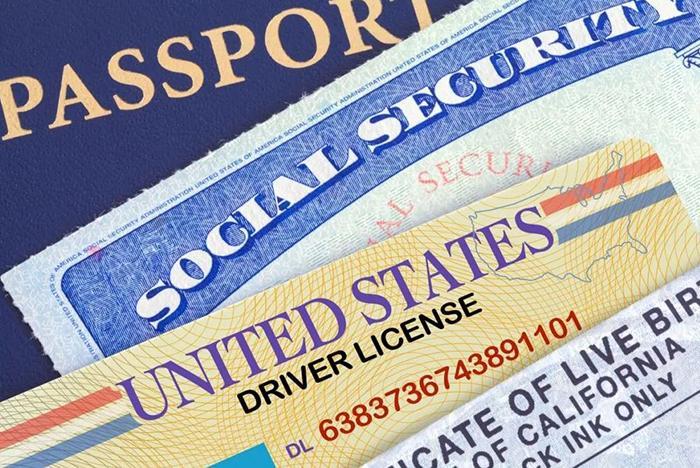
What Exactly Is a Temporary ID?
Before getting into whether it works at a liquor store, it helps to understand what a temporary ID actually is. A temporary ID is essentially a piece of paper (usually printed in black and white) that serves as a temporary identification card for people who are of legal age to purchase alcoholic beverages but are waiting for their official government-issued ID to be issued.
These documents are issued by your state’s Department of Motor Vehicles (DMV) and typically show up in a few common situations:
- You applied for a new or renewed driver’s license and are waiting for the physical card to arrive.
- Your permanent ID was lost or stolen and you are pending a replacement.
- You changed your name or address and reapplied for an updated license.
- You are visiting another state where your original driver’s license won’t work, and a temporary traveler’s license may be issued.
The format of a temporary ID varies significantly by state. Some states print them on standard letter paper with a barcode. Others issue more secure versions that include a photo, a hologram strip, or a magnetic strip. It may have a unique barcode or identification number, depending on the state you’re living in. That variation in format is exactly why the “it depends” answer exists.
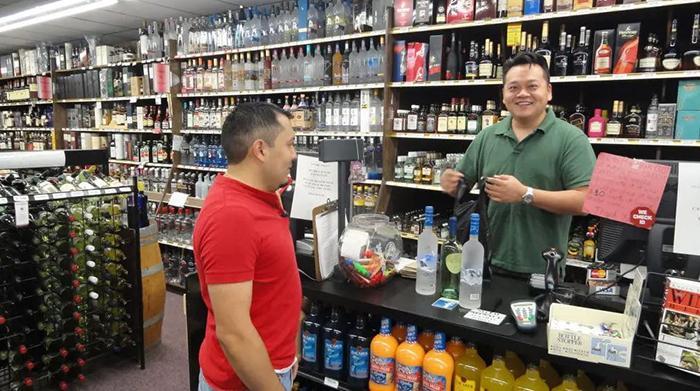
The Federal Law Behind the Drink Age: Why IDs Matter at All
To understand why a paper ID can cause such friction at the checkout counter, it helps to know the legal foundation behind alcohol age verification in America.
On July 17, 1984, the National Minimum Drinking Age Act was enacted. The Act required all states to set their minimum age to purchase alcoholic beverages to no lower than 21 years of age or lose a portion of their allocated federal highway funding. As of July 1988, all 50 states and the District of Columbia had a minimum purchase age of 21.
That federal mandate set the floor, but here is the key detail every drinker should understand: the Twenty-first Amendment to the United States Constitution grants each state and territory the power to regulate intoxicating liquors within their jurisdiction. This means that while the drinking age is uniform, the rules around how you prove your age vary dramatically from state to state, and even from store to store within the same city.
Businesses must verify age with a valid, government-issued ID (such as a driver’s license, state ID, or passport). Without a valid ID, you cannot legally purchase alcohol. The problem with temporary IDs is that many of them, particularly the basic paper versions, do not have the security features that make verification credible.
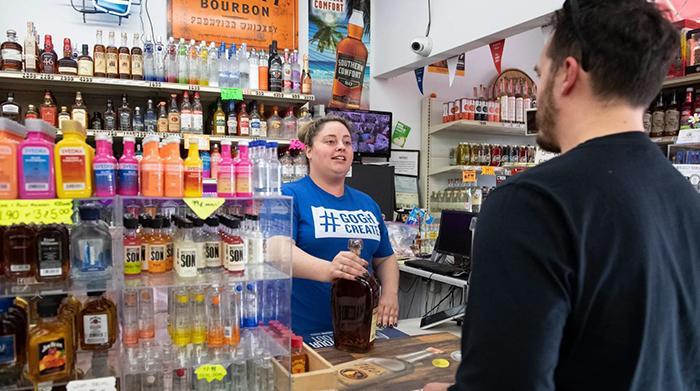
State-by-State: Where a Temporary ID Will (and Will Not) Work
This is the most important section for anyone who finds themselves holding a paper ID and wanting a drink. The rules are genuinely different depending on where you live.
States That Generally Accept Temporary IDs
States like California and Texas generally accept temporary driver’s licenses as valid forms of ID for alcohol purchases, provided they contain the necessary information such as a photo, date of birth, and expiration date.
Washington State has one of the more nuanced rules. The new temporary license will not include a photo or signature (unless it’s a Commercial Driver License), so the temporary license by itself is not acceptable to purchase alcohol. If combined with an expired valid ID with a photograph, it may be accepted. Washington State does, however, specifically list on its Liquor and Cannabis Board website that a Valid Washington State Temporary Driver’s License is on the acceptable identification list in certain circumstances.
Texas takes a notably relaxed approach to the legal framing. Texas state law does not require that a person over 21 provide any identification to purchase alcohol. There is nothing in the law that declares specific forms of ID as valid for an alcohol purchase. However, since store clerks, wait staff, and bartenders can be held criminally liable for selling alcohol to a minor, they often require a photo ID issued by a governmental agency to prove that the person really is of legal age.
States With Stricter Rules
States like New York and Pennsylvania often have more stringent rules regarding temporary IDs.
Florida is particularly strict. In Florida, if you have a license with the word “temporary” printed on it, it will not be accepted.
California presents a mixed picture. A temporary paper driver license is valid for 30 days from issuance and can be used as identification for alcohol delivery. However, delivery services may have their own stricter requirements: delivery services typically require a government-issued photo ID to verify age, and a temporary paper license without a photo might not be accepted.
Comparative Overview by State
| State | Temporary ID Accepted? | Key Condition |
|---|---|---|
| Washington | Conditional | Must be combined with expired photo ID, or be a CDL temp |
| Texas | Generally yes | Retailer discretion; no state law mandating specific ID format |
| California | Conditional | Valid for 30 days; must have photo for delivery services |
| Florida | No | “Temporary” printed on ID is an automatic disqualifier |
| New York | Stricter rules | Temporary IDs face heightened scrutiny; standard IDs preferred |
| Pennsylvania | Stricter rules | Among the most stringent requirements in the country |
| Arkansas | Yes (with mobile ID) | Mobile ID accepted for alcohol service |
| New Mexico | Yes (with digital ID) | Digital ID accepted at participating businesses |
| Georgia | Yes (with mDL) | Mobile driver’s license accepted at participating retailers |
| West Virginia | Yes (with mobile ID) | As of December 2024, mobile ID accepted |
What Makes a Temporary ID Acceptable or Not: The Three Factors
Identification must be valid (not expired), show a photo, include a date of birth, and contain the name of the person. Most temporary IDs, especially the basic paper ones, fail one or more of these criteria.
Factor One: The Photo Problem
This is the single biggest obstacle. Temporary licenses and permits are often rejected if they lack a photo. A paper printout with no photo gives a bartender zero visual way to confirm the person standing in front of them is actually the person named on the document.
Factor Two: Security Features
Physical driver’s licenses contain holograms, UV-reactive ink, microprinting, barcodes, and magnetic strips. Temporary paper IDs issued by the DMV during renewal may not be accepted if they lack security features or clear photo identification. Retailers have discretion to refuse sales if they doubt ID authenticity.
When an employee uses an ID scanner, a paper temporary ID may simply not scan correctly, causing an automatic refusal regardless of the customer’s actual age. Some cash register systems are even set up to require a barcode scan before an alcohol sale can proceed.
Factor Three: Retailer and Establishment Policy
While paper IDs are legally valid in many states, some stores may be cautious and reluctant to accept them due to concerns about authenticity or potential fraud. Individual businesses have the legal right to set their own ID acceptance standards, as long as those standards do not violate civil rights protections.
In some areas, you may be allowed to purchase alcohol with a paper license without any trouble, while other stores may restrict your consumption within the premises. So it’s not always a straightforward process, and it is recommended that you check the rules and laws of an establishment before making a purchase.
The reality on the ground: a neighborhood bar in a college town is likely to be more flexible than a chain grocery store that has corporate-level compliance officers watching for liability exposure.
Forms of ID That Are Universally Accepted
Read More : Best Bars In Mount Pleasant SC Updated 10/2026
While the temporary ID question has a murky answer, the following forms of identification are accepted across virtually all 50 states:
- U.S. Passport or Passport Card: The gold standard. Works everywhere, no questions asked.
- State-issued driver’s license (valid, unexpired, with photo and date of birth)
- State-issued non-driver ID card
- U.S. Military ID card: Widely accepted. States like Texas, Florida, and California generally allow military IDs as valid identification for alcohol purchases, as these IDs include the individual’s name, photograph, and date of birth.
- Permanent Resident Card (Green Card)
- Tribal ID cards issued by federally recognized tribes (accepted in most jurisdictions)
Documents that are not accepted and often confuse people include: photocopies or phone photos of IDs, birth certificates (no photo), social security cards, school or work IDs, expired IDs, and utility bills.
The Rise of Digital and Mobile IDs: A Game-Changer for Drinkers
One of the most significant shifts in the ID landscape over the past few years has been the rapid growth of mobile driver’s licenses (mDLs), also called digital IDs. These are official, government-issued digital versions of your physical ID stored on your smartphone.
A mobile driver’s license is a version of your ID that you keep on your phone instead of in your pocket. In theory, it would work wherever your regular ID works, including TSA, liquor stores, picking up a prescription, or getting into a bar.
States Where You Can Already Use a Mobile ID for Alcohol
The momentum is significant and growing fast:
New York: State bars, restaurants and other businesses with liquor licenses can accept Mobile ID as a form of age verification during alcohol sales, after the New York State Liquor Authority issued an advisory in October 2024 approving its use. More than 200,000 New Yorkers had already gotten their Mobile ID within nine months of its launch.
Georgia: The Georgia Department of Revenue Alcohol and Tobacco Division confirmed that mobile driver’s licenses are a valid and acceptable form of identification for alcohol and tobacco retailers. However, acceptance of mDLs is at the discretion of the individual business.
West Virginia: As of December 2024, West Virginia’s Mobile ID can be used to purchase alcohol at participating establishments within the state.
Arkansas: The Arkansas Mobile ID can be used in the sale or service of alcohol.
New Mexico: State licensing officials notified businesses that digital IDs can now be used for purchasing age-restricted items such as alcohol, cannabis, and tobacco.
California: California started accepting mobile IDs through an app called CA DMV Wallet, published by the California Department of Motor Vehicles, which is in a pilot program with limited participation.
As of August 2024, additional states including Alaska, Connecticut, Kentucky, Illinois, Indiana, North Carolina, Ohio, Pennsylvania, and Virginia have announced plans to launch mobile driver’s licenses.
For anyone waiting on a physical card, a mobile ID is not the same as a temporary paper ID. Mobile IDs are cryptographically secured, biometrically locked, and issued directly by state DMVs, making them far more reliable for verification purposes.
What Bartenders and Retailers Are Actually Thinking
Understanding the psychology and legal exposure of the person checking your ID helps explain why temporary IDs face so much friction.
Businesses that hold liquor licenses are required to ensure that customers who purchase alcohol are over the age of 21. If they fail to do so and sell alcohol to a minor, they can face significant penalties. In many states, these penalties may be applied to the individual sales clerk who completed the transaction as well.
Businesses that are caught selling to minors may face the prospect of having their liquor licenses revoked. Typically, an initial violation by a liquor license holder will result in a citation or warning, but if the offense occurs again, state liquor license boards may opt to revoke the license entirely.
That means a bartender who accepts a suspicious-looking paper ID is not just risking their job; they are potentially exposing their employer to license revocation, the kind of consequence that ends a business. It is therefore entirely rational for a server to refuse a temporary ID, even in a state where it might technically be valid.
The staff at chain retailers such as Total Wine, Walmart, Target, and large grocery stores face even stricter protocols. Many of these companies have corporate ID policies that override state law minimums, requiring specific formats (usually a physical, plastic, government-issued photo ID with a barcode that their system can scan). A paper temporary ID will often fail these automated systems regardless of its legal validity.
The Real Risk: Fake IDs, Altered IDs, and Where the Line Is
There is an important legal and ethical distinction between:
- Using a legitimate temporary ID (your real name, your real birthdate, issued by the DMV) while waiting for your permanent card.
- Using a falsified or altered document to misrepresent your age.
These two things are very different, and the law treats them very differently.
A false or fake ID is any form of identification that is forged, altered, or otherwise purports to establish the false identity of a person. All states have fake ID laws, though how the crime is categorized and punished differs from state to state.
Presenting a fake ID to purchase alcohol, butane, or a vape pen will generally mean misdemeanor penalties. False identification laws also penalize people who use a real ID that isn’t their own. For example, a college student might borrow a friend’s ID to get into a bar or buy alcohol.
Penalties by State: A Snapshot
In Iowa, using a fake ID is a serious misdemeanor. Penalties can include fines of up to $1,875 and up to one year in jail. The state may also suspend the individual’s driver’s license for up to six months.
In Pennsylvania, the first offense for using a fake ID carries a $1,000 fine, while the second can be up to $2,500, with up to a year in jail.
Individuals convicted of misdemeanors may be subject to fines of up to $1,000 or less, whereas those convicted of felonies may face significantly higher fines, potentially reaching up to $100,000.
If you are over 18, you are considered an adult for the purposes of punishment (even though you are not an adult for alcohol purposes). As a result, you are eligible for the entire range of penalties, including years in prison, whereas juveniles typically receive community service and probation.
Read More : Does Sparkling Cider Have Caffeine Updated 10/2026
The business side faces consequences too. When an establishment or venue is caught serving alcohol to underage patrons, businesses face severe penalties including fines and license suspensions. A single violation of serving alcohol to a minor can result in fines ranging from several hundred to thousands of dollars, depending on the jurisdiction.
If a retailer suspects your ID, they can take it from you and keep it, then hand it over to the police, who can arrest you and charge you with a crime. If state law does not allow workers to confiscate fake IDs, they might still call the police.
Practical Tips: How to Buy Alcohol When Your Permanent ID Hasn’t Arrived
If you are in the window between turning in your old ID and receiving your new plastic card, here are the most effective real-world strategies:
Carry your temporary ID plus a supporting document. As Washington State’s rule suggests, if a temporary license is combined with an expired valid ID that has a photograph, it may be accepted. The combination gives the seller the photo verification they need. An expired passport is another solid backup document to carry alongside your temporary.
Use a passport if you have one. Even an expired U.S. passport is not valid, but a current passport is accepted everywhere, no questions asked. If you travel internationally at all, keep it handy during your license gap period.
Go to familiar establishments. A bartender at your neighborhood spot who recognizes you from six months of regular visits is going to apply very different scrutiny than a stranger at a big-box liquor chain. It is not a legal workaround, but it is a practical reality.
Ask the DMV about an expedited card. Many states offer rush processing for an additional fee. If you rely on your ID regularly for alcohol purchases (or work in an environment where you need it), paying $20 to $50 to get your card in a week rather than a month is worth it.
Download your state’s mobile ID app if available. If your state has a mobile driver’s license program and it is accepted for alcohol, this is far more reliable than a paper temporary ID. Check your state DMV’s website to see if you qualify.
Call ahead. Before entering a liquor shop, make sure to check the store’s rules about acceptable IDs. A quick phone call or check of the store’s website can save you a frustrating trip.
The Civil Rights Boundary: What Stores Cannot Do
While retailers have broad discretion to set ID policies, there is a legal limit. Under the Civil Rights Act of 1964, a bar owner is not allowed to show discrimination against customers. A bar owner cannot refuse to give service to a person on the basis of race, gender, color, or national origin.
This means that a policy applied consistently (for example, requiring a photo ID from everyone who appears under 40) is legally defensible. A policy that singles out individuals based on protected characteristics is not. If you believe you have been refused service for discriminatory reasons rather than a legitimate ID concern, you have legal recourse.
How Technology Is Changing the ID Check Experience
The old system of a bartender squinting at a paper document under a dim bar light is rapidly being replaced by sophisticated technology.
Digital scanners are faster and more accurate than manual checks. Scanners help verify authenticity, age, and expiration dates. These systems minimize legal and financial risks while promoting responsible sales.
Modern ID scanners can read barcodes and magnetic strips from physical IDs, cross-reference the encoded data against the printed information on the card (to catch alterations), verify expiration dates automatically, and even check IDs against databases of known fake formats. A basic paper temporary ID with no barcode or magnetic strip will often simply fail to process through these systems, creating a refusal that is automated rather than judgmental.
New York’s Mobile ID data is encrypted and only accessible when the holder consents to sharing it. Information is transmitted to a verifier through a secure, digital connection so the user never has to hand over their phone. Data on when and where someone uses their MiD is not tracked, stored, or transmitted.
This privacy-protective design is likely to make mobile IDs increasingly popular, both with consumers and with the establishments that check them.
Frequently Asked Questions
Can I use a temporary paper ID at Total Wine or Costco?
Most large chain retailers have corporate ID policies that require a physical, scannable ID with a photo. A basic paper temporary ID is likely to be refused at these locations regardless of state law. Your best option is a current U.S. passport or to wait for your physical card.
My temporary ID has a photo on it. Does that help?
Yes, significantly. A temporary ID that includes a photo is much more likely to be accepted than one without. The photo is the primary tool a server uses to visually match the ID to the person holding it. If your temporary includes a photo, expiration date, date of birth, and name, you are in a much stronger position.
Can I use a temporary ID for alcohol delivery (DoorDash, Uber Eats, Instacart)?
When you order alcohol on DoorDash, Uber Eats, or another service, the driver is supposed to confirm ID just as a bartender would. Delivery apps typically require a photo ID, and a driver who cannot verify your age must leave without completing the alcohol portion of your order. A paper temporary ID without a photo is unlikely to satisfy delivery service requirements.
Is it illegal to attempt to use a temporary ID if I know the store won’t accept it?
Using your own legitimate temporary ID (issued to you by the DMV with accurate information) is not illegal. Being refused is not a crime. The legal trouble begins when you present a document that has been altered, forged, or does not belong to you.
What if I’m clearly over 30 and look it, do I still need ID?
Legally, yes in many states. Some states, like Tennessee, require ID checks for all alcohol purchases regardless of apparent age. In practice, many establishments card anyone who appears to be under a certain threshold (often 30 or 40), but corporate chain stores increasingly card everyone to eliminate human judgment from the equation.
The Bottom Line on Temporary IDs and Alcohol
The United States does not have a single federal rule about temporary IDs and alcohol. What you get instead is a patchwork: when it comes to purchasing alcohol, the acceptance of temporary IDs varies significantly across different states. Temporary IDs are typically provided when an individual’s primary identification is being processed or renewed. However, not all states treat these temporary documents equally.
The clearest takeaway: a temporary ID with a photo stands a reasonable chance of being accepted at independent bars and restaurants in states like California, Texas, and Washington. The same temporary ID is likely to be refused at chain retailers, in states like Florida, and anywhere that uses automated scanning systems. Combining a temporary ID with an expired photo ID significantly improves your odds. And if your state has a mobile driver’s license program, activating it is the single best alternative to waiting for your physical card.
The Bigger Picture: What the Patchwork Means for American Drinkers
There is something distinctly American about the ID verification experience. The same beer that a customer in Nashville buys by simply presenting a paper temporary without issue could be refused to that same person walking into a Total Wine in Tampa. The decentralization of alcohol law, a feature of the Twenty-first Amendment’s design, creates a system that is simultaneously protective and confusing.
For the average 22-year-old craft beer fan waiting on a new ID, or the 35-year-old wine enthusiast who lost their wallet, the practical advice is simple: know your state’s rules, carry backup documentation, download your mobile ID if your state offers one, and call ahead when in doubt. The patchwork is not going away anytime soon, but understanding it puts the odds firmly in your favor for an uninterrupted Friday night.
Sources: https://chesbrewco.com
Category: Drink