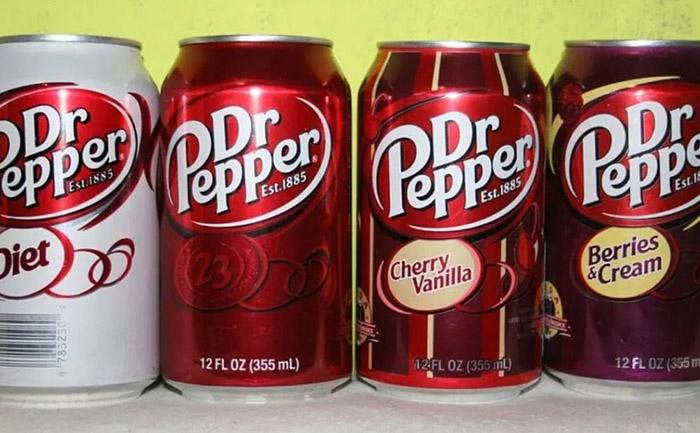
You’re at a backyard cookout, grill smoke drifting across the yard, a cooler packed with ice, and someone slides you a cold can. It’s either a Dr Pepper or a Cherry Coke. You crack it open, take a sip, and in that one moment you’re picking a side in one of the most quietly passionate rivalries in American beverage culture.
These two sodas get lumped together constantly, dismissed as “basically the same thing” by people who’ve never paid close enough attention. That take is dead wrong. Whether you’re mixing your bourbon with something bubbly, looking for the perfect non-alcoholic option between drinks at a wine dinner, or just trying to win an argument at the bar, understanding the real differences between Dr Pepper and Cherry Coke matters a lot more than most people think. This is a full breakdown: the history, the science of flavor, the nutrition, the cocktail potential, the cultural clout, and the honest verdict.
You Are Watching: Dr Pepper Vs Cherry Coke: The Ultimate Showdown Updated 09/2026
The Origin Stories Are Completely Different
Dr Pepper: America’s Oldest Major Soft Drink
Dr Pepper was created in 1885 at Morrison’s Old Corner Drug Store in Waco, Texas, making it a full year older than Coca-Cola, which launched in 1886. The man behind it was a pharmacist’s assistant named Charles Alderton, who reportedly loved the aroma of the soda fountain he worked at, where dozens of fruit syrups mingled in the air. His goal was to capture that complex, layered smell in a single drink.
W.W. Clements, former CEO and president of the Dr Pepper/7-Up Company, described the taste of Dr Pepper as one-of-a-kind, saying, “I’ve always maintained you cannot tell anyone what Dr Pepper tastes like because it’s so different. It’s not an apple, it’s not an orange, it’s not a strawberry, it’s not a root beer, it’s not even a cola. It’s a different kind of drink with a unique taste all its own.”
The brand has been fiercely independent almost from the start. Dr Pepper is owned by Keurig Dr Pepper (KDP), an independent company formed by the merger of Keurig Green Mountain and Dr Pepper Snapple Group. Neither Coca-Cola nor PepsiCo owns Dr Pepper, though Coca-Cola previously distributed it in some regions until 1995. That confusion has persisted for decades. 68% of consumers incorrectly assume corporate ownership ties between Dr Pepper and either Coke or Pepsi, according to a 2023 Beverage Marketing Corporation report.
Texans have always held Dr Pepper close. Texans consume 23% more Dr Pepper than the national average, with strong brand loyalty stemming from its Texas origins and its integration into local food culture, particularly barbecue.
Cherry Coke: A Marketing Move That Became an Icon
Coca-Cola Cherry was originally launched in 1985, the very first flavored cola to be distributed by the company, and their second-ever product extending the original Coca-Cola brand following the launch of Diet Coke in 1982.
But the story starts before 1985. Long before its official introduction in stores, many diners, drugstore soda fountains, and movie theaters dispensed an unofficial version by adding cherry-flavored syrup to Coca-Cola. The Coca-Cola Company first began testing its official cherry-flavored version at the 1982 World’s Fair in Knoxville.
Launched in the 1980s partly as an attempt to challenge Dr Pepper’s well-established presence as a popular cherry-flavored soda option, Cherry Coke successfully captured consumers’ attention with its distinct taste profile that combined their beloved cola with added cherry notes.
Cherry Coke was released nationally around the same time as New Coke, the controversial reformulation of original Coca-Cola. The company boasted Cherry Coke as “the first major entry into a whole new category: cherry-flavored sodas.”
One notable cultural moment: in February 2007, American rapper and record producer Jay-Z was chosen as a spokesman and played a part in designing new can graphics during a major brand campaign for Coca-Cola Cherry.
Flavor: This Is Where They Completely Part Ways
This is the most misunderstood part of the entire debate. Many people assume Dr Pepper is just some kind of cherry cola, maybe a slightly spicier Cherry Coke. That assumption collapses the moment you taste them side by side.
Dr Pepper’s 23-Flavor Mystery
Dr Pepper’s profile is fundamentally different from any cola. Though often mistaken for a cola, it contains no kola nut extract. Instead, its complexity emerges from layered fruit and spice notes, reportedly including amaretto, almond, blackberry, caramel, clove, ginger, juniper, molasses, nutmeg, plum, rum, and vanilla.
Sensory analysis conducted by the Institute of Food Technologists confirms Dr Pepper registers differently on the palate, activating multiple taste receptors simultaneously rather than following the more linear flavor progression of colas. The result is a drink that hits you in waves: something fruity first, then something almost nutty, then a warm spice on the finish.
The cherry element in Dr Pepper is implied, not explicit. Dr Pepper’s official ingredient list includes carbonated water, high-fructose corn syrup, caramel color, phosphoric acid, and natural and artificial flavors. “Cherry” has never officially appeared on its ingredient list. A 2023 beverage consumption study published in the Journal of Sensory Studies found that 68% of participants could correctly identify Dr Pepper in blind taste tests against major colas, citing its “distinct cherry-vanilla backbone” as the differentiating factor.
The exact blend is a trade secret, but historical records and flavor analysis confirm key notes: cherry, licorice, amaretto, caramel, vanilla, almond, blackberry, apricot, plum, and subtle spice.
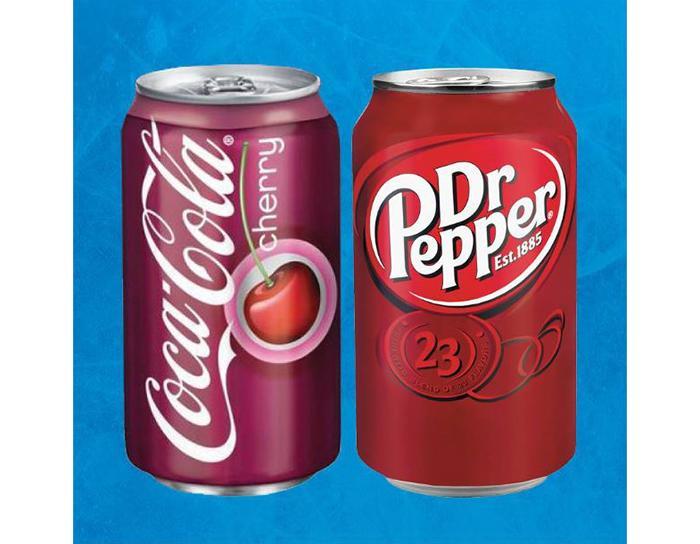
Cherry Coke’s Focused Cherry Profile
Cherry Coke is a completely different design philosophy. It doesn’t try to puzzle you. The ingredients in Cherry Coke include carbonated water, high-fructose corn syrup, caramel color, phosphoric acid, natural flavors, caffeine, and artificial cherry flavoring. It’s Coca-Cola’s clean, familiar cola foundation with a bright, upfront cherry note layered on top.
Read More : How To Drink Without Swallowing Updated 09/2026
Coke’s taste is crisper and has a more pronounced citrus and vanilla finish compared to Dr Pepper’s spicier, cherry-forward taste. It’s the quintessential cola flavor that has defined the category for over a century.
Where Dr Pepper’s cherry is suggested, Cherry Coke’s cherry is declared. It’s sweeter, more straightforward, and unmistakably fruity from the first sip. That clarity is actually a strength, not a weakness. There’s no guessing game, and for many drinkers, that’s exactly the point.
The one-sentence version: Dr Pepper tastes like a spiced, complex mystery drink that hints at cherry. Cherry Coke tastes like someone dropped a perfect maraschino cherry into your favorite Coke.
Nutrition and Ingredients: A Head-to-Head Look
Both drinks carry a similar nutritional footprint, but there are meaningful differences worth knowing, especially if you’re mixing these into cocktails and tracking what you’re consuming over a long evening.
| Category | Dr Pepper (12 fl oz) | Cherry Coke (12 fl oz) |
|---|---|---|
| Calories | 150 | 150 |
| Total Sugar | 40g | 39g |
| Sodium | 55mg | 45mg |
| Caffeine | 42mg | 34mg |
| Carbohydrates | 40g | 42g |
| Preservatives | Sodium Benzoate | None (standard) |
| Flavor Source | Proprietary 23-flavor blend | Natural flavors + cherry flavoring |
| Cola Classification | Non-cola (ATF classified) | Cola |
The most practically important difference here is caffeine. A 12-ounce Coca-Cola Cherry can contains 34mg of caffeine. Dr Pepper contains roughly 42mg. Over the course of an evening where you’re mixing sodas with spirits, those 8 extra milligrams per can can add up. If you’re someone who is sensitive to caffeine late at night, Cherry Coke gives you a slight edge.
The U.S. Bureau of Alcohol, Tobacco, Firearms and Explosives (ATF) classifies Dr Pepper as a “flavored carbonated beverage,” not a cola, confirmed in its federal product registration. This is because colas are defined by the inclusion of kola nut extract or synthetic kola flavoring, and Dr Pepper contains neither.
Both drinks are high in added sugars and are best treated as occasional indulgences rather than everyday staples. Neither provides any meaningful vitamins, fiber, or protein.
Zero Sugar and Diet Variants: Both Are in the Game
If you’re cutting back on sugar but still want that mixer for your whiskey, both brands have you covered.
Dr Pepper Zero Sugar uses acesulfame potassium and aspartame to replicate the original flavor. Many fans argue it comes closer to the original than most diet sodas match their full-sugar counterparts, largely because Dr Pepper’s complex flavor architecture masks the aftertaste of artificial sweeteners more effectively than a simpler cola profile does.
Coca-Cola Cherry Zero Sugar, the low-calorie variant based on Coca-Cola Zero Sugar, was introduced in February 2007 in the United States as Coca-Cola Cherry Zero. It uses aspartame, potassium benzoate, acesulfame potassium, and potassium citrate.
Both zero-sugar versions are legitimate mixer options for cocktails. When diluted with spirits and ice, the sweetener aftertaste that some people notice in straight sips tends to fade considerably.
Cocktail Potential: This Is Where Things Get Really Interesting
For anyone who enjoys beer, wine, and cocktails, the real value of knowing the difference between these two sodas is understanding how they perform behind the bar. They behave very differently as mixers, and using the right one can genuinely elevate a drink.
Dr Pepper as a Cocktail Mixer
Dr Pepper’s spiced, complex profile makes it one of the most versatile and underrated soda mixers in American bartending culture. Its fruit-and-spice backbone means it plays well with spirits that have their own complexity.
Whiskey and Bourbon: The natural pairing. Dr Pepper has strong tastes of spices and cherries as well as hints of licorice and almond. When you mix it with whiskey, you get a complex and robust flavor profile full of spice and sweet flavors. A simple 2 oz bourbon over ice, topped with Dr Pepper and garnished with a lime wedge, is an outstanding highball that holds its own at any gathering.
The Dr Pepper Old Fashioned: A modern riff on a classic. Build it with 2 oz bourbon, ½ oz cherry liqueur (Heering or Luxardo both work brilliantly), two dashes of Angostura bitters, one large ice cube, and a 1-2 oz splash of Dr Pepper to top. Finish with a twisted orange peel and a maraschino cherry. The combination gives you something that feels vintage yet modern, familiar yet daring, merging the deep, oak-aged warmth of bourbon with the nostalgic fizz of one of America’s most iconic soft drinks.
The Dirty Dr Pepper: A crowd-pleasing party cocktail. Fill a glass with ice, add 1½ oz amaretto and 1½ oz Fireball or cinnamon whiskey, and top with Dr Pepper. The cinnamon-cherry combination is addictive.
Vodka and Dr Pepper: Dirty Dr Pepper cocktails combine vodka with Dr Pepper to create a sweet, vanilla-forward drink that is easy to prepare and widely familiar. Vodka is favored because it supports Dr Pepper’s flavor complexity while maintaining balance.
Bartenders prefer Dr Pepper in certain cocktails due to its nuanced flavor profile, and it works better than cola in whiskey-based drinks like “Pepper Whiskey” due to its complexity.
Cherry Coke as a Cocktail Mixer
Cherry Coke earns its place behind the bar by doing something Dr Pepper doesn’t: amplifying sweetness and cherry without adding complexity. When you want cherry flavor to be the dominant note in a drink, Cherry Coke is your weapon.
Rum and Cherry Coke: This is the natural home of Cherry Coke as a mixer. The sweet, fruit-forward profile of Cherry Coke marries beautifully with rum, especially spiced rum or dark rum. A straightforward approach: pour black cherry rum over ice, fill with cola, and squeeze in a lime wedge. Garnish with a cherry if desired. The result is sweeter and fruitier than a standard Cuba Libre, with a layered cherry character.
Bourbon Cherry Coke: For a homemade take, muddle fresh cherries with bourbon and sugar, shake it in a bar shaker, strain it into glasses over ice, and top off with Coke. The fresh cherries add another dimension of flavor to what is a very simple cocktail.
Spiked Cherry Cola: Combine spiced rum with cherry liqueur (like Heering) and Cherry Coke over ice in a pint glass. Garnish with maraschino cherries. Combining the bold flavors of spiced rum with the sweet and fizzy delight of classic cola and cherry liqueur, this drink is a guaranteed crowd-pleaser for summer gatherings.
The Mixer Decision Matrix
| Spirit | Better With | Why |
|---|---|---|
| Bourbon / Rye Whiskey | Dr Pepper | Spice complements spice; complexity matches complexity |
| Spiced Rum | Cherry Coke | Cherry sweetness amplifies rum’s fruitiness |
| Vodka | Dr Pepper | Clean spirit benefits from Dr Pepper’s layered flavor |
| Dark Rum | Cherry Coke | Fruit-forward harmony; classic Cuba Libre upgrade |
| Amaretto | Dr Pepper | Almond notes in both create a seamless blend |
| Whiskey + Citrus | Dr Pepper | The lime/lemon cuts through the spice beautifully |
| Tennessee Whiskey | Either | Both work; Cherry Coke for sweeter, Dr Pepper for spicier |
Food Pairings: Forget the Usual Rules
Read More : Red Bull Shortage Updated 09/2026
Both sodas have strong opinions about food, and those opinions come from their flavor DNA.
Dr Pepper and food: Dr Pepper’s complex profile complements barbecue and spicy foods better than traditional colas, and Texas restaurants commonly serve it with brisket. Its spiced, fruit-forward notes cut through fatty smoked meats without clashing. It also works surprisingly well alongside Tex-Mex, spicy wings, and anything with a dark, umami-rich sauce. Use Dr Pepper for slow-cooked, spiced, or umami-rich dishes.
Cherry Coke and food: Cherry Coke’s cleaner, sweeter profile pairs well with lighter fare: pizza, fast food burgers, and casual bar snacks. It also plays nicely with desserts, especially chocolate-based ones, where its cherry sweetness echoes classic Black Forest flavor combinations. Its cola backbone makes it versatile at the table without the spiced depth that can occasionally clash with delicate flavors.
Market Position and Cultural Moment
For decades, the soft drink hierarchy in America was simple: Coke first, Pepsi second, everyone else fighting for the scraps. That script has been rewritten.
Coke is still the top soda in America. But the runner-up spot, long held by Pepsi, now belongs to Dr Pepper. The U.S. carbonated soft drink market in 2024 shows Coca-Cola Classic at 19.2% market share, with Dr Pepper emerging as a formidable challenger at 8.7%, marginally ahead of Pepsi’s 8.3%.
Dr Pepper’s ascent to the number two spot is attributed to its unique flavor profile, aggressive marketing, and its branding as a “treat” soda. Its success with younger demographics, particularly Generation Z, and its presence on social media platforms like TikTok have been significant drivers. The viral “dirty soda” trend, which involves mixing soda with cream, coconut syrup, or flavored syrups, has been particularly powerful for Dr Pepper’s image.
Cherry Coke, while not occupying a top-three position individually, remains one of the most recognizable and beloved flavored sodas in the country. Its 40-year run, its use in cocktail culture, and its nostalgic association with movie theaters and diners keep it culturally embedded in American life. The brand has also benefited from Coca-Cola’s renewed global push. In October 2025, the drink was relaunched in Great Britain with the same retro packaging as the US and Canada, and in December 2025, Coca-Cola announced that the drink would see a permanent return in the UK beginning in January 2026.
The “They Taste the Same” Myth: Let’s End It
The most persistent myth in this debate is that Dr Pepper is basically just a cherry cola, or that Cherry Coke and Dr Pepper are close enough to be interchangeable. Both ideas are wrong, and here’s the clinical explanation.
Sensory analysis shows only 30% flavor overlap between Dr Pepper and Coke products. Dr Pepper’s dominant notes (almond, licorice, amaretto) don’t exist in Coke’s profile at all.
A quick taste comparison between Dr Pepper and either Wild Cherry Pepsi or Cherry Coke should convince you that Dr Pepper contains flavor components not found in standard cherry colas.
Roughly 30% of the population carries genetic variants that heighten sensitivity to compounds like eugenol (clove oil) and vanillin, which interact with bitter-taste receptors. This makes Dr Pepper taste “antiseptic” or “cough syrup-like” to some people. This is a documented genetic trait, not a flaw in the formulation. If you’ve ever met someone who claims to hate Dr Pepper, there’s a decent biological reason for that reaction.
Cherry Coke, by contrast, rarely triggers that kind of extreme reaction. Its profile is more universally accessible because it’s built on a cola base that most Americans grew up drinking.
Dr Pepper Cherry vs. Cherry Coke: The Within-Brand Comparison
It’s worth addressing the version of Dr Pepper that overlaps most directly with Cherry Coke: Dr Pepper Cherry.
Since 2004, Keurig Dr Pepper has released multiple limited-edition cherry-infused variants under names like Dr Pepper Cherry, Dr Pepper Cherry Vanilla, and Dr Pepper Cherry Lime. These are distinct SKUs with separate formulations, not repackaged versions of the original. Each contains added cherry flavoring listed explicitly in ingredients, higher levels of red fruit esters, and often a brighter, more forward tartness than classic Dr Pepper.
Unlike Cherry Coke, which builds on cola’s vanilla-citrus base, Dr Pepper Cherry starts from a spicier, more herbal foundation, making its cherry impression sharper and less syrupy.
Even in their most similar configurations, the two drinks are architecturally different. Cherry Coke will always be a cola with cherry layered on top. Dr Pepper Cherry is a complex spiced beverage with cherry amplified, not added as a primary component.
So Which One Should You Reach For?
The honest answer is that these sodas serve different moments, and the better choice depends entirely on what you’re doing.
Reach for Dr Pepper when:
- You’re mixing a serious whiskey cocktail and want a soda that contributes complexity, not just sweetness
- You’re eating barbecue, brisket, pulled pork, or anything smoky and spiced
- You want a standalone soda that rewards attention and offers something interesting to sip
- You’re bored with standard cola and want something that actually tastes different
Reach for Cherry Coke when:
- You’re building a rum cocktail and want the cherry flavor to lead
- You want the familiar Coca-Cola experience with a bright, sweet twist
- You’re pairing it with pizza, fast food, or casual bar food
- You want something approachable and universally crowd-pleasing at a party
- You want slightly less caffeine over a long evening of drinking
Both sodas are genuinely excellent in the right context. The people who insist one is clearly better than the other are usually just describing the context they prefer. A bourbon-and-Dr-Pepper at a Texas BBQ and a rum-and-Cherry-Coke on a summer deck are both perfect drinks in their own right.
What they are not is the same drink. The next time someone suggests you swap one for the other, crack open both, taste them back-to-back, and let the 23 flavors speak for themselves.
All nutritional data sourced from official brand nutrition panels and Coca-Cola product information. Market share data from Beverage Digest, 2024. Cocktail recipes are intended for adults 21 and older. Please drink responsibly.
Sources: https://chesbrewco.com
Category: Drink