If you’ve spent any time hunting through convenience store coolers or browsing the energy drink aisle at your local gas station, you’ve probably noticed that Monster Ubermonster is nowhere to be found. Maybe you tried it once and loved it, or maybe a friend swore by it and you never got the chance to grab one before it vanished. Either way, you’re not imagining things. Yes, Ubermonster has been officially discontinued, and it’s been gone long enough to become a genuine collector’s item traded on eBay and specialty forums across the country.
But the story of Ubermonster isn’t just a corporate footnote. It’s actually one of the most fascinating product launches and quiet disappearances in the modern energy drink market, especially for Americans who appreciate beverages that blur the line between craft beer, German brews, and high-octane energy drinks. If you’re a beer lover who’s also into energy drinks, or someone who simply misses that one specific bottle you used to grab on your way to work, this is the full story you’ve been looking for.
You Are Watching: Is Ubermonster Discontinued Updated 09/2026
What Exactly Was Ubermonster?
Before digging into its fate, it’s worth understanding just how unusual Ubermonster was in the landscape of American beverages.
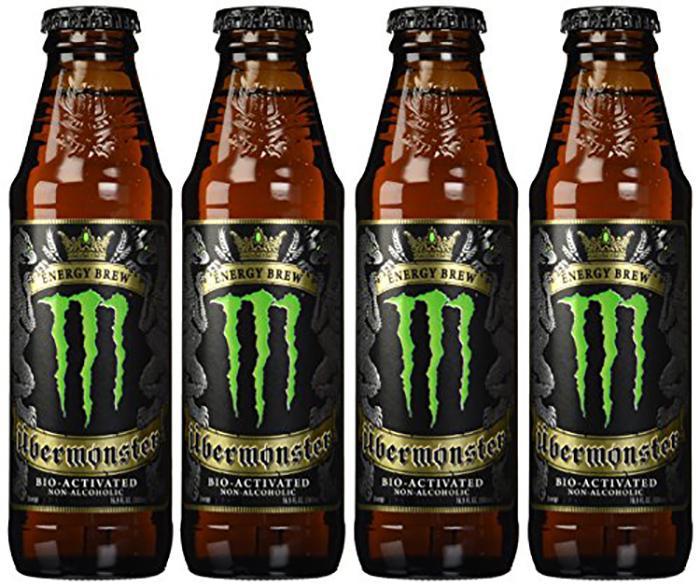
Ubermonster was a non-alcoholic energy brew produced by Monster Energy, the brand owned by Monster Beverage Corporation. The “Uber” part of the name is directly borrowed from German, where the word über means “superior, above the norm, or the ultimate.” The full product name on the bottle read: UberMonster: The Ultimate Energy Brew from Monster.
But here’s what made it genuinely unique compared to every other Monster product on the shelf: it was brewed, not blended. While standard Monster Energy drinks are manufactured through a conventional mixing and carbonation process, Ubermonster was produced using what the label described as “proprietary German brewing technology.” Specifically, a special microbe was used to ferment malted barley, creating what the brand called a “Bio-Activated” energy brew. The result was a clean, crisp base without any alcohol, but with the depth and character that fermentation brings to a liquid.
Ubermonster is a non-alcoholic energy drink made with a base of fermented malt. The fermented malt gives it a subtle yet unique finish, with some resemblance to non-alcoholic beer.
Think about what that means for someone who enjoys craft beer. Instead of the typical artificially carbonated, lab-mixed flavor profile of a conventional energy drink, Ubermonster had a naturally complex undertone, a slight malty depth that you could actually taste if you slowed down and paid attention. It wasn’t a beer. It wasn’t trying to be a beer. But it was closer to the spirit of a craft brew than anything Monster had ever attempted.
The Bottle That Changed Everything
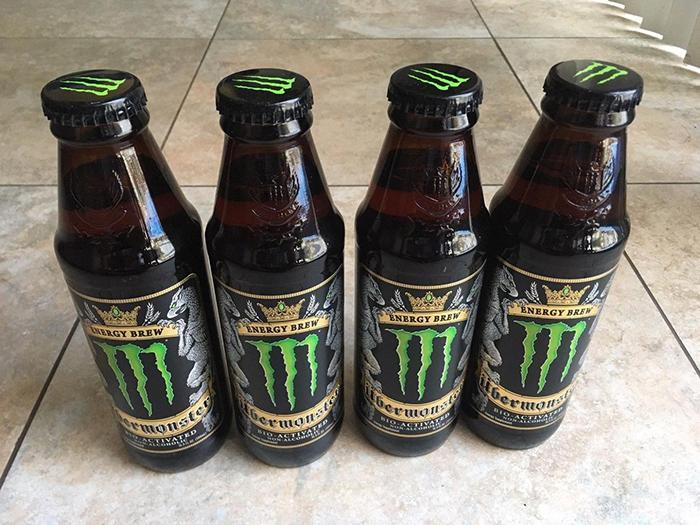
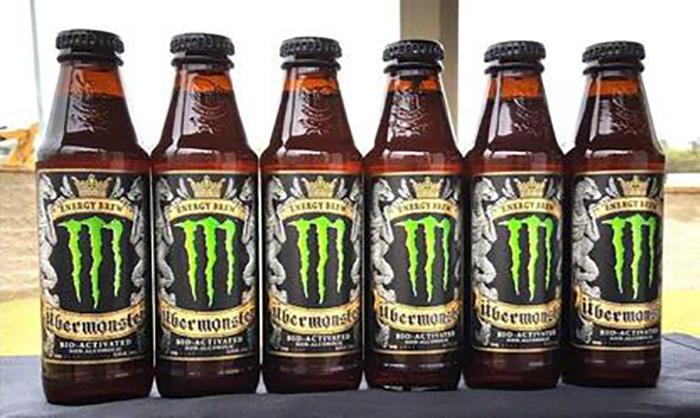
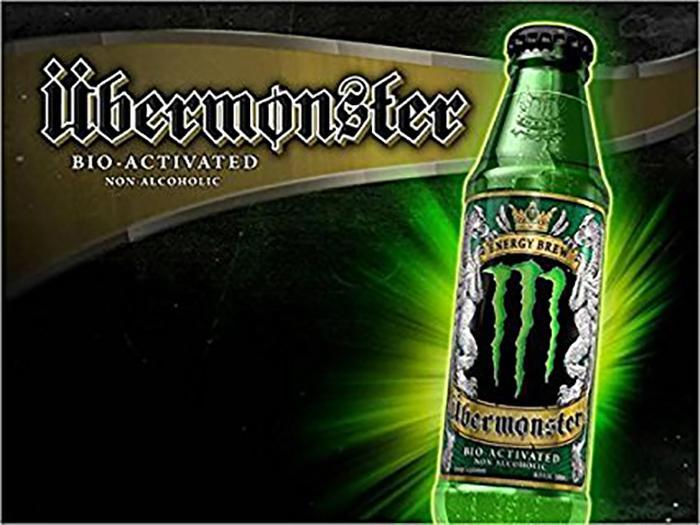
One of the most talked-about features of Ubermonster wasn’t even the drink itself — it was the packaging. Monster used a 16.9 oz. green glass bottle with a textured label featuring a raised Monster logo and gold metallic accents. It’s a very original approach to the category, executed nicely, with the only clunky part being the wide mouth to the bottle, which takes some getting used to.
Early reviewers frequently described the bottle as something that looked like it belonged in a German beer hall or next to a bottle of Jägermeister on a backbar. The label featured elaborate griffin imagery, black and gold typography, and a premium Gothic-style aesthetic that set it apart from Monster’s characteristic neon-and-black can design. The label read: “Produced using proprietary German brewing technology. We ‘borrowed’ a German brewing process which uses a special microbe to ferment malted barley. The resulting ‘Bio-Activated’ energy brew has a clean, crisp taste without the alcohol. No regular bottle could handle this evil energy brewski. So we designed our own with the biggest wide mouth opening we could make.”
The bottle required a bottle opener to get into, which was intentional. The cap was notoriously stubborn, so much so that the brand leaned into it with the playful marketing line: “The big ass cap is a little hard to pry off, but it’s sorta like, if you can’t open it you shouldn’t be able to drink it.”
When Did Ubermonster Launch?
Ubermonster first appeared in select stores in the United States around 2010 to 2012, making its debut in limited markets before slowly trickling into convenience stores and gas stations across the country. Early adopters described the experience of hunting for the bottle as part of the thrill. Distribution was intentionally narrow, never reaching the widespread availability of flagship Monster products.
Ubermonster was one of the harder-to-find Monster products, expected to stay on the hard-to-find side of things, at least for a while.
Reviews from 2012 treated it as a newly released curiosity. Beverage enthusiasts would travel to specific gas stations that were rumored to carry it, similar to the way craft beer drinkers hunt for limited-release tap handles. The price point reflected that premium positioning. Unlike a standard Monster can retailing around $2 to $3, Ubermonster glass bottles were typically sold for $4.25 to $5.00 apiece, placing it firmly in a different tier of the energy drink market.
What Did Ubermonster Actually Taste Like?
This is where things get interesting, because the reviews on Ubermonster’s flavor are fascinatingly divided, in a way that tells a larger story about why it ultimately disappeared.
The Aroma
Multiple reviewers noted that popping the wide-mouthed cap open released an aroma that was simultaneously familiar and slightly off — in the best possible way. It smelled like Monster Energy, but with a faintly funky, malty undercurrent. Think of the difference between mass-produced light beer and a freshly poured amber ale at a brewpub. The base was recognizable, but something more interesting was happening underneath it.
The Taste
On first sip, Ubermonster wasn’t that different from original Monster. It seemed a bit sweeter and maybe a little smoother as well. Its carbonation matched the rest of the Monster family.
The energy ingredients included 160mg of caffeine, 2,000mg of taurine, and 400mg of ginseng, all in the usual Monster Energy blend.
Other reviewers described the profile as “cotton candy, vanilla, and gummy apple,” but with less of the harsh acidic bite that standard energy drinks carry. It reminded one reviewer of a standard energy drink but lacked the harsh acidic bite that a lot of them have. It was more smooth and mellow, and very sweet.
The malt fermentation process did leave a trace. You could sense it in the finish, especially if you had experience tasting craft beers or non-alcoholic malt beverages. But it was subtle. Not everyone picked it up, and many casual drinkers concluded it tasted essentially like regular Monster in an expensive bottle.
The Energy
Read More : What Is Cream Soda Updated 09/2026
Here’s where Ubermonster consistently impressed even its harshest critics. The energy blend in the bottle contained 5,000mg of active ingredients. The kick snuck up, with no jitters, and came within 20 minutes. It was fantastic, providing energy for about 4 hours with a very tiny crash at the end.
It really delivered on the energy promise, with very low twitch, and kept one reviewer at 100% for hours.
For beer drinkers who wanted a mid-afternoon pickup without the alcohol slump, or for cocktail lovers who wanted something premium-feeling to reach for during a long shift, Ubermonster offered a genuinely compelling energy experience. The glass bottle also meant you felt like you were drinking something, not just chugging a can.
The Complete Ingredient Breakdown
The full ingredient list for Ubermonster included: Carbonated Water, Sucrose, Non-Alcohol Fermented Malt Base (Contains Barley, Casein from Milk), Glucose, Citric Acid, Taurine, Sodium Citrate, Natural Flavor, Panax Ginseng Root Extract, L-Carnitine, Grape Skin Extract (Color), Maltodextrin, Caffeine, Caramel Color, Malic Acid, Sucralose, Niacinamide, Inositol, D-Glucuronolactone, Pyridoxine Hydrochloride, Quercetin Dihydrate, Guarana Seed Extract, Japanese Knotweed Plant Extract (98% Resveratrol), and Cyanocobalamin.
What stands out here compared to a standard Monster Energy drink:
| Ingredient | Standard Monster | Ubermonster |
|---|---|---|
| Base | Carbonated water | Carbonated water + Fermented Malt Base |
| Packaging | Aluminum can (16 oz) | Embossed glass bottle (16.9 oz) |
| Caffeine | ~160mg | ~160mg |
| Taurine | 1,000mg | 2,000mg |
| Ginseng | Present | 400mg (stated) |
| Resveratrol | No | Yes (Japanese Knotweed Extract) |
| Quercetin | No | Yes |
| Alcohol | None | None (non-alcoholic brew) |
| Price (retail) | $2–$3 | $4.25–$5.00 |
The inclusion of resveratrol and quercetin is worth noting for drinkers who pay attention to functional ingredients. Resveratrol, famously found in red wine, is an antioxidant compound associated with cardiovascular health. Quercetin is a plant flavonoid with anti-inflammatory properties. Neither of these appeared in the original Monster formula, giving Ubermonster a modest premium-health angle that was ahead of its time in the early 2010s beverage market.
So Why Was Ubermonster Discontinued?
This is the question that still generates discussion on Reddit threads, energy drink collector forums, and beverage industry blogs. The honest answer is a combination of factors, none of which alone would have killed it, but together proved fatal.
Limited Distribution Was a Structural Problem
From day one, Ubermonster was available only in select convenience stores and gas stations. It never landed on the shelves of major grocery chains or big-box retailers. This wasn’t just a logistical quirk. It meant that most Americans who walked into a Walmart, Target, or even a large grocery chain never once saw the product. You couldn’t impulse-buy it because you’d never seen it.
This is a structural death sentence for a beverage brand. When a product only exists where people specifically seek it out, its growth ceiling is low and its vulnerability to supply chain hiccups is extremely high.
The Glass Bottle Was Beautiful But Expensive
There’s a reason virtually every mass-market energy drink is sold in aluminum cans. Cans are cheap to produce, lightweight to ship, easy to stack, and simple to recycle. Glass is heavy, fragile, expensive to manufacture in custom shapes, and requires different cooler display infrastructure.
Monster’s investment in a proprietary wide-mouth green glass bottle for Ubermonster was genuinely impressive from a brand-design perspective. But it translated into higher per-unit cost, reduced shipping efficiency, and greater breakage risk throughout the supply chain. For a product that was already selling at a limited volume through a narrow distribution network, these economics were difficult to justify.
The Taste Didn’t Justify the Price for Casual Consumers
While Ubermonster took Monster’s classic energy drink in a whole new direction, with its different production approach promising a new experience, it was slightly disappointing that Ubermonster basically tasted exactly like regular Monster. Although people noted it was a bit more sugary and slightly smoother, there wasn’t much to set this drink apart. With the money Monster probably sunk into making this drink happen, and its ultimate indistinct taste, it didn’t quite justify its place in the lineup.
This is the core tension. Beer drinkers and craft beverage enthusiasts who tried Ubermonster often appreciated its subtleties. But mainstream energy drink consumers, who represented the bulk of the market, didn’t perceive enough difference from a $2.50 aluminum can to justify paying double the price.
Marketing Faded After the Launch Buzz
Monster gave Ubermonster a reasonable amount of attention when it launched. The packaging itself was extraordinary marketing material, and early adopters spread the word organically. But sustained advertising support wasn’t maintained. Without ongoing visibility in a market that runs on hype cycles and brand loyalty, consumer awareness steadily eroded.
BevNET’s Final Verdict
The official BevNET brand database, a primary industry source for beverage data, simply notes: “This brand is no longer on the market.” No specific discontinuation announcement was ever made publicly by Monster Beverage Corporation. The product simply stopped appearing in distributor networks, inventory ran dry, and by the time fans noticed it was gone, there was nothing left to find in retail.
The Collector Market: What Ubermonster Is Worth Now
Here’s where things get genuinely interesting for beverage enthusiasts.
Ubermonster was soon discontinued and has since become a collector’s item.
The secondary market for sealed, unopened Ubermonster bottles has been active for years on platforms like eBay and WorthPoint. The bottles are in a glass embossed design, were a limited edition item, and are discontinued now, with no expiration date stamped or printed on the glass bottle.
Current listings on eBay show sealed single bottles selling for anywhere from $12 to $30+, depending on condition, while multi-packs of four to six bottles command significantly higher prices. The collectibility comes from several factors working together: the bottle’s premium design, the product’s genuine rarity, the nostalgia factor among energy drink communities, and the simple fact that Monster has never hinted at bringing it back.
Online communities such as Reddit’s r/energydrinks and Facebook collector groups have preserved discussions, taste tests, and even barter systems for unopened cans.
If you happen to find a sealed Ubermonster bottle at an estate sale, antique store, or forgotten stock in the back of a small convenience store, do not crack it open without first checking its current resale value.
How Ubermonster Compares to Other Discontinued Monster Products
Monster has a long history of launching innovative products that quietly exit the market. Ubermonster isn’t alone. Here’s how it stacks up against some of the brand’s other notable discontinuations:
| Product | Key Feature | Approx. Run | Reason Discontinued |
|---|---|---|---|
| Ubermonster | Fermented malt brew, glass bottle | 2010–2015 | Limited distribution, cost, taste gap |
| Monster M-80 | 80% juice content, tropical fruit | 2000s | Low volume, replaced by Juice Ripper |
| Swiss Chocolate Java | Swiss-style chocolate, brewed coffee | 2010s | One of the lowest-selling flavors |
| Monster Mule | Ginger beer flavor, zero sugar | 2020s | Discontinued without warning |
| Monster Ultra Citron | Citrus-infused Zero Ultra | 2010s–2020s | Unclear; fan base still active |
| Monster Reserve Watermelon | Watermelon, black can | ~2022–2023 | Retired as part of SKU rationalization |
Read More : Is Amino Energy Good For You Updated 09/2026
Since 2002, Monster Energy drinks have taken the world by storm. The brand has generated more than $7 billion in revenue annually since 2023 and has released over 100 different flavors and varieties since its conception. Managing that kind of portfolio means constantly trimming underperformers, and Ubermonster, for all its innovation, was never a volume driver.
What Replaced Ubermonster for Beer-Adjacent Drinkers?
If you loved Ubermonster for its beer-like character, its glass bottle, and its premium positioning, the bad news is that nothing has directly replaced it in Monster’s lineup. However, there are some related products worth knowing about:
Monster Import
Ubermonster was brewed, meaning fermented, similar to beer. Import is not. That’s why it tasted different. Ubermonster was discontinued, so Import is considered the next best thing.
Monster Import comes in a sleek metallic European-style can and has a distinct, slightly different flavor profile compared to original Monster. It’s more widely available and far less expensive per unit.
Monster The Beast Unleashed
In 2023, Monster made a major move into the alcohol-adjacent beverage market. In 2023, Monster launched the Monster Beast line of alcoholic beverages. The first release, The Beast Unleashed, featured flavors inspired by classic Monster Energy drinks but reformulated without sugar or caffeine, and brewed with alcohol at 6.0% alcohol by volume.
For beer drinkers who enjoyed the idea of a brewed Monster product, The Beast Unleashed is the spiritual successor to what Ubermonster was trying to do, except this one actually contains alcohol. It’s positioned squarely in the flavored malt beverage (FMB) category, competing with brands like White Claw and Truly.
Monster Nasty Beast
Later in 2023, Monster introduced the Nasty Beast line, a series of hard iced tea beverages targeting the flavored malt beverage market and competing with brands like Twisted Tea.
If your palate runs toward iced teas and hard beverages rather than pure energy drinks, the Nasty Beast line represents Monster’s most aggressive push into the beer-and-FMB space.
Is There Any Chance Ubermonster Could Come Back?
This is the question that Monster fans on Reddit and energy drink forums have been debating for years. The short answer: unlikely, but not impossible.
Unlike other discontinued products that occasionally return through fan campaigns (like Vault or Surge), there has been no indication from Monster Beverage Corp. that these flavors will be reintroduced, even under different branding.
Monster has occasionally brought back discontinued flavors in limited runs, typically tied to seasonal promotions or nostalgia campaigns. But Ubermonster’s return would require bringing back the glass bottle infrastructure, the German brewing partnership, and a whole suite of production logistics that Monster has not maintained. The cost-benefit calculation for a niche product with a small (if passionate) fan base doesn’t currently pencil out.
The brand’s focus in 2023 and beyond has shifted clearly toward the alcoholic FMB market with Beast Unleashed and Nasty Beast, suggesting Monster found the actually-alcoholic version of this concept more commercially compelling than the brewed-but-non-alcoholic version that Ubermonster represented.
Where to Find Ubermonster Today
If you’re determined to get your hands on one, sealed Ubermonster bottles do still exist in the world. Here’s where people are finding them:
eBay: The most active secondary market for Ubermonster. Sealed single bottles and multi-packs appear regularly, though prices have risen significantly as remaining inventory dwindles. Expect to pay a premium for anything in pristine, unopened condition.
WorthPoint: A collectibles valuation site where past Ubermonster sales are cataloged. Useful for researching what sealed bottles have actually sold for, not just listed at.
Regional Distributors and Small Convenience Stores: For enthusiasts still seeking remnants of this fleeting phenomenon: keep your eyes peeled on regional distributors along with secondary markets like eBay where leftover stock may linger long after retail discontinuation. Occasionally, a small family-owned gas station or convenience store in a rural area will have old stock sitting in a back cooler or on a forgotten shelf. These finds are rare but real.
Estate Sales and Auctions: As odd as it sounds, estate sales sometimes surface beverage collections, including rare and discontinued energy drinks. Ubermonster bottles, especially in unopened condition, are legitimate finds at these events.
The Lasting Legacy of Ubermonster
In the grand timeline of American beverages, Ubermonster represents something genuinely interesting. It came at a moment when the craft beer revolution was changing how Americans thought about what they put in a glass. It said: what if an energy drink had the soul of a German lager? What if the packaging was as thoughtful as a fine wine bottle? What if you needed a bottle opener to get into your energy drink, like you would for a craft beer?
The market wasn’t quite ready for it, or at least not at the scale Monster needed. But the questions it asked were the right ones. You can trace a direct line from Ubermonster’s fermented malt concept to Monster’s eventual launch of The Beast Unleashed, where those same ideas got a second chance with an actual alcohol license behind them.
For beer drinkers, cocktail enthusiasts, and anyone who appreciates beverages that blur categories, Ubermonster was ahead of its time. It deserved more than it got.
Conclusion
Some products don’t just get discontinued. They become myths. Ubermonster, with its green glass bottle, its German brewing heritage, its wide-mouthed cap that required genuine effort to remove, and its quietly complex flavor, has achieved something rare in the energy drink world: it became more interesting after it disappeared. The sealed bottles now traded on eBay aren’t just beverages. They’re artifacts from a moment when Monster Energy briefly decided to make something that felt more like a craft brewery experiment than a mass-market product.
If you never tried it, you missed something genuinely unusual. If you did try it and loved it, you’re part of a small, passionate community of people who still remember reaching into a convenience store cooler and pulling out something that looked and felt unlike anything else on the shelf. That memory isn’t going anywhere, even if the product already has.
Sources: https://chesbrewco.com
Category: Drink