If you’ve spent any Sunday night on the couch with a cold beer watching Jon Taffer tear into some hapless bar owner for serving warm draft from a broken walk-in cooler, you already know the pull of Bar Rescue. It’s part intervention, part renovation show, part bar school — and after more than a decade on air, it’s become one of the few reality franchises that actually makes you think about the business side of your favorite neighborhood spot. But here’s the question every fan eventually asks: what happened to all those bars after the cameras left?
The answer, as of 2026, is complicated, fascinating, and occasionally grim. With Season 10 now airing on Paramount Network and over 268 bars in the show’s history, there’s more to track than ever. Whether you’re a die-hard fan who’s watched every episode, a casual viewer who’s just discovered the show, or someone who simply appreciates good whiskey and the drama that surrounds it, this is your complete, no-fluff breakdown of where Bar Rescue stands today.
You Are Watching: Bar Rescue Updates 2026: Which Bars Survived, Which Ones Didn’t? Updated 10/2026
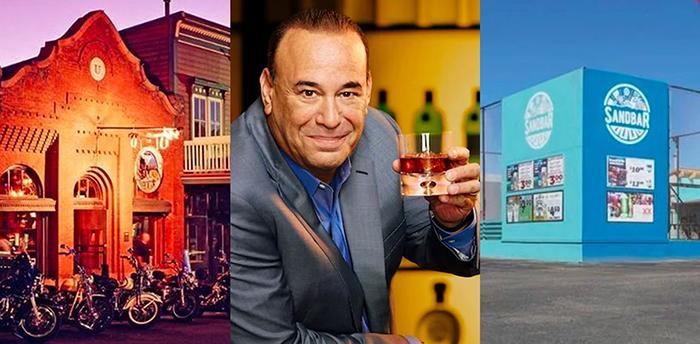
Jon Taffer and the Show That Refuses to Close
Jon Taffer is, by any reasonable measure, the most recognizable figure in American bar culture outside of an actual bartender. With nearly 40 years of experience in hospitality, nightlife, and consulting — working with brands like Anheuser-Busch, TGI Fridays, Buffalo Wild Wings, Ritz-Carlton, and NFL Network — he’s the kind of guy who can walk into a bar, order one drink, and immediately diagnose why the place is hemorrhaging money.
Bar Rescue premiered on July 17, 2011, on what was then called Spike TV. The premise was deceptively simple: Taffer and a rotating team of culinary and mixology experts parachute into failing bars, do undercover reconnaissance, conduct a high-pressure “stress test,” and then gut and rebuild the place — concept, name, equipment, menu, and staff training — in an impossibly short window. The grand reopening gets the bar back on its feet. In theory.
The show’s format has always had a specific rhythm. Taffer’s team surveys the bar like a military recon unit, often catching owners serving contaminated food, bartenders who can’t mix a basic cocktail, and walk-in coolers running at unsafe temperatures. Then comes the confrontation — the part that made Taffer a household name. “Shut it down!” His intensity isn’t theater; it’s the same no-nonsense approach he brings to his consulting firm, Taffer Dynamics.
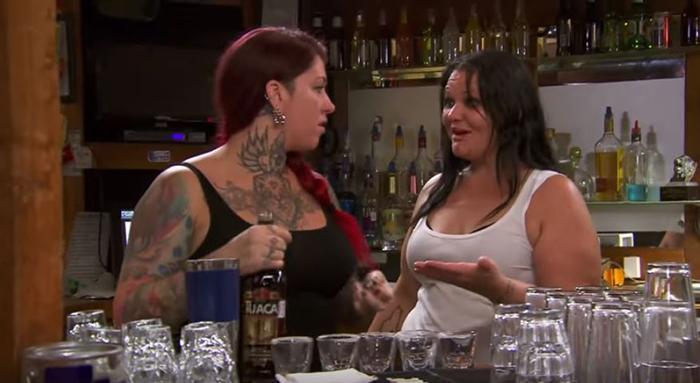
Season 10, which premiered February 22, 2026, marks a genuine milestone. Paramount Network called it the network’s longest-running unscripted series, and for good reason — it has outlasted trends, a pandemic, and a network reorganization that briefly threatened to cancel it entirely. This season takes Taffer through Florida, Georgia, Tennessee, and Kentucky, and features celebrity guests including Chris Kirkpatrick of NSYNC and AEW pro wrestler and actress Mercedes Varnado. Season 9 featured appearances from Donnie Wahlberg, Danny Trejo, and Phil Wills, among others.
Taffer himself, in a recent interview, put it plainly: “Bar Rescue has been the gift that keeps on giving. It has given me an opportunity to really impact people’s lives.” Off camera, he’s been busy expanding Taffer’s Tavern — his restaurant franchise concept that launched in Alpharetta, Georgia in 2020 — partnering with Craveworthy Brands in 2025 to scale it further, with new locations now open in Atlanta and Orlando. He’s also launched Taffer’s Browned Butter Bourbon, a rich bourbon with notes of vanilla and toffee inspired by his years of cocktail development.
The Real Numbers: How Many Bars Actually Made It?
Let’s get into the data, because the stats tell a story that surprises a lot of people.
As of 2026, the show has featured 268 bars across its run. Of those:
- 134 bars are still open — a 50% survival rate
- 134 bars have permanently closed
- A handful were sold to new owners
That 50% figure sounds low until you put it in context. The bar and restaurant industry has notoriously brutal failure rates to begin with. An estimated 30% of restaurants fail in their first year, and the bars that appear on Bar Rescue are specifically chosen because they are already deep in crisis — maxed-out debt, operational failures, ownership conflicts, or some combination of all three. Taffer isn’t walking into healthy businesses. He’s walking into the ones that called for help because they were about to fold.
Compare that to Kitchen Nightmares, Gordon Ramsay’s UK and US versions of the same concept applied to restaurants. By most analyses, Kitchen Nightmares restaurants have a lower long-term survival rate than Bar Rescue bars. Critics and analysts frequently cite Taffer’s methodology — stress testing, data-driven drink menu design, and hands-on staff training — as a reason the show produces better outcomes than its competitors.
Still, a 50% closure rate over 15 years means a lot of bars didn’t make it. Why? Several factors consistently appear:
Debt that was already too deep. Even with Taffer’s renovations and new equipment (all provided free by Spike/Paramount and partner sponsors), a bar that owes $500,000 or $800,000 before filming might generate better numbers but still can’t escape the financial hole.
Owners who revert. Taffer has no legal ability to force anyone to keep the changes once the crew leaves. A significant number of rescued bars quietly swapped back to their old names, old menus, and old habits within months. The cameras are gone. Nobody is watching. And old habits are hard to break when it’s your bar, your staff, and your money.
Read More : Is Vita Ice Good For You Updated 10/2026
COVID-19. The pandemic is directly responsible for a wave of closures among bars that had been genuinely thriving post-rescue. A bar that turned things around in 2016 or 2017, built up strong loyal traffic, and was on solid footing went into government-mandated shutdown in 2020 and never came back.
The permit problem. One of the more unglamorous behind-the-scenes realities is that production crews occasionally skipped the permit process on renovations. Rocky Point Cantina in Tempe, Arizona, is perhaps the most cited example — a code inspection triggered by a repaint revealed years of unpermitted modifications, which forced a closure.
The Biggest Success Stories Worth Knowing
Not everything is doom and loss. Some Bar Rescue bars didn’t just survive — they thrived in ways that make Taffer’s methodology look genuinely effective.
Spirits on Bourbon in New Orleans is the gold standard of what the show can accomplish. Taffer rescued the struggling bar, overhauled it, and by his own account, revenue grew from $2 million to $3 million over a decade. The two owners eventually sold the bar for a significant profit. Taffer still counts them among his personal friends.
Triple Nickel Tavern in Colorado Springs was $150,000 in debt when Taffer arrived, with an owner who treated the place as a hangout for friends rather than a business. Post-rescue, it maintained its punk-rock identity and live music programming and continued to draw loyal crowds.
Bamboo Beach Tiki Bar & Cafe in Fort Lauderdale, despite the owner’s resistance to Taffer’s original rebranding, held onto the new food program and built a strong tourist and local following. As of 2024, it held a 4.4-star rating on Google Reviews, with consistent praise for drinks, food, and atmosphere.
The Midway Tavern in Midvale, Utah — a rare example of a bar that kept Taffer’s new name — turned things around after serving sub-par food and struggling with volume. Reviews stayed positive for years, and the bar even gives Bar Rescue a shout-out on its website, which says something about how the owners felt about the experience.
Drunken Donkey / Butcher & Brew Pub had a long-running success story. Customers embraced the craft beer and signature food concept Taffer installed. The owners eventually returned to their original name, but the rescue was solid enough that they were able to open a second location — about as concrete a measure of success as there is in this industry.
The Failures That Stand Out
The failures are just as educational as the successes, and in many cases, they’re what make the show genuinely compelling viewing.
LABrewCo in Los Angeles is Taffer’s most expensive rescue and, by his own admission, his biggest failure. He invested $1 million into the bar — including a self-service beer tap and an in-house brewing system meant to make it a full craft brewery. Four months after filming, the brewing system had never been used, the self-serve tap had been disconnected, the bar’s liquor license was suspended, and the business was for sale. The owner reversed virtually every change. A million dollars, gone.
Gateway Pub & Grill in Hickory, North Carolina, was one of the more dramatic recent closures. The Hickory Police Department was called to the bar more than 250 times between January 2022 and June 2024. A police officer was shot while attempting to arrest an armed suspect near the bar in May 2024. The North Carolina Alcohol Law Enforcement suspended the liquor license, citing a documented history of firearms discharges, large-scale fights, and weapons violations. No renovation on earth fixes that.
Blue Velvet in St. Clair, Missouri — rescued from a bar called Brothers on Main — closed before its episode even aired. The two brothers who owned it continued to fight, and one left the business entirely. The rescue essentially happened to a partnership that was already over.
Smithton Station Classic Kitchen & Cocktails (formerly CJ’s Pub) switched back to its original name and also closed before its episode aired. Owner Christy received a job offer and, combined with offers that came in post-rescue, decided to sell.
The pattern in most high-profile failures is consistent: the problems that brought the bar to Bar Rescue in the first place were almost never just operational. They were personal. Family conflict, substance issues, criminal behavior, decades of debt, or ownership structures that were fundamentally broken from day one. Taffer can renovate a bar in 72 hours. He can’t repair a marriage, end an addiction, or eliminate $800,000 in debt.
How the Show Actually Works Behind the Scenes
There’s a lot of mythology around what’s real and what’s produced. Here’s what the evidence and various accounts from owners and former staff actually suggest:
The recon is real, but curated. Taffer’s team does conduct genuine surveillance, often catching things the owners don’t know about. But the editors obviously select the worst moments. The walk-in cooler at 85 degrees? The bartender who doesn’t know what goes in a gin and tonic? Those things happened, but they’re selected for maximum impact.
The stress test is genuinely brutal. The production brings in a crowd of real people — sometimes recruited, sometimes bar regulars, sometimes friends of the show — and the staff has to perform under real-world pressure. There’s no editing your way out of running out of glasses, pouring the wrong drink, or letting the kitchen fall behind. The stress test serves a real function: it shows the staff what peak service actually looks like, and it shows the owners what their staff can’t do yet.
Read More : Does Water Make You More Drunk? Updated 10/2026
Bars don’t pay for the renovation. Paramount Network and its sponsors cover the cost of equipment, design, and materials. The bar owner gives up the drama and the TV rights. This has led to some criticism that owners apply to the show to get a free renovation without actually being committed to change — which is almost certainly true in a handful of cases.
Taffer has walked away from bars. He’s left at least four without completing the rescue — typically in cases where the owner refused to engage, was combative beyond what Taffer considered productive, or where the bar’s problems were simply unsolvable within the show’s framework. The show has aired some of those moments, which make for some of the most memorable television in its run.
What Season 9 and Season 10 Reveal About the Show’s Direction
Season 9, which aired through 2024 and into early 2025, marked a notable shift: Jon Taffer stepped back from some rescues, allowing celebrity and expert guests like Danny Trejo, Jason Santos, and Phil Wills to lead interventions. Some episodes found Taffer consulting remotely rather than being present on the floor. This format change was polarizing among fans — many watch specifically for Taffer’s combustible energy and industry-veteran credibility, and an episode where Danny Trejo is running the rescue, while entertaining, isn’t quite the same show.
Season 10 appears to bring Taffer back to the foreground. The press materials and early episodes emphasize his “signature tough-love approach” and the show’s identity as a platform for “explosive confrontations, emotional breakthroughs, and inspiring turnarounds.” The celebrity guest list — Kirkpatrick, Varnado — suggests the producers are leaning into the entertainment value while keeping the core rescue format intact.
The states on the Season 10 itinerary — Florida, Georgia, Tennessee, and Kentucky — are rich territory for the show. The South has a dense bar culture rooted in bourbon, craft beer, and live music venues, all of which give Taffer specific angles to work with. A Tennessee honky-tonk in crisis plays differently than a Manhattan cocktail lounge, and the show has always been at its best when the local culture is baked into the rescue concept.
Bars from Season 10 already in the tracking databases: Apex Social (formerly Bar 44, Marietta, Georgia), Kiki’s: A Chicago Bar (formerly Main Street Hideaway, Ashland City, Tennessee), The Cask: A Whiskey Bar (formerly Game Room and Social Club, Orlando, Florida), and Chase’s Garage (formerly Alley Cat Dive Bar, Bowling Green, Kentucky). All are currently listed as open.
What Taffer’s Track Record Tells You About Bar Ownership
One of the more useful byproducts of watching Bar Rescue — if you’re a guy who’s ever nursed a beer and thought “I could run a bar” — is that it’s essentially a masterclass in how quickly a hospitality business can deteriorate when fundamentals are ignored.
Taffer has noted publicly that across hundreds of rescues, not one bar owner has ever told him “I have no excuses” for why their bar is failing. The excuses, he’s found, break down into a few consistent categories: fear (of upsetting employees, of making changes), ego (the owner knows better than everyone), ignorance (they simply don’t know what they don’t know), and scarcity thinking (it’s always about not having enough time or money, rather than using what they have better).
The data backs this up. Most Bar Rescue bars that fail do so not because Taffer’s renovations were wrong, but because the owners reverted to pre-rescue behavior once the accountability was gone. The ones that succeed almost universally did so because an owner or manager genuinely internalized the changes — and had the discipline to maintain them under pressure.
That’s a lesson that applies well beyond bars. But it plays out most vividly in a place where the product is social, where the margins are thin, where every bad Friday night is visible on the books, and where the owner is usually sitting six feet away from the customers watching it happen in real time.
Where to Watch and How to Follow the Updates
Bar Rescue airs on Paramount Network on Sundays at 10 PM ET/PT. Past episodes are available on Paramount+ and Pluto TV, which makes binge-watching the back catalog more accessible than ever.
For real-time tracking of which bars are open and closed, realitytvupdates.com maintains the most comprehensive database, updated regularly through 2026. barrescueupdates.com is the older tracking site but still logs episode-by-episode updates. Both are worth bookmarking if you want to look up a specific bar after watching an episode.
Jon Taffer is active on social media @jontaffer across Instagram, TikTok, X, and Facebook. For someone who projects authority and intensity on camera, his social content is surprisingly accessible — a mix of bar industry commentary, behind-the-scenes content, and promotion for his bourbon and Taffer’s Tavern expansions.
The conversation around the show on Reddit (primarily r/BarRescue) is worth exploring for deeper dives into specific episodes, owner responses, and the occasional appearance by people who worked at or frequented bars featured on the show.
The Bottom Line on Bar Rescue in 2026
Bar Rescue has been on the air for 15 years. It has featured 268 bars, maintained a 50% open rate against an industry backdrop where failure is the norm, weathered a global pandemic, navigated a network reorganization, and just kicked off its 10th season — with a renewed deal and celebrity guest appearances that suggest Paramount Network is fully committed to keeping it going.
Jon Taffer is 68 years old in 2026, still traveling to failing bars in Kentucky and Tennessee, still getting into the face of owners who’ve been running their business into the ground for a decade, and still — by his own account — finding that the hug at the end of the episode means more than the paycheck.
That’s a hell of a run for a show about saving dive bars. And if the next 268 bars are anything like the first, the story isn’t close to last call.
Sources: https://chesbrewco.com
Category: Drink