If you grew up in America, Kool-Aid is practically encoded in your DNA. That neon-red pitcher. The sticky fingers. The sugar mustache you wore all summer long. But here’s what nobody tells you: the real magic of Kool-Aid was never in drinking it straight. It was always in the mixing. Two packets, three packets, a wild afternoon experiment in your mother’s kitchen, and suddenly you had a concoction that tasted like nothing sold in any store.
- What Happened To Sobe Life Water Updated 10/2026
- How To Stop Feeling Sick When Drunk Updated 10/2026
- Brita Smart Light Battery Replacement: The Complete Guide Every Home Brewer and Drink Lover Needs Updated 10/2026
- What Happened To Gold Peak Raspberry Tea Updated 10/2026
- Where Is Jupina Soda From Updated 10/2026
Today, that same spirit of mixing and experimentation is very much alive, and it’s no longer just for kids. Whether you’re chasing nostalgia over a cold glass at a backyard barbecue, doctoring up a pitcher of party punch, or looking for a budget-friendly mixer to level up your vodka, rum, or tequila game, knowing the best Kool-Aid flavors to mix together is genuinely useful knowledge. This guide covers everything: flavor science, classic pairings, adult cocktail combos, triple-threat blends, and the community-tested recipes that have earned a permanent spot on the party table.
You Are Watching: Best Kool Aid Flavors To Mix Together Updated 10/2026
A Quick Look at What You’re Working With: The Kool-Aid Flavor Library
Before you can mix intelligently, you need to know your palette. Kool-Aid is an American brand of flavored drink mix owned by Kraft Heinz, based in Chicago, Illinois. The powder form was created by Edwin Perkins in 1927. The new product originally came in six flavors: grape, lemon-lime, cherry, orange, raspberry, and strawberry, and sold for ten cents per paper packet.
Nearly a century later, the lineup has exploded. Today, Kool-Aid comes in 20+ flavors. Current available flavors include Green Apple, Strawberry Kiwi, Peach Mango, Cherry Limeade, Tropical Punch, Lemonade, Pink Lemonade, Black Cherry, Sharkleberry Fin, and Invisible Grape. There are also specialty lines: the Kool-Aid Twists line introduced mashup flavors like Blastin’ Berry Cherry, Watermelon-Cherry, Great Blueberry, and Ice Blue Raspberry Lemonade, while the Aguas Frescas line features fruit-forward options like Pineapple, Jamaica (hibiscus), Mango, and Mandarina.
For mixing purposes, the core unsweetened packets are your best friends. They give you total control over sweetness, concentration, and layering, which is exactly what you want when you’re building a custom blend.
Here’s a quick snapshot of the current flavor categories:
| Flavor Category | Key Flavors | Flavor Profile |
|---|---|---|
| Classic Citrus | Lemonade, Pink Lemonade, Lemon-Lime | Tart, bright, acidic |
| Berry | Black Cherry, Cherry, Blue Raspberry Lemonade, Berry Blue | Sweet-tart, fruity |
| Tropical | Tropical Punch, Mango, Pineapple, Peach Mango | Sweet, exotic, light |
| Grape | Grape, Invisible Grape | Bold, rich, slightly tannic |
| Specialty | Watermelon, Green Apple, Strawberry Kiwi, Sharkleberry Fin | Unique, sweet-sour balance |
Why Mixing Kool-Aid Flavors Works So Well
There’s actual flavor science behind why Kool-Aid blends are so satisfying. The powders are built primarily on citric acid (for tartness), artificial flavor compounds (for the fruit character), and food coloring. Because the tartness level is relatively consistent across most flavors, you can combine them without one overwhelming the other.
The key principles at play:
- Complementary fruit families blend smoothly. Citrus + berry works because acidity bridges both categories. Grape + cherry works because both are bold, anthocyanin-adjacent flavors. Tropical + citrus works because the sweetness of mango or pineapple balances lemonade’s pucker.
- Contrasting flavors create complexity. Pairing something deeply sweet (grape, tropical punch) with something bracingly sour (lemon-lime, lemonade) creates a flavor that feels more three-dimensional than either alone.
- Color theory matters, too. Mixing red and blue makes purple. Mixing yellow and red makes orange. If your combination looks muddy, it’s a visual signal the flavors might clash. If it looks vibrant and clean, you’re probably on the right track.
- Concentration ratios matter. Most experienced Kool-Aid mixers use three packets per gallon rather than the standard two, because it gives you a more concentrated base that stays flavorful even when diluted by ice or alcohol.
The Classic Two-Flavor Combos That Never Miss
These are the pairings with the longest track records. They’ve been tested in backyards and kitchens across America for decades, and they consistently earn the highest ratings.
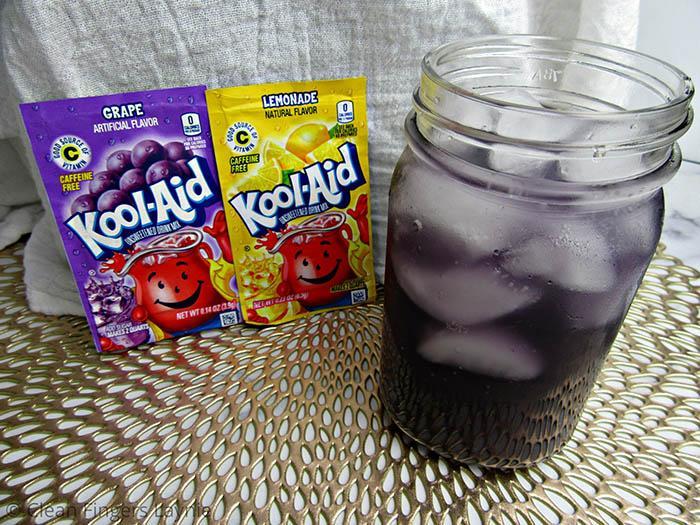
Grape + Lemonade (The Purplesaurus Rex Revival)
This is the legendary combo. When Kool-Aid’s fan-favorite Purplesaurus Rex flavor was discontinued, Kraft itself provided a substitute: mix together a packet of Grape Kool-Aid and Lemonade Kool-Aid. While it’s not exactly the same, it comes very close. The grape brings its rich, bold sweetness. The lemonade slices through with bright citric tartness. Together, they create something that tastes like a sophisticated grape lemonade with real depth. Use equal parts for the classic version, or lean slightly heavier on the lemonade (about 60/40) if you prefer a tarter finish.
Best with: Vodka, white wine spritzers, or straight over crushed ice.
Tropical Punch + Lemonade
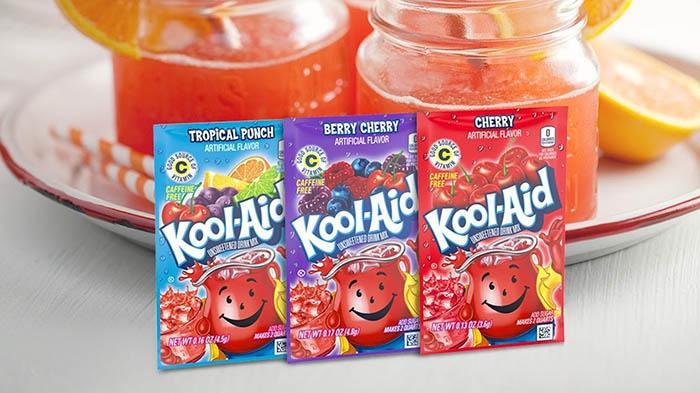
Tropical Punch is arguably Kool-Aid’s greatest achievement. Of all the Kool-Aid flavors, Tropical Punch is the most popular, not only because it brings together tasty fruit and citrus flavors, but because bright red is the quintessential Kool-Aid color. Pairing it with Lemonade lifts the whole drink, giving it a citrus backbone that keeps the tropical sweetness from going cloying. This is the foundation of some of the best adult party punches ever mixed.
Best with: Rum (light or coconut), prosecco, or lemon-lime soda.
Cherry + Black Cherry
This combo is for people who want the most cherry cherry drink possible without it tasting like a cough syrup. Regular Cherry is bright and candy-like. Black Cherry is deeper and slightly more adult, with a tartness that reads almost like actual cherry juice. Combined, they hit a sweet spot between playful and sophisticated. The pairing of Black Cherry and Lemonade is also a highly rated combination among serious Kool-Aid mixers.
Best with: Bourbon, whiskey, or dark rum.
Orange + Tropical Punch
The Grape and Orange combination was rated highly by a self-described “Guru of the GRAPE,” and the Orange and Tropical Punch combo has been specifically called out as a special-occasion mix. Orange adds a tangy brightness that keeps Tropical Punch from sitting too heavy. The color is a gorgeous deep amber-red, and the flavor reads like a fruit punch with a citrus backbone.
Best with: Tequila, light beer shandy-style, or as a sports drink substitute.
Blue Raspberry Lemonade + Lemonade
This is a crowd-pleaser for people who love the blue raspberry candy flavor but find it a little too one-dimensional on its own. Adding a full packet of standard Lemonade sharpens the tartness, dials back the cotton-candy sweetness, and creates a vibrant electric-blue drink that looks stunning in a clear pitcher or cocktail glass.
Read More : What Is A Cherry Phosphate Updated 10/2026
Best with: Coconut rum, vodka, or sparkling water.
Triple-Threat Blends: Three-Flavor Combinations for the Bold
Three-packet blends are where Kool-Aid mixing becomes an art form. The ratio shifts, the color becomes more complex, and the flavor profile develops layers you simply can’t get with two packets. The standard approach is to use three packets per gallon, one per flavor, and adjust the sugar up slightly (about 1.5 cups per gallon instead of 1) to compensate for the increased tartness.
The “Zombie Blood”: Lemonade + Pink Lemonade + Blue Raspberry Lemonade
One of the most celebrated triple-flavor combinations is: Lemonade, Pink Lemonade, and Blue Raspberry Lemonade, with one gallon of water and one and a half cups of sugar to let the lemon tartness shine. The originator named it “Zombie Blood.” The visual effect alone earns this one a permanent spot in the rotation. All three packets lean into citrus and berry territory, so the flavors integrate seamlessly. What you get is a complex, layered lemon-berry experience that hits tart, sweet, and fruity all at once. The color is a deep, brilliant purple that genuinely looks like something out of a Halloween movie.
Cherry + Grape + Black Cherry
The combination of Black Cherry, Lemonade, and Tropical Punch was described by one enthusiast as something a doctor would recommend, with the caveat of a dramatic side effect. And the Ice Blue Raspberry + Cherry combination was noted as an intense, undiluted experience in less than a quart of water. For the triple cherry-grape version: use one packet each of Cherry, Grape, and Black Cherry. This creates a deeply rich, berry-forward blend. Think a fancy grocery store “natural” fruit punch, but without the pretension. The grape grounds everything, the black cherry adds tartness and depth, and the regular cherry keeps it bright.
Orange + Cherry + Tropical Punch
This is the classic backyard barbecue punch formula, and it works because all three flavors exist in complementary frequency ranges. Orange brightens. Cherry sharpens. Tropical Punch sweetens and deepens the base. Together, they create something that tastes genuinely like a real fruit punch. This is also the blend that holds up best in large batches, because none of the three flavors dominates or fades over time in a big punch bowl.
Grape + Raspberry + Lemonade
This combination produces a flavor profile strikingly similar to a grape-raspberry lemonade you’d pay $7 for at a craft beverages stand. The raspberry (if using the classic unsweetened packet) adds a sharp, candy-like tartness that bridges the grape and lemonade beautifully. Use a 1:1:1 ratio as a starting point and adjust from there.
The Adult Upgrade: Best Kool-Aid Flavor Combos as Cocktail Mixers
Here’s where it gets really interesting for the beer, cocktail, and wine crowd. Kool-Aid isn’t just a nostalgic throwback. It’s an incredibly versatile cocktail ingredient. It’s shelf-stable, inexpensive, available in dozens of flavors, and provides both sweetness and acidity in a single packet. Many craft bartenders use house-made syrups with similar flavor profiles. Kool-Aid just does it cheaper.
These adult Kool-Aid cocktail recipes are inspired by classic combinations but are much easier to make in large batches. Whether you’re looking to save time with an easy party punch or just want to enjoy refreshing cocktails, the mixes turn any day into Funday.
Grape Kool-Aid + Vodka (The Purple Rain)
Grape sits around letting Tropical get all the attention, then when Tropical leaves the room, everyone whispers to Grape, “You’re actually my favorite.” Vodka is great because it adds the booziness you need without messing up that classic grape taste. The purple color sets it apart, making a visual splash as well. For the best version, make a full gallon of Grape Kool-Aid with 1 cup of sugar (slightly less than standard to account for the sweetness of the vodka), then add 1 liter of a mid-shelf vodka. Serve over lots of ice. For a more complex version, swap half the grape packet for Lemonade and you’re essentially making a spiked Purplesaurus Rex.
Tropical Punch + Rum (The Backyard Hurricane)
Follow the package directions to make a gallon of ice-cold Tropical Punch and mix with a liter of rum for a perfect treat at any summer party, with a flavor combination similar to a Hurricane cocktail. This combination works so well because rum and tropical fruit flavors are natural partners. The Kool-Aid’s citric acid mimics the lime juice in a traditional Hurricane, the sweetness mirrors grenadine and passion fruit syrup, and the result is something that drinks like a party cocktail at about a tenth of the cost. Garnish with fresh cherries and orange wedges.
Green Apple + Tequila (The Backyard Margarita)
Green Apple-flavored Kool-Aid is reminiscent of a sweet and sour mix, so tequila is the perfect companion. The unmistakable tequila and fruity Kool-Aid flavors mix well and aren’t too far off from the apple margaritas you find in some restaurants. This is also great to throw in the blender with some ice for a frosty frozen drink. Use one packet of Green Apple Kool-Aid mixed into two cups of water with ¾ cup of sugar, then combine with 6 oz of blanco tequila and the juice of one lime. Serve over ice with a salted rim, or blend with ice for a frozen version.
Black Cherry + Bourbon (The Southern Comfort Zone)
Jack Daniel’s and Black Cherry or Fruit Punch makes a wonderfully smooth drink, according to longtime Kool-Aid cocktail enthusiasts. This combination works because the dark, slightly tannic quality of black cherry Kool-Aid mirrors the stone fruit notes common in American bourbon. Mix one packet of Black Cherry with 2 cups of water and ½ cup of sugar to make a concentrate, then combine 2 oz of concentrate per 1.5 oz of bourbon. Serve on the rocks with a cherry garnish. It’s approachable and crowd-pleasing without being cloying.
Berry Blue + Coconut Rum (The Blue Lagoon Punch)
A refreshing drink combines Blue Raspberry and Lemonade flavors with coconut rum and pineapple juice for a taste of the tropics. For a full pitcher version: mix one packet Berry Blue and one packet Lemonade into a gallon base, reduce the water to three-quarters to increase concentration, add 1 liter of coconut rum, and finish with 16 oz of pineapple juice. The blue color is electric, the flavor is sweet and tropical, and the acid from the lemonade keeps it from being candy-sweet.
Tropical Punch + Grape + Lemonade + Vodka (The “Purple Pantie Pulldown” Party Punch)
This legendary party punch has been circulating in American backyard culture for decades. The classic recipe calls for one package of Grape, one package of Lemonade, two cups of sugar, and half a liter of vodka. A more modern, crowd-friendly update adds half a packet of Tropical Punch to the mix, which softens the grape-lemonade sharpness and adds a red tint that makes the color more festive. This is the punch you bring to a cookout when you want to be the most popular person there.
Flavor Pairing Guide: What Works and What Doesn’t
Not every combination is a winner. Here’s a practical reference for knowing what plays well together and what to avoid:
| Flavor 1 | Flavor 2 | Verdict | Why |
|---|---|---|---|
| Grape | Lemonade | ✅ Classic | Tart + sweet balance, proven combo |
| Tropical Punch | Cherry | ✅ Excellent | Complementary fruit profiles |
| Orange | Grape | ✅ Very Good | Citrus brightens bold grape |
| Black Cherry | Lemonade | ✅ Very Good | Dark fruit + acid = depth |
| Blue Raspberry | Pink Lemonade | ✅ Good | Sweet + slightly tart, great color |
| Strawberry | Watermelon | ✅ Good | Similar sweetness profiles, clean blend |
| Grape | Orange | ✅ Good | Classic, clean |
| Peach Mango | Lemonade | ✅ Interesting | Tropical-citrus hybrid |
| Green Apple | Grape | ⚠️ Tricky | Can turn muddy in flavor and color |
| Cherry | Green Apple | ⚠️ Proceed with caution | Apple can overwhelm cherry |
| Lemon-Lime | Grape | ❌ Not recommended | Bitter finish, flat color |
| Two citrus flavors (both tartness-dominant) | Together | ❌ Usually flat | Lack contrast, one-dimensional |
Pro Tips for Mixing Kool-Aid Like a Veteran
Use three packets per gallon instead of two. This gives you a more concentrated base that stays flavorful even when poured over lots of ice or diluted by alcohol. You can always scale the sugar down slightly if it becomes too sweet.
Dissolve the powder in warm water first, then add cold water and ice. The citric acid and flavor compounds dissolve better in warm water, giving you a smoother, more uniform flavor.
Taste before you sweeten. Especially important when mixing for cocktails. The dry powder has a very distinct flavor profile before sugar goes in, and many experienced mixers taste the unsweetened blend first to gauge balance.
Read More : How To Stop Feeling Sick When Drunk Updated 10/2026
Chill your pitcher before serving. Kool-Aid flavor degrades faster at room temperature than most people realize. A pre-chilled pitcher keeps the flavor brighter and fresher.
Add a small pinch of salt. This sounds strange, but a tiny amount of salt (we’re talking barely a pinch per gallon) suppresses bitterness and amplifies sweetness without making the drink taste salty. Bartenders use this trick constantly.
When mixing with alcohol, reduce your sugar by about 25%. Most spirits, especially rum and flavored vodkas, add their own sweetness to the drink. Starting with full sugar and adding alcohol often results in a cloying punch.
Sparkling water as the base. Instead of flat water, try building your Kool-Aid mix with half sparkling and half still water. It adds a lightness to the drink that makes even the sweetest flavors more refreshing. Kool-Aid can also be mixed with sparkling water for an instant burst of flavor.
The Nostalgia Factor: Discontinued Flavors Worth Recreating
Part of what makes mixing Kool-Aid flavors so compelling is the chase for discontinued greatness. If you grew up in the 80s and 90s, you probably remember all the limited-time Kool-Aid flavors, with personal favorites including Great Bluedini. Several of those classics can be approximated with modern packets:
Purplesaurus Rex: Equal parts Grape and Lemonade. This is the official workaround provided by Kraft themselves when they discontinued the original flavor.
Great Bluedini: This one is trickier, but two packets of Berry Blue with half a packet of Grape gets reasonably close. The original had a blueberry-grape quality that the Berry Blue alone doesn’t quite capture.
Incrediberry: Mix Berry Blue with Black Cherry (roughly 60/40 in favor of Berry Blue). The result is a deep berry flavor that approximates the discontinued original.
Rock-A-Dile Red: This watermelon-cherry blend can be recreated by mixing one packet of Watermelon with one packet of Cherry. It’s sweet, vaguely tropical, and deeply nostalgic for anyone who grew up drinking it.
Kool-Aid by the Numbers: Some Facts Worth Knowing
In the early days, a packet of Kool-Aid was priced at 10 cents for a pitcher’s worth of punch. Today it’ll set you back about a quarter. That price-to-value ratio is genuinely remarkable and is a big part of why Kool-Aid remains popular across income levels and demographics. According to the brand, almost 20 percent of Kool-Aid drinkers are Hispanic, and slightly more than 20 percent are African-American.
According to various consumption estimates, around 17 gallons of Kool-Aid are consumed every second during the three months of summer. That’s not a typo. Per second. In summer alone.
Kool-Aid is Nebraska’s official state soft drink, awarded the title in 1998, 71 years after it was created in Hastings. The Kool-Aid Man mascot was illustrated by art director Marvin Potts, inspired by his young son’s smiley face drawings on a frosted window. He was originally called “Pitcher Man” when introduced in the 1950s, and was rebranded as the Kool-Aid Man twenty years later.
Hastings, Nebraska celebrates a yearly summer festival called Kool-Aid Days on the second weekend of August. The festival includes the world’s largest Kool-Aid stand, watermelon seed spitting contests, and Kool-Aid chugging competitions.
Building the Perfect Kool-Aid Party Punch: A Step-by-Step Framework
For a large gathering (serves approximately 20-25 people):
Base: Two gallons of cold water
Flavor: Three packets total (your chosen combination)
Sweetener: Two cups of sugar (dissolved in 2 cups of hot water first, then cooled)
Acid boost: Juice of two limes (optional but recommended, sharpens the flavor)
Carbonation: One 2-liter of lemon-lime soda, added just before serving
Ice: A large ice block, not cubes (melts slower, keeps the punch cold without diluting it)
For a spiked version, add: 1 liter of your chosen spirit (rum for tropical flavors, vodka for berry and citrus, tequila for apple and citrus combinations). Reduce the base water by about a cup to account for the added liquid volume.
The best combinations for a large-batch punch: Tropical Punch + Cherry + Lemonade (crowd-pleasing, works with or without alcohol), Grape + Lemonade + Berry Blue (visually dramatic purple, complex flavor), and Orange + Tropical Punch + Peach Mango (warm, tropical, approachable).
Final Thoughts: The Joy of Mixing
Kool-Aid’s great gift is that it invites you to participate. You’re not just opening a can or twisting off a cap. You’re measuring, combining, tasting, adjusting. You’re doing something. And when the combination you’ve worked out is perfect, the satisfaction is disproportionate to the effort involved. That’s why people have been doing this for nearly a hundred years.
Whether you’re mixing a nostalgic Saturday afternoon pitcher for the family, building a low-budget signature cocktail for a summer party, or chasing the ghost of a discontinued flavor from your childhood, the combinations here give you a solid foundation to start from. The real experimentation begins the moment you open those packets.
Some final rules of thumb to keep in your back pocket: citrus and berry almost always work; grape plays well with most things; lemonade is the great equalizer that improves nearly every combination it joins; and tropical punch is the most forgiving base flavor in the entire lineup. Start there, trust your palate, and don’t be afraid to go off-script.
The Kool-Aid Man has been busting through walls for decades to deliver this message. The least you can do is mix two flavors together and see what happens.
Sources: https://chesbrewco.com
Category: Drink