You’re at a backyard cookout, halfway through a cold IPA, and someone passes you a glass of Cabernet. Do you switch? Do you mix? Will tomorrow morning be a disaster? These are the kinds of questions that follow American drinkers from college house parties to rooftop bars to Saturday night dinner tables, and most of us have been operating on folklore rather than facts.
The short answer is: yes, you can mix beer and wine. But like most things worth understanding, the full picture is a lot more interesting than a one-sentence verdict. This guide covers everything, from the real science behind hangovers to the bold world of beer-wine cocktails and hybrid drinks that are quietly changing how America drinks.
You Are Watching: Can You Mix Beer And Wine? Here’s What Science, Bartenders, and Your Next Hangover All Agree On Updated 03/2026
What Actually Happens When You Mix Beer and Wine?
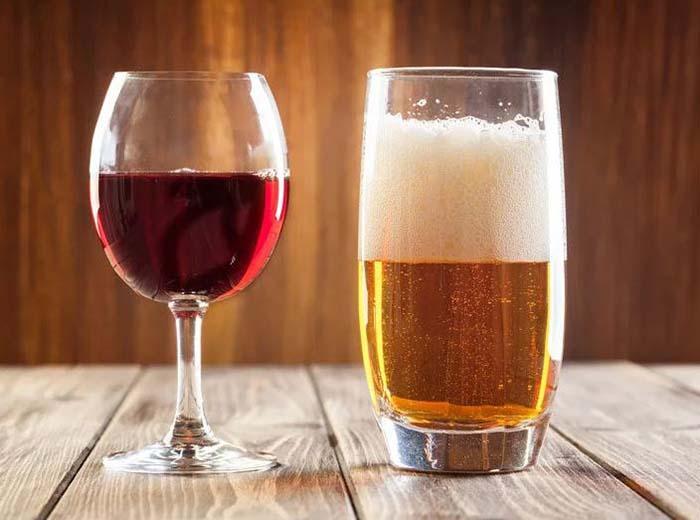
Let’s cut straight to the chemistry. When you drink beer and wine together, or back to back over the course of an evening, no unique chemical reaction occurs between them. The alcohol in both drinks is the same molecule: ethyl alcohol, or ethanol. Whether it was fermented from barley and hops or from Chardonnay grapes, ethanol is ethanol. Your liver processes it the same way regardless of its origin.
The confusion comes from how people drink when they mix, not from any sinister interaction between the two beverages themselves. When you bounce between drinks, it becomes significantly harder to track your total alcohol intake. That loss of awareness is what usually causes a rough morning, not some mysterious reaction between wine tannins and beer yeast.
As researchers at Witten/Herdecke University and the University of Cambridge confirmed in a peer-reviewed study published in the American Journal of Clinical Nutrition, the order in which you consume beer and wine has no measurable effect on hangover severity. The study recruited 90 volunteers between 19 and 40 years old and split them into three groups: one drank beer then wine, one drank wine then beer, and one control group drank only one or the other. A week later, the groups swapped. The result? No significant differences in hangover scores across any group, in either direction.
The study’s first author, Jöran Köchling, put it plainly: the truth is that drinking too much of any alcoholic drink is likely to result in a hangover. The only reliable predictors were how drunk participants felt during drinking and whether they vomited.
The “Beer Before Wine” Myth, Unpacked
“Beer before wine, you’ll feel fine. Wine before beer, you’ll feel queer.”
Virtually every American who drinks has heard some version of this rhyme. It gets passed down at college dorms, shouted across bonfires, and cited with complete confidence by people who have no idea where it came from. So where did it come from, and does it hold any water?
The Origin of the Saying
The rhyme has murky origins rooted in folk wisdom from the British pub tradition. One of the more popular theories is based on alcohol content: beer typically has an ABV of 4 to 7 percent, while wine lands between 11 and 15 percent. The logic goes that if you start with a lower-ABV drink, you ease into intoxication gently. Then, if you move to wine, your heightened awareness (you haven’t had much alcohol yet) means you’ll sip it more carefully.
Flip that order, and starting with wine gets you tipsy faster, which then impairs your judgment when you move to lower-ABV beer. With lowered inhibitions, you may drink more beer than you intended, ultimately consuming more total alcohol than you would have otherwise.
In theory, it sounds plausible. In practice, Harvard Health and multiple independent research teams have confirmed it doesn’t hold up. Dr. Tarek Hassanein, a specialist at the Southern California Liver Centers and a professor of medicine at UC San Diego School of Medicine, stated clearly: “The order in which you drink alcohol does not matter because it all reflects on how many grams of alcohol the person is drinking.”
His threshold: over 30 grams per day for men and over 20 grams for women is considered harmful to the liver, regardless of whether that alcohol came from beer, wine, or spirits.
Why Some People Swear By It
The reason the rhyme survives is partly confirmation bias and partly a real but indirect effect. When someone starts on wine, the higher ABV hits harder and faster, making them feel like they’ve had more than they have. When they switch to beer, they may subconsciously drink faster because beer “feels lighter.” The cumulative intake climbs without them noticing. So the hangover they blame on “mixing the wrong way” is really just the result of drinking too much, full stop.
The Role of Congeners: Why Some Drinks Hit Harder Than Others
Here is where the science gets genuinely useful. While mixing beer and wine isn’t dangerous, the type of each drink you choose actually does matter. And the key variable is congeners.
Congeners are chemical compounds produced as byproducts of fermentation and aging. They include methanol, acetaldehyde, tannins, esters, and fusel oils. They’re responsible for the distinctive taste, color, and aroma of different alcoholic beverages. They’re also responsible for making some hangovers significantly worse than others.
A landmark study published in Alcohol and Alcoholism ranked common drinks from highest to lowest congener content:
| Drink | Congener Level | Notes |
|---|---|---|
| Brandy / Cognac | Very High | Aged extensively in barrels |
| Bourbon / Dark Whiskey | High | ~37x more congeners than vodka |
| Red Wine | Moderate-High | Extended grape skin contact |
| Rum (dark) | Moderate-High | Barrel-aged |
| White Wine | Moderate | Less skin contact than red |
| Beer (dark, craft) | Low-Moderate | Grain fermentation byproducts |
| Light Beer / Lager | Low | Minimal aging |
| Vodka / Gin | Very Low | Distilled to remove congeners |
The important takeaway here: red wine contains significantly more congeners than beer, particularly tannins from grape skins and seeds, as well as higher methanol content. Research from PubMed confirms that beverages high in congeners, such as bourbon, produce more severe hangover ratings than low-congener options like vodka, even when total ethanol intake is identical.
Read More : When Do Gas Stations Stop Selling Beer Updated 03/2026
Bourbon, for example, has been estimated to contain roughly 37 times more congeners than vodka, according to published research. Red wine, while not quite reaching bourbon’s congener density, sits in the upper tier compared to most beers.
This is why mixing a red wine night with a craft stout might feel worse than mixing a white wine with a light lager: the combined congener load is higher. The drinks aren’t reacting with each other, but your body is working harder to metabolize all the additional compounds stacked on top of the base ethanol.
Practical implication: If you’re going to mix beer and wine in a single evening, consider pairing lower-congener versions of each. A crisp white wine and a light pilsner, for instance, is a far gentler combination than a full-bodied Cabernet Sauvignon plus a barrel-aged imperial stout.
Carbonation: The Variable Nobody Talks About
One factor worth paying attention to when mixing beer and wine is carbonation. Beer is carbonated. Most wines are not (sparkling wines being the obvious exception). One popular theory about why wine and beer together might seem to hit harder involves the carbonation in beer accelerating the absorption of alcohol from wine.
The reasoning: carbonation stimulates the stomach lining and can increase the rate at which alcohol enters the bloodstream. There is some scientific support for this idea in the context of spirits mixed with carbonated beverages, but the effect is modest and temporary. It doesn’t change the total amount of alcohol absorbed, only the speed of the initial rush.
That said, if you notice you feel the effects of wine more quickly after switching from beer, this could be part of the explanation. It’s not dangerous, but it is a reason to slow down when transitioning between carbonated and still drinks, giving your body time to calibrate.
Beer-Wine Hybrid Drinks: The Category You Didn’t Know Existed
Here’s where mixing beer and wine moves from the realm of accident into the realm of craft. There is an entire category of beverages built on the deliberate combination of beer and wine characteristics, and they’ve been growing in popularity across the American craft beverage scene.
Oenobeer (Wine-Beer Hybrids)
The term oenobeer refers to beers brewed with wine grapes as part of the fermentation process. These drinks include wine grapes in the mashing and fermentation stage, and the resulting liquid often ferments in oak barrels, imparting genuine wine character into the finished beer.
This isn’t new at all. Evidence of grain and grape combinations in beverages dates back to the Bronze Age. In 1999, Dogfish Head Brewery created Midas Touch, a landmark hybrid blending wine, mead, and beer inspired by a 2,700-year-old recipe discovered in King Midas’s tomb. It remains one of the most celebrated crossover drinks in American craft brewing.
Some notable examples of the oenobeer category available in the American market:
Jester King Brewery’s Sour Grape Ales (Texas): Jester King, based in Austin, is celebrated for its farmhouse-style sours fermented with wild yeast. Several of their releases include wine grapes, such as Muscat or Tempranillo varieties, giving the finished beer a distinct grape aroma and vinous complexity layered over the characteristic funk of wild fermentation. ABVs typically run around 6 percent.
Bruery Terreux Sour Ales (California): This California producer has released several barrel-aged sour beers fermented with Pinot Noir grapes and similar wine varietals. These are premium releases, typically priced accordingly, with complex flavor profiles that appeal to both wine lovers and craft beer enthusiasts.
The appeal of oenobeer is that it bridges the gap between two drinking cultures. Wine drinkers curious about craft beer can find familiar fruit notes and vinous complexity. Beer drinkers get to explore structured tannins and grape aromatics without committing to a full bottle of Burgundy.
The Black Velvet: A Classic Beer-Wine Cocktail
Few drinks in history demonstrate the compatibility of beer and wine as elegantly as the Black Velvet. This century-old cocktail was created around 1861 in London following the death of Prince Albert, Queen Victoria’s beloved consort. The story goes that a bartender at Brooks’s Club wanted to create a drink that mirrored the mourning worn by Victorian high society, hence the dark, somber appearance.
The Black Velvet is simply Guinness stout layered with Champagne (or any quality brut sparkling wine) in a champagne flute. The technique involves pouring the sparkling wine very slowly over the back of a spoon so it floats on top of the dark stout, creating a dramatic two-tone presentation. The differing densities of the two liquids keep them separated, at least initially.
Taste-wise, the result is unexpectedly harmonious. The roasty bitterness and notes of chocolate and coffee from the stout are softened by the bright acidity and effervescence of the Champagne, while the Champagne takes on depth and complexity it wouldn’t have alone.
It remains a popular order at American bars, particularly around St. Patrick’s Day and during football season, and it’s one of the most elegant ways to experience the genuine compatibility of beer and wine in a single glass.
Popular Cocktails and Mixed Drinks That Blend Beer and Wine
Beyond dedicated hybrids, bartenders across the United States have developed a wide range of cocktails that blend beer with wine or treat each as an interchangeable building block.
The Shandy and Radler
The Shandy is arguably the most widely consumed beer cocktail in the world. Traditionally, it’s equal parts beer and lemonade, but the category has expanded significantly. Craft bartenders now build shandies with fresh-squeezed citrus, flavored syrups, or even sparkling wine in place of the lemonade, creating a light, refreshing low-ABV drink that works beautifully in summer.
The Radler (from the German word for cyclist) is the German equivalent, traditionally made with beer and citrus soda, designed as a refreshing recovery drink. At roughly half the ABV of a standard beer, both the Shandy and the Radler are popular choices for people who want to stay social without committing to a long, heavy night.
The Michelada
Read More : What Does Ipa Taste Like Updated 03/2026
The Michelada is arguably America’s most beloved beer cocktail and has roots in Mexican drinking culture. Built on a Mexican lager (typically a crisp, light variety such as Modelo or Pacifico), it adds tomato juice or Clamato, lime juice, Worcestershire sauce, hot sauce, and salt. The result sits somewhere between a savory Bloody Mary and a refreshing beer cocktail. It has become a staple on brunch menus across the country, with countless regional variations.
The Lambic Sangria
Traditional sangria uses red wine as its base, but a creative alternative replaces the wine with Belgian fruit lambics, sour wheat beers naturally fermented with wild yeast and often brewed with cherries, raspberries, or peaches. The result has the fruity, refreshing quality of sangria with the additional complexity of the sour beer’s funky fermentation character. This drink is a natural bridge for people who love wine’s fruity notes but want to explore the craft beer world.
The Beer Spritzer
For wine drinkers who find beer too heavy or bitter, the Beer Spritzer offers a lighter entry point. Rather than mixing white wine with club soda (the traditional spritzer), you substitute a wheat beer or light lager, creating a drink with gentle carbonation, mild bitterness, and lower alcohol content than a standard glass of wine. It’s particularly popular at outdoor events and afternoon gatherings.
How to Drink Beer and Wine Together Without Feeling Terrible the Next Day
All the science points in one direction: the amount you drink and how fast you drink it are the dominant factors determining how you feel the next morning. But there are practical strategies that can meaningfully reduce the impact when you’re mixing.
Stay Hydrated Consistently: Your liver can process approximately one standard drink per hour. That’s 12 ounces of beer, 5 ounces of wine, or 1.5 ounces of spirits. Alcohol is a diuretic, meaning it actively causes you to lose more fluid than you consume. Drinking a full glass of water between every alcoholic drink doesn’t ruin the night; it saves the morning.
Eat Before and During Drinking: Food, particularly proteins and fats, slows the absorption of alcohol through the stomach lining and small intestine. Drinking on an empty stomach accelerates the rate at which blood alcohol concentration rises, which makes tracking your intake genuinely difficult. A solid meal before you start is one of the most effective hangover prevention tools available.
Choose Lower-Congener Options When You Can: Given what we know about congeners, mixing a light lager with a crisp white wine is a gentler combination than pairing a barrel-aged stout with a full-bodied red. You’ll still need to drink responsibly, but the congener load will be lower.
Track Your Total, Not Your Order: The research is unambiguous. The sequence of your drinks doesn’t matter. What matters is the total number of drinks consumed over the course of the night. Keeping a mental count, using a drink tracking app, or simply committing to a personal limit before you start is far more effective than any rhyme about order.
Know Your Pace: Because beer is carbonated, switching from beer to wine can create the brief sensation that the wine is hitting faster. Give yourself time to adjust and resist the temptation to immediately refill your glass after switching.
What About Mixing Beer and Wine in the Same Glass?
This is the question that probably started this whole conversation. Can you literally pour beer and wine together and drink it?
Technically, yes. Taste-wise, it’s typically not pleasant. Beer is bitter, hoppy, and carbonated. Wine has complex fruit notes, tannins, and acidity. Most combinations don’t harmonize well when simply poured together. The carbonation of the beer can cause the wine to foam aggressively. The flavor profiles often clash rather than complement each other.
However, there are exceptions. The Black Velvet works because the specific density and flavor profile of stout pairs with the acidity of Champagne. Some experimental craft brewers have found that sour beers and Pinot Noir grapes have complementary acidity and fruit character. Belgian lambics with their vinous, wine-like sourness blend more naturally with white wine than a classic American IPA would.
If you want to experiment at home, start with these more compatible pairings rather than dumping whatever’s in the fridge together:
- Dry stout (Guinness) + Brut Champagne or Prosecco: The Black Velvet approach. Layer carefully.
- Wheat beer + Riesling: Both have fruity, slightly sweet profiles that can work together.
- Sour ale + Pinot Grigio: The shared acidity makes these a more harmonious blend.
- Light lager + Sparkling rosé: Low-commitment, refreshing, and easy to adjust.
Beer vs. Wine: A Quick Comparison for the Curious Drinker
Before you decide how to spend an evening, it helps to understand what you’re actually working with.
| Characteristic | Beer | Wine |
|---|---|---|
| Typical ABV | 4% to 7% (craft can reach 12%+) | 11% to 15% |
| Standard Serving Size | 12 oz | 5 oz |
| Congener Level | Low to moderate | Moderate (white) to high (red) |
| Carbonation | Yes | Typically no (except sparkling) |
| Calorie Range | 100 to 300+ per serving | 120 to 200 per serving |
| Fermentation Base | Grains (barley, wheat, corn) | Grapes |
| Time to Feel Effects | Slower (lower ABV) | Faster (higher ABV) |
This table makes one thing clear: a standard beer and a standard glass of wine contain roughly the same amount of total alcohol, despite the very different serving sizes and flavors. That’s the core reason why drink-counting works the same way for both.
The Bottom Line on Mixing Beer and Wine
There are no monsters hiding in the combination of beer and wine. No unique chemical hazard, no special reaction that punishes you for being adventurous with your drink selection. The science is clear, consistent, and ultimately reassuring: what matters is total consumption, not the order or combination of what you drink.
What does matter is being honest with yourself about how much you’ve had. It’s much easier to lose track when you’re bouncing between different drinks, different ABV levels, and different serving sizes. The practical challenge of mixing isn’t chemistry; it’s arithmetic.
The world of deliberate beer-wine mixing, from century-old Black Velvets to modern oenobeers to the growing craft beer cocktail scene, is genuinely worth exploring. These aren’t desperate combinations born from running out of one option; they’re thoughtful creations that demonstrate how well these two ancient beverages can complement each other when approached with a little intention.
A Word on Responsible Drinking
The CDC defines moderate drinking as up to one drink per day for women and up to two drinks per day for men. No amount of responsible mixing changes the fundamental math of alcohol consumption. If you’re planning a night where beer and wine both make an appearance, plan for it: eat well beforehand, hydrate throughout, and have a clear sense of your personal limits before the first drink lands in your hand.
The best nights out, whether you stick to one drink or explore the full range, are the ones you actually remember.
Alcohol content, congener levels, and hangover research cited in this article are drawn from peer-reviewed studies published in the American Journal of Clinical Nutrition, PubMed, and Alcohol and Alcoholism, as well as reporting by Harvard Health, Healthline, and the University of Cambridge.
Sources: https://chesbrewco.com
Category: Beer