Whether you’re eyeing the menu at your favorite sports bar, planning a backyard cookout, or trying to figure out how many rounds you’ll get out of one order, the question eventually comes up: how big is a pitcher of beer, exactly? It sounds simple enough. But between the different sizes bars carry, the variation across states, and the math involved in figuring out whether a pitcher actually saves you money, there’s a lot more to unpack than most people realize.
- What Are Pepsi Soda Brands Updated 10/2026
- How Much Alcohol Is In Michelob Ultra Updated 10/2026
- What Is Zima? The Clear Malt Drink That Changed American Drinking Culture Forever Updated 10/2026
- Best Beer To Cook Crabs With Updated 10/2026
- Is One Beer A Day Bad? What the Latest Science Actually Says Updated 10/2026
This guide covers everything — from the standard ounce counts and glass comparisons to cost breakdowns, state laws, and the kinds of beers that taste best poured from a pitcher with friends around the table.
You Are Watching: How Big Is A Pitcher Of Beer? Every Size, Price, and Pour You Need to Know Updated 10/2026
The Pitcher Has Deep Roots in American Drinking Culture
Before we crack into ounces and pour counts, it’s worth knowing where the pitcher came from. The word “pitcher” traces back to the 13th-century Middle English word picher, meaning earthen jug, which itself came from the Old French pichier and ultimately from the Medieval Latin bicarium, rooted in a Greek word for earthen vessel. In other words, humans have been pouring communal drinks from large vessels for a very, very long time.
Beer in America predates European settlement: Native Americans brewed fermented beverages from maize, birch sap, and water long before the first colonists arrived. When the Pilgrims landed, they brought their own brewing traditions, and the tavern quickly became the center of early American social life. A century before the Revolution, beer-drinking culture in America was well established, with roughly twenty-six breweries and taverns operating in New Amsterdam alone.
By the mid-1800s, large-scale commercial brewing had taken hold. By 1860, there were over 1,260 breweries producing more than one million barrels of beer for a population of 31 million. Beer was a communal drink, served in shared vessels at saloons and taverns where workers, tradespeople, and neighbors gathered together. The pitcher was a natural extension of that tradition: an efficient, social way to serve large amounts of beer to groups without running back and forth to the bar.
After Prohibition’s repeal in 1933, American bar culture rebuilt itself, and the beer pitcher became a staple of the mid-20th century bar experience. Cheap domestic lagers dominated tap lines, and ordering a pitcher was both economically smart and socially practical. The pitcher of beer as a mode of delivering beer has quietly stepped out of the limelight during the recent craft beer renaissance, not because pitchers disappeared, but because bartenders are now more often serving IPAs and rotating tap selections than pouring mass-market domestics into shared vessels. Still, at sports bars, casual restaurants, and neighborhood pubs across the country, the pitcher remains one of the most satisfying ways to drink.
How Big Is a Pitcher of Beer: The Three Standard Sizes
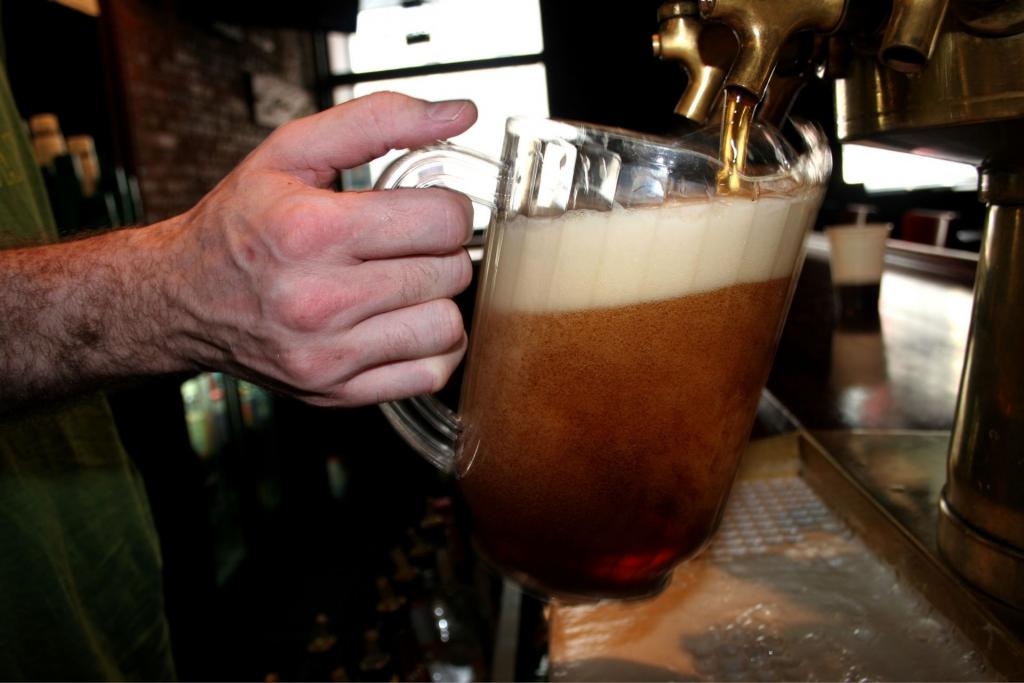
Pitchers commonly come in three sizes: 32, 48, and 60 fluid ounces. These are the benchmarks you’ll encounter at the vast majority of American bars and restaurants, though some venues deviate slightly in either direction.
The 32-Ounce Pitcher
The 32-ounce pitcher holds approximately 2 pints or 4 cups of liquid. It is the smallest of the standard sizes, and while you’ll find it in some casual dining chains and family-friendly restaurants, it’s less common at dedicated bars and pubs. Think of it as the “starter” pitcher. In terms of metric volume, a 32-ounce pitcher contains 946.353 ml of beer.
Interestingly, Vermont has made the 32-ounce size something of a legal ceiling: Vermont law forbids pitchers to be larger than 32 ounces, which is solely two pints. If you’re visiting Vermont and expecting a big communal pour, you’ll need to adjust your expectations.
The 48-Ounce Pitcher
A 48-ounce pitcher has 1,419.53 ml of beer, meaning you’ll consume about 1.4 liters. This is the middle-ground option: big enough for a small group to share a round, but not so large that the beer at the bottom gets warm before it’s finished. Many casual dining restaurants prefer this size because it manages consumption naturally and is physically easier for servers to carry.
The 60-Ounce Pitcher
A standard pitcher of beer that you can expect to find in most restaurants is 60 ounces, or approximately 1.77 liters of beer. This is the most common size at American bars and the one most people picture when they hear the word “pitcher.” It’s the size built for groups, game days, and long conversations over cheap domestic lagers. One pitcher holds five 12-ounce glasses or six 10-ounce glasses; however, when dealing with a pint glass, things aren’t as cut and dry, since a pint is 16 ounces, meaning a standard pitcher can hold 3.75.
Some sources reference a 64-ounce size as well, which is common with certain restaurant house pitchers. The average pitcher has a capacity of 64 ounces: if you tend to drink beer on draft in a 16-ounce pint glass, a pitcher has four of those servings; if you’re used to 12-ounce bottles, a pitcher holds just over five beers.
Pitcher Size Comparison at a Glance
| Pitcher Size | Volume (ml) | American Pints | 12-oz Glasses | 16-oz Pint Glasses |
|---|---|---|---|---|
| 32 oz | 946 ml | 2 pints | ~2.67 glasses | 2 pint glasses |
| 48 oz | 1,420 ml | 3 pints | 4 glasses | 3 pint glasses |
| 60 oz | 1,774 ml | 3.75 pints | 5 glasses | ~3.75 pint glasses |
| 64 oz | 1,893 ml | 4 pints | ~5.3 glasses | 4 pint glasses |
Keep in mind that a poured pint rarely contains a full 16 ounces. A typical poured pint doesn’t usually include a full 16 ounces due to the need to transport the glass without spilling, and alongside the space taken up by foam, the true volume of beer in a glass is likely a few ounces less. So in practice, you may get an extra pour out of a pitcher compared to the raw math suggests.
How Many Beers Are Actually in a Pitcher?
This depends on two things: the size of the pitcher and the size of the glass being used. The math shifts quite a bit based on the vessel.
For a standard 60-ounce pitcher:
- Five full 12-oz servings (the most common reference point, since 12 oz matches the volume of a can or bottle)
- Six 10-oz pours (common for stronger, higher-ABV draft beers)
- 3.75 standard 16-oz pints (this is the awkward one, which is why pitchers almost always come with extra glasses to keep things civil at the table)
For a 48-ounce pitcher:
- Four 12-oz glasses
- Three 16-oz pints
For a 32-ounce pitcher:
- Approximately 2.67 12-oz glasses (read: two full glasses and a top-off)
- Two 16-oz pints exactly
According to standard drink size guidelines, a pitcher of beer at 5% ABV is counted as roughly 5 standard drinks. That number shifts based on the ABV of the beer itself. A pitcher of a 4% lager contains less total alcohol than a pitcher of a 7% craft IPA, even if the volume is identical. This is important not just for personal pacing, but for understanding the difference between a mellow night and an unexpectedly rough morning.
The Real Cost of a Pitcher vs. Buying Individual Pints
Here’s where the pitcher becomes not just a social choice but a financial one.
The average cost of a pitcher of cheaper domestic brews runs from about $10 to $20, while a pitcher of craft beer might be more like $15 to $30, depending on what region you’re in. Compare that to individual pints:
Read More : Substitute For Beer In Beer Batter Updated 10/2026
The average price of a pint of macro beer is around $3.50 to $5.50, or craft beer about $6 to $10, making pitchers generally cost-effective. Two pitchers of macro beer could ring in at, say, $30, versus eight separate orders at $4.50, which is $36 — a savings of $6 per round, or $12 after two rounds.
That savings adds up meaningfully over the course of a night with friends. The math clearly favors the pitcher when everyone at the table wants the same beer and is planning to have more than two drinks each.
| Scenario | Individual Pints (Cost) | Pitcher (Cost) | Savings |
|---|---|---|---|
| 4 people, 2 rounds of domestic | 8 pints x $4.50 = $36 | 2 pitchers x $15 = $30 | $6 |
| 4 people, 3 rounds of domestic | 12 pints x $4.50 = $54 | 3 pitchers x $15 = $45 | $9 |
| 4 people, 2 rounds of craft | 8 pints x $8 = $64 | 2 pitchers x $25 = $50 | $14 |
The savings are real, but there is a catch: pitchers are cost-effective as long as everyone in your group can agree on a beer. If half your table wants a hazy IPA and the other half wants a light lager, individual pints are your only realistic option.
The form factor of the pitcher and the general cost of goods purchased in bulk tend to favor the consumer when it comes to drinking in bars. In short: the economics of scale that apply to buying in bulk at the grocery store also apply at the bar.
Beer Towers, Growlers, and Pitchers: Understanding the Difference
Once you venture beyond the standard pitcher, a few other communal beer vessels start entering the conversation. It’s worth knowing how they stack up.
Beer Towers
Beer towers typically come in three sizes: 1 liter, 2 liters, or 3 liters of beer. Unlike a pitcher, a beer tower usually sits in the center of the table with a tap at the bottom, allowing each person to pour their own glass. They’re theatrical, fun at large group settings, and offer a self-serve dynamic that pitchers don’t. Both beer pitchers and beer towers are served in bars and restaurants as they both serve large quantities of beer at once, and technically, anything larger than 60 ounces falls under the tower category.
Growlers
A growler is a sealed, refillable container designed for taking draft beer home, not consuming it at the bar. The most common size is 64 ounces (a half-gallon), though 32-ounce “howlers” exist as well. Growlers are popular at breweries and craft taprooms, allowing you to carry home a fresh, unpasteurized draft beer that should ideally be consumed within a day or two of filling. They’re not a direct substitute for a pitcher at a bar, but they scratch a similar itch.
Kegs
For perspective: a half-barrel keg typically contains just over 165 12-ounce servings or 124 full pint glasses worth of beer. If a standard 60-ounce pitcher yields five 12-ounce pours, that means a half-barrel keg is the equivalent of roughly 33 pitchers. That’s quite a party.
Pitcher Laws and State Regulations Across America
Here is something most bar-goers don’t think about until they run headfirst into it: the rules around ordering a pitcher of beer vary significantly by state, and in some cases by city or county.
Massachusetts is the most notable example. Massachusetts law not only bans after-work happy hours but also any other kind of drink special, including fixed-price open bars, all-you-can-drink promotions, and free drinks as prizes. When it comes to pitchers specifically, a patron cannot have more than two drinks at any one time, and pitchers are not allowed unless you have more than two people. Massachusetts was the first state to ban happy hours back in 1984, and the rules around pitcher service reflect the same philosophy of limiting overconsumption.
Vermont caps pitcher size altogether. As noted earlier, Vermont forbids pitchers larger than 32 ounces, making the larger 60-ounce formats that dominate elsewhere legally unavailable.
Washington, D.C. has its own quirk: in DC, you’ll have to stay firmly planted in your seats while drinking a pitcher. No wandering around the bar with your communal vessel.
Texas takes a somewhat different angle: pitchers, buckets, carafes, and similar containers are all permitted, with one caveat: the service must be for two or more customers. No solo pitchers in the Lone Star State.
Utah, as expected, has some of the strictest alcohol laws in the country. Bartenders are required to use metered dispensing systems, and cocktails face strict ABV caps. Pitcher availability is constrained by these broader regulations.
The broader principle at work here: the Twenty-first Amendment grants each state and territory the power to regulate intoxicating liquors within their jurisdiction, meaning laws pertaining to the production, sale, distribution, and consumption of alcohol vary significantly across the country. Always worth checking your local laws before you assume the rules are the same as the last bar you visited in a different state.
What Beers Work Best in a Pitcher?
Not every beer is an ideal candidate for the pitcher format. There are practical and sensory reasons why certain styles shine when poured communally, while others suffer.
Beers That Are Perfect for Pitchers
Light lagers and American domestics are the undisputed champions of the pitcher format. Bud Light, Coors Light, Miller Lite, and similar offerings are brewed and priced specifically for high-volume, social consumption. They’re refreshing, not particularly nuanced, and taste essentially the same at the beginning of the pitcher as they do at the end. These are the beers that made pitcher night at the corner bar an institution.
Session ales and American pale ales are another excellent choice. With ABVs typically between 4% and 5%, they’re sessionable enough that a 60-ounce pitcher among two or three people won’t leave anyone in trouble. They’re also flavorful enough to actually be enjoyable, unlike a straight-up light lager if you want something with a bit more character.
Wheat beers and hefeweizens pour beautifully from a pitcher, hold a nice head, and offer an approachable flavor profile that tends to have broad appeal at a table. Blue Moon, for example, has become one of the most commonly pitcher-ordered craft-adjacent beers in American bars.
Beers That Are Not Ideal for Pitchers
High-ABV IPAs and double IPAs lose their aromatic complexity quickly once poured into a large vessel exposed to air. The hop character that makes a well-crafted IPA sing in a tulip glass starts to fade within minutes in an open pitcher. More importantly, a 60-ounce pitcher of a 9% double IPA contains roughly the alcohol equivalent of nine standard drinks. That’s not responsible consumption territory.
Read More : When Do Gas Stations Stop Selling Beer Updated 10/2026
Stouts and porters are traditionally served in smaller pours for a reason. A 10-ounce pour is used for stronger beers like stout and imperial, which are stronger than typical 5 percent ABV beers, with any imperial beer having an 8 percent ABV or more. Ordering a pitcher of an imperial stout is technically possible, but it’s rarely a good idea from either a financial or physiological perspective.
Sours and wild ales also don’t fare well in the communal pitcher format. Their acidity and carbonation are best experienced fresh from a proper pour, and the flavor profile is generally divisive enough that getting your whole group to agree on a sour for the pitcher is something of an uphill battle.
Practical Tips for Ordering a Pitcher at the Bar
Knowing the theory is one thing. Making smart decisions at the bar in real time is another. Here’s what experienced drinkers know that first-timers often learn the hard way.
Count your crew before you order. The first variables in the pitcher calculation are the number of people in your group and about how many beers everyone anticipates having, including considering how long you’ll be at the bar and what you’ll be doing. If you’re catching up for an hour over burgers, two beers per person is a reasonable estimate. If you’re settling in for a full game, assume three to four. Do the math before you order.
Confirm everyone wants the same beer. This sounds obvious but is the most common pitcher mistake. One dissenter at the table who wants something different from what you ordered means either they sit out or you waste part of the pitcher.
Order with food. Beer consumed alongside food is absorbed more slowly, which means a longer, more enjoyable evening. Salty snacks and fried food pair particularly well with lighter lagers and pale ales served from a pitcher.
Watch the foam. A well-poured pitcher should have some foam, but not so much that it takes up a quarter of the volume. If your server fills the pitcher to the brim with foam, that’s worth a polite word. A good pour leaves roughly 80% liquid to 20% head.
Keep it cold. In warm weather or at crowded venues, beer in a pitcher can warm faster than expected. If your table isn’t going through it quickly, consider asking for an ice bucket alongside the pitcher, or simply order smaller pitchers more frequently rather than one large one.
Know when to skip the pitcher. If you’re flying solo, a pitcher is a tall order. And if you’re the only one still drinking at the table, finishing a 60-ounce pitcher on your own means consuming the equivalent of five beers in one sitting. The pitcher is a social instrument; it works best in the right context.
Alcohol in a Pitcher: What You’re Actually Drinking
Here is the part of the pitcher conversation that doesn’t always come up but absolutely should. Understanding the alcohol content of a pitcher keeps the evening from going sideways.
At 5% ABV (the standard for most domestic lagers), a 60-ounce pitcher contains roughly 2.36 ounces of pure alcohol. That equates to approximately five standard drinks, since a standard drink in the U.S. is defined as 0.6 ounces of pure alcohol. Split two ways, that’s 2.5 standard drinks per person. Split three ways, it’s under two per person. Split four ways, it’s about 1.25 drinks each.
At 7% ABV (common for many craft ales and IPAs), the same 60-ounce pitcher contains about 3.3 ounces of pure alcohol, or closer to 5.5 standard drinks. The volume is identical to the domestic lager pitcher, but the alcohol load is meaningfully higher. This is where many people underestimate how much they’ve consumed.
When drinking from a pitcher, one could easily underestimate the intake of alcohol, so exercising care when consuming alcohol from a pitcher is important. The communal, free-pour nature of pitcher service means there’s no natural pause at the end of each “drink,” the way there is when you finish a pint glass. The beer just keeps flowing until the pitcher is empty. It takes conscious awareness to track how much you’ve actually had.
The Pitcher in the Age of Craft Beer
The craft beer revolution, which began gathering serious steam in the late 1970s and early 1980s following President Carter’s legalization of home brewing in 1978, transformed what Americans expect from beer. America holds the title for most breweries in one country, with the microbrewing explosion driving unprecedented variety and quality.
This abundance of choice has complicated the pitcher format in interesting ways. When your tap list runs 30 lines deep across multiple styles, ABVs, and breweries, the shared-pitcher logic becomes harder to execute. Craft beer drinkers often want to explore different styles across a single session, which is fundamentally at odds with the “everyone agrees on the same beer” requirement for pitcher ordering.
That said, many craft taprooms have adapted, offering their approachable session beers and wheat ales in pitchers at a significant discount. Some even offer “pitcher night” specials on specific days of the week, recognizing that even in the craft era, the social joy of a shared pitcher has never really gone away. The format itself is resilient because it serves a human need that goes beyond beer, which is the pleasure of gathering around something communal and enjoying it together.
The Pitcher vs. Other Large-Format Options
To put the pitcher in context with other large-format beer serving options:
| Format | Volume | Best For |
|---|---|---|
| 32-oz pitcher | ~946 ml | Solo drinker or small pair |
| 48-oz pitcher | ~1,420 ml | 2-3 people, one round |
| 60-oz pitcher | ~1,774 ml | 3-5 people, standard group |
| 1-liter beer tower | 1,000 ml | Small group, self-serve fun |
| 2-liter beer tower | 2,000 ml | Party tables, big groups |
| 64-oz growler | ~1,893 ml | Take-home draft from brewery |
| Half-barrel keg | ~58,700 ml | Major event or party |
One Final Thought Worth Pouring Over
The question of how big is a pitcher of beer has a clean answer for most American bars: 60 ounces, holding five 12-ounce pours, costing somewhere between $10 and $30 depending on the brew and the city, and saving you real money compared to ordering individual pints.
But the pitcher has always been about more than volume and price. It’s about the shared table, the game on the screen, the conversation that doesn’t end when the glass does. It’s the reason that, even as craft beer has complicated the economics and choices involved, the pitcher has never truly gone out of style. There will always be a moment, with the right people, when asking for a pitcher is simply the only logical thing to do.
Drink what you enjoy, pour with generosity, and always know your limits before the pitcher is empty.
Sources: https://chesbrewco.com
Category: Beer