There’s a moment at every great American gathering, whether it’s a backyard cookout in July, a playoff watch party, or a Friday night out with your crew, when the chanting starts. Chug. Chug. Chug. Most people tip back their bottle and drink. But a rare few do something extraordinary: they create a spinning, swirling tornado inside the bottle and let physics do the work for them. That is the tornado beer chug, and it is one of the most impressive, satisfying, and genuinely skill-based drinking moves you can learn.
This guide covers everything you need to know about how to tornado a beer. From the actual science behind why it works, to a step-by-step breakdown of the technique, common mistakes, the best beers to use, safety considerations, and even the viral origin story behind it, this is the only resource you need to go from curious beginner to tornado-certified.
You Are Watching: How To Tornado A Beer Updated 10/2026
What Does It Mean to Tornado a Beer?
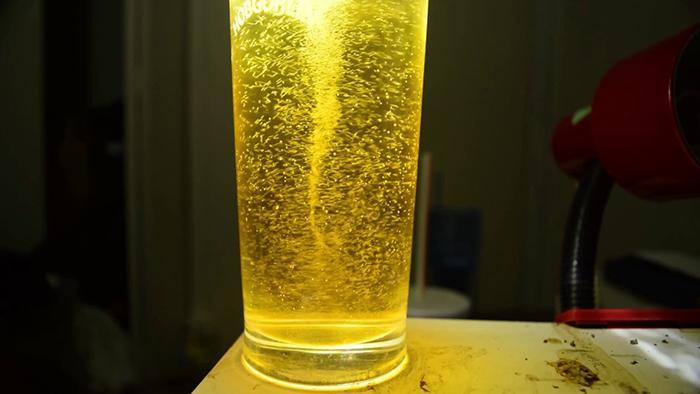
Tornadoing a beer (also called the vortex chug, twister chug, or tornado chug) is a chugging technique where you create a rotating whirlpool inside the beer bottle as you drink it. Instead of the liquid trickling and gurgling down in an awkward, air-fighting flow, the beer spirals downward in a smooth, continuous funnel, emptying the bottle dramatically faster, and looking absolutely jaw-dropping in the process.
Unlike shotgunning a can or using the strawpedo method (where you insert a flexible straw to let air in), the tornado technique requires no tools, no punctured cans, and no props. Just a bottle, your hands, and the right motion. It is equal parts physics demonstration and party trick, and once you pull it off, you will never forget the feeling.
The Origin Story: A Chinese Farmer Who Went Viral in 2019
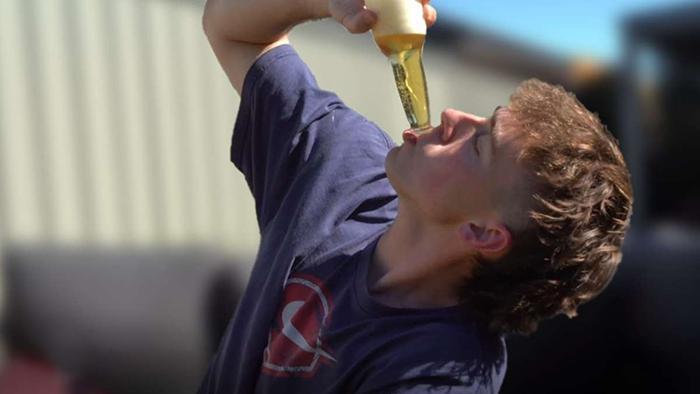
Before you can tornado a beer, you should know who invented it. In November 2019, Liu Shichao, a farmer from Hebei province in China who went by the Twitter handle @hebeipangzai, posted a video of himself chugging a beer in a way no one had seen before. The liquid inside the bottle wasn’t just pouring; it was spinning, forming a perfect miniature cyclone as it drained directly into his mouth.
The internet lost its collective mind. The video spread rapidly, and Liu, who dubbed himself the “inventor of the tornado,” even posted a tutorial tweet explaining the mechanics. His exact words: “Swirl the bottle clockwise or anticlockwise, not shake it back and forth, to make the beer spin like a tornado in the bottle. This is why I call it ‘Tornado’. Hope you can master it.”
Almost immediately, people from across the globe began attempting the technique, posting their results on YouTube, TikTok, Twitter, and Instagram, with most failing spectacularly and a few nailing it in genuinely impressive fashion. The name stuck, and terms like vortex chug, twister chug, and tornado beer all came to describe the same move that a Hebei farmer casually invented and shared with the world.
Why the Tornado Works: The Science Behind the Vortex
Here is what makes the tornado chug more than just a party trick: it is grounded in real, fascinating physics. And understanding the science will actually make you better at performing it.
Centripetal Force and Fluid Dynamics
When you swirl a liquid inside a bottle in a circular motion, you are applying centripetal force, an inward-directed force that causes objects in motion to travel in a circular path rather than a straight line. The walls of the bottle contain that circular motion and redirect the liquid toward the center, creating what is known as a vortex, a rotating column of fluid with a hollow air core at its center.
Here is the brilliant part: in a normal bottle flip, water or beer tries to pour out of the neck while air simultaneously tries to push its way up into the bottle. This creates the classic glug-glug-glug interruption you have definitely experienced. The liquid and air are fighting each other for the same opening.
When a vortex is created, the spinning liquid forms a hollow central core. Beer flows down along the outer edges of the neck in a spiral, while air travels up through the center simultaneously. The two flows no longer compete. The bottle empties in a smooth, continuous, and dramatically faster stream.
This is also exactly why the tornado chug is scientifically superior to a standard chug for speed: the fluid dynamics are simply more efficient.
Why You Need a Long-Neck Bottle
The vortex only works when the bottle has a long enough neck to allow the centripetal force to build and sustain the rotating column of liquid. This is why you cannot tornado a beer from a can, a pint glass, or a short-necked bottle. The neck is the engine of the tornado. The longer and narrower it is, the tighter and more stable the vortex becomes. Bottles like Coronas, Heinekens, Modelo Especials, and standard longneck American bottles are ideal.
The Speed-Vortex Relationship
The physics here are worth noting: the faster you swirl the bottle, the stronger the centripetal forces acting on the liquid, which means a tighter, more stable, more impressive tornado. Too slow and the vortex collapses into a glug. Too fast at the wrong angle and the beer becomes foam. There is a sweet spot, and you will feel it once you find it.
How To Tornado a Beer: Step-by-Step
This is the core of what you came here for. Read it carefully, then practice with water first.
Step One: Choose the Right Beer and Bottle
Not all beers are created equal for this technique. Lower carbonation beers are significantly easier to tornado because excess CO2 causes foam, and foam disrupts the vortex. For beginners, lighter American lagers are excellent starting points. Here is a quick comparison:
| Beer | Carbonation Level | Tornado Difficulty | Notes |
|---|---|---|---|
| Corona Extra | Low | Easy | Classic long neck, low fizz, great starter |
| Bud Light | Low-Medium | Easy | Very popular, widely available |
| Miller Lite | Low-Medium | Easy | Reliable bottle shape |
| Coors Light | Medium | Moderate | Slightly more carbonated |
| Heineken | Medium | Moderate | Good neck length |
| Modelo Especial | Medium | Moderate | Excellent bottle weight and grip |
| IPA / Craft Beer | High | Difficult | Too much CO2, high foam risk |
| Stout (e.g., Guinness bottle) | Low | Easy-Moderate | Low carbonation but thicker liquid |
For absolute beginners, Corona Extra is the community favorite. Low carbonation, iconic long neck, and a bottle shape that fits comfortably in your hands.
Step Two: Let the Beer Settle
If you have a few minutes, open the bottle and let it sit for one to two minutes. This allows some carbon dioxide to dissipate naturally, reducing the foam risk when you begin the swirl. This step is not mandatory, but it meaningfully lowers the chance of a foamy mess.
Step Three: Take a Small Sip First
Before any swirling happens, take a small initial sip from the bottle. This does two things: it creates a small air gap at the top of the bottle (essential for starting the vortex), and it gives you a moment to seal your lips around the opening properly before the technique begins.
Step Four: Seal Your Lips Around the Bottle Opening
Place the mouth of the bottle against your lips in a firm, airtight seal. You are not loosely drinking from it, you are creating a closed system. If air leaks from the sides of your mouth, the vortex will break and beer will spray. Think of it like a seal around a snorkel, firm but not rigid.
Step Five: Create the Tornado
Read More : How To Get Beer Smell Out Of Carpet Updated 10/2026
This is the move. With the bottle sealed against your lips, swirl the bottle in a circular motion, either clockwise or counterclockwise. The key distinction from Liu Shichao’s original tutorial: do not shake the bottle back and forth. That is not a vortex, that is just agitation. You are drawing smooth, consistent circles in the air with the base of the bottle while keeping the neck (and your lips) as the pivot point.
Use your wrist, not your whole arm, to generate the rotation. The motion is controlled and fluid, not frantic. Start with moderate speed and increase gradually until you feel the liquid begin to spin inside.
Step Six: Tilt Your Head Back and Open Your Throat
Simultaneously with (or immediately after) establishing the vortex, tilt your head backward and bring the bottle upright, so gravity is pulling the tornado directly down toward your throat. This is the moment everything comes together: the spinning beer is now falling through its own hollow core into your open mouth.
The most critical instruction here: do not fight the pour. The single biggest mistake people make is trying to control the flow with swallowing or gulping. That resistance breaks the vortex, causes choking, and ends the chug. Instead, open your throat as wide as possible and let the beer fall. You are not swallowing actively; you are allowing gravity and physics to do the work. If you must take gulps, make them large ones, never small sips.
Step Seven: Keep the Bottle Steady and Finish
Maintain the tilt angle so the vortex remains stable throughout. Keep your lips sealed, your throat open, and continue the slight circular motion of the bottle until it is empty. Exhale once before you begin and hold your breath through the chug to avoid interrupting the flow.
The Most Common Mistakes (And How to Fix Them)
Even people who understand the concept often make the same handful of errors. Here is what typically goes wrong:
Shaking instead of swirling. Shaking the bottle back and forth is not a vortex motion. It agitates the beer, creates foam, and does nothing to establish the centripetal rotation. Always move the bottle in smooth, consistent circles.
Not sealing the lips properly. Air gaps destroy the vortex. A leaky seal means the liquid loses the structural support of its hollow core and collapses into a standard glug, often followed by beer all over your shirt.
Resisting the pour. This causes choking and is the most common reason beginners struggle. The tornado pushes liquid down faster than a normal chug. Your job is to get out of the way, not manage it.
Using a can or short bottle. The technique simply does not work without a long neck. If you have ever tried and failed with a short bottle, this is likely why.
Beer is too carbonated or too cold. Ice-cold beer has higher viscosity and resists the swirling motion. Extremely carbonated beers foam aggressively when swirled, collapsing the vortex. Aim for a beer that is chilled but not frozen, around 40 to 45 degrees Fahrenheit.
Swirling too slowly. The slower the swirl, the weaker the centripetal force, and the more the vortex collapses. Once you begin, commit to a steady, confident rotation.
How to Practice the Tornado Technique Without Wasting Beer
Practice makes permanent, and the tornado chug has a real learning curve. The good news: you do not need to crack open a six-pack for every practice session.
Start with water. Fill any long-neck bottle (an empty beer bottle works perfectly) with water and practice the swirling motion and the throat-open technique. Water has no carbonation and no alcohol, so you can practice as many times as you need without any consequences.
Graduate to soda. A bottle of Sprite or lemon-lime soda introduces carbonation to your practice and makes it more realistic. Since soda carbonation is moderate, it is a good middle step between water and beer.
Try a non-alcoholic beer. These have the same bottle shape, similar liquid behavior, and minimal carbonation. They are genuinely excellent for learning the mechanics before committing to the real thing.
When you do move to actual beer, choose your lowest-carbonation option and give yourself permission to fail the first few attempts. Most people who eventually master the tornado took multiple tries before their first clean execution.
Tornado vs. Other Beer Chugging Methods
The tornado is not the only way to chug a beer fast, but it is arguably the most impressive. Here is how it stacks up against the other popular techniques:
| Method | Speed | Skill Required | Tools Needed | Visual Impact |
|---|---|---|---|---|
| Tornado (Vortex) Chug | Very Fast | High | None | Very High |
| Strawpedo | Fast | Low-Medium | Bendy straw | Low |
| Shotgun | Very Fast | Low | Key or can opener | Medium |
| Standard Chug | Moderate | Low | None | Low |
| Tap and Chug | Fast | Low-Medium | None | Low |
The tornado wins decisively on visual impact, which is why it became a viral phenomenon. Shotgunning is faster for most beginners, but it requires puncturing a can and generates significantly less spectacle. The tornado, when executed correctly, looks like something between a magic trick and a physics experiment.
Does Tornadoing a Beer Change How It Tastes?
This is a legitimate question, and the answer is: somewhat, yes. The swirling motion releases carbon dioxide from the beer as you create the vortex, which means you are drinking a slightly less carbonated beer than the one that was sitting sealed in the bottle. For taste enthusiasts, this can actually reduce the sharpness and biting fizz that some beers carry.
The tornado chug is not a sipping experience. By design, the beer bypasses much of your palate and goes directly to the back of your throat and down. If you are drinking a premium craft beer to savor its hop profile and finish, the tornado is not the move. But if you are at a party and the crowd is chanting, the physics do not care about flavor notes.
Safety: What You Need to Know Before You Try
Here is where we get real. The tornado chug is genuinely fun, genuinely impressive, and genuinely something that requires responsible execution.
Alcohol enters your bloodstream faster when you chug. When you drink quickly, your body has no time to process the alcohol at a measured rate. What feels manageable during the chug can hit harder than expected minutes later. According to Gallup, the average American drinker consumed about 2.8 drinks per week in 2025, the lowest tracked level in decades. The culture around drinking is increasingly mindful, and even in social contexts where chugging is fun, pacing matters.
Read More : Alcohol Content In Labatt Blue Updated 10/2026
Know your limits before you show off. Practicing the technique with water first is not just about mastering the mechanics, it is also about understanding what your throat and body can handle before alcohol is added to the equation.
Do not use this technique with high-ABV beers. Keep your tornado chugging to beers under 5% ABV. High-alcohol beers consumed at this speed carry genuine health risks.
Never force the chug. If your throat is telling you to stop, stop. The tornado chug sends beer to the back of your throat at speed. Choking is a real risk if you resist the flow or try to continue when your body signals otherwise.
Choose your environment. Perform this with people you trust, on a surface where a spill is not a catastrophe, and with a clear exit strategy from the situation if things go sideways.
The Tornado Chug in American Drinking Culture
Beer remains the most commonly preferred alcoholic beverage among American men, with Gallup reporting that 52% of male drinkers reach for a beer first, compared to 23% of women. Meanwhile, 42% of Americans aged 18 to 34 identified beer as their drink of choice in 2023, according to Gallup data, making the beer chug deeply embedded in the social fabric of American college life, sports culture, and backyard gatherings.
The tornado chug sits in a specific cultural niche: it is the drinking move that actually rewards skill rather than just willingness. Unlike shotgunning (which mostly rewards having a sharp key and low standards for mess), the tornado chug takes genuine practice, physical coordination, and an understanding of fluid dynamics. It is the difference between simply performing a party trick and mastering one.
Social media has supercharged its popularity. TikTok videos tagged with tornado chug, beer vortex, and related terms have accumulated tens of millions of views across platforms. Liu Shichao’s original 2019 post spawned an entire subgenre of attempt videos, tutorial reactions, and celebratory success clips that continue to circulate years after the original went viral.
Tornado Pouring: The Bartender Version
It is worth noting that “tornadoing a beer” also refers to a pouring technique used by bartenders, distinct from the chugging method. In the bartender version, a beer bottle is spun on a flat surface to build up rotational momentum, then tilted at a 90-degree angle to pour the liquid into a glass with a dramatic foamy swirl effect.
This technique creates more visible foam and carbonation activity in the glass, producing an impressive visual for bar patrons. The physics principle is the same (rotational momentum creating a vortex), but the application is entirely different. If you are behind a bar and want to put on a show for guests, the spin-and-pour bartender tornado is a genuine crowd-pleaser.
Here is how bartenders execute it:
Hold the bottle by the base, spin it rapidly on a flat, stable surface for 15 to 20 seconds. Maintain constant, even speed. Once spinning, tilt the bottle forward at a steep angle toward the glass and pour slowly, maintaining gentle pressure at the base. The beer cascades in with a dramatic foamy swirl. Hold the bottle steady as the last drops fall to avoid overflow.
The Tornado Chug vs. the Strawpedo: Which Should You Learn First?
If you are entirely new to intentional chugging techniques, the strawpedo is the more forgiving starting point. Named for the bendy straw inserted into the bottle (the straw acts as a vent, allowing air in while beer flows out), the strawpedo removes the need for coordinated swirling and throat control. It is simpler, more consistent, and more beginner-friendly.
The tornado, on the other hand, rewards practice with a genuinely superior visual payoff. Once you have the strawpedo down and understand how your throat behaves under a fast beer pour, transitioning to the tornado becomes much more intuitive. Think of the strawpedo as the prerequisite and the tornado as the advanced course.
A Note on Beer Bottle Shapes That Work Best
Not all long-neck bottles are created equal. The neck diameter matters as much as the length. Here is what to look for:
A narrow neck creates a tighter, more defined vortex because the centripetal forces are concentrated through a smaller opening. This produces the most visually impressive tornado but requires more precision in the swirl.
A slightly wider neck is more forgiving for beginners. The vortex is a little looser and easier to establish, making it better for practice sessions.
Standard 12 oz longneck bottles (the kind Corona, Bud, Miller, and Modelo come in) are the sweet spot. They are designed for drinking from directly, have sufficient neck length for the physics to work, and are comfortable to grip during the swirl motion.
What Happens When It Goes Wrong
Let us be honest about what failure looks like, because every beginner will experience it.
The most common failure mode is the premature vortex collapse, where the swirl is not quite fast enough or the angle shifts, causing the tornado to break down into a standard glug. This usually results in a slow, gurgling pour rather than the smooth spiral. The fix: faster, more consistent circular motion.
The second common failure is the foam explosion. If the beer is too carbonated, too warm, or the bottle was shaken rather than swirled, CO2 is released aggressively and the liquid becomes more foam than beer. The fix: settle the beer before starting, choose lower-carbonation options, and swirl rather than shake.
The third is choking, which happens when the throat is not fully open or when the swallowing reflex kicks in against the fast flow. The fix: practice with water until opening your throat on demand becomes second nature.
Conclusion
The tornado beer chug is many things at once. It is a viral internet phenomenon born from a Chinese farmer’s backyard video. It is a legitimate physics demonstration of centripetal force and fluid dynamics. It is a party trick that actually requires skill. And it is something genuinely satisfying to feel when it works, the sensation of beer flowing in a smooth, spinning column down your throat instead of fighting against gravity and air is unlike any other way to drink a bottle.
But more than any of that, the tornado is proof that there is always something new to learn, even at a backyard party with a cold beer in your hand. Physics is everywhere, including the bottom of a Corona bottle. And the next time someone starts chanting, you will know exactly what to do with that knowledge.
Drink smart. Swirl with confidence. And for the love of the vortex, practice with water first.
Sources: https://chesbrewco.com
Category: Beer