You crack open a cold one after a long day. The amber color, the satisfying fizz, the crisp hoppy aroma. It’s a ritual that millions of Americans share. But for a growing number of people — whether they follow Islamic dietary law, are sober-curious, pregnant, on medication, or simply cutting back — the question has shifted from what kind of beer to whether a beer can be enjoyed at all without breaking a deeply held rule. And that question, when it comes to non-alcoholic beer and halal status, turns out to be far more layered, scientifically nuanced, and theologically contested than any label on a six-pack can communicate.
This article digs into the real answer: the chemistry, the religious scholarship, the labeling loopholes, and what it all means for the 3.45 million American Muslims and the tens of millions of non-Muslim Americans who are increasingly reaching for NA beers in bars, grocery stores, and at backyard cookouts.
You Are Watching: Is Non Alcoholic Beer Halal? Updated 10/2026
What “Non-Alcoholic” Actually Means on a Beer Label
Before you can answer whether non-alcoholic beer is halal, you need to understand what non-alcoholic actually means in legal terms, because the answer is almost certainly not what you assume.
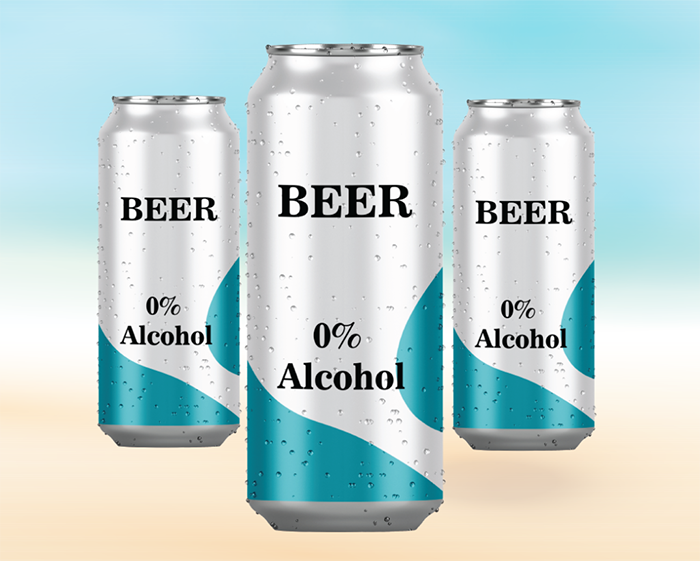
In the United States, the Alcohol and Tobacco Tax and Trade Bureau (TTB) allows any beverage containing less than 0.5% alcohol by volume (ABV) to be labeled “non-alcoholic.” That means when you pick up a can of Heineken 0.0, Budweiser Zero, or Athletic Brewing Run Wild IPA and read “non-alcoholic” on the side, you are not necessarily holding a drink with zero alcohol. You are holding a drink with less than 0.5% ABV.
To put that in perspective, your morning orange juice can naturally contain between 0.1% and 0.3% ABV from natural fermentation of fruit sugars. A ripe banana clocks in at roughly 0.5% ABV. Store-bought apple juice has been measured at 0.2% to 0.4% ABV in independent studies. Even a slice of sourdough bread contains trace amounts of ethanol from yeast fermentation.
There is an additional, stricter category: “alcohol-free” or “0.0% ABV” beers. These products claim to contain zero alcohol, though even here, the measurement threshold used by labs typically detects down to 0.05% ABV. Products labeled “0.0%” may technically contain up to 0.05% alcohol, which is an incredibly small amount but nonetheless a real one.
This labeling nuance is not a technicality. It is the precise point where the halal debate begins.
How Non-Alcoholic Beer Is Made: The Four Methods
Understanding the production process is essential for anyone trying to make a religiously informed decision. There are four primary methods used by brewers to produce NA beer, and they carry different implications for religious permissibility.
Controlled Fermentation (Arrested Fermentation)
This is the most common method used by craft NA breweries like Athletic Brewing Company, the current top-selling NA beer brand in America. Instead of allowing yeast to consume all available sugars and produce significant alcohol, brewers keep the wort (the liquid grain-and-water mixture) at or below 60 degrees Fahrenheit (15.5 degrees Celsius). At this temperature, yeast activity slows dramatically, limiting alcohol production to well under 0.5% ABV.
The result is a beer that was never fully alcoholic to begin with. This is an important distinction from a halal perspective: the product did not start as an alcoholic beverage and then have alcohol removed. It was brewed with intentional limits on fermentation from the start.
Dealcoholization via Vacuum Distillation
Many major brands, including versions of Heineken 0.0 and Guinness 0.0, brew a full-strength beer first and then remove the alcohol afterward. The most common method is vacuum distillation, where the beer is heated under reduced atmospheric pressure, causing ethanol to evaporate at a lower temperature (around 35-40°C instead of 78°C) and be extracted. This preserves more of the flavor compounds that would otherwise burn off at higher temperatures.
Critically, vacuum distillation cannot remove 100% of the alcohol. The final product will typically retain trace amounts, usually between 0.01% and 0.05% ABV, even when labeled as “0.0%.”
Reverse Osmosis
A more sophisticated and increasingly popular method, reverse osmosis involves forcing the beer through a semi-permeable membrane under high pressure. The membrane captures larger flavor molecules (responsible for taste and aroma) while allowing smaller molecules, including water and alcohol, to pass through. The alcohol is then separated from the water, and the purified water is recombined with the concentrated flavor extract.
This method produces some of the best-tasting NA beers on the market, as it better preserves the complex flavor profiles, and can achieve very low ABV levels. Wellbeing Brewing and several German craft breweries use this process.
Dilution
The simplest and least flavorful method involves brewing a full-strength beer and then diluting it with water until the ABV drops below 0.5%. This significantly reduces flavor intensity and body. While effective, it is rarely used by quality-focused brewers for this reason.
The Islamic Framework: Understanding Why Alcohol Is Prohibited
To grasp the halal debate around non-alcoholic beer, you have to understand what Islam actually prohibits and why. The prohibition is not simply about a chemical compound. It is about khamr, an Arabic term that encompasses intoxicating drinks, and the concept of fasad, or corruption of the mind and body.
The Quran’s most direct prohibition appears in Surah Al-Ma’idah (5:90): “O you who have believed, indeed, intoxicants, gambling, sacrificing on stone altars to other than Allah, and divining arrows are but defilement from the work of Satan, so avoid it that you may be successful.”
The Prophet Muhammad (peace be upon him) further clarified in a hadith recorded by Imam Muslim: “Every intoxicant is khamr and every intoxicant is haram.”
The legal principle derived from this is built on intoxication as the harm, not alcohol as a pure chemical. This is where the scholarly debate around NA beer finds its opening.
What Islamic Scholars Actually Say: A Divided Community
The honest answer is that Islamic scholarly opinion on non-alcoholic beer is genuinely divided, and that division maps fairly directly onto the different methods of production described above.
The Permissive Position
A number of respected scholars, drawing on the Hanafi school of Islamic jurisprudence and supported by rulings from the Islamic Religious Council of Saudi Arabia, argue that non-intoxicating beverages are permissible provided they cannot cause intoxication even if consumed in large quantities.
Sheikh Ibn Uthaymeen, one of the most widely respected Saudi scholars of the 20th century, stated that the key factor is not the mere presence of alcohol but whether the substance causes intoxication. His ruling, preserved in Al-Bab al-Maftuh, holds that if something contains a trace percentage of alcohol that has no intoxicating effect whatsoever, it is halal. He specifically addressed the hadith “Whatever intoxicates in large quantities, a little of it is haram,” arguing that this applies to beverages where large quantities cause intoxication. It does not apply, in his reading, to a beverage where no quantity could ever cause intoxication.
Under this interpretation, a beer with less than 0.5% ABV, which would require a person to drink physiologically impossible volumes to feel any effect, is permissible. (For reference, you would need to consume approximately 10 standard NA beers within a short window to absorb the equivalent of one standard 5% ABV beer.)
The Prohibitive Position
The Islamic Religious Council of Singapore and several scholars from Egypt’s Dar al-Ifta take a stricter position rooted in the principle of sadd al-dharai’, which translates roughly as “blocking the means to evil” or “closing the doors to transgression.”
Their argument rests on several points. First, for products made by dealcoholization, the production process began with something haram (a fully alcoholic beverage). The Islamic principle that “if the whole of a thing is haram, the part of it is also haram” applies. Second, these beverages imitate haram products in their branding, packaging, taste, and cultural context. They are marketed explicitly as beer alternatives, which some scholars argue constitutes tasyabbuh (resembling or imitating what is forbidden). Third, the trace alcohol that always remains (even in “0.0%” products) means absolute purity cannot be guaranteed.
The Middle-Ground Position
Many contemporary scholars advise that the production method is the decisive factor. Beers brewed using arrested fermentation (never fully alcoholic) present a significantly different case than beers that began as alcoholic beverages and were dealcoholized. Under this nuanced view, a product like Athletic Brewing’s Run Wild IPA, which was never fully alcoholic and contains less than 0.5% ABV entirely from the natural trace fermentation that even fruit juice undergoes, is in a meaningfully different category from Heineken 0.0, which begins as standard Heineken and has alcohol removed.
Breaking Down the Key Variables: A Comparison
The following table summarizes how the main factors influencing halal status align across common NA beer types.
| Factor | Arrested Fermentation Beers | Dealcoholized Beers (0.0% label) | Low-Alcohol Beers (up to 1.2% ABV) |
|---|---|---|---|
| Started as alcoholic beer? | No | Yes | Sometimes |
| Typical residual ABV | Under 0.5% | 0.0% to 0.05% | 0.5% to 1.2% |
| Can cause intoxication? | No | No | Extremely unlikely |
| Production method | Controlled fermentation | Vacuum distillation / reverse osmosis | Dilution or partial fermentation |
| Majority scholarly view | More likely permissible | Debated, depends on scholar | Generally haram |
| Halal certification possible? | Yes | Yes, if process verified | Unlikely |
| Example brands | Athletic Brewing, Sierra Nevada Trail Pass | Heineken 0.0, Guinness 0.0 | Many European lagers |
The “0.0% ABV” vs. “Non-Alcoholic” Label: Does the Difference Matter?
For halal consumers specifically, the distinction between a “0.0% ABV” product and a “non-alcoholic” (under 0.5%) product is significant but still not absolute.
A beverage labeled 0.0% ABV has had alcohol removed to below the detection threshold of standard laboratory instruments, which is typically around 0.05%. It does not necessarily mean the product has zero ethanol molecules. It means the ethanol present, if any, is below the measurable limit. Some products genuinely achieve this; others simply round down.
A non-alcoholic label in the US, as noted above, legally allows up to 0.5% ABV. This is 10 times more alcohol than what is in a “0.0%” product. For someone who is strictly following halal dietary guidelines, the distinction matters.
The Malaysia case of Heineken 0.0 offers a useful real-world lesson. When Heineken launched its 0.0 product in Malaysia, a Muslim-majority country, the company proactively clarified that the product was not halal-certified, even though it was labeled alcohol-free. The Malaysian Department of Islamic Development (JAKIM) did not grant halal certification, citing both the residual trace alcohol and the cultural association with an alcoholic brand. This decision surprised many consumers who assumed “0.0% alcohol” and “halal” were synonymous. They are not.
The Sober-Curious Boom: Why This Conversation Matters Right Now
This is not a niche theological debate happening in seminary classrooms. It is an intensely practical question intersecting with one of the hottest consumer trends in American beverage history.
US non-alcoholic beer volumes surged 23% in 2024, according to IWSR, a global authority on beverage alcohol data. Since 2019, volume has grown by an extraordinary 175%, and the category is forecast to grow at 18% CAGR through 2029. On-premise sales (bars and restaurants) grew 26.4% in just the first part of 2025.
The sober-curious movement has moved from fringe to mainstream. A 2024 Gallup survey found that one in three Americans drank less alcohol in the past year. Among Americans aged 21 to 29, weekly consumption of non-alcoholic beverages grew significantly, with 27% drinking NA beverages weekly. The percentage of US adults under 35 who report drinking alcohol at all dropped from 72% in 2001 to 62% by 2023.
Athletic Brewing Company, the craft brewery that pioneered the arrested-fermentation approach, now holds a remarkable 17% of the entire NA beer category’s volume share in the US and was valued at approximately $800 million in 2024. Even celebrity culture has joined the shift: actor Tom Holland launched Bero, an NA beer line; retired NBA star Dwyane Wade co-created Budweiser Zero with AB InBev.
NA beer accounts for 87% of all non-alcoholic beverage sales in the US as of 2025. The market is projected to be worth close to $5 billion by 2028. This is not a fad. It is a structural shift in how Americans drink.
The Halal Certification Process: What It Actually Verifies
For a Muslim consumer who wants certainty, the clearest path forward is halal certification by a recognized body. In the United States, the most prominent certifying organizations include the Islamic Food and Nutrition Council of America (IFANCA) and the Halal Food Authority (HFA).
Halal certification for beverages does not simply confirm that the product contains less than a certain amount of alcohol. The certification process examines:
The entire ingredient list must be free of haram substances. This includes not only alcohol but also any additives, flavorings, or processing aids that may derive from haram sources such as pork-derived gelatin (used in fining agents in some brewing processes) or alcohol-based flavorings.
The manufacturing process must be reviewed. For dealcoholized products, the certifier must verify that the original alcoholic base was not classified as khamr in and of itself and that the dealcoholization removes alcohol to below the accepted threshold. For arrested-fermentation products, the certifier verifies that no fully alcoholic intermediate exists at any point in production.
Cross-contamination controls must be in place if the facility also produces alcoholic beverages on the same equipment.
Read More : What Is Kirsch? The Clear Cherry Brandy Every Serious Drinker Needs in His Cabinet Updated 10/2026
Brands like Le Petit Beret (a French non-alcoholic craft beer) and Barbican (a malt beverage popular in the Middle East) carry halal certification and are available through specialty distributors in the US. Erdinger Alkoholfrei, the German wheat beer, is produced to 0.0% ABV standards and is widely considered compatible with halal dietary requirements by many scholars, though its formal certification status varies by market.
Trace Alcohol in Everyday Foods: Putting the Numbers in Perspective
One argument made by scholars who permit NA beer is that trace ethanol is genuinely ubiquitous in the modern food supply, and treating it as categorically equivalent to khamr leads to outcomes that are practically absurd.
Consider these naturally occurring alcohol levels in everyday foods that no mainstream Islamic scholar has declared haram:
Ripe bananas contain approximately 0.2% to 0.4% ABV. Grape juice begins fermenting naturally almost immediately after pressing and can contain 0.1% to 0.3% ABV before being sealed. Soy sauce, a staple condiment in many Muslim-majority Asian countries, contains between 1% and 2% alcohol by volume from its fermentation process, though the volume consumed is small. Bread made with baker’s yeast contains residual ethanol. Vinegar, which is permissible under Islamic law and specifically mentioned in Hadith as a good condiment, contains trace ethanol from its production.
The principle applied by many scholars is istihlak, meaning that a substance is so thoroughly diluted or naturally occurring that it loses its original harmful character. The trace ethanol in a 0.5% ABV NA beer, in their view, falls into the same category as the trace ethanol in orange juice or sourdough bread.
What About the Cultural Argument?
Perhaps the most philosophically interesting argument against NA beer is not chemical at all. Some scholars argue that the cultural act of drinking something that looks like beer, tastes like beer, and is served in a beer glass at a bar is itself the problem, regardless of what is inside the can.
This argument, rooted in the concept of tasyabbuh (imitating the forbidden), holds that Muslims who drink NA beer in social settings risk normalizing beer-drinking culture for themselves and for others around them, potentially lowering psychological resistance to eventually consuming regular beer. It also argues that being seen holding what looks like a beer can creates a misleading public impression and potentially encourages others to assume you are drinking alcohol.
This is a genuinely thoughtful concern. It is worth noting, however, that the same argument could theoretically apply to halal meat prepared to taste like conventionally slaughtered meat, or to decaffeinated coffee that still smells like regular coffee. Most scholars who raise the cultural argument apply it specifically to NA beer while not extending it to other “imitation” halal products, which creates some logical inconsistency.
The counter-position, held by many contemporary scholars, is that intention matters enormously in Islamic ethics. A Muslim drinking an NA beer with no intent to intoxicate themselves, no desire to assimilate into drinking culture, and full awareness of what they are consuming is in a fundamentally different moral position than someone using NA beer as a gateway or cover for alcohol consumption.
Practical Guidance for Making Your Own Informed Decision
Whether you are Muslim and navigating these questions personally, or a non-Muslim beer enthusiast who hosts friends from diverse backgrounds, here is a practical framework drawn from the scholarship and science discussed above.
If you follow the permissive scholarly position and are comfortable with the arrested-fermentation approach, products from Athletic Brewing Company, Sierra Nevada Trail Pass, and similar craft NA breweries represent the cleanest option from both a production and halal standpoint. They were never fully alcoholic, contain genuine trace-only ABV, and are produced independently of alcoholic beer on dedicated equipment.
If you follow a stricter position and prefer halal-certified products, look specifically for the IFANCA or HFA certification mark on the label. Le Petit Beret and Barbican are among the most widely available halal-certified NA beers in the US. When shopping at specialty grocery stores serving Muslim communities, ask specifically for dealcoholized beers certified by a recognized body.
If you want to avoid all ambiguity entirely, the category of malt beverages that were never fermented (brewed from malt extracts without yeast fermentation) offers a completely different product profile, though these typically taste less like traditional beer. Botanical NA drinks from brands like Lyre’s or Three Spirit, which use no fermentation process at all, present zero alcohol from start to finish.
If you are simply a beer drinker curious about the halal concept because your Muslim friends or partners need to navigate it, the short version is: not all “non-alcoholic” beers are equal, the label is less informative than most people assume, and the most conscientious choice for someone observing halal standards is either a certified product or one made by arrested fermentation with no alcoholic intermediate stage.
The Industry Response: Are Breweries Adapting?
Major breweries are paying close attention to the halal consumer market, partly because of the North American Muslim population and significantly because of enormous demand from markets in the Middle East, Southeast Asia, and beyond where alcohol is legally restricted or culturally discouraged.
Anheuser-Busch InBev, the world’s largest brewer and maker of Budweiser Zero, currently commands approximately 25% of the global NA beer market. The company has pursued halal certification for selected products in specific markets but has not universally certified its NA portfolio.
Heineken’s 0.0 product remains one of the most discussed cases. The brand achieved what many consider the gold standard of dealcoholization quality, but its Malaysian halal certification controversy highlighted the complexity: a technically compliant alcohol content does not automatically translate to halal certification, particularly when the brand name carries strong alcoholic associations.
The category of dedicated NA craft breweries, led by Athletic Brewing in the US, represents a more naturally halal-compatible model. Because these breweries produce only non-alcoholic beer and use arrested fermentation, they avoid the two most problematic elements: the alcoholic-original-product concern and the cross-contamination risk. As Athletic Brewing continues its extraordinary growth (a 175% volume increase since 2019), its model may become the template for a broader category of products that satisfy both the sober-curious mainstream consumer and the religiously observant Muslim consumer simultaneously.
A Final Perspective Worth Sitting With
Here is what the data, the scholarship, and the science collectively suggest: the question “is non-alcoholic beer halal?” does not have a single answer that applies across every product, every production method, every school of thought, and every individual’s personal religious practice. What it does have is a remarkably clear framework for making an informed decision once you understand the variables.
The beer industry is at an inflection point. NA beer volumes in the US surged 23% in 2024, on-premise sales are up 26.4% in 2025, and the market is projected to reach $5 billion by 2028. The sober-curious movement, the wellness-first generation, the designated drivers, the pregnant women, the competitive athletes, the observant Muslims: they are all reaching toward the same shelf. The shelf is responding. The scholarly conversation is evolving. And the technology that allows a beer to be brewed with genuine craft quality while containing no meaningful alcohol is improving every year.
The question is not really whether a can of something that tastes like beer is acceptable. The question is whether the spirit of what you are doing, the substance you are consuming, and the values you are honoring are in alignment. That is a question every drinker, Muslim or not, alcohol-abstaining or not, is ultimately answering every time they make a choice about what goes in their glass.
For some, the answer will be a carefully selected, halal-certified, arrested-fermentation craft NA IPA. For others, it will be sparkling water with lime. For many more, it will depend on the day, the occasion, and the conversation happening around the table.
What matters is that you now have enough information to make that choice with your eyes open.
Sources: https://chesbrewco.com
Category: Beer