If you’ve ever walked into your local grocery store, convenience shop, or gas station, reached for a cold bottle of Snapple Peach Tea or Kiwi Strawberry, and found the shelf suspiciously bare, you’re not alone. Across the country, loyal Snapple fans have been asking the same question: Is there actually a Snapple shortage, or am I just losing my mind?
The answer, like most things in the American beverage industry, is complicated. There is no single, nationwide Snapple shortage happening right now, but there have been very real, documented supply disruptions that affected Snapple specifically, and there are ongoing structural reasons why certain flavors and the brand itself can feel frustratingly hard to find in some regions. Whether you’re reaching for a Snapple as your go-to afternoon refresher between rounds of something stronger, mixing it into a summer cocktail, or just craving that iconic twist-off pop, this is the complete story of why your favorite bottled tea might not always be waiting for you on the shelf.
You Are Watching: Is There A Snapple Shortage Updated 10/2026
The Official Snapple Supply Crisis: What the Parent Company Actually Said
To understand the Snapple availability situation, you have to start at the top: Keurig Dr Pepper (KDP), the massive beverage conglomerate that owns Snapple, along with Dr Pepper, Canada Dry, Green Mountain Coffee, Mott’s, and over 125 other brands.
In August 2021, during an earnings call with investors, KDP Chairman and CEO Bob Gamgort made a statement that sent a chill through non-carbonated beverage lovers everywhere. He confirmed that “our non-carb beverage portfolio has been negatively impacted by supply disruptions, especially Snapple and Core.” He went further, saying that the company had “struggled with the rollout and refresh of Snapple’s bottle on the West Coast” and that the challenges of “input cost and labor inflation, transportation constraints, labor shortages and supply chain disruptions” made 2021 “arguably more difficult in many respects than 2020.”
This wasn’t rumor or social media panic. This was the CEO of one of North America’s largest beverage companies telling Wall Street directly that Snapple was having a hard time getting to store shelves. For anyone who had noticed their local Snapple section looking thinner than usual during that period, this was the confirmation they needed.
But the story starts even earlier, during the chaos of 2020.
COVID-19 and the Aluminum Can Crisis: Ground Zero for Beverage Shortages
The year 2020 was a disaster for the supply chains of nearly every consumer product, and beverages were far from immune. Home consumption of certain food and drinks increased due to the temporary closures of restaurants and bars, combined with the fact that people were spending more time at home. Americans weren’t going to bars or restaurants. They were stocking their fridges, coolers, and pantries like never before.
This surge in at-home beverage consumption triggered a critical aluminum can shortage that affected every drink brand in America, from craft beer to soda to iced tea. “Aluminum cans are in very tight supply with so many people buying more multi-pack products to consume at home,” Coca-Cola stated during the crisis. The problem wasn’t unique to one company. If you drank beer during the pandemic, you may have noticed your favorite six-pack of IPAs disappearing from shelves just as fast as toilet paper. The same exact market pressure hit Snapple, Dr Pepper, and every other canned or bottled beverage.
“Sixteen-ounce cans are going to be a problem this summer,” said David Racino, co-founder and CEO of American Canning, a packaging supplies company. This wasn’t just about Snapple. The entire American beverage industry was scrambling for packaging material.
The Bottle Switchover: The Hidden Culprit Behind Regional Snapple Shortages
Here’s a piece of the Snapple puzzle that doesn’t get nearly enough attention: the company went through one of the most significant packaging transitions in its history between 2017 and 2021, and that transition directly caused localized shortages that frustrated consumers for years.
From Iconic Glass to Recycled Plastic
Starting in 2017, Snapple began phasing out their glass bottles in favor of polyethylene terephthalate (PET) plastic, with the plan to completely retire their glass bottle by the end of 2021. For a brand that had built its entire identity around that satisfying twist-off pop of a glass bottle, this was a monumental cultural shift.
The new bottle wasn’t just any plastic, either. Keurig Dr Pepper announced that its Snapple and CORE brands were transitioning to bottles made of 100% recycled (rPET) plastic, eliminating approximately 46.3 million pounds of virgin plastic used by KDP annually. The environmental motivations were genuine. The rPET bottle reduced bottle weights by 80% and significantly lessened the brand’s overall environmental impact, reducing the need for approximately 8,500 trucks annually.
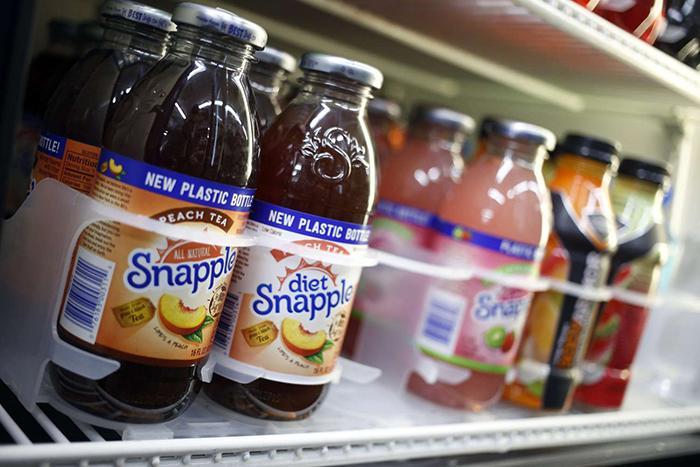
But the rollout was not smooth. Because of how the new packaging needed to be introduced region by region, starting on the West Coast, the company struggled with the rollout and refresh of Snapple’s bottle on the West Coast, which began in November 2020. That phased rollout created a patchwork of availability across the country, where some areas had the new plastic bottle on shelves while others were caught in between supply chains, effectively causing localized Snapple shortages that felt very real to shoppers in those markets.
The Engineering Challenge of the New Bottle
What most consumers don’t realize is how incredibly difficult it was to engineer the new plastic bottle. “The Snapple consumer is very, very protective of the bottle shape, they’re protective of the pop, and they’re protective of the under-the-cap facts,” said Patrick George, Senior Director of Engineering for DPS. “If you don’t supply them with those three things, they’re not happy.”
The engineering team spent three years developing a PET bottle that could replicate the look and feel of the glass bottle, including the signature metal-cap pop. The solution required an “abnormally heavy wall thickness” of 0.038 inches and proprietary plastic distribution technology that prevented the bottle from distorting during the hot-fill process. That level of complexity, applied at massive commercial scale, inevitably creates supply chain friction.
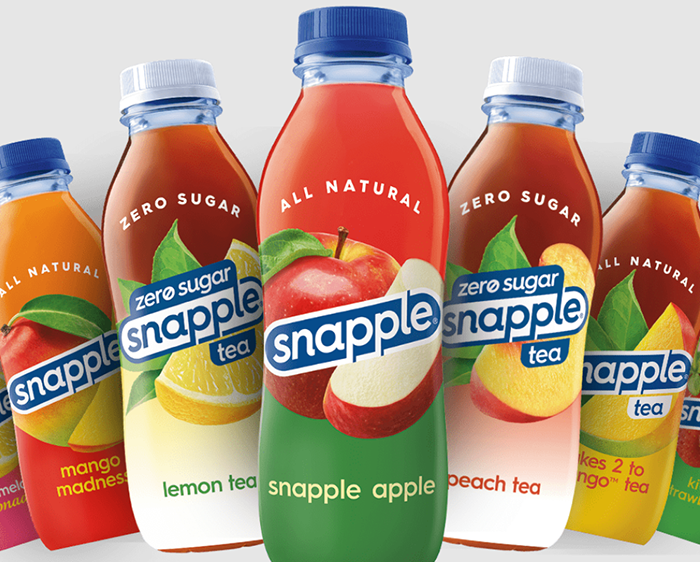
Why Snapple Feels Harder to Find Than Other Beverages
Read More : How Long After Stent Can You Drink Alcohol Updated 10/2026
Even outside of pandemic disruptions and packaging transitions, Snapple occupies a peculiar position in the American beverage market that makes it structurally more prone to feeling like it’s in short supply, even when it technically isn’t.
Regional Production = Regional Availability
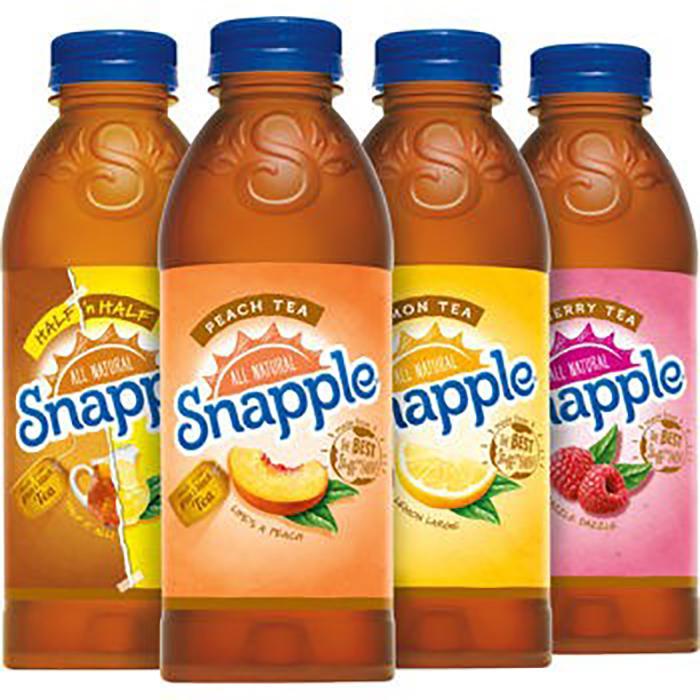
This is the single most important thing to understand, and Snapple’s own FAQ acknowledges it directly. Snapple is made in production facilities across the United States, and production facilities across the country specialize in certain flavors. This is why some flavors are regional and accessible only in specific parts of the country.
This means that the flavor you love might simply not be produced near you, and if distribution logistics get tight, that flavor disappears from your local shelves without disappearing from the brand’s lineup entirely. For someone in, say, rural Oklahoma versus Brooklyn, the Snapple experience can be completely different. The brand might feel abundant in one city and ghost-town scarce in another, not because of a true shortage, but because of how the production and distribution network is structured.
The Distribution Network’s Complexity
Snapple purchases about 1,000 different raw materials from 100 or so suppliers that are fed into 30 manufacturing facilities in North America. Five of these are company-owned while the other 25 are co-packing facilities. Snapple ships product from these facilities to 20 distribution centers that are primarily run by third-parties, and approximately 400 finished good items are shipped out from the DCs to several hundred distributors.
That is an extraordinarily complex supply chain for what looks like a simple bottled iced tea. Every single link in that chain is a potential point of friction. A labor shortage at one facility, a transportation delay at one distribution center, or a packaging material problem at one co-packer can cascade into a regional availability gap that looks and feels like a shortage to the consumer at the end of the chain.
Snapple’s Complicated History of Discontinued Flavors
One major source of the “shortage” perception is the fact that Snapple has discontinued dozens of flavors over its 50-plus-year history, and some of those discontinued flavors had intensely loyal followings. When your favorite flavor disappears, it can feel like a shortage even when the brand itself is thriving.
Here is a look at some of the most mourned departures from the Snapple lineup:
| Flavor | Era | Why It Disappeared |
|---|---|---|
| French Cherry Soda | 1980s-1990s | Shifted focus away from carbonated sodas to tea/juice |
| Bali Blast | Until 2005 | Portfolio restructuring |
| Snapple Elements (original line) | 1999-2005 | Drop in sales, health-food backlash over high fructose corn syrup |
| Mint Tea | 1987-2007 | Low sales and shelf space constraints |
| Whipper Snapple smoothies | Early 2000s | Refocus on core tea/juice products |
| Snapple Pie (various) | 2005, brief revival | Disappeared shortly after relaunch |
| Two-Liter Fruit Punch | Until 2021 | Confirmed discontinuation via Twitter |
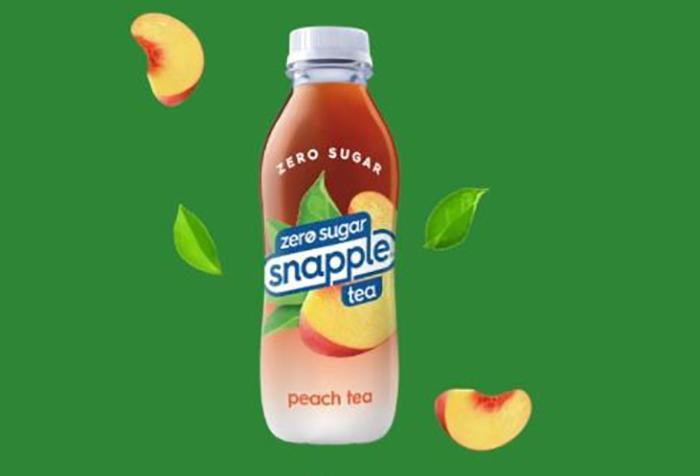
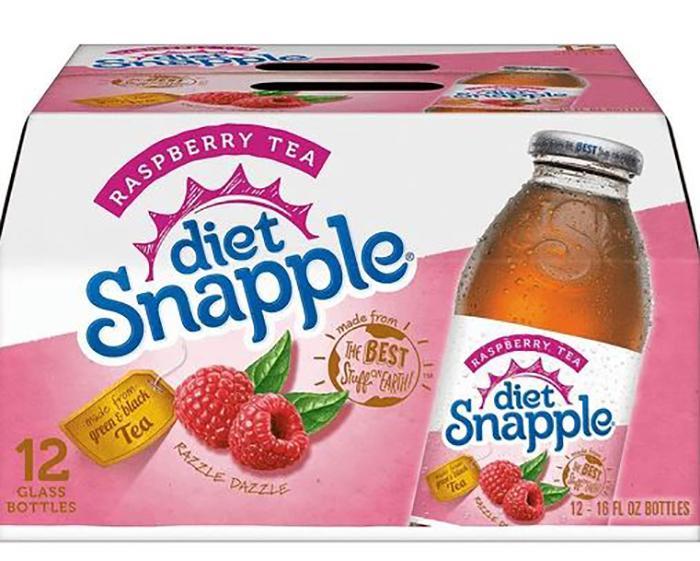
| Diet Snapple (name) | 2020s | Rebranded as “Zero Sugar Snapple,” same formula |
Occasionally, certain Snapple flavors are discontinued or are only sold as limited-time offers. That’s a polite way of saying that if you fall in love with a Snapple flavor, there’s a real chance it won’t be around forever.
The most dramatic example is the Snapple Elements line, those wide-mouth glass bottles with names like Fire, Rain, Earth, and Sun. In 1999, Snapple entered new territory with the Elements product line, which became a huge hit amongst young customers due to its unique flavors and innovative product design. However, just six short years after its initial launch, Snapple Elements were pulled from production altogether. After a 17-year absence, fans of Snapple Elements were delighted to hear in 2022 that the company was bringing back the product, igniting an online frenzy for the nostalgic revival. But even the revival sparked debate, because the revived line received some pushback due to Snapple altering the flavors and design.
Think about what that kind of brand history does to consumer confidence. If you grew up in the 1990s reaching for a Snapple the way you now reach for your favorite craft IPA or pre-mixed cocktail, you’ve already watched flavors you loved quietly disappear. The perception of a “shortage” is sometimes just the lived experience of being a longtime Snapple fan.
The Glass Bottle Nostalgia Factor: When “Shortage” Means Something Else Entirely
In late 2025, Snapple made a move that confirmed just how powerful the emotional pull of the original glass bottle still is. Snapple brought back the glass bottle for a limited time in the New York City area, responding to what a company spokesperson described as “demand for nostalgia from an OVERWHELMING number of consumers.”
The limited-edition glass bottles were available at CVS, Shoprite, Stop & Shop, and local bodegas in the New York and New Jersey area, selling for $3.99 each while supplies last, with five flavors available in the classic packaging.
This is exactly the kind of move that triggers “shortage” panic, intentionally or not. When Snapple announces a limited-time, limited-geography return of its most iconic packaging format, the result is predictable: fans who can access it buy as many as they can, fans who can’t access it feel like they’re missing out, and social media amplifies the anxiety into a national narrative. The item isn’t truly in short supply for the country, but it absolutely is in short supply for the majority of Americans who don’t live in the New York metro area.
Is There a Current Snapple Shortage in 2025?
To give you the most accurate answer: No, there is not a declared, company-wide Snapple shortage as of 2025. Snapple is actively expanding, not contracting.
Consider the evidence pointing toward a healthy Snapple presence in the market:
- Snapple Zero Sugar Peach Tea launched as a fountain beverage for the first time in history at participating 7-Eleven, Speedway, and Stripes stores nationwide, marking a major new distribution channel.
- Keurig Dr Pepper introduced Snapple Peach Tea and Lemonade in March 2025, blending tea with lemonade flavors to attract consumers looking for variety.
- In April 2024, Snapple added another product to the Elements line, Elements Sun (Starfruit, Orange, and Nectarine), promoted during the solar eclipse.
- There are over 30 Snapple flavors currently available, and the brand is always looking for fun new flavors to add to its lineup.
A brand in shortage mode doesn’t launch new flavors, expand to new distribution channels, and bring back nostalgic packaging for limited promotions. These are the actions of a brand in active, healthy growth.
That said, some flavors remain hard to find in specific markets due to regional production, and the distribution network’s complexity means localized gaps are a persistent reality.
How Snapple Fits Into America’s Growing Iced Tea Market
For beer drinkers, wine lovers, and cocktail enthusiasts who also keep a Snapple in the fridge as their non-alcoholic option of choice, here’s some context on just how significant this brand is in the American beverage landscape.
Read More : How To Make Club Soda With Sodastream Updated 10/2026
The global iced tea market was valued at USD 55.42 billion in 2024, with the global market size expected to reach USD 85.75 billion by 2033, expanding at a compound annual growth rate (CAGR) of 4.97%. The RTD (ready-to-drink) iced tea segment, which is exactly where Snapple plays, is the fastest-growing category in that market.
The U.S. iced tea market is dominated by a few major brands that continue to hold strong market positions: Arizona leads the market with its wide range of affordable and widely distributed flavors, followed closely by Pure Leaf, while Lipton remains a staple. Gold Peak and Snapple offer a mix of classic and more modern flavors.
Snapple’s position in that competitive landscape is interesting. It doesn’t have the raw volume of Arizona (the current market leader), but it has something arguably more valuable: cultural prestige. The brand became popular in the 1990s and 2000s from pop-culture references and sponsorships in television shows, including a legendary association with Seinfeld that made Snapple synonymous with New York City cool.
Snapple held approximately 6.3% of the U.S. RTD tea market in 2019, with sales volume of 54.6 million cases per year at that time, according to Beverage Digest data. For a brand with a premium price point (compared to Arizona’s famous 99-cent giant cans), that’s a substantial footprint.
What to Do If You Can’t Find Your Favorite Snapple
If you’re experiencing what feels like a personal Snapple shortage, here are practical steps that actually work.
Use the Official Product Locator
Snapple has a product locator on their website that lets you search for specific flavors at stores near you. Before assuming your favorite is gone forever, check snapple.com to see which nearby retailers carry it.
Check Online and Specialty Retailers
Platforms like Amazon regularly carry Snapple variety packs and individual flavors. Snapple is available in all 50 states across the country through its official online retail channels, even if your specific local store is out of stock.
Explore Overstock and Discount Chains
Stores like Big Lots, Tuesday Morning, and discount grocery chains sometimes carry Snapple flavors at reduced prices, including varieties not commonly stocked at major chains.
Consider That Your Flavor May Be Discontinued
If you cannot find a specific Snapple flavor anywhere, it’s worth checking whether it has been quietly discontinued. Pro tips for finding discontinued Snapple flavors include checking overstock and discount chains, international markets, or DIY clone recipes shared by fans online. The Snapple fan community is particularly active on Reddit, where people share recipes that replicate discontinued favorites.
Snapple, Social Media, and the Shortage Rumor Machine
It’s worth addressing something that affects every major beverage brand today, not just Snapple: the role of social media in manufacturing and amplifying shortage narratives that may not reflect reality.
We saw this with Dr Pepper during the pandemic. After Dr Pepper acknowledged difficulty keeping shelves stocked, fans said: “when it’s on the shelf, we snarf it up when we see there is any sort of potential supply disruption.” That panic-buying behavior, triggered by a temporary logistics issue, actually created a worse shortage by depleting available stock faster than stores could restock.
The same dynamic applies to Snapple. When one person posts on TikTok or Reddit that they can’t find their favorite flavor, hundreds of others check their local stores with heightened anxiety. If one store is simply out that day for ordinary restocking reasons, it looks like confirmation of a national crisis. Algorithms reward alarm. “Snapple shortage” is a more shareable headline than “Snapple is fine but distribution logistics are complex.”
This doesn’t mean the frustrations are imaginary. Real supply disruptions happened. Real flavors have been discontinued. Real regional availability gaps exist. But distinguishing between a temporary local stock issue and a systemic shortage is important before concluding that your beloved Peach Tea is on the way out.
The Bigger Picture: What Snapple’s Journey Says About American Beverage Culture
There is something deeply revealing about the intensity of Americans’ feelings toward Snapple’s availability. Think about it this way: you might feel mildly annoyed if your local grocery store is out of a particular wine, and you’d just grab a different bottle from the same shelf. But many Snapple fans feel genuine distress when their specific flavor isn’t there.
That’s because Snapple occupies a unique emotional register in American beverage culture. Snapple originated as an apple juice first produced in 1972 by three founders in Valley Stream, Long Island, New York, and the brand became popular in the 1990s and 2000s from pop-culture references and sponsorships in television shows. It peaked at a staggering $674 million in sales in 1994 before a series of ownership changes and marketing missteps caused it to stumble. The brand’s resilience, its survival through Quaker Oats, Cadbury Schweppes, Dr Pepper Snapple Group, and now Keurig Dr Pepper, is actually a remarkable story of an American brand refusing to die.
For people who were teenagers or young adults in the 1990s, a cold Snapple sits in the same emotional category as a cold beer from their college era, or a wine from a memorable trip. It’s not just a drink. It’s a portal to a specific time and feeling. That’s exactly why the glass bottle’s return in New York in 2025 was met with the kind of enthusiasm usually reserved for limited-edition bourbon releases or rare craft brew drops.
And that emotional connection is exactly why people reach for the word “shortage” when they can’t find it. When something feels irreplaceable, any absence feels like a crisis.
Conclusion
Here is what no one in the beverage industry wants to say out loud: the real “Snapple shortage” isn’t happening in a warehouse or on a production line. It’s happening in the gap between what we expect from brands we love and the messy, imperfect reality of industrial supply chains, profit-driven flavor discontinuations, and distribution networks that were never designed to guarantee every fan access to every flavor in every city on every Tuesday afternoon.
Snapple is still here. It’s expanding. It’s launching new flavors, hitting new distribution channels, and even bringing back the glass bottle for people who refuse to let go of 1997. But like any beloved American institution, whether it’s a family-owned brewery, a regional wine, or a neighborhood bar that still makes a perfect Manhattan, the real thing is rarely as available, as consistent, or as perfectly preserved as memory insists it should be.
Maybe that scarcity is part of what makes it taste so good when you finally find it.
Sources: https://chesbrewco.com
Category: Drink