If you’ve ever reached into a cooler, cracked open a Red Bull, and thought, why does this feel so different from my beer? you’re not alone. That slim, tall cylinder sitting next to your pint cans and wine glasses is one of the most precisely engineered pieces of packaging in the beverage world. Whether you’re mixing a Vodka Red Bull at a house party, ordering a Jägerbomb at the bar, or just trying to figure out which size fits your car’s cup holder, Red Bull can dimensions matter more than most people realize.
This guide breaks down every size Red Bull makes in the U.S., compares them to standard beer and soda cans, explains why that slim silhouette was a deliberate design rebellion, and covers what all of this means when you’re mixing drinks, stocking a cooler, or ordering at the bar.
You Are Watching: Red Bull Can Dimensions:Every Size, Spec Updated 10/2026
Why Red Bull Can Dimensions Are Worth Knowing
Here’s something most casual drinkers never think about: a Red Bull can holds less liquid than your standard 12 oz beer can, yet it looks taller on the shelf. That’s not an accident. That’s engineering, marketing, and brand identity compressed into aluminum.
A typical 12-ounce soft drink can measures about 4.83 inches tall and 2.6 inches in diameter. Red Bull, by contrast, sticks to a tall, slim format, with the classic 8.4 oz can measuring just 2.12 inches across. The result is a can that reads premium, stands out visually, and fits neatly into tight spaces.
Companies use tall and slim cans because they take up less shelf space despite containing the same amount of fluid as comparable standard beverage cans. As such, retailers can stock more cans per shelf, encouraging higher-quantity orders. There are secondary reasons too, including faster cooling (a larger surface area relative to volume cools more quickly) and appearance.
For the American drinker, especially someone who reaches for Red Bull as a cocktail mixer or a pre-game pick-me-up, understanding these dimensions helps answer real questions: Will it fit in my cup holder? How much caffeine am I actually getting? Which size should I grab for a Vodka Red Bull? Does the can size change the cocktail?
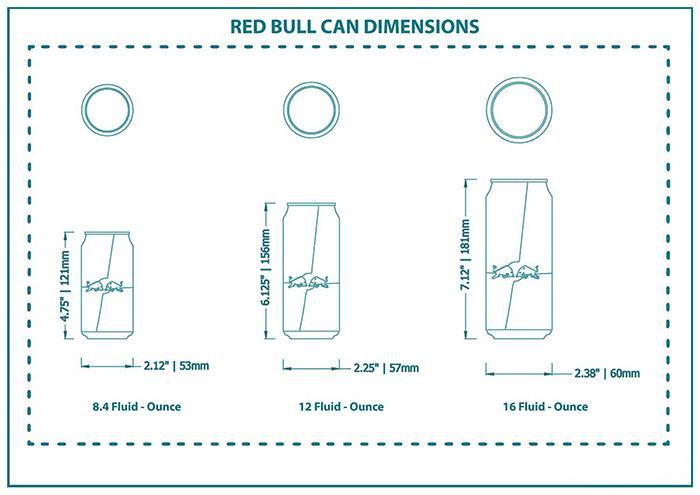
The Full Breakdown: Every Red Bull Can Size Available in the U.S.
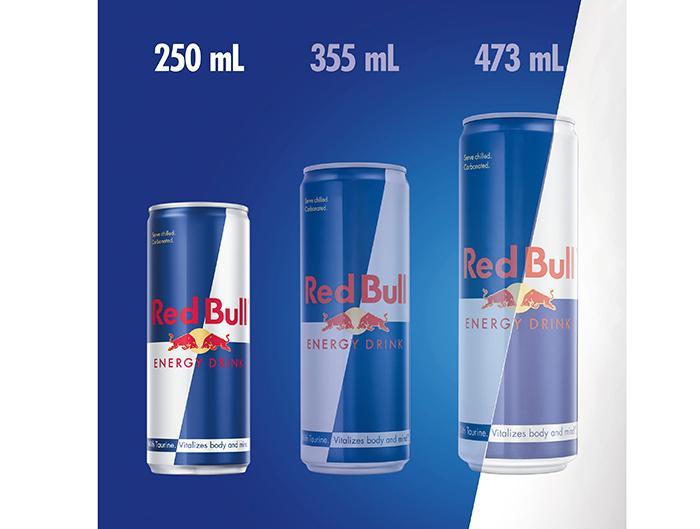
Red Bull is available in several sizes, including 8.4 oz, 12 oz, 16 oz, and 20 oz, designed for different energy needs and occasions. Each size carries its own caffeine payload, physical footprint, and ideal use case.
Here’s the full picture:
| Size | Volume | Height | Diameter | Circumference | Caffeine | Calories |
|---|---|---|---|---|---|---|
| Classic | 8.4 oz / 250 ml | ~5.25 in (13.3 cm) | ~2.25 in (5.7 cm) | ~7.1 in (18 cm) | 80 mg | ~110 |
| Medium | 12 oz / 355 ml | ~6.2 in (15.7 cm) | ~2.25 in (5.7 cm) | ~7.1 in (18 cm) | 114 mg | ~160 |
| Large | 16 oz / 473 ml | ~6.9 in (17.5 cm) | ~2.6 in (6.6 cm) | ~8.2 in (20.8 cm) | 151 mg | ~220 |
| Extra Large | 20 oz / 591 ml | ~7.6 in (19.3 cm) | ~2.6 in (6.6 cm) | ~8.2 in (20.8 cm) | ~200 mg | ~270 |
Note: Dimensions may vary by ±1–2 mm due to manufacturing tolerances. Values represent reliable U.S. market averages.
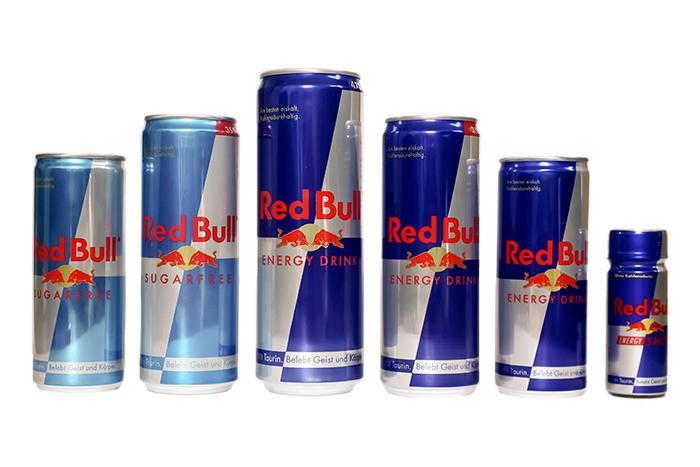
The Classic 8.4 oz Can: The One That Started It All
The 8.4 oz (250 ml) can is the original. It’s the one with the iconic blue and silver design that’s been photographed more times than most celebrities. This standard size revolutionized portable energy drinks when Red Bull entered the U.S. market in 1997. The slim can design fits perfectly in your hand and slides effortlessly into cup holders.
The classic 8.4 oz Red Bull can, the most globally recognized size, stands approximately 5.25 inches (13.3 cm) tall with an outer diameter of about 2.25 inches (5.7 cm). This size contains 80 mg of caffeine and approximately 110 calories, offering a focused energy boost. Its design is intentionally portable and cup-holder friendly, making it ideal for active, on-the-go lifestyles.
The inner diameter at the lid is slightly smaller, measuring about 2.13 inches (5.4 cm), which is a deliberate engineering choice to create a pressure seal. The circumference, the full wrap-around measurement you’d get if you taped a ruler around the can’s widest point, clocks in at approximately 7.1 inches (18 cm). That’s exactly why the label feels so well-fitted: it was printed to match that circumference precisely.
For bartenders and home mixers, the 8.4 oz is the go-to cocktail can. It’s the right volume for a single-serve Vodka Red Bull, it pours cleanly into a pint glass, and the smaller caffeine dose keeps the cocktail experience social rather than wired.
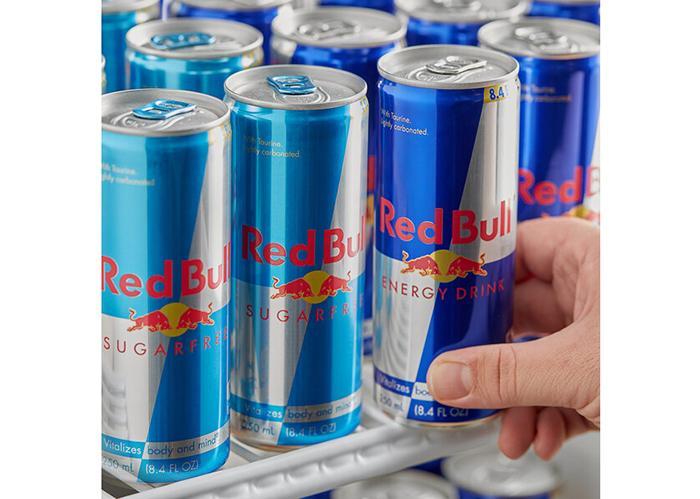
The 12 oz Can: The Middle Ground Most Americans Reach For
The 12 oz / 355 ml can stretches up to about 6.2 inches, or 15.7 cm, keeping a similar slim profile but clearly saying, “I’m more of a commitment.” At 114 mg of caffeine, it crosses the threshold where you’re getting noticeably more stimulation than a single cup of drip coffee.
This is the size that most closely matches a standard beer can in volume, which makes it a natural choice for people who drink beer socially and want to swap in an energy drink without feeling like they’re drinking less. A 12 oz Red Bull can stands approximately 5.9 inches tall with a diameter of 2.6 inches, which matches standard soda can dimensions.
At bars that pour Red Bull cocktails using the can-pour method (rather than from a gun), the 12 oz is often the preferred bartender size. It fills a highball glass with room for ice and a spirit pour without overflow. It’s also the right size for the Irish Trash Can recipe, one of the most theatrical bar drinks in America, where the open can is literally dropped upside-down into the glass.
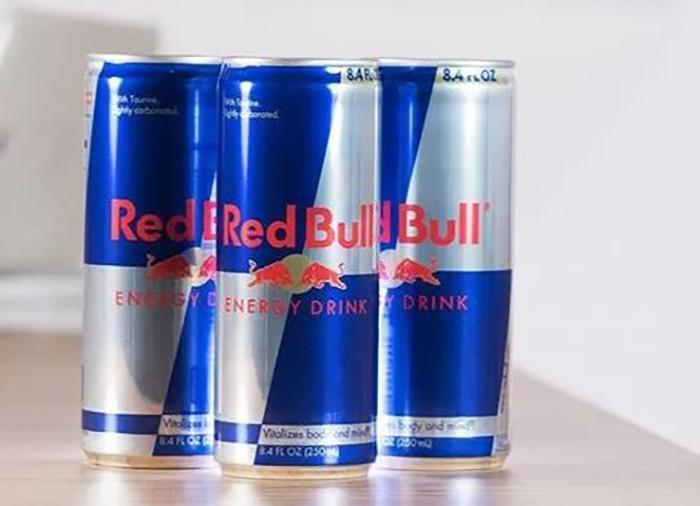
The 16 oz Can: For Long Nights and Hard Days
Step up to the 16 oz / 473 ml version and you’re looking at around 6.9 inches tall, which is 17.5 cm. Larger can, higher numbers: the 16 oz climbs to 160 mg of caffeine.
At nearly 7 inches tall, this can starts entering tall boy territory, the same category as the craft beer cans you see at most taprooms. The design of the can is bolder, with larger graphics, reflecting the heightened energy content within.
For drinkers who use Red Bull as a cocktail base for larger format drinks, this is where things get interesting. A 16 oz Red Bull split between two people in a shared cocktail gives each person roughly the caffeine equivalent of a standard cup of coffee, which is about the sweet spot for a fun, alert night out without crossing into jittery territory.
The diameter on the 16 oz shifts slightly to approximately 2.6 inches (6.6 cm), which means it may not fit in every vehicle cup holder designed for slimmer 8.4 oz cans. Worth checking before your next road trip.
The 20 oz Can: Red Bull’s Biggest Statement
Read More : Is Bubly Sparkling Water Gluten Free Updated 10/2026
The 20 oz (591 ml) can, sizing up at approximately 3.15 × 7.9 inches (8 × 20 centimeters), is the biggest option in the Red Bull lineup. At roughly 7.6 inches tall, it’s nearly as tall as a standard water bottle and carries close to 200 mg of caffeine, which puts it solidly in the “pace yourself” category.
The 20 oz is less common but available in some locations, and it’s for the real troopers. Larger cans may deliver more power, but pacing yourself is key. More isn’t always better, especially with caffeine.
This can is also notable from a cocktail perspective: a 20 oz Red Bull split across a punch bowl or large-batch cocktail recipe can fuel an entire group. It’s increasingly popular for pregame setups and tailgate drinks, where the goal is communal energy rather than individual portions.
How Red Bull Cans Compare to Beer, Soda, and Other Energy Drinks
Understanding Red Bull’s dimensions only gets really interesting when you put them next to what most American drinkers are already familiar with.
Red Bull vs. Standard Beer Cans
The classic American 12 oz beer can (think Bud Light, Coors, Miller Lite) stands about 4.83 inches (123 mm) tall with a diameter of roughly 2.6 inches (66 mm). It’s shorter, fatter, and designed for a different grip experience.
A standard 12 oz soda can measures about 4 7/8 inches (123.5 mm), whereas an 8.4 oz Red Bull can is closer to 5.4 inches (137 mm). That extra height gives it a sleek, grabby feel. So even though a Red Bull classic holds less liquid than your beer, it looks taller. That’s the magic trick of the slim can.
Red Bull vs. Competing Energy Drinks
Monster Energy typically uses 16 fl oz cans as their standard size, which are noticeably wider than Red Bull. A Monster can measures about 6.2 inches in height with a diameter around 2.6 inches. The wider profile gives Monster a different visual presence on shelves. While Monster offers more volume per can on average, Red Bull’s slim design creates a distinct identity.
Red Bull uses the most compact can profile of any major energy drink brand. Its classic 8.4 oz slim format stands apart from every competitor on the shelf. Monster, Bang, and Rockstar all use the wider 2.8-inch wide-body format at 16 oz. Red Bull’s classic can is the shortest and slimmest of them all, making it the easiest to carry, store, and fit in tight spaces.
Here’s a quick comparison of how the major players stack up:
| Brand | Standard Size | Height | Diameter |
|---|---|---|---|
| Red Bull (classic) | 8.4 oz / 250 ml | ~5.25 in | ~2.25 in |
| Monster | 16 oz / 473 ml | ~6.2 in | ~2.6 in |
| Bang Energy | 16 oz / 473 ml | ~6.2 in | ~2.8 in |
| Rockstar | 16 oz / 473 ml | ~6.1 in | ~2.8 in |
| Celsius | 12 oz / 355 ml | ~6.25 in | ~2.6 in |
| Standard Beer (12 oz) | 12 oz / 355 ml | ~4.83 in | ~2.6 in |
The takeaway is clear: Red Bull is playing a different game. While every other major energy drink brand went wide and large, Red Bull doubled down on tall and slim. That wasn’t just a branding choice. It was a practical one.
The Engineering Behind That Slim Can
Red Bull doesn’t choose sizes randomly. Every dimension serves a purpose: easier to hold and carry; stronger brand identity (people instantly recognize the “slim” look); more efficient use of aluminum (less material for the same volume); catering to the U.S. market, where consumers prefer bigger servings in certain contexts; and offering better cost-per-milliliter value.
The material itself is worth understanding. Every Red Bull can is made from aluminum, specifically recyclable aluminum, which is lighter than steel and easier to reshape without losing integrity. This matters for transportation logistics, reducing fuel use, and keeping costs from rising. Aluminum chills fast too, which is a functional perk people feel but rarely name.
Red Bull’s use of 100% recyclable aluminum cans aligns with sustainability trends, reducing waste and environmental impact. An empty standard 8.4 oz Red Bull can weighs only about 0.5 ounces (15 grams), which makes it one of the lightest beverage containers of its volume on the market. Filled, the total weight comes in around 9 ounces (255 grams).
There’s also the sound dimension, something beverage engineers genuinely think about. That sharp, pressurized hiss when you crack a Red Bull is a product of carbonation pressure built up inside the slim aluminum shell. The slim walls actually amplify that crack slightly, which is part of why it feels so satisfying to open.
Red Bull Can Dimensions and the Cup Holder Factor
For American drivers, the cup holder is a real-world test that most cans either pass or fail. Here’s how each Red Bull size performs:
The 8.4 oz classic can, with its 2.25-inch diameter, fits comfortably in virtually every standard car cup holder, gym bottle cage, and stadium drink holder in the U.S. It was engineered for exactly this purpose.
The 12 oz can, despite being slightly taller, maintains a similar slim profile and fits most cup holders without issue.
The 16 oz and 20 oz cans are wider at approximately 2.6 inches in diameter. Some cup holders, particularly in older vehicles and stadium seating, may be a slightly snug fit. If you’re driving and sipping, the classic 8.4 oz remains the most practical choice.
What Red Bull Can Dimensions Mean for Cocktails and Mixing
Here’s where things get genuinely fun for anyone who drinks cocktails, beer, or wine, and occasionally throws an energy drink into the mix.
The Vodka Red Bull: Why the 8.4 oz Is the Bartender’s Default
The ideal way to serve a Vodka Red Bull is in a pint glass to accommodate its total volume. To mix one properly, first pour 90 ml of vodka into a pint glass. Then add approximately 240 ml of energy drink on top. Stir gently with a long spoon to ensure the ingredients are well combined, but avoid vigorous stirring to maintain carbonation.
This is why the 8.4 oz can (250 ml) is the default for cocktail use. It’s almost exactly the right volume of Red Bull for a single-serve pint glass cocktail. The standard pour becomes: 1.5 oz of vodka, the full 8.4 oz can of Red Bull, served over ice. Clean, calibrated, consistent.
The perfect ratio starts with a conservative approach: 1 part spirit to 3 parts Red Bull. A standard pour is usually 1.5 ounces of spirit per 5–6 ounces of Red Bull. And temperature matters: always ensure both the alcohol and the Red Bull are well-chilled before mixing. Warm Red Bull falls flat quickly and ruins the texture.
The Irish Trash Can: Why the 8.4 oz Size Makes the Spectacle Work
The Irish Trash Can is one of the most visually dramatic cocktails in American bar culture, and it only works because of the specific dimensions of the 8.4 oz can.
The Irish Trash Can is a party in a glass, made with 6 types of liquor and a Red Bull energy drink. The key is glassware: a tall pint-style glass, wide enough to safely fit the can. Pour the spirits over ice, then open the Red Bull and carefully drop the entire can upside down into the glass. The drink will mix as the energy drink releases.
The reason this works mechanically is the slim 2.25-inch diameter of the 8.4 oz can. It drops neatly into a pint glass without getting stuck. A wider Monster or standard soda can would wedge itself at the rim. Leave plenty of headspace before adding the can, or your drink will overflow. A wider rim is best for sipping.
The Jägerbomb: A Size-Specific Ritual
The Jägerbomb is a legendary concoction that has taken the party scene by storm, combining the herbal notes of Jägermeister with the electrifying jolt of an energy drink, served as a bomb shot. Drop the shot of Jägermeister into a glass of energy drink and witness the fusion of flavors.
Read More : What Is Yogurt Soda Updated 10/2026
For the Jägerbomb, the 8.4 oz can is standard: it’s poured into a larger glass and the Jäger shot is dropped in. The specific volume is important here because too much Red Bull dilutes the herbal bite of the Jäger, while too little makes the drink unpleasantly concentrated.
The Vegas Bomb: Whiskey Meets Energy
The Vegas Bomb is a classic cocktail that combines whiskey, peach schnapps, and Red Bull for an explosive drink. The combination of Crown Royal and peach schnapps creates a smooth and fruity base, while the Red Bull adds a boost of caffeine and energy. Again, the 8.4 oz can is the bartender’s instinct: it balances the flavor profile without overpowering the spirit.
A Note on Mixing Red Bull With Beer and Wine
For wine and beer drinkers who are curious: Red Bull’s dimensions and caffeine content make it a surprisingly versatile mixer beyond the vodka-and-energy-drink crowd.
Some craft cocktail bars in the U.S. have experimented with using the sugar-free Red Bull (same dimensions as the standard) as a low-calorie sparkling element in spritz-style cocktails, similar to how Prosecco or sparkling water is used in a Aperol Spritz. The slim can’s controlled carbonation pours cleanly without the aggressive fizz of club soda.
For beer drinkers, Red Bull is occasionally used as a “boilermaker” variant: a small shot of Red Bull alongside a lager or pilsner. The citrus-forward notes in a Red Bull can actually complement the grassy, light-grain profile of a cold American lager. It’s not traditional, but it works.
When discussing what alcohol goes well with Red Bull, three pairings consistently top the charts: vodka (the neutral flavor allows Red Bull’s taste to dominate), Jägermeister (the herbal bitterness clashes dramatically with the sweet energy drink, creating a flavor explosion), and rum (a clean, accessible pairing for those who find vodka too neutral).
Red Bull’s Caffeine Content by Can Size: A Practical Guide for Drinkers
Understanding the caffeine in each can size is crucial, especially when mixing with alcohol. The stimulant effect of Red Bull can mask the depressant effects of alcohol, leading drinkers to feel less impaired than they actually are. This increases the risk of consuming more alcohol than intended.
Here’s how the caffeine stacks up in context:
| Red Bull Size | Caffeine | Equivalent To |
|---|---|---|
| 8.4 oz (classic) | 80 mg | 1 cup drip coffee |
| 12 oz | 114 mg | ~1.4 cups drip coffee |
| 16 oz | ~151 mg | ~1.9 cups drip coffee |
| 20 oz | ~200 mg | ~2.5 cups drip coffee |
The general guideline suggests that adults should limit their daily caffeine intake to 400 mg or less, which equates to about five 8.4 oz cans of Red Bull. For most social drinkers having one or two cocktails with a single Red Bull, the 8.4 oz classic keeps you comfortably within safe territory.
Red Bull Can Dimensions Around the World: What Changes When You Travel
If you’ve ordered a Red Bull in Europe or Asia and noticed it looked slightly different, you weren’t imagining things.
Red Bull sizes aren’t universal. In Japan, you often find the 185 ml and 250 ml sizes. In Europe, the 250 ml, 355 ml, and 473 ml cans are common. Australia offers 250 ml and 355 ml, with occasional 500 ml limited editions. The Middle East carries a mix including 250 ml and 355 ml, depending on the market.
While global supply chains benefit from standardized dimensions for streamlined logistics, regional preferences still play a significant role. Can sizes often vary by geographic market to cater to local consumer habits and preferences. In North America, sizes like 355 ml, 473 ml, and 591 ml are particularly popular, reflecting a preference for larger serving sizes. In Europe and Asia, the standard 250 ml slim can dominates, supporting quick consumption and portion control.
There’s also a mini Red Bull format worth knowing about: some regions offer 190 ml or “shot” versions, which are shorter but use the same diameter as the slim 250 ml can. And for those who want a caffeine hit without the full-size can experience, Red Bull Energy Shots (2 fl oz) are designed for fast consumption with no fizz, more functional than flavorful but effective when you need to snap back fast.
Practical Tips for Storing and Using Red Bull Cans
Whether you’re stocking a home bar, packing a cooler for a tailgate, or setting up for a party, Red Bull’s specific dimensions make a practical difference.
Refrigerator storage: The slim 8.4 oz cans stack efficiently. A standard 12-pack of 8.4 oz cans requires roughly 25 inches of linear shelf space, arranged in a single row. Stack two rows deep and you’ve covered a full party’s worth.
Cooler packing: The slimmer 2.25-inch diameter means you can fit more Red Bull cans in a standard ice cooler alongside beer bottles and wine coolers than you could with wider cans. Think of it as the compact sedan of the beverage world, it parks in spaces the SUV-sized Monster cans can’t.
Cup holder compatibility: For travel, always keep at least a few 8.4 oz classics on hand. They fit every cup holder. The 16 oz and 20 oz are better for desk or bar use.
Cocktail prep: If you’re setting up a DIY bar, use high-quality ice with large, dense cubes that melt slowly to keep the drink cold and prevent rapid weakening. Always ensure both the alcohol and the Red Bull are well-chilled before mixing. Warm Red Bull falls flat quickly and ruins the texture.
The Weight of a Red Bull Can: Empty vs. Full
It’s a small detail, but it comes up more than you’d think, especially if you’re doing an Irish Trash Can drop into a glass and want to know if the can will sink or float, or if you’re packing cans for a camping trip and need to calculate weight.
An empty Red Bull aluminum can weighs approximately 0.5 ounces (15 grams) for the standard 8.4 oz size. When filled, the total weight reaches about 9 ounces (255 grams) including liquid and packaging. The 16 oz can weighs roughly 17 ounces (480 grams) when full.
For the Irish Trash Can cocktail specifically: the 8.4 oz can, when opened and partially empty, floats at an angle in the pint glass, which is actually by design. The slow release of liquid from the upended can is what creates the gradual color-shift effect that makes the drink so visually dramatic.
Red Bull’s Record-Breaking Can Production
Here’s a number that puts all of this in perspective: in 2021, Red Bull shattered its own sales record by selling 9.8 billion cans worldwide. That’s approximately one can for every person on Earth, give or take. Each of those cans had to meet precise dimensional standards, fit in cup holders from Phoenix to Frankfurt, and survive the supply chain from Austrian headquarters to your nearest gas station cooler.
Red Bull cans are 100% recyclable. According to the company, Red Bull has emphasized sustainable practices, which include reusing aluminum cans and encouraging consumers to recycle empty Red Bull cans. Aluminum is also unique among packaging materials in that it can be recycled indefinitely without quality loss.
Conclusion
The next time someone at your bar drops a can of Red Bull upside-down into a pint glass, or you reach for an 8.4 oz classic to mix with your vodka, or you’re standing in a gas station at 11 PM squinting at three different Red Bull sizes on the shelf, you now have the full picture. This isn’t just a can. It’s a deliberate choice, made in millimeters, that shapes how you hold it, how much you drink, how it fits in your world, and yes, what it tastes like in a cocktail.
The real story of Red Bull’s dimensions isn’t about specs. It’s about a company that looked at a world full of wide, squat beverage cans and said: we’re going tall and slim. And then the bars, the cup holders, the coolers, and the cocktail recipes all quietly rearranged themselves around that decision. Every measurement from the 2.25-inch grip of the classic to the near-water-bottle height of the 20 oz was a choice with consequences you drink every time you pop the tab.
Cheers to the engineers who make sure it fits in your hand.
Sources: https://chesbrewco.com
Category: Drink