There is a specific kind of nostalgia that hits you somewhere between the first sip of something ice-cold and sweet, and the realization that you have not tasted it since you were ten years old. For millions of Americans, Kool-Aid is that drink. It is the pitcher of electric-red liquid sweating on the kitchen counter at every summer barbecue. It is the red mustache on the upper lip of every kid who could not be bothered to wipe their mouth. And yes, it is also the cocktail base that grown adults have rediscovered with a splash of vodka or rum.
You Are Watching: Kool Aid Current And Discontinued Flavors Updated 10/2026
But Kool-Aid is far more layered, historically rich, and surprisingly complex than most people realize. Since Edwin Perkins first created the powder in 1927, the brand has introduced and retired dozens of flavors, some of which inspired petitions, collector markets, and enough online nostalgia to fill a swimming pool. Whether you are a longtime fan revisiting the classics, a cocktail enthusiast looking for a novel mixer, or someone who still mourns the loss of Purplesaurus Rex, this is the complete guide you have been waiting for.
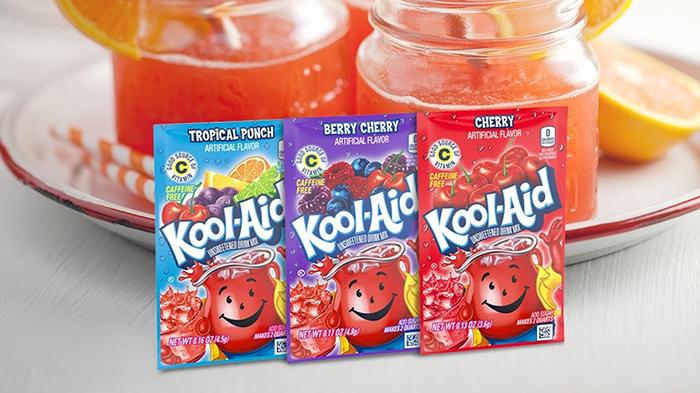
From Fruit Smack to a Household Name: The Origin of Kool-Aid
The story of Kool-Aid begins not in a corporate lab but in a mother’s kitchen in Hastings, Nebraska. Edwin Perkins was a restless entrepreneur with a mail-order catalog business who sold everything from tobacco remedies to perfumes. His most popular item was a bottled fruit concentrate called Fruit Smack, a precursor to what Kool-Aid would become. The problem with Fruit Smack was purely logistical: corked glass bottles leaked, broke in transit, and were expensive to ship.
By 1927, Perkins had solved the problem through dehydration. He figured out how to remove the liquid from Fruit Smack entirely, leaving behind only a concentrated powder made from dextrose, citric acid, tartaric acid, flavoring, and food coloring. He called the product “Kool-Ade” (later changed to “Kool-Aid” after government regulations barred the use of “Ade” in products containing no real fruit juice). Each packet sold for just ten cents, enough to make an entire pitcherful for a family.
The timing was almost accidental genius. When the Great Depression hit in 1929, cheap, enjoyable luxuries became precious. A pitcher of Kool-Aid cost pennies, tasted like summer, and gave families with very little money something simple to enjoy. Sales exploded. Perkins moved production to Chicago in 1931, and by 1953, General Foods (later acquired by Kraft Heinz) had purchased the brand and introduced the world to the Kool-Aid Man, the anthropomorphic pitcher with the legendary catchphrase: “Oh, Yeah!”
Today, Kool-Aid is owned by Kraft Heinz, ranks as the 16th most popular beverage brand in the United States according to YouGov polling, and moves an estimated 563 million gallons annually, roughly 17 gallons consumed every single second during the peak summer months. According to brand data, nearly 20 percent of Kool-Aid drinkers identify as Hispanic and slightly more than 20 percent are African-American, reflecting the drink’s broad demographic reach. Memphis, Tennessee, consistently leads the nation in per-capita consumption, followed by Little Rock, Arkansas, and St. Louis, Missouri.
The Six Original Flavors (And Why One Disappeared Early)
When Kool-Aid first launched in 1927, it came in exactly six flavors: Cherry, Grape, Lemon-Lime, Orange, Raspberry, and Strawberry. These were the founding lineup, the original roster that shaped the American palate for decades.
Five of those original six flavors either remain in production today or evolved into recognizable modern variants. Raspberry, however, was quietly discontinued not long after the brand’s founding, making it the sole original flavor that never made it to the modern era in its original form. Here is the bitter irony: raspberry happened to be the personal favorite of Edwin Perkins himself, the man who invented the drink. Today, the closest substitute is Blue Raspberry Lemonade, which hits nearby notes but carries a decidedly different identity.
Root Beer was another very early addition that came and went, disappearing in the 1950s and leaving a small but vocal fan base that still occasionally surfaces on collector forums.
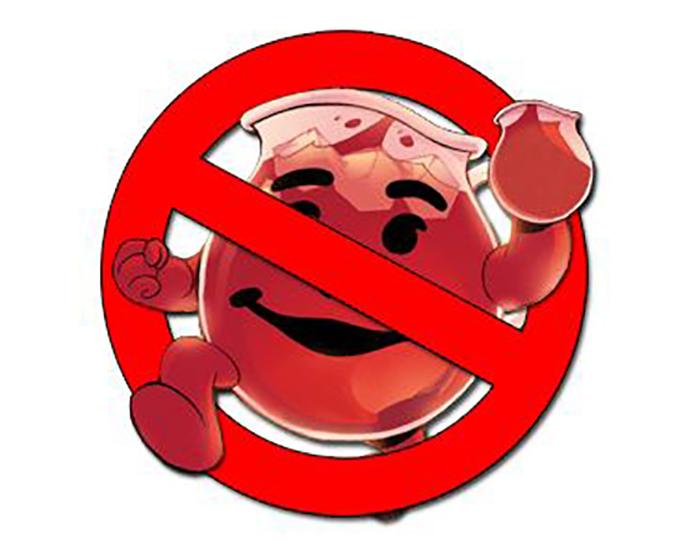
Current Kool-Aid Flavors: What Is on Shelves in 2026
As of today, the standard Kool-Aid powdered drink mix line contains approximately 22 distinct flavors, not counting the Aguas Frescas line, sugar-free variants, Jammers pouches, or newer product extensions. The lineup includes everything from timeless classics to newer tropical blends.
| Flavor | Category | Flavor Profile |
|---|---|---|
| Tropical Punch | Classic | Mixed citrus-fruit, sweet and bright red |
| Cherry | Classic | Sweet artificial cherry, candy-forward |
| Grape | Classic | Concord grape, crowd-pleaser at events |
| Orange | Classic | Bold citrus, strong orange flavor |
| Lemonade | Classic | Sweet-tart lemon, summer staple |
| Pink Lemonade | Classic | Softer, berry-tinged lemon |
| Black Cherry | Classic | Deeper, slightly bitter cherry |
| Strawberry | Classic | Sweet berry, one of the original six |
| Watermelon | Fruit Forward | Light, refreshing warm-weather flavor |
| Green Apple | Fruit Forward | Tart green apple, Jolly Rancher-adjacent |
| Blue Raspberry Lemonade | Signature | Sweet-tart, vivid blue color |
| Sharkleberry Fin | Retro Survivor | Orange-strawberry-banana, 80s icon |
| Strawberry Kiwi | Tropical | Bright, fruity hybrid |
| Peach Mango | Tropical | Warm, sun-kissed, pairs well with rum |
| Cherry Limeade | Citrus Hybrid | Cherry sweetness with lime tartness |
| Invisible Grape | Novelty | Clear liquid, full grape flavor |
| Lemon-Lime | Citrus | Crisp and clean, classic soda flavor |
| Mandarina-Tangerine | Aguas Frescas | Mild tangerine, somewhat underwhelming |
| Mango | Aguas Frescas | Tropical mango, vibrant orange color |
| Pina-Pineapple | Aguas Frescas | Pineapple-forward, tropical sweetness |
| Jamaica | Aguas Frescas | Hibiscus-based, earthy and floral |
| Raspberry Lemonade | Berry | Blue raspberry meets tart lemonade |
Tropical Punch remains the single best-selling flavor and the one most people picture when they think of Kool-Aid. Its bright red color and mixed-fruit profile have made it synonymous with the brand itself. Interestingly, Grape consistently wins the popular vote at Kool-Aid Days, the annual summer festival held every August in Hastings, Nebraska, where it has been the number-one requested flavor at the World’s Largest Kool-Aid Stand for most of the event’s history.
Sharkleberry Fin is worth special mention. Originally released in 1988-1989 and discontinued in 1996, it was later resurrected and is the one retro mascot-era flavor that survived to the present day in regular production. It still carries the distinctive orange-strawberry-banana combination that made it a cult favorite, even if the mascot has been updated from a pink shark in sunglasses to a more streamlined design.
Kool-Aid Zero Sugar: The Low-Calorie Line
The brand also maintains a dedicated Zero Sugar lineup for calorie-conscious drinkers. Available flavors in this range include Tropical Punch, Cherry, Grape, Lemonade, Pink Lemonade, Watermelon, and Summer Punch. These use artificial sweeteners in place of added sugar and are sold both in individual packets and in larger pitcher-size tubs. For adults who like to use Kool-Aid as a cocktail mixer, the Zero Sugar variants are particularly handy, since the spirit of choice brings plenty of its own calories without the drink mix adding a full cup of sugar on top.
Discontinued Kool-Aid Flavors: The Complete Graveyard of Greatness
This is where things get genuinely interesting, and for many readers, genuinely painful. Over the brand’s nearly hundred-year history, Kool-Aid has introduced and retired a staggering number of flavors, some of which have achieved near-mythological status among nostalgic fans. Here is a thorough breakdown.
The Dinosaur That Ruled the 1980s: Purplesaurus Rex
Read More : Yakult Or Actimel For Ibs Updated 10/2026
Ask any child of the 1980s or early 1990s to name their favorite Kool-Aid flavor, and a significant percentage will say Purplesaurus Rex without hesitation. Released in 1988 and discontinued in 1996, this grape-lemonade hybrid was unlike anything in the Kool-Aid lineup before or since. The grape provided bold, jammy sweetness while the lemon cut through with a sharp, almost candy-sour tartness. The combination was addictive in a very specific, artificial-fruit-candy way that natural drinks simply cannot replicate.
The mascot was a cheerful purple dinosaur, a full year before a certain very famous purple dinosaur arrived on PBS. Purplesaurus Rex was invented by a General Foods flavor chemist, a fact proudly shared publicly by his child decades later in online forums, cementing the flavor’s legacy as a real act of creative craftsmanship rather than corporate randomness.
After discontinuation, fans launched a petition that gathered over 27,000 signatures demanding its return. Kraft brought it back briefly as a retro limited edition in 2014, alongside several other discontinued flavors, but it has since gone dormant again. The unofficial DIY substitute: mix one packet of Grape Kool-Aid with one packet of Lemonade Kool-Aid. It is not identical, but it is remarkably close.
The Magician Who Disappeared: Great Bluedini (1992-2003)
Great Bluedini occupies a unique corner of Kool-Aid history as the first flavor to be officially marketed as color-changing. The powder was light green in the packet. Add water, and it turned aqua blue. The mascot was a top-hat-wearing octopus who doubled as a magician. The flavor profile combined white grape, Concord grape, cherry, strawberry, and plum into something that tasted loosely like fruit punch with a distinctly mysterious edge.
The problem, according to multiple reports, was that the prepared drink looked almost exactly like windshield wiper fluid. Parents kept the Kool-Aid Man pitcher in the refrigerator, filled it with Great Bluedini, and well-meaning adults occasionally mistook it for automotive antifreeze. Safety concerns contributed to its early exit from shelves around 2003. Like Purplesaurus Rex, it made a brief comeback in 2014 but has not returned since.
The Alligator Jazzman: Rock-A-Dile Red (1991-1994)
One of the shorter-lived classic flavors, Rock-A-Dile Red lasted only three years on shelves from 1991 to 1994. Its mascot was an anthropomorphic crocodile who reportedly played mean jazz, a detail that feels completely at home in early-1990s mascot design. The flavor was a mixed berry punch combining cherries, grapes, and strawberries into something bright, red, and sweet. Its brief run has made it something of a collector’s white whale, and sealed original packets have reportedly sold for meaningful sums on auction websites.
The Blob That Wouldn’t Be Contained: Incrediberry (1994-Early 2000s)
Incrediberry was billed as “Super Fruity!” and united strawberry and raspberry into a single flavor. Its mascot was a red blob of Kool-Aid that, according to the packaging, could not be contained by any glass. It was also a color-changing formula: the powder appeared yellow in the packet but turned red when mixed with water. The premixed Kool-Aid Bursts bottles carried the tagline “looks yellow, tastes red,” which is either genius marketing or deeply unsettling, depending on your perspective. Incrediberry disappeared from shelves in the early 2000s, with Strawberry-Raspberry being its closest modern analog.
The Flamingo Lifeguard: Pink Swimmingo (Early 1990s-1996)
Few Kool-Aid mascots have generated as much affection in retrospect as Pink Swimmingo, a flamingo in lifeguard gear who represented a watermelon-cherry-lemonade flavor. The drink itself was pink, vivid, and refreshingly tart. Its main problem was market competition: it occupied roughly the same pink-drink space as Sharkleberry Fin, and the two flavors cannibalized each other’s audience. Pink Swimmingo left the lineup by 1996 and briefly resurfaced in the 2014 retro wave, but has not been seen since.
Rainbow Punch: Six Flavors in One (1984)
Rainbow Punch, launched in 1984, had one of the most visually striking Kool-Aid packets ever produced: a full-color rainbow arching over the Kool-Aid Man’s pitcher. The formula incorporated six unspecified flavors, and enthusiasts who have cracked open vintage packets describe hints of cherry, orange, lemonade, lime, and grape. It even appeared in an early television advertisement featuring a then-unknown Candace Cameron, years before her Full House fame. Rainbow Punch disappeared from regular production in the late 1980s and has not returned in any form.
Mountain Berry Punch (Mid-1980s to Early 1990s)
Mountain Berry Punch was a sweetened-only powder packet, meaning it came pre-sugared rather than in the standard unsweetened format. This made it particularly convenient but also less flexible. It developed a devoted following especially in Canada, where a Facebook page was eventually created solely to advocate for its return. The flavor leaned into a generic mixed-berry profile that was warm, round, and satisfying in a way that no current flavor quite replicates.
The Invisible Line (2005)
In 2005, Kool-Aid attempted something that Crystal Pepsi and Tab Clear had tried before it: transparent drinks with full flavor. The Invisible line launched with Raspberry and Watermelon Kiwi, and later added Cherry, Grape, and Lemon and Lime. The clear liquid was a neat novelty but the concept never caught the broader market. Today, Invisible Grape remains the lone survivor of this line and still appears on shelves as something of an anomaly in the otherwise brightly colored lineup.
The Canadian Exclusives: Scary Black Cherry and Eerie Orange
These two flavors were released as part of a Halloween-themed Canadian line called Hallowe’en Kool, running only from 1996 to 1997. The American equivalent seasonal product used the “Ghoul-Aid” branding on standard packets rather than inventing new flavors. Scary Black Cherry and Eerie Orange were unique to Canada and their very limited release window makes surviving packets genuine collector items.
Other Notable Discontinued Flavors
The list of retired Kool-Aid flavors extends considerably further, including:
- Berry Blue (early 1990s): A blue raspberry-lemon that was also discontinued partly due to its resemblance to toxic household liquids. It eventually evolved into the current Ice Blue Raspberry Lemonade variant available through the Island Twists line.
- Cherry Cracker (1991-1993): A cherry-and-vanilla hybrid that leaned more candy than fruit.
- Strawberry-Starfruit and Blue Moon Berry (2000-2003): Part of the short-lived Blast-Offs sub-line.
- Arctic Green Apple and Lemon Ice (2004-2006): Both were crisp, lighter flavors that arrived just before the Aguas Frescas line attempted a more sophisticated fruit profile.
- Lemon-Lime (original): One of the six founding flavors, now discontinued in its classic form, though a modern Lemon-Lime version exists in some markets.
- Kolita: A cola-adjacent tropical flavor released in the mid-1990s that failed to gain traction.
- Sunshine Punch, Surfin’ Berry Punch, Strawberry Falls Punch: Three berry-punch variants that occupied the shelves briefly in the late 1980s and early 1990s.
- Roarin’ Raspberry Cranberry: A tart-forward berry hybrid with a short shelf life.
The 2014 Retro Revival: What Came Back
In 2014, Kraft executed a limited retro revival that brought back several fan-favorite flavors for a finite run. The returning flavors included Purplesaurus Rex, Great Bluedini, Rock-A-Dile Red, Pink Swimmingo, Sharkleberry Fin, and Berry Blue. The response from consumers was overwhelmingly enthusiastic, proving that nostalgia is a powerful purchasing motivator even decades after a product’s original discontinuation. Only Sharkleberry Fin remained in regular production afterward. The others faded back into retirement, though collectors snapped up remaining stock.
Kool-Aid Twists and the Aguas Frescas Lines
Beyond the standard powdered packet, Kool-Aid has launched several sub-brands over the years that introduced entirely new flavor philosophies.
Kool-Aid Twists blended two flavors into a single packet, producing combinations like Blastin’ Berry Cherry, Watermelon-Cherry, Swirlin’ Strawberry-Starfruit, and Mixed Berry. The line also included an Island Twists variation with tropical pairings such as Ice Blue Raspberry Lemonade, Kickin’ Kiwi-Lime, Slammin’ Strawberry-Kiwi, and Man-O-Mango Berry. The Twists line has since been folded into the main lineup, with some flavors continuing under the standard branding.
The Aguas Frescas line was a more ambitious concept: replicating classic Latin American fruit-water drinks in powdered form. The line included Pineapple, Jamaica (hibiscus), Pina-Pineapple, Mango, Mandarina, and Mandarina-Tangerine. The Jamaica flavor, made with hibiscus, drew particular interest because it attempted something genuinely unusual for the brand. The verdict from tasters has been mixed: hibiscus has a floral, earthy quality that is difficult to translate into an artificial powder format, and the Jamaica flavor smells unusual to those unfamiliar with real hibiscus drinks. Mandarina-Tangerine has been similarly criticized for being underwhelming compared to the brand’s bold Orange variant. The Mango and Pineapple variants fared better, leaning into simpler tropical sweetness.
The New Kool-Aid Soda Line: An Adult Chapter Begins
In 2025, a new product category arrived that is likely to make adult consumers take particular notice. Fire Brands, the same company behind Skittles Water and WarHeads Soda, announced a new line of Kool-Aid Sodas featuring five fan-favorite flavors: Orange, Grape, Black Cherry, Blue Raspberry Lemonade, and Sharkleberry Fin. Food influencer Markie Devo previewed the upcoming release to significant fanfare online, with fans expressing particular enthusiasm for the Blue Raspberry Lemonade and Sharkleberry Fin options.
The sodas have begun appearing on store order guides, though no formal nationwide release date has been set as of early 2025. The natural question for cocktail drinkers: Kool-Aid-flavored carbonated sodas used as mixers rather than still powder-based drink mixes opens up an entirely different set of possibilities behind the bar.
Kool-Aid as a Cocktail Mixer: The Adult Upgrade
Read More : Does Wendy’S Have Root Beer Floats Updated 10/2026
If you enjoy beer, wine, or cocktails and find yourself reading a guide to Kool-Aid, you are probably already aware that the powdered drink mix has a long and surprisingly legitimate history as a cocktail ingredient. The flavor intensity, low cost, and ease of preparation make it an ideal party punch base that can be scaled to any size crowd.
Here are some well-established combinations that work particularly well:
Tropical Punch with Rum: The most classic adult Kool-Aid pairing. Tropical Punch’s mixed fruit brightness complements white or light rum in exactly the way that a classic rum punch does. Make a gallon of Tropical Punch per package directions, mix in a liter of rum, and serve over ice. Garnish with orange slices.
Grape with Vodka: Vodka’s neutrality lets the grape flavor carry the drink without interference. This is the Kool-Aid cocktail with the broadest smile factor at parties. The resulting drink is sweet, purple, and immediately crowd-pleasing.
Orange with Whiskey: This pairing is more sophisticated than it sounds. The classic Old Fashioned combines orange and whiskey notes, and orange Kool-Aid follows the same logic at a fraction of the effort. Dial back the Kool-Aid concentration slightly to keep the whiskey presence intact.
Green Apple with Tequila: The tartness of green apple Kool-Aid mirrors the flavor profile of a sour apple margarita. Combine with tequila, a squeeze of lime, and ice for a frozen blended version that works beautifully in summer.
Blue Raspberry Lemonade with Coconut Rum and Pineapple Juice: Arguably the most layered Kool-Aid cocktail in the amateur bartender’s playbook, this combination adds tropical depth to the already complex blue raspberry and lemon profile. Serve over ice with a pineapple wedge.
The Killer Kool-Aid (Bar Classic): This drink, made famous by Ruby Tuesday restaurants and endlessly replicated since, uses Southern Comfort, amaretto, and cranberry juice for a sweet-tart finish that tastes exactly like childhood Kool-Aid and drinks like a well-balanced adult cocktail. Serve in a highball glass over ice, garnish with cherries.
Pink Lemonade with Vodka and Triple Sec: A simple, elegant setup. The pink lemonade Kool-Aid provides the tart base, the vodka provides the structure, and the triple sec adds citrus complexity. This is the closest you can get to a lemonade cocktail without squeezing a single piece of fruit.
The powdered packet format is particularly useful for cocktail makers because a small amount (often just a quarter or half packet) can dramatically shift the color and flavor profile of a batch drink without overwhelming it with sweetness, especially with the unsweetened variant where you control the sugar level entirely.
Why Flavors Get Discontinued: The Business Reality
The fate of any given Kool-Aid flavor comes down to a combination of shelf space, sales velocity, and internal brand strategy. As one longtime Kool-Aid community forum user explained: a grocery chain might only allocate about one and a half feet of shelf space to the Kool-Aid section, meaning every new flavor added requires displacing an existing one. Flavors that do not sell quickly enough in their first few months get cut by the wholesaler or grocer before consumer demand can build.
In some cases, discontinuations were driven by safety optics rather than taste, as in the case of Berry Blue and Great Bluedini, both of which were pulled partly because their blue liquid looked too much like toxic household chemicals when stored in pitchers. Other flavors disappeared simply because they were too similar to existing options: Strawberry Falls Punch competed directly with standard Strawberry, while Surfin’ Berry Punch overlapped too closely with Tropical Punch.
Rarer are cases like Raspberry, the original Edwin Perkins favorite, which vanished for reasons never fully explained publicly, despite being one of the most universally appealing fruit flavors in existence.
The Kool-Aid Collector Community
Kool-Aid has generated a serious collector subculture over the decades. Rare vintage packets in sealed, undamaged condition have sold for several hundred dollars each on auction platforms. The most sought-after items are original pre-General Foods era packets, early Purplesaurus Rex and Great Bluedini packaging, limited-edition Flintstones tie-in flavors (Bedrock Orange and Yabba Dabba Do Berry, both from a 1988-1989 promotion), and the Amazing Spider-Man Raspberry Reaction packet from 2012, which used a powder that turned from blue to red when water was added, tying into the film release.
Collectors are also drawn to the evolution of the Kool-Aid Man mascot, which shifted from a 2D illustrated character in early decades to a fully rendered CGI celebrity in 2013, described by Kraft as “a celebrity trying to show that he’s just an ordinary guy.” For purists, the original illustrated pitcher with the smiley face remains the definitive version.
The Cultural Weight of a Powdered Drink
No article about Kool-Aid can entirely sidestep the cultural baggage the brand carries. The phrase “drinking the Kool-Aid” entered the American lexicon following the 1978 Jonestown Massacre in Guyana, where over 900 members of Jim Jones’s People’s Temple died after drinking a cyanide-laced beverage. Present-day scholarship and criminal investigation records suggest the beverage used may have been Flavor Aid, a competing budget brand, rather than actual Kool-Aid, though both brands were found in the commune’s supplies. Kraft Heinz has repeatedly stated that Kool-Aid was not the drink served that day. Regardless, the brand name stuck to the event, and “drinking the Kool-Aid” became a permanent idiomatic expression describing blind group conformity.
Despite this shadow, Kool-Aid has maintained its standing as one of the most recognizable and genuinely beloved beverage brands in American history. It has been referenced in pop culture, displayed in the Museum of Modern Art, and celebrated annually at Kool-Aid Days in Hastings, Nebraska, every August. It is Nebraska’s official state soft drink. And it is the only beverage brand where the mascot’s primary distinguishing feature is crashing through walls.
Final Thoughts: Still Worth Drinking
After nearly a century on shelves, Kool-Aid remains one of the most cost-effective, flavor-flexible, and culturally significant beverage brands in the United States. Whether you are mixing a summer punch for a backyard gathering, hunting down a vintage Purplesaurus Rex packet online, or just deciding between Grape and Tropical Punch at the grocery store, the sheer range of flavors, current and discontinued, tells a story about what Americans have wanted to drink at every stage of their lives.
The discontinued flavors are not simply dead products. They are snapshots of a specific moment in American culture, tied to mascots, to childhood kitchens, to the specific sensation of mixing a pitcher of something impossibly bright and sweet and cold. Some will return. Many will not. But the fact that a petition for Purplesaurus Rex gathered 27,000 signatures decades after its discontinuation tells you everything you need to know about what a good Kool-Aid flavor is actually worth. Oh, yeah.
Sources: https://chesbrewco.com
Category: Drink