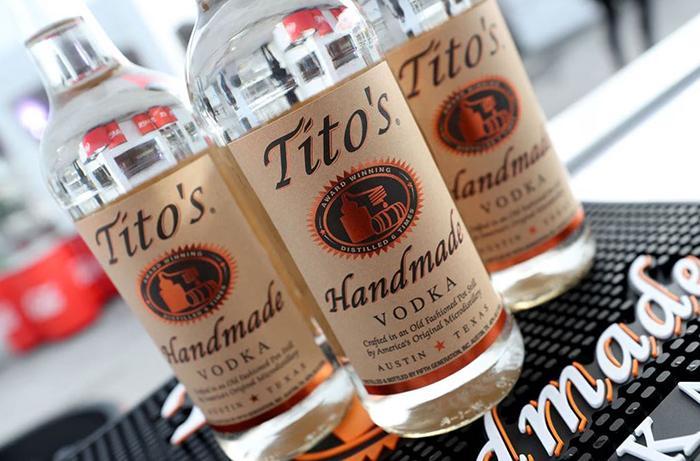
If you’ve walked into any bar, liquor store, or backyard cookout in America over the past decade, you’ve seen that bottle. The simple, no-frills label. The unpretentious font. The modest price tag sitting a few shelves below the Grey Gooses and Belvederes of the world. Tito’s Handmade Vodka has become the unofficial house spirit of the American adult, outselling every other vodka brand in the United States by millions of cases. But is all that popularity deserved, or is Tito’s just one of the greatest marketing success stories in liquor history?
This review digs into everything: the real story behind the brand, what’s actually in the bottle, how it performs neat, on the rocks, and in cocktails, how it stacks up against the competition, and whether your next bottle should have Tito’s name on it.
You Are Watching: Titos Vodka Review: Is America’s Best-Selling Spirit Actually Worth the Hype? Updated 10/2026
The Origin Story: A Geologist, 19 Credit Cards, and a Dream
Before we talk about what’s in the glass, you have to know who put it there, because the story of Bert “Tito” Beveridge is genuinely one of the more compelling entrepreneurial tales in American business.
Tito didn’t start his career in spirits. He’s a native Texan who spent the beginning of his working life in the oil industry after majoring in geology and geophysics at the University of Texas at Austin. After oil, he pivoted to mortgage sales. Adrift in his career, Beveridge took up a hobby of infusing store-bought vodka with various flavors, which he then gifted to friends.
Those gifts caught on fast. His true love turned out to be making flavored vodka as gifts for his friends, an act that soon gained him the reputation as “the vodka guy.” The flavors of choice? Habanero, black cherry, and orange. Local liquor stores told him flat out: if you can make a vodka smooth enough to drink straight, then maybe you’ve got something.
The path to getting there was anything but smooth. His first pot still was jimmied out of two Dr. Pepper kegs and a turkey-frying rig. And when it came time to actually build a real distillery? He obtained an official license for a microdistillery in Texas, the first of its kind since the Prohibition era. He racked up $90,000 over 19 credit cards, just enough to buy 13 acres for his craft distillery in Travis County, Texas.
Without the help of the internet or books about vodka distilling, Tito finally stumbled upon pictures of old moonshiners and prohibition-era busts. He used these as a model and began his distillation process, constantly refining it and using his friends as willing test dummies for taste.
The name “Tito” has its own origin story too: Beveridge is a native Texan, born in San Antonio. He got his nickname “Bertito” (little Bert) from his Latino caregivers, and it was later shortened to “Tito.” As for his last name, well, the universe has a sense of humor. The man whose destiny was to build a billion-dollar beverage empire was born with the surname Beveridge.
Commercial production began in 1997 when Beveridge formed Fifth Generation, Inc. and established the Mockingbird Distillery, producing 1,000 cases that year. The distillery became the first legal, operating distillery in Texas history. The brand got a major breakthrough when it won the Double Gold Medal at the San Francisco World Spirits Competition in 2001, beating out established vodka brands and gaining international recognition. The competition included over 70 entries, including Grey Goose and Belvedere. Getting a double gold means Tito’s received a Gold medal rating by all members of the judging panel. That single win changed everything.
How Tito’s Is Made: The Corn, The Pot Still, and the Six-Times Distillation
Understanding what makes Tito’s taste the way it does requires a brief look under the hood of its production process, and there are some genuinely interesting things going on here.
The Base Ingredient: Yellow Corn
Most of the world’s major vodka brands use wheat (Grey Goose, Absolut, Ketel One) or rye (Belvedere, Stolichnaya), or occasionally potatoes. Tito’s specializes in vodka made from yellow corn, rather than potatoes or wheat. This choice is deliberate and consequential. Corn imparts a softer, slightly rounded quality to the final spirit, contributing to that mild sweetness that has become Tito’s most recognizable tasting note. It also makes the vodka naturally gluten-free, which is a meaningful advantage for a growing segment of health-conscious American drinkers.
Tito’s Handmade Vodka is certified gluten-free by the Gluten Intolerance Group (GIG), a leading organization that certifies gluten-free products, ensuring the vodka contains less than 10 parts per million of gluten.
Pot Still Distillation: The Craft Distinction
Here is the technical detail that most people gloss over, but it matters enormously for flavor. Tito’s distills their vodka in pot stills (a rarity for vodka, and much more labor-intensive than a column still) 6 times and filtered through activated charcoal.
Why does the still type matter? Column stills, used by the majority of large vodka producers, are efficient and consistent, running essentially as a continuous production machine. Pot stills, by contrast, are the same vessels used to make fine single malt Scotch whisky and premium cognac. They require more skill, more time, and more attention per batch. The result tends to be a spirit with slightly more character and texture, even when that spirit is ultimately vodka, a category defined by its supposed neutrality.
The vodka is distilled six times because, according to Beveridge, “five times isn’t enough and the seventh time doesn’t make a difference.” That quote tells you quite a bit about the man’s sensibility. Not overly precious, not falsely modest. Just practical and precise.
Filtration
After distillation, Tito’s Handmade Vodka is filtered through activated carbon, also known as activated charcoal. This filtration process contributes further to the removal of impurities, resulting in a crystal-clear, clean vodka. The brand also uses limestone-filtered water in its production, which adds a layer of natural mineral quality to the base.
Tasting Notes: What Tito’s Actually Tastes Like
Let’s get specific about what happens when you actually drink this stuff, because tasting notes matter, whether you’re sipping it neat, throwing it in a cocktail shaker, or pouring it over ice on a Sunday afternoon.
Appearance
Crystal clear. No color, no cloudiness, good viscosity for a vodka, slightly thicker than water when chilled, which is a positive sign of body.
Nose
Clean and subtle, with hints of corn sweetness. Light citrus notes and a touch of black pepper emerge. Minimal alcohol burn. Wine Enthusiast’s professional assessment added more dimension: the initial nosing passes find subtle traces of charcoal and roasted grain, which are followed by sweeter aromas of sweet grain mash and pipe tobacco.
Palate
Smooth and creamy texture. Mild corn flavor with a touch of vanilla. Slight sweetness balanced by a gentle peppery spice. Clean and neutral overall.
Read More : What Is Blue Curacao Updated 10/2026
You may even detect a mild charred note in the background, adding some depth to its overall palate. The presence of esters contributes to a faint fruity undertone that further enhances the vodka’s unique profile.
Finish
Medium length. Faint warmth with lingering notes of corn and subtle black pepper. Clean and crisp aftertaste with minimal burn. Wine Enthusiast rounds this out, noting it ends on a delicious oily, bacon-like note, describing it as a very well-made American pot still vodka.
The key word professional and amateur reviewers keep returning to is smooth. Since it is distilled six times, it is extremely smooth. After swallowing the vodka, your taste buds are greeted with a sweet, yellow-corn taste. It’s very unique and very pleasing.
That said, Tito’s is not universally beloved, and intellectual honesty demands acknowledging that. Some reviewers find the midpalate a bit oily and sweet with a bit of heat, and the finish a bit shorter with more burn than expected. Others have called it “mostly tasteless,” which, in vodka terms, is both a criticism and a compliment depending on how you’re using it.
Tito’s vs. The Competition: An Honest Comparison
No review is complete without context. Here’s how Tito’s stacks up against the brands you’ll find beside it on American shelves.
| Brand | Base | Distillations | ABV | Avg. Price (750ml) | Origin | Gluten-Free |
|---|---|---|---|---|---|---|
| Tito’s | Corn | 6x (Pot Still) | 40% | ~$22 | Austin, TX (USA) | Yes |
| Grey Goose | French Wheat | 5x | 40% | ~$30 | France | No (wheat-based) |
| Belvedere | Polish Rye | 4x | 40% | ~$35 | Poland | No (rye-based) |
| Ketel One | Dutch Wheat | Multiple | 40% | ~$23 | Netherlands | No |
| Absolut | Winter Wheat | Continuous | 40% | ~$22 | Sweden | No |
| Smirnoff | Corn/Grain | 3x | 40% | ~$15 | USA | Yes (distilled) |
Pricing sourced from retail estimates (2024-2025 averages).
Tito’s vs. Grey Goose
This is the matchup people care about most, because Grey Goose has occupied the “premium vodka” throne in American pop culture for decades. After tasting all three (Tito’s, Belvedere, Grey Goose), Tito’s emerged as the winner in a comparative review. Regarding Grey Goose: kudos to their marketing team. Grey Goose is probably the most recognizable spirit of the three tried, and the least favorite.
The truth is that in multiple blind taste tests conducted by everyday consumers, Grey Goose frequently fails to justify its premium price tag. Grey Goose tends to get a bad rap in the spirits world for its hefty price tag, and it’s agreed that it’s expensive for what it is. A lot of what you’re paying for with Grey Goose is marketing.
Tito’s, at roughly $8 less per bottle, routinely matches or beats Grey Goose in head-to-head tastings.
Tito’s vs. Belvedere
Belvedere is the more legitimate premium contender. Out of the three, Belvedere would be the choice for a classic Martini, because of its smooth creaminess. It would be most enjoyable to drink in a spirit-forward cocktail. Belvedere does not burn and is overall a lovely spirit. But neither of us would be mad about a Tito’s Vodka Martini.
If you’re doing serious, spirit-forward cocktails like Martinis or Vespers, Belvedere’s additional complexity earns its higher price. For everything else, Tito’s holds its own.
Tito’s vs. Ketel One
Ketel One is perhaps the closest competition to Tito’s in the value-quality space. Both are widely available, both deliver genuine smoothness, and both sit in the mid-$20s price range. Ketel One has a slightly crisper, colder character due to its wheat base and Dutch water. Tito’s is softer and rounder from the corn. The choice comes down almost entirely to personal preference.
The Price-to-Quality Equation: Where Tito’s Wins Decisively
Here is where the Tito’s argument becomes almost inarguable. In its price point, compare Tito’s Handmade Vodka to Blue Ice, Finlandia, Absolut, and Chopin. But, being totally honest, it’ll hold its own versus Ketel One, Belvedere, Grey Goose, and Hangar One.
Tito’s dominates the vodka category, with $2.5 billion in sales at retail in 2024. At one Boulder, Colorado liquor store, Tito’s is the top-selling SKU, accounting for a quarter of all vodka sales. The No. 2 brand, Smirnoff, trails Tito’s by roughly 4 million cases annually.
That kind of market dominance doesn’t happen by accident or marketing budget alone. Tito’s spends comparatively little on advertising and has never used celebrity endorsements. Even its no-frills bottle hasn’t changed since Beveridge made the label himself in 1994. The company prides itself on that. They’d rather put their money into the liquor than the label.
Mixing with Tito’s: The Cocktails That Showcase It Best
Tito’s corn-based profile and its near-neutral character make it one of the most versatile mixing spirits on the American market. Its slight sweetness pairs especially well with citrus, ginger, and savory ingredients, without competing or clashing with the other flavors in a cocktail.
The Tito’s Mule
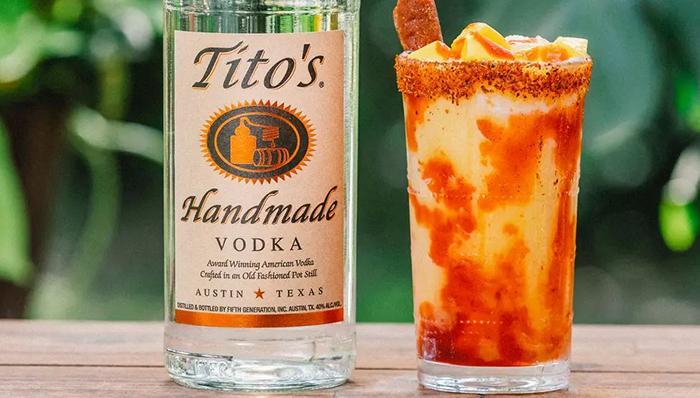
The Moscow Mule was practically made for a vodka like Tito’s. Combine 2 oz Tito’s with 4 oz good ginger beer (Fever-Tree or Q Mixer) and ½ oz fresh lime juice in a copper mug over ice. The corn sweetness plays beautifully against the spice of the ginger.
The Tito’s Bloody Mary
Start your day with a kick by mixing Tito’s Vodka with tomato juice, Worcestershire sauce, Tabasco, and spices. The savory, slightly oily finish of Tito’s is almost purpose-built for this cocktail. Add celery salt, a pickle spear, and a lemon wedge, and you have a Sunday brunch essential.
The Tito’s Martini
As noted above, Tito’s performs surprisingly well in a spirit-forward Martini. Just add Tito’s Handmade Vodka and dry vermouth to a shaker with ice. Shake or stir, and strain into a chilled martini glass. Garnish with three olives or a lemon twist. The corn base adds a subtle sweetness that makes the Martini approachable without muddying the drink.
The Tito’s Soda
When it doubt, simplicity wins. Tito’s with club soda and a squeeze of lime is an easy, low-calorie option that lets the vodka’s character speak for itself. Just out of the fridge or shaken with ice, Tito’s becomes essentially alcoholic water in the best possible sense, working in every single vodka cocktail you can think of. Every. Single. One.
The Strawberry Lemonade Smash
Lightly muddle fresh strawberries in a glass. Add 2 oz Tito’s, fresh lemonade, and ice. Stir and garnish with a strawberry or lemon slice. This one is crowd-pleasing at any summer gathering and shows off the softer, fruitier side of the corn base.
Tito’s Gluten-Free Credentials: A Real Advantage
While technically all distilled spirits are considered gluten-free under FDA guidelines (the distillation process eliminates gluten proteins), Tito’s goes further. Because it’s made entirely from corn rather than wheat or rye, it contains zero gluten at the source level, not just at the distillation stage.
Tito’s Handmade Vodka is certified gluten-free by the Gluten Intolerance Group (GIG), and Tito’s website states that they regularly test their products to ensure they remain gluten-free. For Americans with celiac disease or gluten sensitivity, this certification provides meaningful peace of mind that a wheat-based vodka like Grey Goose or Absolut simply cannot offer at the same level.
Read More : Best Cheap Vodka: 12 Budget Bottles Under $20 Updated 10/2026
Tito’s may have been one of the first pioneers to start labeling vodka “gluten-free,” and this foresight helped the brand connect deeply with health-conscious consumers before competitors were paying attention to that segment.
The “Handmade” Controversy: What You Should Know
In the spirit of full transparency, it’s worth addressing a criticism that has followed Tito’s for years: the question of what “handmade” actually means at the scale they now operate.
By 2001, the brand was no longer a microdistillery, having surpassed the industry standard of 40,000 cases for a craft distillery as defined by the Distilled Spirits Council of the United States. Now made in a facility with 10 floor-to-ceiling stills and equipment bottling 500 cases an hour, the brand recorded a sales volume around 3.8 million 9-liter cases in the United States as of 2016.
When Forbes visited the distillery in 2013, its photographer was directed away from the buildings housing its current-day operations. Given the scale of the company’s manufacturing, it’s likely that the vodka is made by re-distilling a pre-made grain-neutral spirit. This is a common practice in the industry, and not inherently a quality issue, but it does put the “handmade” claim in a slightly different light.
The brand has also faced lawsuits over the “handmade” labeling. Tito’s has largely prevailed in these cases, arguing that the label refers to the spirit and methodology rather than a literal hand-bottling process. The result, regardless of the semantics: Tito’s uses a unique automated pot still system of their own design, combining traditional copper pot stills with modern column stills, allowing them to maintain consistency while producing large volumes.
Does this diminish the product? In taste, no. In honesty, you deserve to know.
Love, Tito’s: The Brand Beyond the Bottle
One of the genuinely distinguishing qualities of Tito’s is what the company does with its success. Love, Tito’s is the philanthropic heart of Tito’s Handmade Vodka, dedicated to turning spirits into love and goodness. Over $200 million in philanthropic support has been donated to nonprofits in the last 5 years, with over 50,000 nonprofit events supported and more than 20,000 nonprofit organizations assisted in the same period.
The dog program is particularly beloved. Since the beginning, stray dogs have wandered up to the Tito’s distillery. Through dozens of rescues and constant companionship, they inspired Tito’s to create the “Vodka for Dog People” program with the goal to help pets and their people.
During the COVID-19 pandemic, the distillery transitioned to making industry-approved hand sanitizer, and Tito’s also made a grant of $1 million towards the development of the COVID-19 vaccine Corbevax.
For a growing number of American consumers, where their money goes matters. Tito’s has built genuine goodwill here, and it’s not manufactured for press releases. It predates the brand’s success and is woven into its identity.
What Other Drinkers Are Saying: Real Reviews
The vodka community is genuinely divided on Tito’s, which is itself a kind of interesting data point. Here’s a representative cross-section:
On the positive side, many longtime vodka drinkers describe it as the most value-conscious decision they’ve ever made at the liquor store. Smooth and creamy to start, slight pepper taste, no antiseptic taste or smell, goes down quickly turning into a warm glow. An appreciation for the lack of hangover-inducing congeners. Superb, one of my favorites.
Tito’s consistently beats out premium top-shelf vodkas at competitions and is the fastest-growing brand in America. Tito’s is truly a pleasure to shoot, and the sweet finish makes for a nice touch.
On the more critical side, some drinkers find the profile simply too neutral. One recurring theme in negative reviews is that Tito’s tastes like a well-executed neutral spirit rather than a distinctive vodka. As one reviewer on Distiller noted, Tito’s is a well-made vodka, nothing great about it but nothing off-putting. As a mixer it works great, but less so neat. The palate is clean with some lemon peel, a bit oily and sweet, with a bit of heat.
A small contingent of drinkers also report headaches after drinking Tito’s, though this complaint is anecdotal and appears to be the exception rather than the rule. Alcohol affects people differently, and corn-based spirits can occasionally cause issues for individuals with corn sensitivities, which may account for some of these experiences.
Tito’s Sales Numbers: The Proof Is in the Pour
The brand recorded a sales volume around 3.8 million 9-liter cases in the United States as of 2016, with a market share of 7.1% of the United States vodka market as of 2017. Those numbers have only grown since. Tito’s dominates the vodka category, with $2.5 billion in sales at retail in one recent year.
Beveridge himself has become one of the richest people in the world, with a net worth of $7.51 billion and counting. From 19 maxed-out credit cards and a turkey-fryer still to a personal fortune in the billions. That’s not a marketing story. That’s a product story.
United Airlines recognized the quality early: beginning in 2013, United Airlines began serving only Tito’s for its inflight vodka beverages. When an airline with millions of annual passengers makes one brand its exclusive vodka choice, that’s a meaningful endorsement.
Final Verdict: Ratings Breakdown
| Category | Score (out of 10) |
|---|---|
| Taste (neat) | 7.5 |
| Taste (on the rocks) | 8.0 |
| Mixability | 9.5 |
| Smoothness | 8.5 |
| Value for money | 9.5 |
| Gluten-free suitability | 10 |
| Brand transparency | 7.0 |
| Overall | 8.5 |
Who Should Buy Tito’s?
Buy it if: You want the most reliable, crowd-pleasing, flexible vodka for your home bar, you host gatherings where multiple people with varying tastes will be drinking, you have a gluten sensitivity or celiac disease, or you simply don’t want to pay a $10-per-bottle premium for a label.
Consider alternatives if: You’re making a classic, spirit-forward Martini where complexity matters (look at Belvedere or Ketel One), you want strong flavor character in your vodka (look at Stolichnaya or Chopin), or you’re specifically seeking a potato vodka’s distinct richness.
The Bottom Line
Tito’s isn’t trying to be the most complex spirit in your collection. It’s not competing with single malts or aged bourbons for complexity and depth. What Tito’s is trying to be, the smoothest, most versatile, most accessible craft vodka at an honest American price, it does as well as any spirit on the market.
The story behind it matters. The philanthropy is real. The gluten-free credentials are certified. And the taste, while not revelatory, is genuinely, consistently, impressively good for the money.
Here’s the thing no vodka review wants to admit: if you put Tito’s in a beautiful bottle, stamped it with a French chateau name, and priced it at $45, critics would be writing breathless profiles about its nuanced corn sweetness and its complex finish. The fact that it comes in a humble bottle for $22 is not a liability. It’s the whole point.
The best bottle of vodka you own is the one you actually open. Tito’s makes that an easy call.
Sources: https://chesbrewco.com
Category: Wine