Where Is Corona Beer Brewed? The Full Story Behind America’s Favorite Mexican Lager
If you have ever cracked open a cold Corona Extra on a beach, at a backyard barbecue, or alongside a plate of tacos, you have probably wondered at least once: where exactly does this beer come from? The clear bottle, the golden liquid, the iconic lime wedge ritual — it all feels effortlessly relaxed and sun-soaked. But behind that laid-back image is a massive, deeply fascinating brewing operation rooted firmly in Mexico, with a corporate story that stretches from a small Mexico City brewery in 1925 all the way to billion-dollar investments, a controversial canceled plant, and a legal battle over water rights. Whether you are a casual drinker who grabs a six-pack on Friday nights or a curious enthusiast who wants to understand what is actually in the glass, this is the complete story of where Corona beer is brewed, how it is made, and why it has become one of the most recognized beer brands on the planet.
- Does Beer Make You Fart Updated 10/2026
- Where Is Stella Artois Made Updated 10/2026
- Can You Mix Beer And Wine? Here’s What Science, Bartenders, and Your Next Hangover All Agree On Updated 10/2026
- How Much Alcohol Is In Michelob Ultra Updated 10/2026
- What Happened To Root Beer Popsicles Updated 10/2026
The Origin Story: A Crown Born in Mexico City
Corona is not a recent invention. Its history dates back to 1925, when it was first brewed at Cervecería Modelo (officially Grupo Modelo, S.A. de C.V.) in Mexico City. The brand owes much of its identity to a German immigrant and brewmaster named Adolph H. Schmedtje, who joined Cervecería Modelo in July 1922 and developed the original Corona recipe. The beer was officially introduced to the Mexican market in 1925, and it quickly captured local drinkers with its light, crisp character — a style that stood apart from the heavier European beers of the time.
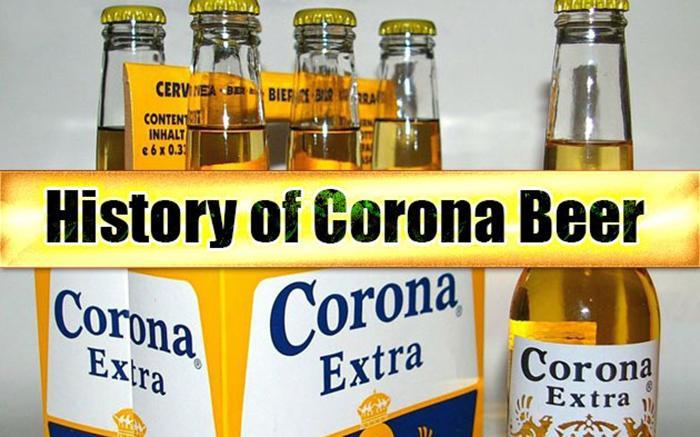
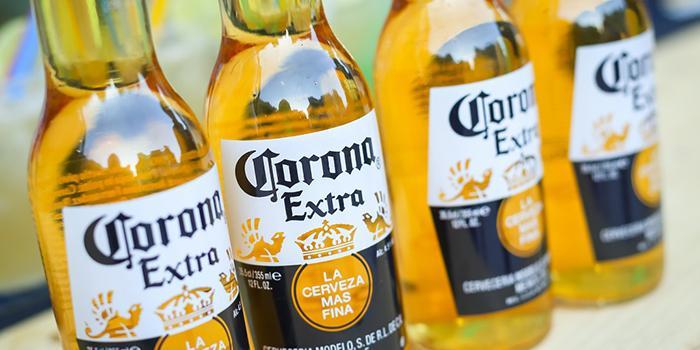
The name “Corona” means crown in Spanish, and the iconic label, featuring a golden crown set against a yellow-and-blue background, was designed by Eduardo Cataño of the advertising company Galas de México around 1935. That label has remained remarkably consistent ever since, a rarity in an industry that constantly refreshes its visual identity. By the 1930s, Grupo Modelo had consolidated the brewery under unified ownership and began scaling up production in earnest.
In 1979, Corona Extra made its way across the border into the United States, initially arriving in a handful of border states before eventually spreading nationwide. The timing was impeccable: Americans were hungry for something different from domestic lagers, and Mexican beer carried an exotic, vacation-like appeal. The reduction of import tariffs following the implementation of NAFTA in 1994 supercharged this growth further, and by 1998, Corona Extra had become the top-selling imported beer in the United States, a title it held for many consecutive years before Modelo Especial edged it out more recently.
Where Is Corona Beer Brewed Today?
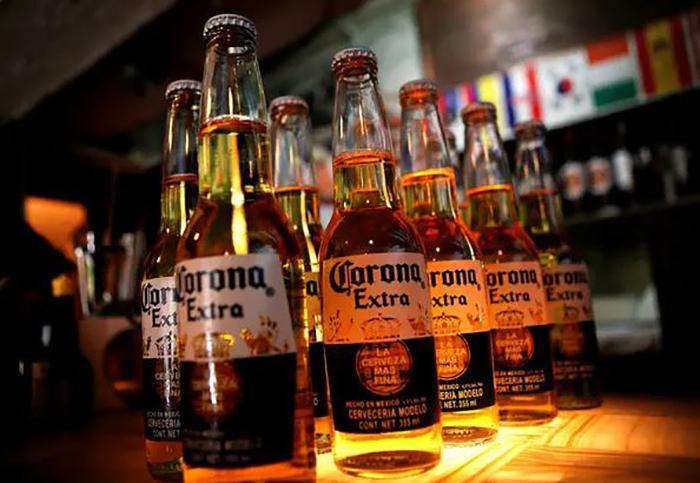
This is the question most people want answered clearly: Corona beer is brewed exclusively in Mexico. Not in the United States, not in a European facility licensed to produce it for the American market, and not in any country that receives American consumers’ bottles. Every bottle and can of Corona that lands on a shelf in the 50 states of the U.S., Washington D.C., or Guam has been physically brewed and bottled in Mexico before making the journey north.
The Nava, Coahuila Brewery: The Beating Heart of Corona Production
The most significant brewing facility for the Corona brand destined for the U.S. market is located in Nava, Coahuila, a municipality in northern Mexico about 21 kilometers (roughly 13 miles) from the border city of Piedras Negras, Texas. This brewery is owned and operated by Constellation Brands, the American company that holds the exclusive license to import, market, and sell Corona and Grupo Modelo brands in the United States.
The Nava brewery is not just large. It is extraordinarily large. Spread across 334 hectares (approximately 825 acres) of land alongside Highway 57, it is widely regarded as one of the largest and most technologically advanced single brewery campuses of its kind in the world. It employs roughly 2,000 people and has gone through several rounds of massive expansion over the past decade. When Constellation Brands originally acquired the facility from Grupo Modelo in 2013, as part of a broader deal tied to AB InBev’s acquisition of Grupo Modelo, the Nava plant had a capacity of around 10 million hectoliters per year. Through billions of dollars in investment, that capacity has since grown to approximately 30 million hectoliters annually — tripling in just about a decade.
The brewery produces Corona Extra, Corona Light, Modelo Especial, Negra Modelo, Pacifico, and Victoria brands, all for the U.S. export market. It includes a new brewery building, advanced packaging facilities, warehouses, a rail line, water and wastewater treatment plants, and a cogeneration facility for energy efficiency. By the end of Constellation’s fiscal year 2023, total production output across its Mexican facilities reached 42 million hectoliters, with Nava being the dominant contributor.
Ciudad Obregón, Sonora: The Second Constellation Facility
Constellation Brands operates a second brewery in Ciudad Obregón, Sonora, in northwestern Mexico. This facility, while smaller than Nava, plays a critical supplementary role in meeting the unrelenting demand for Corona and Modelo brands in the American market. Constellation invested heavily in this plant’s expansion as well, with the company planning to add significant capacity there to help bridge production gaps while its third brewery in Veracruz is completed.
The Cancelled Mexicali Brewery and the New Veracruz Facility
No discussion of where Corona is brewed would be complete without mentioning the Mexicali brewery controversy, one of the most dramatic chapters in the brand’s recent history. Constellation Brands had been constructing a large new brewing facility in Mexicali, Baja California, with a planned initial capacity of 5 million hectoliters, intended to help meet skyrocketing U.S. demand. The investment ran into a serious obstacle: water rights disputes and fierce local opposition.
Baja California is a water-stressed region, and residents of Mexicali voted in a public consultation in 2020 to halt the project, citing concerns that the mega-brewery would divert precious water resources away from agricultural and residential use. Constellation Brands was forced to abandon the nearly-complete facility, booking a staggering $700 million loss on the canceled project. Construction equipment and usable assets were relocated to other sites across Mexico.
Rather than retreat, Constellation pivoted. The company announced plans to build an entirely new brewery in the state of Veracruz, on Mexico’s eastern coast along the Gulf of Mexico. The Veracruz facility is currently under construction with an investment projected at $1.5 billion, and it is designed to eventually replace the capacity that would have come from Mexicali. Constellation’s total investment in its Mexican brewery infrastructure has surpassed $4 billion in recent years, a staggering figure that reflects just how central the Mexican supply chain is to the brand’s American business.
Grupo Modelo’s Own Breweries Across Mexico
Beyond Constellation’s facilities, Grupo Modelo itself operates a network of seven brewing plants across Mexico with a combined capacity exceeding 60 million hectoliters per year. These facilities produce Corona for markets outside the United States, as well as the full Grupo Modelo portfolio. Notable Grupo Modelo production sites include:
- Mexico City (the original Cervecería Modelo, still active)
- Mazatlán, Sinaloa (contributing significantly to Corona Extra production)
- Orizaba, Veracruz (manufacturing various Grupo Modelo products including Corona)
- Torreón, Coahuila
- Guadalajara, Jalisco
- Mérida, Yucatán
- Zacatecas, Zacatecas
Read More : Is Ginger Beer Good For You Updated 10/2026
Grupo Modelo was acquired by AB InBev (Anheuser-Busch InBev), the Belgian brewing giant, in a transaction finalized in 2013. As a condition of U.S. antitrust regulators approving that acquisition, AB InBev was required to sell the rights to sell Grupo Modelo brands in the United States — specifically to prevent a monopoly in the American beer market. That is how Constellation Brands came to own the U.S. rights. Outside the United States, AB InBev owns and controls Corona globally, and the beer is now also brewed in China specifically to supply the Australasian market (Australia and New Zealand).
Who Actually Owns Corona Beer? (It Is Complicated)
The corporate structure behind Corona is genuinely confusing for most consumers, and it is worth untangling it clearly.
| Entity | Role | Geographic Scope |
|---|---|---|
| Grupo Modelo | Original creator and Mexican brewer | Global production (non-US) |
| AB InBev | Parent company of Grupo Modelo | Worldwide ownership except US |
| Constellation Brands | Exclusive licensee and sole US importer | United States, D.C., Guam only |
| Cervecería Nava (Constellation) | Brews all Corona for US market | Nava, Coahuila, Mexico |
So when you buy Corona in Chicago, Miami, Los Angeles, or Nashville, that beer was brewed by Constellation Brands at its Mexican facilities. When someone in London, Sydney, or Tokyo buys Corona, that product comes through AB InBev’s global supply chain. The beer is the same recipe, but the corporate entity controlling the supply differs dramatically depending on where you are standing on the map.
Constellation Brands acquired the full rights to the U.S. business in 2013 through a transaction that gave it “complete, independent control of all aspects of the U.S. commercial business,” including a brewery in Mexico, a perpetual brand license, and the freedom to develop brand extensions and innovations specifically for the American market. In 2022, despite a pandemic that briefly threatened the brand’s image due to a naming coincidence with COVID-19, Corona’s brand net value was estimated at approximately $7 billion, while the broader Corona brand family’s global value reached over $19 billion according to some analyses, making it one of the most valuable beer brands on Earth.
What Goes Into Every Bottle: Ingredients and the Brewing Process
Understanding where Corona is brewed is only part of the picture. How it is brewed, and with what, shapes every sensory experience you have when you open one.
The Core Ingredients
Corona Extra, the flagship product, is brewed with a relatively straightforward set of ingredients that prioritize clarity, light body, and crisp refreshment over complexity:
- Barley Malt: The foundational grain that provides fermentable sugars, light sweetness, and that distinctive pale golden color.
- Non-Malted Cereals (Corn/Maize): The addition of corn, rather than relying solely on barley malt, is a deliberate choice. It contributes to a lighter body, a smoother finish, and a crisper overall character — one reason Corona sits comfortably between heavier European imports and lighter American domestic beers.
- Hops: Specific hop varieties are used in modest quantities to provide a gentle, balanced bitterness that never overwhelms the beer’s light profile.
- Yeast: A lager yeast strain that ferments at cooler temperatures, contributing to the beer’s clean, crisp finish.
- Water: High-quality filtered water forms the bulk of the product. The water profile used in brewing significantly affects the final taste.
According to data published by Sinebrychoff (a Finnish subsidiary of the Carlsberg Group that has analyzed Corona for European markets), the beer also contains ascorbic acid as an antioxidant and propylene glycol alginate as a foam stabilizer.
The Brewing Steps
The process follows standard industrial lager production but with strict quality controls applied at every stage. Crushed malted barley and corn are mashed together with hot water to convert starches into fermentable sugars. The resulting sweet liquid (the wort) is boiled alongside hops to extract bitterness and aroma compounds. After boiling, the wort is rapidly cooled and transferred to fermentation tanks where lager yeast works at low temperatures to convert sugars into alcohol and carbon dioxide. The beer is then cold-conditioned (lagered) to develop its clean character before filtering, carbonation adjustment, and packaging. Grupo Modelo and Constellation’s Nava facility both operate under rigorous quality testing protocols to ensure every batch meets the same consistent flavor profile regardless of production volume.
The famous clear glass bottle is an interesting choice. Most craft and premium beers use brown or green glass to protect the beer from UV light, which can cause chemical reactions that create a “skunky” off-flavor. Clear glass offers no such protection. Constellation and Grupo Modelo manage this through rapid supply chain logistics, ensuring the product moves from production to cold storage quickly, and through consumer expectations that the beer is typically served very cold with a lime wedge, which masks any minor light-struck notes.
The Full Corona Product Family
Today, Corona is not a single beer but a full family of products, all brewed in Mexico and imported exclusively for the U.S. market by Constellation Brands. Each variant occupies a distinct space in the American beer drinker’s repertoire.
| Product | ABV | Calories (12 oz) | Carbs (g) | Style |
|---|---|---|---|---|
| Corona Extra | 4.6% | 148 | 13.9 | Pale Lager |
| Corona Light | 4.1% | 99 | 5.0 | Light Pilsner-Style Lager |
| Corona Premier | 4.0% | 90 | 2.6 | Premium Light Lager |
| Corona Familiar | 4.8% | 156 | 14.6 | Full-Flavored Lager |
| Corona Non-Alcoholic | 0.0% | Low | Low | Non-Alcoholic Lager |
Corona Extra remains the undisputed flagship, a pale lager with that crisp, malt-forward character and a clean, slightly sweet finish. It has been the top-selling imported beer in the United States since 1998, a remarkable streak. Corona Light, introduced in 1989, is a pilsner-style lager with notably hop-forward bitterness compared to its siblings, making it surprisingly more interesting than many people expect from a “light” beer. Corona Premier, the newest significant launch (introduced in 2017), is aimed at health-conscious consumers who still want the Corona experience but at only 90 calories and 2.6 grams of carbs per bottle, putting it in direct competition with Michelob Ultra. Corona Familiar, originally a Mexican market staple sold in large 32-ounce bottles, crossed over to American markets and has developed a devoted following for its fuller, richer flavor profile with notes of caramel and cereal sweetness.
The brand has also extended into Corona Hard Seltzer, Corona Refresca (a flavored hard tropical punch), and as of 2024, Corona Sunbrew Citrus Cerveza, a limited release brewed with real orange and lime peels and blended with citrus juices, targeting younger, flavor-forward drinkers.
Corona in the American Market: The Numbers Tell a Remarkable Story
The commercial success of Corona in the United States is not merely impressive. It is historically significant in the context of American drinking culture.
Brand awareness for Corona among U.S. beer drinkers stands at approximately 91 percent, according to consumer research published by Statista in 2024, with brand awareness as high as 100 percent among Baby Boomers. The brand is consumed by more than 30 percent of beer drinkers in the United States on a regular basis.
The entire import beer segment generated approximately $11 billion in U.S. retail dollar sales for the 52 weeks ending January 2024, up 11.1% year-over-year according to Circana data. Mexican imports, led by Constellation’s Corona and Modelo family, drove the overwhelming majority of this growth, with Mexican beer imports growing 14.2% in 2023 alone. While Modelo Especial surpassed Corona Extra as the single top-selling beer brand by dollar share in 2023, Corona Extra itself remained in the Top 10 Dollar Share gainers for that same year, meaning both brands are growing simultaneously. This is a remarkable position for any single company’s portfolio.
Demographics are a significant tailwind for the brand. According to NielsenIQ and other analysts, demographic and cultural shifts are working in favor of Mexican import brands: Mexican food culture has gone mainstream across America, and Hispanic consumers represent a rapidly growing segment of U.S. beer buyers. Interestingly, Gen Z is the age cohort with the highest consumption share for Corona, at approximately 39 percent of U.S. beer drinkers in that generation reporting they drink Corona, though brand awareness actually skews higher among older generations.
Read More : Do They Still Make Michelob Beer Updated 10/2026
Mexico remains the dominant exporter of beer to the United States by a significant margin. According to the Beer Institute, Mexico accounted for the largest share of U.S. beer imports in 2023, with the country shipping over $5.8 billion worth of beer that year, and the United States remaining the world’s largest beer importer by value.
The Lime Ritual: Cultural Tradition or Marketing Invention?
Ask any American beer drinker how they drink Corona, and the majority will say: with a lime wedged into the neck of the bottle. This practice is so deeply embedded in the Corona experience that it feels ancient. The true origin is debated. Some believe the lime was originally used in bars and cantinas to wipe the rim of the bottle clean, as clear glass bottles were easier to mark with bacteria or dust in dusty environments. Others argue it was a bet between two bartenders in California in the early 1980s to see how quickly the habit would spread, and that it caught on purely because of social influence.
Whatever its origins, the lime wedge ritual became one of the most effective pieces of organic marketing in beer history. It creates a tactile, interactive moment with the brand. It signals membership in a relaxed, beach-adjacent lifestyle. The corona of foam that briefly appears when you press the lime down into the bottle is visually compelling, memorable, and endlessly photographable in the age of social media. Constellation Brands has never needed to instruct people to do this — the ritual perpetuates itself entirely through cultural transmission.
The brand’s longtime taglines reinforce this positioning. The phrase “La Cerveza Más Fina” (The Finest Beer) has been associated with Corona for decades. From 2000 to 2007, advertising campaigns ran under the tagline “Miles Away From Ordinary,” and since the early 2010s, “Find Your Beach” has become one of the most recognizable slogans in beer marketing, suggesting that the right frame of mind (and the right beer in hand) can transform any moment into a vacation.
The Mexicali Water Controversy: When Growth Collides With Environment
The story of the Mexicali brewery cancellation deserves its own section because it illuminates a tension that is increasingly central to the global beverage industry: the competition between industrial production and natural resources.
Brewing beer requires enormous quantities of water. A typical brewery uses between 3 and 7 liters of water to produce a single liter of finished beer, when accounting for cleaning, cooling, and processing needs. Constellation’s planned Mexicali facility would have required significant water extraction in a region where water is scarce and where local farmers, residents, and agricultural operations already compete intensely for access.
The public consultation in 2020 that ultimately killed the project represented a rare instance of community opposition successfully halting a multi-billion-dollar industrial project. Constellation Brands had already invested heavily in the site and had to book the previously mentioned $700 million write-down when the project was abandoned. The company subsequently relocated equipment from Mexicali to its other Mexican facilities and redirected its development plans toward the Veracruz site, where water availability is considerably better given the region’s access to Gulf of Mexico rainfall patterns.
This controversy has made Constellation and Grupo Modelo significantly more attentive to water management in their existing facilities. The Nava plant, notably, includes its own water treatment and recycling infrastructure as part of its operations, and sustainability reporting from Constellation has increasingly emphasized responsible water usage in a region (northern Coahuila) that also experiences significant aridity.
Corona Around the World: Global Brewing Footprint
While Americans drink their Corona brewed in Nava, Coahuila and Ciudad Obregón, Sonora, consumers in other countries may be drinking Corona that traveled a very different path.
In most of the world, Corona is the property of AB InBev, and the Belgian conglomerate manages its production and distribution across a global network. As noted above, Corona is now brewed in China specifically to supply the Australian and New Zealand markets (Australasia), reducing the shipping distance and improving freshness for consumers in that region. European markets receive Corona primarily from Grupo Modelo’s Mexican facilities, though some European production under license exists in markets like Spain, where the beer was historically sold under the name “Coronita” (meaning “little crown”) due to a trademark conflict with Spanish winery Bodegas Torres, which had held the “Coronas” trademark since 1907. AB InBev resolved this dispute in 2016, and Corona has been sold under its proper name in Spain since June of that year.
The beer is distributed to more than 120 countries, making it one of the most geographically widespread single beer brands in existence. The global brand value of Corona from Grupo Modelo/AB InBev has been cited at over $19 billion, making it the most valuable beer brand in the world by some measures, ahead of even Budweiser.
How the Beer Gets from Nava to Your Neighborhood
The supply chain from the Nava brewery to an American retailer’s cooler is a logistical achievement worth appreciating. The brewery in Nava sits just 13 miles from the Texas border, and that proximity is no accident. Products leave the facility by rail and truck, crossing into the United States through border crossings in southern Texas before being distributed through Constellation’s nationwide network. The company works through a three-tier system — from producer to wholesaler/distributor to retailer — that is standard in the American alcohol industry, with regional distributors managing the final-mile delivery across tens of thousands of retail and on-premise (bar and restaurant) accounts.
Because Corona comes exclusively from Mexico and must be imported, it does carry a slight price premium compared to domestically brewed American lagers. That price point is, however, also part of the brand’s positioning: a premium import that still remains accessible and affordable enough for everyday occasions, rather than a luxury beer reserved for special events.
Why It Tastes the Way It Does
The distinctive taste of Corona Extra — light, slightly sweet, mildly hoppy, with that crisp clean finish — is a direct result of deliberate brewing choices. The inclusion of corn (non-malted cereal) alongside barley malt is the single most important flavor decision. Corn contributes fermentable sugars but does not add the heavy, bready quality that all-malt beers can have. The result is a beer that is refreshingly light in body without tasting watery, that pairs beautifully with spicy food (which is why it became a staple alongside Mexican cuisine), and that is highly approachable for drinkers who find heavier ales or IPAs too intense.
The relatively low IBU (International Bitterness Units) rating keeps the hop character subtle, functioning more as a balancing agent than a flavor statement. The beer finishes clean, which makes it highly sessionable — something you can drink multiple of over a long afternoon without flavor fatigue. This session-friendly character is central to its cultural appeal at events, beaches, barbecues, and casual gatherings, which are exactly the environments that Constellation Brands and Grupo Modelo have always targeted in their marketing.
Conclusion: The Crown Still Belongs to Mexico
There is something quietly powerful about the fact that one of America’s most beloved beers has never been brewed on American soil. In a country that prides itself on domestic production, Corona has built a $7-billion brand identity on the promise of authenticity: it comes from Mexico, it has always come from Mexico, and that matters. The sandy beaches in the commercials are not just a mood board. They are a statement about origin, culture, and craft. Every sip connects you, however loosely, to the brewmasters, the workers in Nava, the barley fields, the clear northern Mexican sky.
Next time you reach into a cooler for that familiar clear bottle, you are holding something that crossed an international border just to reach you. Squeeze that lime. Tip the bottle. That tiny ritual is the whole point.
Sources: https://chesbrewco.com
Category: Beer