Why Is There a Ball in Guinness Cans? The Tiny Invention That Beat the Internet
You crack open a cold can of Guinness Draught after a long day, and you hear it: a hollow, mysterious clink-clink-rattle. You shake the can, and it rattles again. You think, “Did something break off inside?” You hold it up to the light, squint, and wonder if this can is defective. It is not. That little white plastic ball rolling around inside your can is, without exaggeration, one of the most important engineering achievements in the history of beer. It is called a widget, and in 1991, British and Irish citizens voted it a greater invention than the internet. Not a joke. The internet came in second place.
If you are an American beer drinker, a cocktail enthusiast who occasionally wants something rich and dark, or a wine lover who has always been curious about that beautifully poured Guinness at your local Irish pub, this article is for you. We are going deep into the science, the history, the engineering genius, and the cultural mythology of the Guinness can widget, the most fascinating ball you will ever find in a beverage.
You Are Watching: Why Is There A Ball In Guinness Cans Updated 10/2026
The Ball Has a Name, and It Is Surprisingly Humble
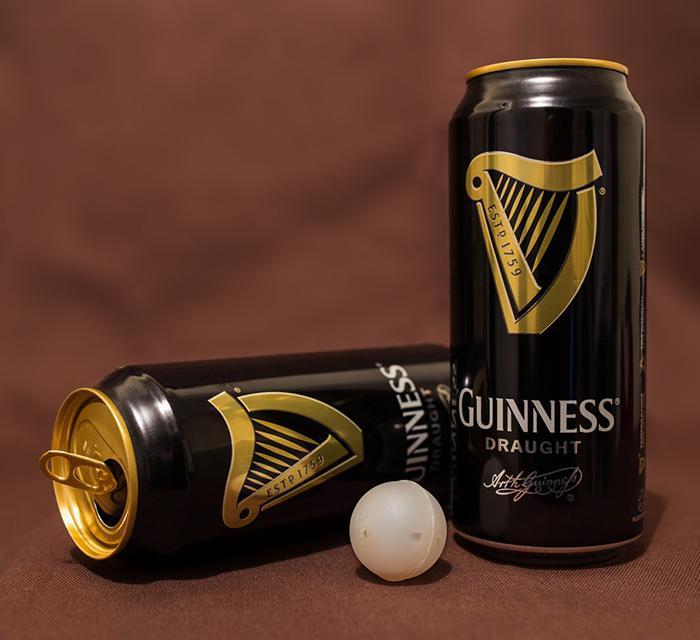
The small plastic sphere rattling around inside every can of Guinness Draught is officially called a widget. Not a capsule, not a nitrogen orb, not a beer pellet. A widget. The word itself is a placeholder, the kind of non-word engineers use when they want to name something without committing to a name. And yet it stuck.
Physically, the floating widget is a hollow plastic sphere approximately 3 centimeters (about 1.2 inches) in diameter, making it slightly smaller than a standard ping-pong ball. It has two tiny pinholes and a visible seam running around its circumference. Made from food-safe, BPA-free polypropylene, the same material used in medical devices and high-end food containers, it poses no health risk whatsoever to the drinker.
There is also a second variety: the rocket widget, found in Guinness Draught bottles rather than cans. True to its name, the rocket widget is shaped like a small rocket ship, roughly 7 centimeters (about 2.8 inches) long, with tiny fins at the base to keep it oriented correctly inside the bottle. The hole is located at the bottom, allowing nitrogen to be released with each sip. Same science, different form factor.
Neither widget contains nitrogen on its own before the can is sealed. Contrary to popular belief, the widget is not a pre-filled nitrogen capsule. What actually happens inside the can is far more elegant than that.
A Brief History of the Black Stuff, and Why a Simple Can Was Never Simple Enough
To understand why the widget exists, you need to understand the unusual physics of Guinness itself.
Arthur Guinness signed his now-legendary 9,000-year lease at St. James’s Gate Brewery in Dublin on December 31, 1759, paying an annual rent of £45. He began with ale, then switched to the dark porter style that was becoming fashionable in London. Using just four ingredients (water, malted and roasted barley, hops, and yeast) he refined the rough, heavy porter style into something more complex and drinkable. By 1799, Arthur had stopped brewing anything else and committed entirely to porter and its bolder cousin, stout.
For most of the 19th and early 20th centuries, a pint of Guinness poured at the pub was a two-tap affair. Bartenders literally blended beer from two different casks directly into the glass, one for the “fresh” beer and one for the older, more acidic stock. It was inconsistent, laborious, and demanded skill. Something had to change.
That change came in 1959, the 200th anniversary of the Guinness brewery, when a mathematician-turned-brewer named Michael Ash solved one of the most vexing problems in brewing history. Ash figured out how to pressurize Guinness casks using a blend of nitrogen (N₂) and carbon dioxide (CO₂), and how to force the beer through a tap with a restrictor plate containing dozens of tiny holes. This process, called nitrogenation, produced the tight, velvety cascade of bubbles and the dense, creamy head that Guinness is famous for today. The two-part pour was born, the beer world was permanently altered, and Guinness Draught became the standard.
The problem? This magic could only happen at a pub, through a specialized tap connected to a gas line. The moment you poured Guinness from a regular bottle or can, using standard CO₂ carbonation like every other beer, you got something sad: a flat, lifeless stout with barely any head. It tasted fine, roughly, but it looked wrong, felt wrong, and was frankly un-Guinness in every important way.
Guinness knew it needed to bring the draught experience home. And for thirty years, that goal proved maddeningly elusive.
The Long Road to the Widget: Project ACORN and the Initiator Era
Beginning in 1969, two brewers at St. James’s Gate, Tony Carey and Sammy Hildebrand, developed and patented a concept for producing draught-type Guinness from sealed containers by using an internal gas compartment. The patent was filed on January 27, 1969, and published in the UK in March 1972.
Early development under a project with the brilliantly named codename Project ACORN (Advanced Cans Of Rich Nectar) explored using a false inner lid to form a gas chamber beneath the main can lid. Technical difficulties led to that approach being shelved. Guinness pivoted to bottles instead, launching Bottled Draught Guinness in the Irish market in 1979. The catch? Drinkers had to use an “initiator” device that looked like a syringe to inject nitrogen gas into the poured beer themselves. It worked. It was also deeply awkward, and it never caught on internationally.
Guinness let their original patent lapse. It was not until 1984, when company leadership centralized research and development, that serious work resumed. Engineer Alan Forage and his colleague William Byrne spent the mid-1980s designing a plastic capsule that could be inserted into a can during filling, pressurized, and then triggered to release gas in a controlled way when the can was opened. The project was painstaking. Early versions forced beer inside the widget during pressurization, which degraded head quality. The orifice size mattered critically: too large and the pressure equalized too quickly, too small and not enough gas moved to generate proper nucleation.
The first generation of the widget was a flat plastic disc fixed to the bottom of the can. It launched commercially with Guinness Draught in a can in 1988. It worked beautifully, with one significant flaw: if the beer warmed up, the cans had a tendency to overflow catastrophically upon opening. Warm-can disasters aside, the widget had arrived.
In 1991, the Guinness widget earned the Queen’s Award for Technological Achievement, the first time that honor had ever been awarded to a brewing company. It was also, in the same public vote, declared the single greatest invention of the previous 40 years by British citizens, narrowly beating out the internet.
In 1997, Guinness engineer John Lunn cracked the warm-can problem by introducing the floating widget, which he internally called the smoothifier. Because the sphere floats freely in the beer rather than sitting fixed at the bottom, it functions correctly regardless of temperature or the angle of the can. The current version of the widget used today is a direct descendant of Lunn’s 1997 design.
Read More : Is 5 Alcohol A Lot? Updated 10/2026
(Brief footnote for history nerds: in 2020, supply chain disruptions caused by COVID-19 forced Guinness to temporarily revert to a fixed widget while floating widget manufacturing caught up with demand. By 2021, the floating design was restored.)
The Science: Why Nitrogen Changes Everything
Here is the part where things get genuinely fascinating, even for people who do not usually care about chemistry.
Most beers, from your average American lager to an IPA to a pilsner, are carbonated using carbon dioxide (CO₂). When CO₂ dissolves in liquid under pressure and then is suddenly released (when you open the can), it forms relatively large bubbles that rise quickly, produce a thin head, and give the beer its familiar sharp, prickling bite. That bite is actually mild carbonic acid. CO₂-carbonated beers are crisp, bright, and a bit aggressive on the palate.
Guinness uses a very different gas blend: approximately 70% nitrogen and 30% CO₂. Nitrogen is a fundamentally different tool. It dissolves far less readily in liquid than CO₂, and under the same pressure, it creates bubbles that are dramatically smaller, denser, and more stable. Those nitrogen microbubbles are what produce Guinness’s signature: a cascade that appears to fall downward before rising (a visual effect caused by fluid dynamics and bubble density differences within the glass), a head that is thick and persistent rather than quick-dissipating, and a mouthfeel that is smooth and velvety rather than sharp and fizzy.
Because nitrogen does not dissolve well in beer, you cannot simply pump a can full of nitrogen and expect it to work. Without the widget, opening a nitrogen-heavy Guinness can would result in something nearly flat, the nitrogen would just sit in the headspace rather than creating proper carbonation throughout the liquid. The bubbles would not nucleate correctly, the head would not form, and the beautiful surge-and-settle effect would not happen.
The widget solves this by creating a controlled, high-pressure miniature tap inside the can itself.
Here is the step-by-step of what happens during the canning process and in your hands:
During filling, an empty widget is placed inside the can. The can is then filled with beer and a small shot of liquid nitrogen is added just before sealing. As that liquid nitrogen vaporizes, it pressurizes the entire can. Because the widget’s tiny pinhole is submerged just below the beer’s surface, rising pressure forces a small amount of beer into the widget through that hole, compressing the nitrogen already inside. The widget is now a tiny pressurized vessel sitting inside a larger pressurized vessel.
When you crack the tab, the main can pressure drops immediately to room pressure. The widget, still at high internal pressure, forces its contents (that compressed mixture of nitrogen and beer) out through the pinhole at high velocity. This jet of gas and liquid agitates the surrounding beer, triggering thousands of nucleation points throughout the liquid. Nitrogen microbubbles cascade through the stout in a chain reaction. You pour it into a glass, and the surge-and-settle effect plays out in real time, the beer appearing to churn and swirl in the glass before resolving into a two-tone portrait of dark liquid beneath a creamy white head.
The entire process from tab-pop to settled head takes approximately 15 to 20 seconds. Every time you pour a can of Guinness, you are watching precision beverage engineering perform a live demonstration.
Tap vs. Can: How Close Does the Widget Actually Get?
Beer enthusiasts have debated this question for decades. Here is an honest comparison:
| Feature | Draught (Tap) | Canned with Widget |
|---|---|---|
| Nitrogen delivery | Continuous via gas line and restrictor tap | One-time burst via widget pinhole |
| Bubble size | Extremely fine, highly consistent | Very fine, nearly as consistent |
| Head thickness | Dense, domed, iconic | Dense, very close to tap quality |
| Mouthfeel | Silky, full-body, velvety | Silky, very similar to tap |
| Aroma | Pronounced (open-air pour) | Slightly subdued vs. tap |
| Convenience | Pub only (requires equipment) | Anywhere, anytime |
| Pour technique | Two-part, 119.5 seconds | Single or two-part pour, glass recommended |
| Temperature sensitivity | Controlled by pub equipment | Must be chilled before opening |
In a blind tasting conducted among regular drinkers in Dublin comparing freshly poured keg pints against properly handled canned Guinness (no shaking), most participants could not tell the two apart, citing identical creaminess and mouthfeel. Only a small minority noted minor differences, and none of them considered those differences a negative. For practical purposes, and especially chilled, the can holds up remarkably well.
The one honest gap is aroma. Tap Guinness, poured fresh through a bar’s nitrogenation system and into a tulip glass in an environment full of beer smells, camaraderie, and ambient warmth, carries a more pronounced bouquet of roasted malt, chocolate, and coffee. The can is slightly subdued on the nose, because the nitrogen delivery is more abrupt and the setting is typically your couch.
How to Actually Pour a Guinness from a Can
Most Americans who pick up a Guinness can for the first time make the same two mistakes: they shake it (do not) and they drink it straight from the can (please do not). Guinness is designed to be poured into a glass. Here is how to do it correctly.
Step one: Chill your can thoroughly. Cold temperature is not optional. It is the single most important factor in achieving proper bubble formation. Refrigerate for at least two hours before opening.
Step two: Open the can on a flat surface, and wait approximately 5 seconds before pouring. This brief pause gives the widget time to complete its initial nitrogen surge inside the can before liquid starts moving.
Step three: Hold a clean, dry pint glass at a 45-degree angle and begin pouring Guinness in a smooth, steady stream aimed at the side of the glass. Fill the glass to about three-quarters full.
Step four: Set the glass down and let it settle. This is the most important and most violated step in the United States. Watch the cascade. The liquid will churn, surge, and gradually resolve into a dark stout topped by a rising white head. This takes roughly 60 to 90 seconds from can. Do not rush it.
Step five: Once settled, place the glass upright and complete the pour until the creamy head sits just above the rim of the glass.
Do not shake the can before opening. Shaking prematurely releases nitrogen bubbles throughout the liquid while still under pressure, which leads to excessive foam, a flat finish, and a very messy kitchen counter.
The Widget’s Cultural Footprint: Bigger Than You Think
The Guinness widget is one of the few pieces of beverage technology that has crossed over into genuine pop culture. The rattling sound it makes in an empty can has become instantly recognizable, like a miniature musical signature for the brand. TikTok videos of people cutting open Guinness cans to reveal the widget collect millions of views. Reddit threads dissecting the physics of nitrogenation generate thousands of comments. It is the kind of object that makes engineers quietly proud and non-engineers suddenly very interested in engineering.
The T3 technology poll in 2004 remains its most remarkable cultural achievement. When the Irish lifestyle magazine asked nearly 9,000 readers to vote for the greatest technological invention of the past 40 years, the Guinness widget won with 48% of the vote. Email and the internet finished second with 13%. Mobile phones, cloning, contact lenses, and video games all trailed behind a hollow plastic ball designed to make beer foam correctly. As one commenter memorably observed, the internet never poured anyone a proper pint of stout.
Read More : Can Beer Give You A Yeast Infection Updated 10/2026
David Warren, who commissioned the survey, noted that nothing had prepared the team for that finding. It was a testament, he said, to how seriously people take the quality of a good beer.
The widget also holds the distinction of being the first brewing-related invention to receive the Queen’s Award for Technological Achievement, a distinction that Guinness proudly notes on their official timeline.
Beyond Guinness: The Widget Goes Global
After Guinness launched the widget-equipped draught can in 1988, other breweries recognized the opportunity and licensed or developed similar technology.
Boddingtons Pub Ale became one of the first major adopters, launching widget cans in 1991 through Whitbread Brewery. The impact on Boddingtons’ sales was immediate and dramatic, boosting revenue by an estimated £23 million in the first year alone and transforming the Manchester cream ale into a mainstream international product. Boddingtons’ famous television commercials, featuring the creamy pour and the tagline “The Cream of Manchester,” were built entirely around the visual appeal that the widget made possible in a can.
Murphy’s Irish Stout followed in 1992 with its own nitro-widget system, and John Smith’s Extra Smooth launched with a widget in 1995, reportedly generating £65 million in sales within its first six months. Caffrey’s Irish Ale reached 2 million pints of sales rapidly after its 1994 widget-can launch.
In the United States, Samuel Adams introduced a line of nitrogen-infused beers, including the Nitro White Ale and Nitro Coffee Stout, using what they called a nitrogenator, a hat-shaped widget manufactured by Ball Corporation (yes, the company famous for Mason jars). Budweiser joined the nitro category in 2020.
Today, widget technology is used by brands ranging from Old Speckled Hen to Young’s Double Chocolate Stout to various craft nitro stouts. The common denominator: every single one of them exists because Guinness spent roughly twenty years and enormous resources figuring out how to put a tiny pressurized ball inside a can of beer.
The Widget and Your Recycling Bin
Here is the practical information that most people never know but absolutely should.
The Guinness floating widget is made from polypropylene (#5 plastic), a food-safe and technically recyclable material. The aluminum can itself is, of course, recyclable everywhere. The complication is that some aluminum recycling facilities, particularly older or lower-tech operations, may flag cans with foreign materials inside as contamination.
The good news: most modern aluminum recycling plants can handle the widget without any intervention on your part. During the shredding and decoating phase of aluminum recycling, the plastic is separated and processed separately from the metal. Some scrap metal dealers, particularly those handling large volumes of nitrogenated cans, may classify them at a slightly lower grade, but they will still accept them.
If you want to take the extra step, you can cut the empty can open (carefully, the edges are sharp) and remove the widget separately. The polypropylene ball can then be placed in your #5 plastic recycling stream, if your local program accepts it. Widgets are small (under 2 inches in diameter), and some sorting centers’ disc screens may not capture items that small, so checking with your local recycling program is advisable.
The broader sustainability picture: Guinness has publicly committed to reducing plastic in their packaging and has been researching alternatives to the polypropylene widget. The challenge is formidable, because any replacement material must be food-safe, pressure-resistant, and capable of the same precision gas delivery as the current design. The widget that billions of people have enjoyed for over 35 years is also a genuinely difficult engineering act to replicate with more sustainable materials.
Other Ways Guinness Has Chased the Perfect Pint at Home
The widget is not the only technology Guinness has developed in pursuit of the at-home draught experience.
In 2006, Guinness introduced the Surger, a small ultrasonic device that sits beneath a pint glass and emits a pulse of sound waves to create cavitation, driving nitrogen out of solution and generating head. It required specially packaged Surger-ready cans.
More recently, Guinness launched NitroSurge, an updated ultrasonic device designed to work with standard Draught cans. According to Guinness, NitroSurge sold 5.5 times more units than projected in its first year in Ireland, where it captured 14% of the take-home stout market. The company has described it as the most significant breakthrough in at-home beer dispensing since the original widget.
There is also Guinness MicroDraught: a miniature keg system small enough to fit in a standard refrigerator, combining CO₂ and nitrogen to deliver a tap-quality pour without requiring pub-grade equipment. Guinness describes it as “the keg so small it comes in a can.”
None of these technologies have rendered the widget obsolete. The humble plastic ball remains the most accessible and affordable way to get a proper Guinness away from a bar. You can find it in a gas station, a corner grocery store, or a 12-pack at your local Costco. Every single can contains that small engineering marvel, ready to do its job the moment you pop the tab.
The Widget as a Philosophy
There is something quietly profound about what the Guinness widget represents beyond its technical function. It is the product of a company that refused to accept “good enough.” Most breweries, faced with the challenge of canned stout, would have carbonated with CO₂, shipped the product, and hoped customers would not notice the difference. Guinness spent twenty years and multiple failed prototypes to ensure that a person sitting alone in their apartment in Columbus, Ohio, or in a camping chair in the Rocky Mountains, could open a can and experience something close to the real thing.
That commitment, from Tony Carey and Sammy Hildebrand’s 1969 patent through Alan Forage’s capsule designs to John Lunn’s floating widget, is what gets voted above the internet by a nation of drinkers. Not because they are anti-technology. But because the technology actually delivered what it promised, every single time, in every single can.
Pour One and Listen to It
The next time you pull a Guinness from the refrigerator, stop and hold it for a moment before opening. Tilt it gently. You will hear the widget shift. That rattle is the sound of 30 years of engineering history, of a mathematician-turned-brewer named Michael Ash, of a project called ACORN that almost failed, of a flat disc widget that exploded warm cans all over people’s kitchens in 1988, of a floating sphere that finally got it right in 1997.
When you crack the tab, wait five seconds. Then pour it properly, at a 45-degree angle, into a real glass. Watch the cascade do its thing. Watch the nitrogen microbubbles churn upward through the dark liquid, the head form like a slow exhale, the stout settle into that iconic two-tone portrait.
Raise the glass. The widget’s work is done. Sláinte.
Sources: https://chesbrewco.com
Category: Beer