Whether you’re trying to pace yourself at a backyard BBQ, stay sharp for an early morning, or simply cut back without cutting out the ritual of cracking open a cold one, beer with the lowest alcohol content has gone from a niche category to a mainstream shelf staple across the United States. And honestly? The options available in 2025 are better than they’ve ever been.
This guide breaks down everything you actually need to know, from what “low alcohol” legally means on a label, to which specific brands will make you forget you’re drinking light, to the science behind why your body handles a 2.4% lager very differently than a 7% IPA.
You Are Watching: Beer With Lowest Alcohol Content Updated 10/2026
What “Low Alcohol Content” Actually Means on a Beer Label
Before you can pick the right beer, you need to understand what the numbers on the can are telling you. According to the Alcohol and Tobacco Tax and Trade Bureau (TTB), a regulatory agency of the U.S. Department of the Treasury, any malt beverage containing less than 0.5% alcohol by volume is considered non-alcoholic and is classified as a “non-alcoholic malt beverage” or a “near beer.”
That’s the federal baseline. But the consumer market has carved out several meaningful tiers:
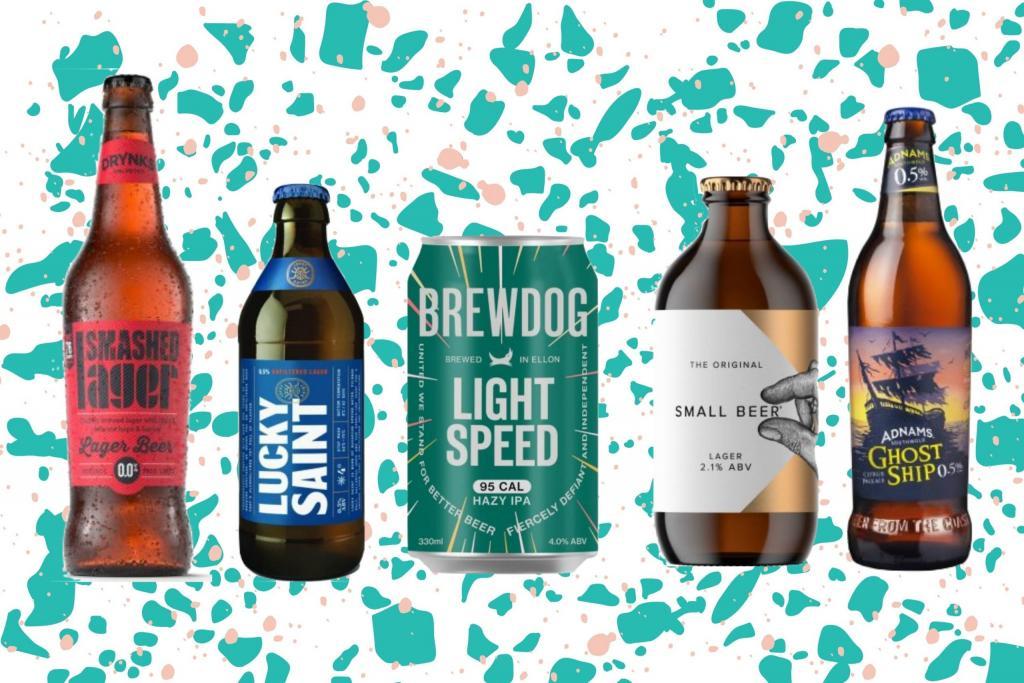
Non-alcoholic beer includes alcohol-free (0% ABV), non-alcoholic (0.5% ABV), and low-alcohol (0.5% to 2.5% ABV) variants, and has emerged as a significant segment within the global beverage industry. Above that, most Americans casually use the term “light beer” to describe anything brewed to have fewer calories and a softer alcohol presence, though the real ABV spread within that category is wider than most drinkers realize.
In the U.S., low-ABV beers are typically those under 5%, while the EU defines them as beers with less than 1.2% ABV, with some up to 3.5% ABV being marketed as low-alcohol. This matters because when an American brand calls itself a “low alcohol” beer, it’s playing by very different rules than a German or British import making the same claim.
Here’s the simple breakdown for your next grocery run:
| Category | ABV Range | Example |
|---|---|---|
| Alcohol-Free | 0.0% | Heineken 0.0, Ceria Grainwave |
| Non-Alcoholic | Under 0.5% | Athletic Brewing Run Wild IPA |
| Low-Alcohol | 0.5% to 2.5% | Beck’s Premium Light, Bud Select 55 |
| Session Beer | 2.5% to 4.5% | Many craft session IPAs |
| Standard Light Beer | 4.0% to 4.5% | Bud Light, Coors Light, Michelob Ultra |
| Regular Beer | 5.0%+ | Budweiser, Corona Extra, Heineken |
The Beers With the Absolute Lowest Alcohol Content
Beck’s Premium Light: The Lightest Light Beer You Can Buy
According to the Homebrew Academy, the light beer with the lowest alcohol content is Beck’s Premium Light. With a mere 2.3% ABV, it takes the lead as the light beer with the lowest alcohol content available in the market.
This German-made brew is a legitimate alternative for anyone who wants the social experience of drinking a beer without the weight of a standard alcohol load. With only 64 calories per serving and 3.9 grams of carbs, this light beer option is an excellent choice for those watching their calorie and carbohydrate intake. Its flavor profile is crisp and clean, leaning into classic European lager territory without the bitterness of a more aggressive hop bill. It’s the kind of beer that disappears easily on a warm afternoon without leaving you foggy.
Budweiser Select 55: The Calorie King
Budweiser Select 55 is a premium light American-style lager with only 55 calories and the crisp, clean finish of Budweiser Select, marketed as the lightest beer in the world.
With a 2.4% ABV, Budweiser Select 55 contains only 55 calories and 1.8 grams of carbs, making it one of the lowest-calorie beers on the market. It’s brewed with caramel malts and a blend of imported and domestic hops. The flavor is subtle, some would say very subtle, but that’s the trade-off when you’re engineering something this light. Think of it less as a flavor-forward experience and more as a refreshing cold liquid with just enough character to feel like beer.
The actual alcohol content of Select 55 is reported to be 2.4% ABV; by comparison, most American lagers have around 5%. That’s less than half the alcohol of the Budweiser sitting right next to it on the shelf.
Miller 64: The Middle Ground
Miller 64 occupies the sweet spot between the two options above. Miller 64 is a close competitor to Bud Select 55, offering 64 calories per 12-ounce serving and a slightly higher ABV at 2.8%. That extra half a percent of alcohol translates into a noticeably fuller body and a slightly more traditional beer taste, which makes it the choice for drinkers who want something that feels more like an actual beer while still staying in extremely low-ABV territory.
Non-Alcoholic Beers: When You Want Zero Impact
Athletic Brewing Run Wild IPA: The Category Changer
If there is one brand that has singlehandedly changed how Americans think about non-alcoholic beer, it’s Athletic Brewing Company. Run Wild is the ultimate sessionable IPA for craft beer lovers, brewed with a blend of five Northwest hops, with an approachable bitterness to balance the specialty malt body, and only 65 calories.
Run Wild strikes a commendable balance between malt sweetness and bright hop-driven bitterness, giving it a satisfying depth of flavor without being overly bitter. With a clean, crisp finish, Run Wild is incredibly refreshing. The ABV sits at under 0.5%, technically making it non-alcoholic by U.S. federal standards.
Athletic Brewing’s Run Wild IPA dominated blind taste tests at one evaluation, fooling three of five panelists who thought it contained alcohol. That’s not a marketing claim. That’s drinkers being genuinely surprised. The beer has won over 30 awards internationally, and its success helped push Athletic Brewing to surpass USD $130 million in sales in 2024, supported by its positioning as a wellness-oriented brand.
Heineken 0.0: The Grocery Store Staple
Heineken 0.0 delivers a true 0.0% ABV and global availability, making it perfect for travel or restaurants with limited NA options. At around 69 calories per bottle, it retains the recognizable Heineken flavor profile. This is the go-to for people who want something they can hand to a guest without an explanation, something that looks and acts like a regular bottle of Heineken but carries no alcohol whatsoever.
Sierra Nevada Trail Pass IPA
Sierra Nevada Trail Pass Hazy IPA took gold in the Hoppy Non-Alcohol Beer category at the 2025 World Beer Cup. That kind of competitive hardware signals that major craft breweries are treating their non-alcoholic recipes with the same seriousness as their flagship beers. Trail Pass offers citrus and pine notes with a silky malt body and sits comfortably below the 0.5% ABV threshold.
Guinness 0.0: Yes, That Guinness
For anyone who assumed stouts were off-limits in the low-ABV world, Guinness 0.0 changes the conversation entirely. The global non-alcoholic beer market was expected to double by 2024 from the level in 2018, and the United States has seen a rise in non-alcoholic beer consumption over the last decade. Guinness has leaned into this trend aggressively. In 2024, Diageo plc expanded its zero-alcohol variant, Guinness 0.0, to new markets, aiming to capture the growing consumer interest in non-alcoholic stouts. The result is a creamy, roasty, nitrogen-infused experience that carries the full personality of the classic with none of the alcohol.
Session Beers: Low ABV Without Giving Up Craft Flavor
Not everyone wants to drop all the way to the 2.3% floor or go fully non-alcoholic. That’s where session beers live, and they represent arguably the most flavorful corner of the low-alcohol landscape.
“Session” is basically an adjective used to describe a beer that is lower in alcohol (generally under 4 or 5% ABV) and high in refreshment. These beers also tend not to be too anything. They’re not too bitter, not too hoppy, not too malty.
A session beer is a beer with a low alcohol content measured by ABV (alcohol by volume), usually 4.5 percent or lower. There is a tendency to associate the label “session beer” with light-colored, crisp-flavored beer styles, such as pilsners, lagers, and pale ales. However, dark beers like dry porters or stouts can be session beers with low alcohol content.
The craft beer world has responded to consumer demand for flavor-forward, lower-alcohol options with some genuinely excellent session IPAs. Lagunitas’ Daytime IPA clocks in at about 98 calories and around 4.0% ABV. Dogfish Head Slightly Mighty keeps it to 95 calories at 4.0% ABV as well. These beers drink like real IPAs because they are real IPAs. The brewing challenge is simply managing the malt bill and fermentation process to land under the session threshold without creating something watery and thin.
Calorie and ABV Comparison: All the Numbers You Need
Read More : What Is Corona Beer Made Of Updated 10/2026
Here is an honest, side-by-side breakdown of the most popular low-alcohol beers available at American retailers in 2025, organized by ABV from lowest to highest:
| Beer | ABV | Calories (12 oz) | Carbs (g) |
|---|---|---|---|
| Heineken 0.0 | 0.0% | 69 | 16.8 |
| Athletic Brewing Run Wild IPA | Under 0.5% | 65 | 14 |
| Sierra Nevada Trail Pass Hazy IPA | Under 0.5% | ~70 | ~15 |
| Guinness 0.0 | 0.0% | ~70 | ~14 |
| Beck’s Premium Light | 2.3% | 64 | 3.9 |
| Budweiser Select 55 | 2.4% | 55 | 1.8 |
| Miller 64 | 2.8% | 64 | 2.4 |
| Michelob Ultra | 4.2% | 95 | 2.6 |
| Corona Premier | 4.0% | 90 | 2.6 |
| Miller Lite | 4.2% | 96 | 3.2 |
| Coors Light | 4.2% | 102 | 5.0 |
| Bud Light | 4.2% | 110 | 6.6 |
| Guinness Draught (regular) | 4.2% | 125 | 9.8 |
One counterintuitive takeaway from the table: the calorie difference between the cheapest light beers such as Natural Light and Busch Light and the premium ones such as Michelob Ultra and Miller Lite is almost nothing. They are all within 1 to 2 calories of each other, and the price difference is entirely about branding.
Another surprise: Guinness achieves a relatively lean 125 calories because it is only 4.2% ABV and uses nitrogen rather than heavy carbonation to create its creamy texture. Many Americans assume Guinness must be heavy and caloric. It is not.
Why America Is Drinking Lighter: The Sober Curious Revolution
The shift toward lower-alcohol beer isn’t a fad. It’s a structural change in how Americans, especially those under 35, think about alcohol as part of their identity and lifestyle.
Nearly half (49%) of Americans are planning to drink less alcohol in 2025, representing a 44% increase from 2023. Dry January participation has grown by 36% year over year, and purchases of nonalcoholic beer increased by 22% from December 2023 to November 2024.
The demographic shift driving this is pronounced. The percentage of U.S. adults under 35 who report drinking alcohol dropped from 72% (2001 to 2003) to 62% (2021 to 2023), a 10-point decline. Gen Z, in particular, is the most sober generation in recent American history. Gen Z leads the sober curious movement, with 65% planning to drink less and 39% committing to a fully dry lifestyle in 2025.
The cultural moment has a name: the sober curious movement. Coined by author Ruby Warrington in her 2018 book “Sober Curious,” the movement encourages people to examine how alcohol affects their physical health, mental well-being, and overall life satisfaction. Unlike traditional sobriety programs that focus on addiction recovery, sober curiosity is about conscious choice.
This isn’t just young people avoiding hangovers, either. In January 2025, the United States Surgeon General released an advisory that directly links alcohol consumption and cancer risk, emphasizing that alcohol is the third leading preventable cause of cancer in the US, after tobacco and obesity. That kind of public health messaging carries real weight for adults of all ages who are re-evaluating their weekly drink count.
The Market Behind the Movement: Billion-Dollar Growth
The numbers behind the low-alcohol and non-alcoholic beer category are striking in how quickly they’ve scaled.
Total NA beer sales reached $740 million in the latest 52-week period, reflecting a $175.8 million increase of roughly 30.9% compared to the previous year.
The global non-alcoholic beer market is estimated to be valued at USD 22.1 billion in 2026 and is projected to reach USD 43.9 billion by 2036, growing at a robust CAGR of 7.9%. The U.S. is leading this charge. The NA beer segment in the USA is poised to expand at 7.1% CAGR, driven by the explosive success of dedicated NA craft breweries like Athletic Brewing, which have destigmatized the category.
Adoption of month-long challenges such as “Dry January” and “Sober October” has risen by around 20% year on year since 2020. Around 35% of trial consumers during these periods go on to buy non-alcoholic beers throughout the year. That last stat is important: low-alcohol beer isn’t just a January experiment for most people who try it seriously. It becomes part of their regular rotation.
Interestingly, 67% of non-alcoholic beer consumers also buy alcoholic beer, indicating these items are complementary, not competitive. In other words, choosing a 0.5% ABV beer on a Tuesday night doesn’t mean you’ve quit drinking. It means you’re drinking with more intention.
What Low Alcohol Actually Does to Your Body (And What It Doesn’t)
Here’s the practical science that most beer lists skip over entirely.
The calorie content in beer comes primarily from alcohol and carbohydrates. Alcohol (ethanol) is the most calorie-dense component in beer, providing 7 calories per gram. Beers with higher ABV have more calories. Carbohydrates, derived from malted grains, contribute 4 calories per gram.
This is why the ABV number is the single best predictor of calorie count in any beer. Light beers contain 30 to 40% fewer calories and 50 to 70% fewer carbs than regular beers.
Beyond calories, there’s the matter of how drunk you actually get at different ABV levels. A 2.4% ABV Budweiser Select 55 is, from an intoxication standpoint, dramatically different from a 5.0% Budweiser. At 2.4%, a 150-pound person drinking two bottles over an hour would maintain a blood alcohol concentration well under the legal driving limit of 0.08%, while the same person drinking two regular Budweisers would be approaching or crossing it. The math matters when you’re deciding whether to drive home, return to work, or simply stay sharp for the second half of the afternoon.
The low 0.5% or less ABV in non-alcoholic beers is considered non-alcoholic because the body breaks the small amount of alcohol down before it hits the bloodstream. This means it does not affect you like a regular ABV beer would.
For people taking antibiotics or other medications that require complete abstinence, even 0.5% is worth considering. True 0.0% options like Heineken 0.0 eliminate any concerns about alcohol interaction with medications.
There are also actual health benefits to reducing alcohol intake. A study published in BMJ Open highlighted the benefits of taking a break from alcohol, showing that regular drinkers who abstained for 30 days reported weight loss, better sleep and more energy, in addition to lower cholesterol and blood pressure levels.
How Low-Alcohol Beers Are Brewed (The Part That Makes the Flavor Possible)
For beer lovers who care about what’s in the can, the brewing process for low-alcohol beers is genuinely interesting.
Breweries achieve low and non-alcoholic beer through various methods, such as reverse osmosis, vacuum distillation, or halting fermentation early.
To produce low-alcohol beer, brewers can reduce malt to lower alcohol content while maintaining flavor, shorten fermentation time and keep temperatures lower to control alcohol production, use wort with fewer fermentable sugars, choose yeast strains that produce clean flavors without aggressive fermentation, mash at 148 to 152°F to create unfermentable sugars, and add fruits, spices, or herbs for flavor complexity without extra alcohol.
The newer and more promising approach is specialized yeast. One of the most promising developments in low-alcohol beer brewing is the availability of low-alcohol yeasts. These special yeasts are bred or engineered to ferment a beer while producing very low levels of alcohol, and commercial examples have been surprisingly good when achieving the right malt, hop, and body balance.
Read More : Is Yuengling A Domestic Beer Updated 10/2026
Athletic Brewing uses a proprietary process that it has kept closely guarded, but the results speak for themselves in blind taste tests. The dealcoholization technology used by brands like Heineken and AB InBev involves removing alcohol post-fermentation through techniques such as vacuum distillation or reverse osmosis, retaining the flavor and characteristics of traditional beer but with alcohol levels typically below 0.5% ABV.
Who Should Be Drinking Low-Alcohol Beer, and When
Low-alcohol beer isn’t just for people who don’t drink. It’s for everyone in the right context. Here’s an honest breakdown of who benefits most:
Designated Drivers. The math is simple. If you’re the one driving home, a 2.4% ABV Select 55 or a 0.0% Heineken lets you participate in the social ritual without the liability.
Athletes and Active Adults. In Germany, the rapid adoption of alcohol-free wheat beers by marathon runners and athletes drives revenue generation for brands positioning themselves as recovery aids. Alcohol disrupts sleep architecture and impairs muscle recovery. A post-run non-alcoholic beer gives you the hydration, carbs, and social comfort of drinking without the recovery penalty.
Pregnant Women. For women in their first trimester who miss the experience of a beer with dinner, options that are truly 0.0% ABV offer a way to participate without any risk. Always consult your OB first, but 0.0% means zero.
People Managing Weight. Switching from two Bud Lights (220 calories) to two Beck’s Premium Lights (128 calories) saves you nearly 100 calories per session without sacrificing the drinking experience entirely.
Midday and Weekday Drinking. There is a specific pleasure in drinking a beer at noon on a Saturday without it affecting the rest of your day. Session beers and ultra-lights were made exactly for this moment.
Anyone on Medication. Some antibiotics specifically prohibit any alcohol consumption, making true 0.0% options the only appropriate choice.
The Flavor Problem (And How the Industry Has Solved It)
For years, “non-alcoholic beer” was shorthand for disappointment. Thin, sweet, vaguely medicinal. The stigma was earned. Early NA beers stripped out the alcohol and, along with it, most of what made beer taste like beer.
That era is over.
Several of the best non-alcoholic beers have already medaled at the biggest competitions in beer. Sierra Nevada Trail Pass Hazy IPA and Go Brewing’s Disarm Hazy IPA took gold and silver respectively in the Hoppy Non-Alcohol Beer category at the 2025 World Beer Cup, with Best Day Kölsch picking up bronze in Classic Non-Alcohol Ale or Lager.
At the Great American Beer Festival, Deschutes’ Patagonia Provisions Non-Alcoholic Organic Golden (in 2024) and Super Stoked Golden (in 2025) both brought home gold in non-alcohol categories. These are not pity awards in a consolation bracket. They’re medals judged against traditional craft beer standards.
The flavor problem was solved partly by better brewing science and partly by craft brewers simply caring more about the result. Market survey studies suggest that taste is still the final buying consideration for 78% of consumers, with low-alcohol products performing consistently better than totally alcohol-free ones in blind taste tests. The industry responded to that data aggressively.
Tips for Choosing the Right Low-Alcohol Beer for Your Taste
Not all low-ABV beers deliver the same experience. Here’s how to navigate the category based on what matters to you:
If you want the absolute lowest alcohol possible: Beck’s Premium Light (2.3% ABV) for something that still counts as “beer,” or any true 0.0% option like Heineken 0.0 or Ceria’s Grainwave for genuinely zero impact.
If calories are your primary concern: Budweiser Select 55 at 55 calories per 12 oz. is the floor in the mainstream market. Nothing widely available in American stores goes lower.
If flavor is non-negotiable: Athletic Brewing’s Run Wild IPA or Free Wave Hazy IPA deliver genuine craft beer complexity at under 0.5% ABV. Expect to pay $13 to $15 for a six-pack, which is comparable to a mid-tier craft beer.
If you want something for the whole crew without making it awkward: Heineken 0.0 is the most recognizable packaging in the category. People who haven’t thought about NA beer will recognize the bottle and not make it a conversation.
If you miss craft beer specifically: Sierra Nevada Trail Pass, Lagunitas Daytime (4.0% ABV), and Dogfish Head Slightly Mighty (4.0% ABV) all bring hop-forward flavor profiles with significantly reduced alcohol compared to their full-strength counterparts.
To store low-alcohol beer properly, keep it in a cool, dark place, ideally at temperatures between 45 to 55°F (7 to 13°C). Avoid exposure to light and temperature fluctuations. NA beers in particular have a shorter shelf life than their full-strength counterparts since alcohol acts as a natural preservative, so check the best-by date before buying in bulk.
The Bigger Picture
What’s quietly happening in the American beer aisle is a renegotiation of what it means to drink. The ritual, the social lubrication, the cold glass after a long day: none of that requires a 5% ABV. It turns out much of what people love about beer, the bitterness, the carbonation, the temperature, the act of opening it, has nothing to do with how drunk it makes you.
Trading in the “lite” for something with flavor, a lower ABV beer can be a gateway to middle of the road beers and then their boozier big brothers. For those already in the know, session simply offers the opportunity for one more. And one more after that.
The industry has finally caught up to where drinkers were already heading. And the result is a shelf full of legitimate options that would have been impossible to find a decade ago.
Your best beer doesn’t have to be your strongest one. Sometimes the smartest pour is the lightest one in the fridge, and in 2025, that beer is finally worth drinking.
Sources: https://chesbrewco.com
Category: Beer