Can Red Bull Break Glass? The Viral Myth, the Real Science, and What Every Drinker Should Know
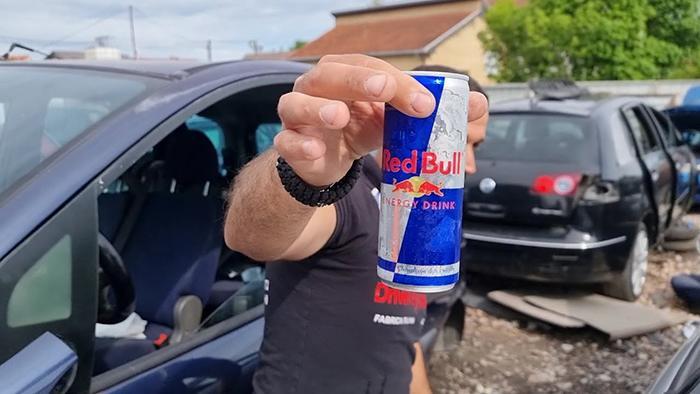
You’ve probably seen it. A video pops up on your TikTok feed, racking up millions of views, showing someone pouring Red Bull onto a car window while pressing a paper towel against the glass, and then, seconds later, the windshield dramatically shatters. The comments explode: “No way that’s real,” some people write. Others say, “I knew that stuff was dangerous.” And just like that, another viral myth is born, dressed up in just enough pseudo-science to feel convincing.
So here’s the question that’s drawing real curiosity from millions of Americans who enjoy a cold drink whether it’s a beer after work, a cocktail at the bar, or a glass of wine with dinner: Can Red Bull actually break glass? And beyond that viral clip, what does the real science say about this energy drink, its chemistry, and the surprisingly fascinating world of glass strength?
You Are Watching: Can Red Bull Break Glass Updated 10/2026
The short answer is no, Red Bull cannot break glass. But the longer answer is far more interesting, and understanding it will completely change how you think about your favorite mixer the next time you’re out at the bar.
The Viral Trend That Fooled Millions
The claim gained serious traction around 2021 and 2022 when videos circulated on TikTok and Instagram showing what appeared to be Red Bull shattering car windows. These weren’t fringe clips buried in dark corners of the internet. Some racked up hundreds of thousands, even millions, of views. One video in particular, showing a person pressing a Red Bull-soaked paper towel against a rear car window, became so widely shared that automotive YouTuber and TikToker ChrisFix felt compelled to debunk it directly.
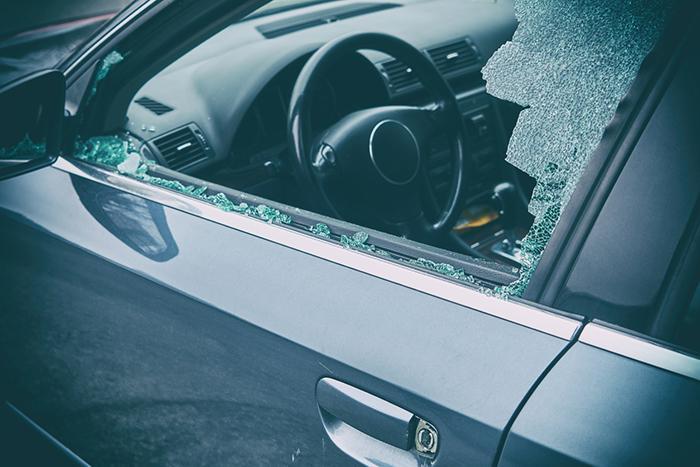
ChrisFix’s response video gained nearly 1 million likes and made the mechanism of the trick crystal clear: the glass was not broken by the Red Bull at all. A car safety hammer, a small emergency tool that costs roughly five dollars on Amazon, was used off-camera to initiate the crack. The Red Bull was theatrical misdirection, nothing more. The actual cost of replacing a car window, according to Caliber Collision estimates, runs between $250 and $400, a steep price to pay if anyone took the myth at face value and actually tried pouring energy drinks on their windshield hoping to cash an insurance claim.
The origin of the myth appears to trace back even further. According to reporting from Chesbrewco, a 2001 Red Bull marketing campaign featured a stuntman breaking through a glass wall using a specialized tool while being fueled by Red Bull. Over time, the association between the brand and something dramatic and destructive stuck in the cultural imagination, even without any scientific basis for it.
What Is Red Bull Actually Made Of?
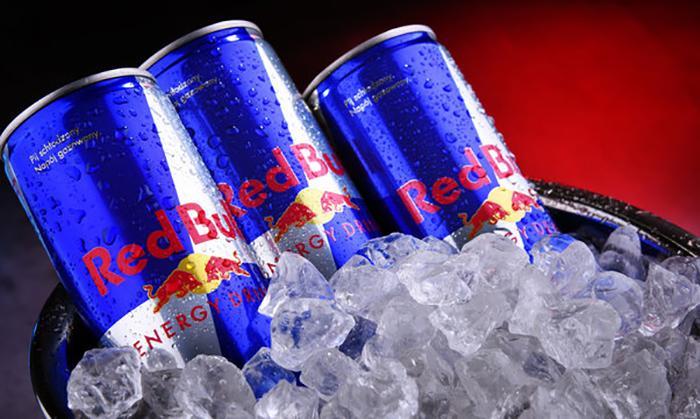
To understand why Red Bull cannot break glass, you have to understand what’s actually inside the can. Red Bull is not some exotic, corrosive chemical cocktail. It is a carefully balanced, commercially manufactured beverage with a well-documented formula.
According to Wikipedia and Red Bull’s own labeling, a standard 8.4 fl. oz. (250 ml) can of Red Bull contains:
- Carbonated water (the base)
- Sucrose and glucose (table sugar and simple sugar)
- Citric acid (a flavor enhancer and preservative)
- Taurine (an amino sulfonic acid)
- Sodium bicarbonate and magnesium carbonate (buffering agents)
- B vitamins (B2, B3, B5, B6, and B12)
- Caffeine (approximately 80 mg per 8.4 fl. oz.)
- Natural and artificial flavors
None of these ingredients, individually or in combination, possess any glass-corroding or glass-shattering property. The carbonated water creates a mild carbonic acid when CO₂ dissolves in water. The citric acid provides tartness and shelf life. The taurine, despite its dramatic-sounding name, is an amino acid naturally found in your own muscles and brain, and also in meat and fish. The taurine in Red Bull is synthetically produced, completely identical to what your body already contains.
The caffeine content of 80 mg is roughly equivalent to a regular cup of brewed coffee. It keeps you alert. It doesn’t corrode windshields.
The pH Reality: Acidic, But Not in the Way You Think
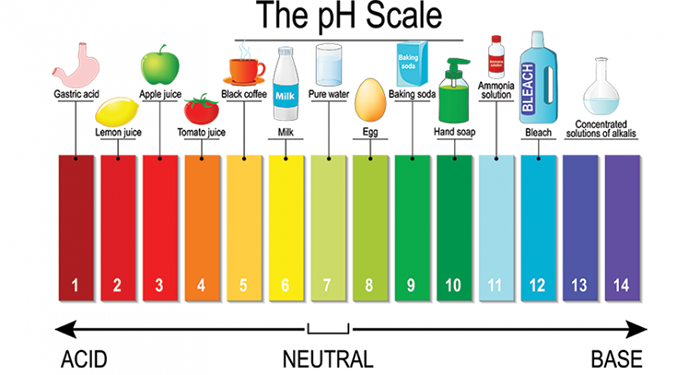
Here is where things get genuinely interesting, and where the myth likely gets some of its misguided fuel. Red Bull is acidic. Significantly so.
<br>
| Beverage | Approximate pH |
|---|---|
| Pure water | 7.0 (neutral) |
| Black coffee | 4.5–5.0 |
| Red Bull (regular) | 3.3–4.0 |
| Red Bull Sugar Free | ~3.39 |
| Lemon juice | 2.0–2.5 |
| Battery acid | ~1.0 |
<br>
The pH of Red Bull falls between 3.3 and 4.0, placing it firmly in acidic territory, well below the 5.5 threshold at which dental enamel begins to erode. Research confirms that the combination of citric acid and carbonation gives Red Bull this low pH. As one analysis from eathealthy365.com explains, the citric acid is the primary driver, acting as a “much stronger acid than carbonic acid” and significantly lowering the drink’s overall pH.
This acidity is a very real concern for your teeth. Research from Periodontal Health Center and Timberlake Dental confirms that the pH of energy drinks, including sugar-free versions, can erode enamel over time. But dental erosion, as serious as it is, is categorically different from glass breakage. The acids present in Red Bull are organic, food-grade acids in concentrations that are safe enough for human consumption. Glass, particularly the type used in windows and car windshields, is not remotely vulnerable to these concentrations.
To put this in perspective: hydrofluoric acid can etch glass. Battery acid can corrode certain surfaces over extended exposure. Citric acid in a can of energy drink? Not even close.
The Science of Glass: Why Red Bull Has Zero Chance
To truly appreciate why this myth is so absurd, you need to know how strong modern glass actually is, because it is remarkably strong.
What Glass Is Made Of
Ordinary float glass, the kind used in windows and picture frames, is formed from melted silica sand, soda ash, and dolomite. The atomic structure of glass is a disordered, amorphous network of silicon and oxygen atoms, which is why glass is both transparent and brittle in its base form. Under normal circumstances, this standard glass breaks at roughly 6,000 PSI (pounds per square inch).
Tempered Glass: The Real Armor on Your Car
Car windows and most modern architectural glass are not made from ordinary float glass. They are made from tempered glass, which is approximately four to five times stronger than standard glass. The tempering process involves heating the glass near its softening point and then rapidly cooling the outer surfaces with jets of cold air.
This creates a “stress sandwich” inside the glass: the outer surfaces are under compressive stress, while the interior is under tensile stress. These opposing forces act like armor. Any incoming force must first overcome the surface compression before it can propagate a crack.
Read More : Why Does Gfuel Have Lead Updated 10/2026
According to federal safety standards referenced by Jockimo Glass and multiple engineering sources, tempered glass must have a minimum surface compression of 10,000 PSI and typically breaks at around 24,000 PSI. High-performance tempered glass used in automotive applications can withstand even more.
<br>
| Glass Type | Typical Breaking Stress |
|---|---|
| Annealed (ordinary) glass | ~6,000 PSI |
| Tempered glass (standard) | ~24,000 PSI |
| Laminated windshield glass | Designed to resist shattering entirely |
<br>
To generate anywhere near 10,000 PSI of pressure, you would need a mechanical force that no liquid poured from a can could ever produce. Carbonated drinks, even when sealed, generate internal pressures of roughly 30 to 90 PSI, a tiny fraction of what would be needed to stress even the weakest point of tempered glass.
The Thermal Shock Loophole (And Why It Still Doesn’t Apply)
Some people point to thermal shock as a possible mechanism: could pouring cold Red Bull on warm glass cause it to crack? This is a legitimate phenomenon in principle. When glass experiences a rapid, uneven temperature change, the expansion and contraction of different sections can create stress fractures. This is why you should never pour boiling water into a cold glass.
However, car windows are specifically engineered to handle temperature differentials, which is why they don’t shatter when you blast air conditioning into a sun-baked car or when ice-cold rain hits a warm windshield. The thermal resistance of tempered glass is rated for temperature changes of up to 250 degrees Celsius (482 degrees Fahrenheit). The temperature differential between a chilled can of Red Bull and a warm car window is nowhere near sufficient to cause fracture.
Automotiveplanner.com summarizes this point cleanly: Red Bull cannot generate the pressure required to break tempered car glass, whether poured from a cold can or otherwise.
How the Viral Videos Actually Work
The ChrisFix exposé revealed the trick clearly. Here is the basic mechanics of what is happening in nearly every viral “Red Bull breaks glass” video:
A spring-loaded car safety hammer (also called a window punch) is a tool designed specifically to shatter tempered car glass in emergencies. It works by concentrating all its force into an extremely small point, often as small as 0.01 inches in contact area. Because pressure equals force divided by contact area, a relatively small physical force applied to a tiny point can generate an enormous local PSI, easily exceeding 24,000 PSI and shattering the glass instantly.
In the viral videos, the hammer is used either by the person filming from behind the phone, by someone off-camera, or by the person supposedly “pressing” the paper towel (who is actually pressing the hammer tip concealed beneath the towel). The red liquid provides the theatrical distraction and the fake causation. The edit is quick. The glass shatters. The viewer’s brain connects the two events, because our brains are wired to infer causation from correlation, especially when the timing is tight.
This is not unique to Red Bull. Multiple similar videos exist claiming that Monster Energy, Gatorade, and other beverages can shatter glass. All are performed with the same concealed mechanical trick.
Red Bull in Your Glass: Cocktails, Mixers, and the Bar Scene
For beer, wine, and cocktail drinkers, the more practically relevant question about Red Bull and glass is not whether the drink breaks it, but what happens when you pour it into one.
The Jägermeister Bomb and the Vodka Red Bull
Red Bull has been used as a cocktail mixer in Europe since the 1980s, but it was the invention of the Vodka Red Bull in 1999 (attributed to futurologist Benjamin Reed, and believed to be an accidental creation that originally also included lemonade) that turned it into a global bar staple.
The classic ratio is roughly three parts Red Bull to one part vodka. The Red Bull dominates the flavor, masking the sharpness of the spirit. Alongside this, the Jäegerbomb (a shot of Jägermeister dropped into half a can of Red Bull) became an iconic bar ritual, especially on college campuses and at late-night venues across the United States.
The “Wide Awake Drunk” Effect
Here is where the science gets genuinely worth paying attention to, especially for those who enjoy a night out. The primary concern researchers have raised about mixing Red Bull with alcohol is not that it causes heart attacks in healthy adults (though heavy consumption raises cardiovascular stress), but rather a more subtle and socially dangerous phenomenon: masking the feeling of intoxication.
Alcohol is a CNS depressant. It slows reaction time, impairs coordination, and eventually makes you feel sedated and tired. That tiredness is actually your body’s natural signal to stop drinking. Red Bull’s caffeine is a CNS stimulant. It increases alertness and reduces the subjective feeling of sleepiness. When combined, the caffeine effectively mutes the signal your body is sending you.
According to research published in the Journal of Studies on Alcohol and Drugs, a Canadian research team reviewing 35 years of literature found that mixing caffeine with alcohol led to a notably higher chance of injury compared to drinking alcohol alone. Lead researcher Audra Roemer explained the mechanism: people who are “wide awake drunk” tend to stay out later, consume more alcohol, and make riskier decisions, because they don’t feel as drunk as they actually are.
A 2016 study separately found that combining alcohol with energy drinks increased the risk of injury compared to consuming alcohol by itself.
On the other hand, a 2012 scientific review published in Substance Abuse and Rehabilitation and cited on PubMed examined available evidence more carefully, finding that the researchers could not confirm consistent evidence that energy drinks alone alter perceived intoxication levels or that they directly cause increased alcohol consumption. The science, in other words, is nuanced: the risks are real but are most significant for those who are already inclined toward heavy or binge drinking, and less relevant for moderate, responsible drinkers.
What Bars Actually Serve
Despite the health debates, Red Bull cocktails are a permanent fixture in American bar culture. As noted by DrugRehab.com, Twin Peaks restaurant serves a drink called Tropic Thunder made from Red Bull Tropical Yellow, Malibu coconut rum, and Bacardi Rum. Boston Pizza’s menu includes four Red Bull cocktails, among them the Green Monster: a citrusy combination of vodka, rum, gin, schnapps, curaçao, and Red Bull.
The FDA stepped in during 2010 to ban pre-mixed caffeinated alcoholic beverages (like Four Loko’s original formula) after a series of hospitalizations linked to the product. But bartender-mixed drinks combining energy drinks and alcohol remain completely legal and widely available throughout the country.
Freezing Red Bull: A Real Risk You Should Know About
While pouring Red Bull on glass from the outside is harmless, there is one scenario involving Red Bull and containers that carries a legitimate physical risk, though it has nothing to do with glass shattering.
If you put a sealed can of Red Bull (or any carbonated beverage) in the freezer and forget it, the water inside will expand as it freezes. This expansion increases internal pressure significantly. The aluminum can, not the glass, is what you should worry about: it can deform, crack, or in some cases rupture, making a mess and potentially sending shrapnel of aluminum and frozen liquid across your freezer.
The lesson? Chill your Red Bull in the refrigerator. Leave it out of the freezer.
Red Bull By the Numbers: A Brand Bigger Than Most Countries’ GDP
Understanding why this myth has such incredible staying power also requires understanding the sheer cultural scale of the brand behind the drink.
<br>
| Red Bull Statistic | Data |
|---|---|
| Year founded | 1984 (Austria), launched 1987 |
| Cans sold globally since launch | Over 100 billion |
| Cans sold in 2025 | Over 13.9 billion |
| Global energy drink market share (2023) | 13% |
| Countries where Red Bull is sold | Over 175 |
| Brand value ranking among soft drinks (2021) | 3rd, behind Coca-Cola and Pepsi |
<br>
Red Bull’s origin story is genuinely interesting. Austrian entrepreneur Dietrich Mateschitz discovered a Thai energy drink called Krating Daeng (meaning “red gaur”) in 1982 while traveling for work. The drink was popular among Thai truck drivers and laborers for its energizing effects. Mateschitz partnered with Thai entrepreneur Chaleo Yoovidhya, reformulated the drink for Western tastes (including adding carbonation), and launched Red Bull GmbH in 1984. The brand became a global phenomenon by sponsoring extreme sports and creating what Wikipedia describes as a “brand myth” rather than following traditional consumer marketing.
With over 13.9 billion cans sold in 2025 alone, Red Bull has an extraordinary cultural footprint. When something is that omnipresent, myths and rumors attach to it easily, and virality does the rest.
What Does Actually Break Glass? (For the Curious)
Since we’ve established what doesn’t break glass, it’s worth briefly covering what does, because the science is fascinating.
Acoustic resonance is perhaps the most spectacular. Opera singers who shatter wine glasses with their voices are using a real physical principle: if the frequency of the voice matches the natural resonant frequency of the glass, the glass vibrates at increasing amplitude until it fractures. This works best with crystal wine glasses, which have a very pure resonant frequency. Standard glass is more difficult to shatter this way.
Nickel sulfide inclusions cause what’s known as spontaneous breakage in tempered glass. These are microscopic impurities that can expand over time inside the glass, building internal stress until the whole pane suddenly shatters, sometimes years after installation, without any external impact. This is the phenomenon that causes the occasional mysterious shattering of glass shower doors, building facades, or car sunroofs.
Focused thermal shock can crack ordinary glass, particularly when there are pre-existing micro-cracks at the edges. A common example is pouring very hot liquid into a cold glass that hasn’t been warmed gradually. But again, this requires a dramatic temperature differential, not the few degrees’ difference between a room-temperature beverage and a warm window.
A center-punch or spring-loaded hammer, as detailed earlier, works by concentrating enormous pressure into a single tiny point, immediately overwhelming the compressive stress layer of tempered glass and triggering a catastrophic chain reaction of fractures across the entire panel.
None of these mechanisms involve pouring Red Bull on anything.
Drinking Smart: Tips for the Beer, Wine, and Cocktail Crowd
If you enjoy Red Bull as a mixer, the science doesn’t say you need to stop. It says you should be thoughtful about it. Here are practical, evidence-informed points worth keeping in mind:
Know that the caffeine is masking fatigue signals. If you’re mixing Red Bull with vodka, rum, or spirits at a bar, understand that you may feel more alert than your blood alcohol level would otherwise indicate. Pace yourself by tracking the number of drinks, not how tired or drunk you feel.
Acidity matters if you’re drinking regularly. Red Bull has a pH of around 3.3–4.0, which is significantly below the 5.5 threshold at which dental enamel starts to soften. If you’re having Red Bull cocktails frequently, drinking through a straw reduces contact with teeth, and rinsing with water afterward helps.
The carbonation is doing something. Carbonated mixers, including Red Bull, may slightly accelerate the absorption of alcohol by increasing gastric motility. In simple terms: carbonated drinks mixed with alcohol can hit a little faster than still drinks mixed the same way. Something to keep in mind on an empty stomach.
Moderate drinking with a caffeinated mixer is not the same as binge drinking with one. The research studies that found serious risks were largely conducted in contexts of heavy, binge-level alcohol consumption. Having one Vodka Red Bull at a bar is a very different physiological situation from having six in a row.
The Real Story Behind Why People Believe This Myth
Social psychologists call it illusory causation, the tendency to infer a cause-and-effect relationship from two events that are simply timed close together. Video editors know this. Marketers know this. The viral video format is perfectly designed to exploit it.
Add to that the cultural narrative around energy drinks being “extreme,” “dangerous,” or “too powerful,” and you have a myth that almost writes itself. Red Bull’s own marketing, with its outrageous stunts, cliff dives, Formula One cars, and near-space jumps, positions the brand as something that pushes limits. If anything were going to break glass, the mythology insists, it would be this drink.
But mythology and chemistry don’t operate by the same rules. And the next time you see a viral video of any beverage apparently doing something structurally impossible, you now have the science to know better.
Conclusion
There’s something unexpectedly satisfying about pulling back the curtain on a myth this well-traveled. The fact that millions of people genuinely wondered whether Red Bull could shatter glass says less about the drink and more about how beautifully our brains are wired to tell stories, to find cause where there is only coincidence, to be drawn toward the dramatic even when the mundane is sitting quietly in the corner, armed with the actual truth.
The real power of Red Bull, if it has any worth discussing at the bar, is not in its acid content or its carbonation pressure. It’s in the way it makes a night feel longer, a social moment feel more electric, and a cocktail taste like something worth ordering twice. Whether that’s a feature or a bug probably depends on how the night ends.
Pour it in a glass. Enjoy the buzz. Just don’t pour it on your windshield.
Sources: https://chesbrewco.com
Category: Drink