If you’re old enough to remember ordering a round at a bar in the 1980s, you probably have a clear picture in your head: that unmistakable dark brown, teardrop-shaped bottle sitting in an ice bucket, the gold label gleaming under neon lights. Michelob. It was the beer that made you feel like you’d arrived somewhere. Not just another round of Bud, not some imported curiosity, but something polished, something premium, and something unmistakably American.
So what happened? Is Michelob beer still being made? Can you actually walk into a store today and pick up a six-pack? The answer, like most things involving a 130-year-old brand that has survived Prohibition, two World Wars, the craft beer revolution, and an ever-shifting American palate, is complicated. And the full story is far more interesting than a simple yes or no.
You Are Watching: Do They Still Make Michelob Beer Updated 09/2026
The Origins of Michelob: A Beer Born for Connoisseurs
The Michelob story begins in 1896, when the legendary German-born brewer Adolphus Busch introduced it through Anheuser-Busch in St. Louis, Missouri. The name “Michelob” is not a word Busch invented. It is the German rendering of Měcholupy, a market town in what is now the Czech Republic, where a prominent brewing tradition already existed. Anton Dreher, one of the founding fathers of modern pale lager brewing, had operated a brewery there. Beer historians widely believe that Anheuser-Busch drew deep inspiration from that Bohemian lager tradition when crafting what would become one of America’s most celebrated brands.
From the very start, Michelob was positioned differently from Budweiser. It was not meant for the everyday working-class drinker. Priced at $8 a barrel at a time when Budweiser was significantly cheaper, Michelob was marketed as a “draught beer for connoisseurs”, available only on tap at the finest establishments. The original recipe used 100 percent two-row barley malt, lightly hopped with German noble hops, giving it a rich, toasted malt character and a smooth, polished finish. The alcohol content sat at a respectable 6% ABV, noticeably stronger than most American lagers of the era.
For decades, though, it remained a regional curiosity, largely confined to the Midwest and South, because it was available only on draught and could not be legally shipped across state lines in its unpasteurized form.
From Keg to Bottle: The Game-Changing Year of 1961
Everything changed in 1961, when Anheuser-Busch developed a pasteurized version of Michelob. This was actually the first beer the brewery ever pasteurized, a landmark moment in its history. Pasteurization meant the beer could now be bottled, canned, and legally transported across state lines, opening the entire country to a brand that had previously been a local legend.
To mark this transition, Michelob was packaged in one of the most celebrated beer bottles ever designed: the iconic teardrop bottle, named for its resemblance to a water droplet. Wider at the base and tapering upward into a slender neck, the bottle was so visually striking that it won a medal from the Institute of Design in 1962. Bartenders and bar managers loved it because the shape made it instantly recognizable even across a darkened barroom. Customers loved it because it felt special, different from the standard, utilitarian bottles of competitors.
The bottle was discontinued in 1967 for the practical reason of production-line efficiency, but its cultural impact was already cemented. Beer drinkers who had grown up in the 1960s and 1970s would carry that teardrop silhouette in their memories for decades.
Michelob in Its Prime: The “Weekends Were Made for Michelob” Era
Through the 1970s and 1980s, Michelob was riding an extraordinary wave. Anheuser-Busch positioned it brilliantly in the gap between mass-market domestics like Budweiser or Coors and expensive European imports. Marketing executives recognized a specific American consumer: young professionals, upwardly mobile, aspirational, who wanted something that felt premium without crossing into the territory of a foreign label they couldn’t pronounce.
The campaign that defined a generation was the instantly memorable slogan: “Weekends were made for Michelob.” It ran through the late 1970s into the 1980s and became one of the most successful beer advertising themes in American history. The ads were sleek, sophisticated, and aspirational. They didn’t show frat houses or tailgate parties. They showed adults in their element: dinners, celebrations, Friday nights done right.
The brand also introduced Michelob Light in 1978, predating Bud Light and making it Anheuser-Busch’s first foray into reduced-calorie beer. It was marketed as the country’s first super-premium light beer, brewed with a high percentage of two-row barley malt and employing a special micro-carbonation process for a crisper finish. The brand further expanded with Michelob Classic Dark in 1981 and Michelob Golden Draft in 1991, the latter introduced specifically to compete with Miller Genuine Draft in Midwest markets.
At its commercial peak, the Michelob family of brands was practically inescapable. The original lager, the light, the dark, and later specialty variants occupied prime shelf real estate and draft handles across the country.
The Long Slide: What Went Wrong
The decline, when it came, was dramatic. And it came from multiple directions at once.
First, imported beers exploded in popularity through the late 1980s and into the 1990s. Corona, Heineken, Stella Artois, and Kronenbourg offered American drinkers something genuinely different: an actual foreign pedigree, a story rooted in another country. Michelob, despite its European-sounding name and Bohemian inspiration, was still a domestic American lager. The mystique of the import was something it simply could not manufacture.
Second, the craft beer revolution began reshaping the American palate. Small, independent breweries started offering drinkers intensely flavored ales, IPAs, stouts, and seasonal specialties that made even a well-crafted macro lager seem one-dimensional by comparison. Consumers who had once splurged slightly on Michelob as their “better” beer now discovered they could get genuinely different and complex flavors from local or regional craft producers.
The numbers became impossible to ignore. According to data from Beer Marketer’s Insights, Michelob Original Lager shipped 500,000 barrels domestically in 2006 but had collapsed to just 140,000 barrels by 2011, a decline of more than 70 percent in five years. By comparison, even Amstel Light, another struggling brand, still outsold it by 200,000 barrels that year. Michelob Light fared similarly, dropping 66.3 percent from 2006 to 2011. USA Today included Michelob Light at the top of a notorious 2013 list: “9 Beers Americans No Longer Drink.”
Anheuser-Busch had seen the signs earlier. In 2002, it quietly dropped the teardrop bottle in favor of a more conventional shouldered shape, hoping to attract younger drinkers who associated the teardrop with their parents’ era. It didn’t work.
A Last Attempt: The 2007 Revival
To its credit, Anheuser-Busch did not give up without a fight. In February 2007, the company made a bold announcement: Michelob Original Lager and Michelob Light would return to the iconic teardrop bottle and a 100 percent all-malt recipe, undoing the post-WWII decision to include rice and corn adjuncts. Don Muhleman, the company’s Group Vice President of Brewing Operations, described the goal vividly: “The beer will have a rich toasted maltiness, a balanced hop profile from the use of noble aroma hops, a rich color, and a smooth velvety finish.”
The teardrop bottles hit shelves nationwide by late February 2007 and generated genuine nostalgic buzz. Unfortunately, the revival was short-lived. The teardrop packaging was quietly discontinued again by October 2008, having failed to reverse the brand’s commercial trajectory. By 2020, reports began surfacing on BeerAdvocate and other beer communities that Michelob Original Lager had disappeared entirely from distribution, effectively marking the end of the classic beer that started it all.
So, Do They Still Make Michelob Beer? Here Is the Real Answer
Yes, and in the most spectacular fashion imaginable, but not in the way you might expect.
Read More : Is Barq’S A Coke Product Updated 09/2026
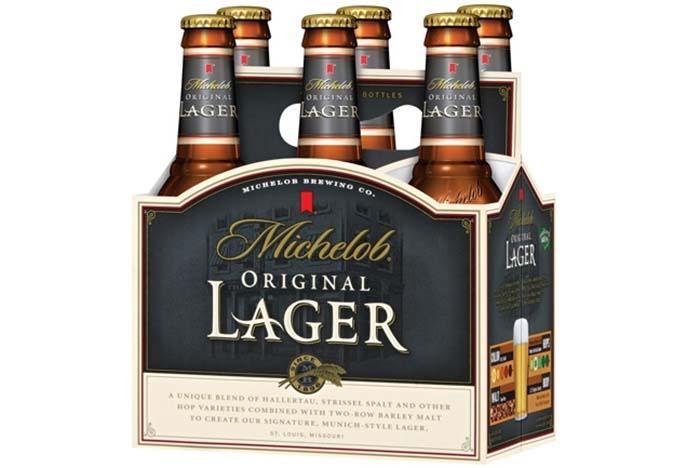
The original Michelob lager as most longtime fans knew it has effectively been discontinued from mainstream national distribution. Anheuser-Busch has made no sweeping public announcement about formally retiring it, but it has vanished from most distributor lists, and the brand’s official communications focus entirely on other products. You may occasionally still find remnant stock at some specialty retailers or in very limited regional distribution, but for most Americans, the original Michelob is gone from everyday availability.
Michelob Light is in a similar position: still technically produced by Anheuser-Busch as of 2024, but available only sporadically and in sharply reduced distribution. Anheuser-Busch has shifted all of its Michelob consumer-facing attention away from this product entirely.
What is vigorously alive, however, is the Michelob Ultra sub-brand, which has evolved far beyond simply being a line extension. It has become the heart and soul of everything the Michelob name represents in the 21st century, and by September 2025, it had achieved something truly staggering.
Michelob Ultra: From Low-Carb Experiment to America’s Best-Selling Beer
When Michelob Ultra was introduced in 2002, it was a calculated bet on the low-carb craze that was sweeping American culture. Dr. Atkins was everywhere. Carbohydrates were the enemy. And Anheuser-Busch wanted a piece of that dietary anxiety applied to beer.
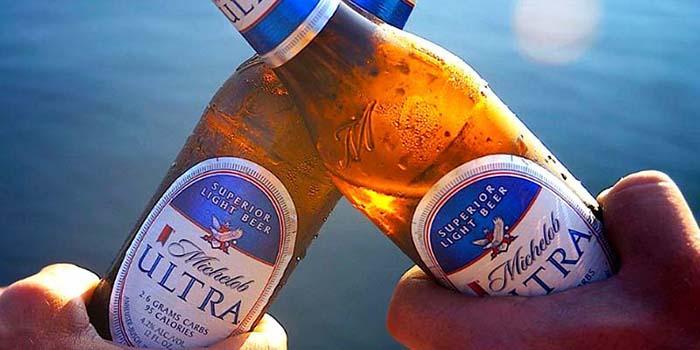
The product was simple: 95 calories, 2.6 grams of carbohydrates, and 4.2% ABV per 12-ounce serving. It was brewed with barley malt, rice, hops, and pure-cultured yeast, and it contained no artificial flavors or colors. At the time, it was not universally celebrated. Beer enthusiasts found it thin. Critics dismissed it. But the target audience, health-conscious Americans who wanted to enjoy a social drink without obliterating their fitness routines, responded with almost evangelical enthusiasm.
The brand’s marketing playbook focused heavily on sports and active-lifestyle partnerships. Michelob Ultra became the Official Beer of the PGA Tour, a relationship that stretched over 30 years. It attached itself to tennis, beach volleyball, running events, and cycling races. The message was consistent: this is not a couch beer. This is the beer for people who also go to the gym in the morning.
Then, from 2020 to 2025, something remarkable happened. Michelob Ultra grew by 15 percent in volume and captured over 2 percentage points of overall beer market share, according to Circana data. In September 2025, Anheuser-Busch announced that Michelob Ultra had officially become the number-one selling beer in America by volume, surpassing Modelo Especial in retail channels and also leading bars and restaurants according to NielsenIQ data.
“Consumers are buying more Michelob Ultra than any other beer in America. The brand stands out as the growth leader in the industry, and it’s showing no signs of slowing down,” said Scott Scanlon, Executive Vice President of Category Insights at Circana.
For context, this crown had previously been held by Bud Light for many years, until that brand suffered a catastrophic consumer backlash in 2023 following a controversial influencer partnership. Modelo Especial then took the top spot, only to face headwinds in 2025 tied partly to shifting consumer behavior and the business environment. Michelob Ultra rose through the turbulence to claim the summit.
The Current Michelob Lineup: What You Can Actually Buy Today
Understanding what the Michelob brand offers in 2025 requires stepping away from the original lager entirely and looking at the brand as it has been rebuilt. Here is the current active lineup:
| Product | Calories (12 oz) | Carbs | ABV | Key Feature |
|---|---|---|---|---|
| Michelob Ultra | 95 | 2.6g | 4.2% | Core flagship, #1 beer in America |
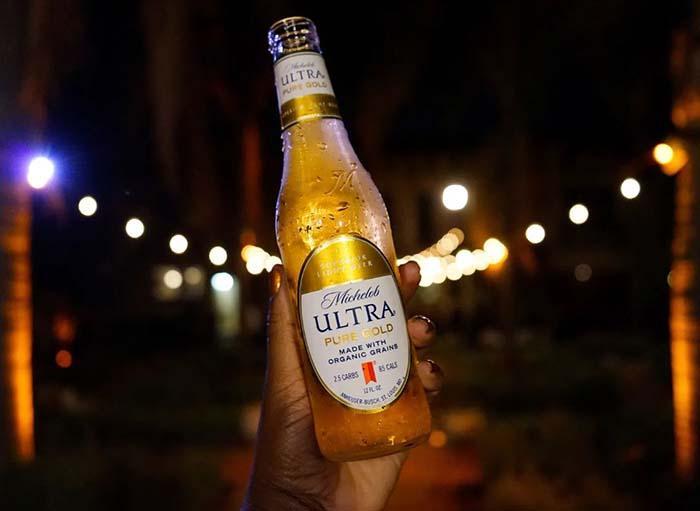
| Michelob Ultra Pure Gold | 85 | 2.5g | 3.8% | USDA-certified organic grains |
| Michelob Ultra Infusions | ~95 | ~2.5g | 4.0% | Fruit-infused varieties (Lime & Prickly Pear, etc.) |
| Michelob Ultra Zero | 29 | N/A | 0% | Non-alcoholic, launched January 2025 |
| Michelob Light (limited) | 123 | 11.7g | 4.3% | Sporadic regional availability only |
Michelob Ultra Pure Gold
Introduced as Anheuser-Busch’s answer to the growing organic food movement, Michelob Ultra Pure Gold is brewed with USDA-certified organic grains, delivering 85 calories and 2.5 grams of carbohydrates per 12-ounce serving. It skews toward the consumer who shops at Whole Foods, tracks macros, and sees beer as something that should fit within a lifestyle philosophy rather than derail it.
Michelob Ultra Infusions
The Infusions line brings fruit-forward flavors into the Ultra formula without dramatically changing the calorie or carbohydrate profile. Varieties like Lime & Prickly Pear and Peach cater to drinkers who find straight lager too neutral but aren’t looking for a heavy craft beer either. It occupies a useful middle ground in a market increasingly competitive with hard seltzers.
Michelob Ultra Zero: The Non-Alcoholic Bet
Perhaps the most significant recent development in the Michelob story is the January 2025 launch of Michelob Ultra Zero, a completely alcohol-free version of the flagship containing just 29 calories per 12-ounce serving. Anheuser-Busch rolled it out in 12-ounce can 12-packs first, with 6-packs of bottles following in March 2025.
The timing was not accidental. Non-alcoholic beer sales in the United States had grown by over 29 percent year-over-year by late 2024, representing more than $328 million in tracked channel sales. The “sober curious” movement, Dry January participation, and growing awareness of alcohol’s health effects were creating a legitimate consumer segment. Michelob Ultra Zero quickly became one of the top-selling non-alcoholic beers in the U.S. in its first nine months, according to Circana data, a genuinely impressive debut for a product in a crowded field.
Why Michelob Ultra Won Where the Original Lager Lost
There is a real lesson buried in the arc of the Michelob brand, one that tells you something important about how American drinking culture has shifted over the past 40 years.
The original Michelob thrived in an era when premium was defined by richness: richer flavor, richer color, stronger alcohol, more expensive. The teardrop bottle was not just functional; it was a status object. Ordering a Michelob at a bar in 1983 communicated something about you: that you had slightly better taste, slightly more refined preferences, slightly more money.
By the 2000s, the definition of premium had undergone a fundamental inversion. Premium no longer meant more; it now meant better calibrated. Better for your body, better for your active lifestyle, better aligned with the idea that you are a person who is in control, deliberate, and health-aware. The 95-calorie, low-carb pitch of Michelob Ultra hit that cultural nerve perfectly.
The sports partnerships amplified this positioning brilliantly. When Michelob Ultra shows up on the 18th hole of a PGA Tour event or at a Team USA Olympic broadcast, it is not saying “celebrate excess.” It is saying “you earned this.” The brand has been the Official Beer Sponsor of Team USA, the NBA, and the FIFA World Cup 2026 (to be hosted in the United States), with plans extending to the 2028 Los Angeles Olympic Games. These partnerships reinforce the athletic-lifestyle identity at the highest possible level of cultural visibility.
What Happened to the Classic Michelob Variants?
For readers who remember more obscure corners of the Michelob catalog, here is a summary of what became of the specialty lines that Anheuser-Busch rolled out between the late 1970s and the 2000s:
Michelob Classic Dark (1981): A well-regarded dark lager that found a loyal niche audience but never achieved mass-market scale. It has been discontinued from national distribution.
Michelob AmberBock: Probably the most beloved of the specialty variants among serious beer drinkers. A dark lager brewed with 100 percent malt (including roasted black barley malt), it received a World Beer Cup Bronze Medal in 1998 and had a genuinely complex flavor profile: nutty, toasty, with caramel notes and hints of toffee. It, too, has been discontinued from mainstream national distribution, though remnant stock appears occasionally in limited regional outlets.
Michelob Golden Draft (1991): Introduced to compete with Miller Genuine Draft primarily in Midwest markets. Limited national exposure and long since out of production.
Michelob Ultra Amber: A short-lived attempt to bring some color and malt character into the Ultra framework. Consumer feedback cited an off-putting aftertaste, and the product was discontinued within six months of its launch.
Read More : Alcohol Content In Labatt Blue Updated 09/2026
The broader pattern is clear: Anheuser-Busch has made a deliberate strategic choice to concentrate the Michelob brand around the Ultra platform and its extensions, walking away from the portfolio complexity that briefly defined the brand in the 1990s and early 2000s.
Michelob and the Bigger Picture of American Beer in 2025
The current position of Michelob Ultra at the top of American beer sales is worth contextualizing within the broader industry landscape, which is not uniformly rosy.
Retail beer sales in the United States for the first half of 2025 fell nearly 5 percent year-over-year to approximately $34.7 billion, according to analysis from Fintech and the National Beer Wholesalers Association. Americans have been steadily reducing their overall beer consumption for four consecutive decades, per data from the National Institute on Alcohol Abuse and Alcoholism. The entire category is fighting a structural contraction.
Within that contraction, the winners are the brands that have successfully aligned themselves with where consumer values have moved: toward moderation, toward health consciousness, toward low-calorie or alcohol-free options. Michelob Ultra’s rise is not despite this environment; it is because of it.
The irony is striking. The brand that was born as a connoisseur’s beer, a rich, all-malt, premium strength lager designed for drinkers who wanted more, has become the industry’s most successful product by offering less: fewer calories, fewer carbs, less alcohol (in Ultra Zero’s case, none at all), and fewer guilt pangs about enjoying a cold one after a workout.
That is not a failure of vision. That is an extraordinary evolution.
Where Can You Still Find Michelob Products Today?
Michelob Ultra is ubiquitous. You will find it at essentially every grocery store, gas station, convenience store, liquor retailer, sports bar, and restaurant across the country. It holds the largest share of U.S. draft lines (surpassing Bud Light in that metric since November 2024, according to Draftline Technologies), which means it is the beer on tap at more American bars than any other brand. You will find it in 12-packs, 6-packs, 24-packs, 30-packs, and individual bottles or cans.
Michelob Ultra Pure Gold and Michelob Ultra Infusions are widely available at most major retailers, though they occupy a narrower footprint than the core Ultra.
Michelob Ultra Zero is rolling out nationally and is increasingly found in supermarkets alongside other non-alcoholic options like Athletic Brewing, Heineken 0.0, and Corona Non-Alcoholic.
Michelob Original Lager is effectively gone from widespread circulation. A determined beer hunter might locate it in very limited specialty or legacy retailers with old stock, or through regional distributors in select markets, but it should not be expected. If it shows up, treat it as a find, not a staple.
Michelob Light occupies a similar ghostly zone: technically still in existence but without meaningful national presence. Check with online beer locators or contact local distributors in Anheuser-Busch’s distribution network if you want to track it down.
Comparing Classic Michelob to Michelob Ultra: A Study in Contrast
It is instructive to place the beer that started everything alongside the beer that inherited its name:
| Attribute | Michelob Original Lager | Michelob Ultra |
|---|---|---|
| Introduced | 1896 | 2002 |
| ABV | 4.2% (modern), originally ~6% | 4.2% |
| Calories | ~155 per 12 oz | 95 per 12 oz |
| Carbohydrates | ~13g per 12 oz | 2.6g per 12 oz |
| Malt Bill | 100% two-row barley malt | Barley malt and rice |
| Hops | German noble hops | Hops (unspecified variety) |
| Taste Profile | Toasted malt, rich, slightly nutty | Light, crisp, subtle grain, very clean finish |
| Positioning | Superpremium connoisseur’s lager | Active lifestyle, health-conscious light lager |
| Availability | Effectively discontinued | #1 selling beer in the U.S. (2025) |
The two beers occupy opposite ends of a spectrum, and the direction of travel between them tells the story of how American beer preferences evolved across more than a century.
For Those Who Miss the Original: What to Drink Instead
If you are among the beer drinkers who remember Michelob Original Lager with genuine fondness and are looking for something to fill that space, a few options are worth considering:
Yuengling Traditional Lager is the closest widely available American lager in spirit and character to what classic Michelob represented: amber-colored, malt-forward, moderately hopped, and brewed with tradition. It is available throughout much of the Eastern U.S. and expanding nationally.
Samuel Adams Boston Lager occupies a similar premium domestic lager space, though with a more assertive hop character. It is a well-made, all-malt lager that takes its German heritage seriously.
Shiner Bock from Spoetzl Brewery in Texas is a solid American dark lager in the mold of what Michelob AmberBock represented: rich, malty, with toasted caramel notes.
For drinkers who want a premium European lager experience closer to what Michelob’s founders were actually inspired by, Pilsner Urquell from the Czech Republic or Spaten Munich Lager from Germany offer the real Bohemian and Bavarian article.
The Legacy of a 130-Year-Old Brand
Michelob’s journey from the kegs of 1896 St. Louis to the top of the American beer market in 2025 is genuinely one of the more remarkable stories in the history of consumer brands. It survived Prohibition, the scarcity of two World Wars, the rise and fall of its own cultural cachet, a dramatic sales collapse that sent it to the very bottom of the American beer chart, and then staged a reinvention so complete that the brand now sits at the very summit of an industry it once threatened to exit entirely.
The original lager may be gone. The teardrop bottle is a museum piece. The “Weekends were made for Michelob” tagline belongs to a particular era of American aspiration that feels both distant and strangely vivid. But the name has outlasted all of it, attached now to a product that the original brewer could not have imagined and a market position that no one would have predicted from the depths of that 2011 collapse.
The Bottom Line
Yes, they still make Michelob beer. Just not the one you might be looking for.
The Michelob Original Lager is effectively no longer in production for national distribution. Michelob Light survives in a drastically reduced capacity. What thrives, what dominates, is Michelob Ultra, the 95-calorie, low-carb lager that became America’s best-selling beer in 2025 after two decades of disciplined brand investment.
Whether you raise a glass to the old teardrop bottle or crack open a cold Michelob Ultra after a morning run, you are participating in a story that stretches back to the last years of the 19th century. That is something worth appreciating, regardless of which version you prefer.
Sources: https://chesbrewco.com
Category: Beer