You reach for your favorite six-pack at the grocery store, head to the register, and the cashier asks for your ID. You’re 47. You haven’t been carded in years. You’re annoyed, slightly flattered, and genuinely confused about whether this is actually required by law. Sound familiar?
This scenario plays out millions of times a week across the United States, and the honest answer to “does everyone have to show ID when buying alcohol?” is: it depends on where you are, what the store’s policy is, and sometimes, how old you look. The legal landscape in America is a patchwork of state laws, store policies, and local ordinances that can make the whole thing feel wildly inconsistent. And it is inconsistent. But once you understand the framework, it all starts to make sense.
You Are Watching: Does Everyone Have To Show Id When Buying Alcohol Updated 10/2026
Whether you’re a craft beer enthusiast, a cocktail lover who frequents your neighborhood bar, or someone who picks up a bottle of wine with dinner every Friday, this guide covers everything you need to know about ID rules for alcohol purchases in the U.S.
The Legal Foundation: Why the 21-Year Minimum Exists at All
Before diving into the who, what, and when of ID checks, it helps to understand why the system exists in its current form.
The legal drinking age of 21 is uniform across all 50 states, but it wasn’t always that way. After the 26th Amendment lowered the voting age to 18 in 1971, many states followed by lowering their drinking ages. Traffic fatalities spiked. In response, Congress passed the National Minimum Drinking Age Act of 1984, which effectively tied a state’s federal highway funding to maintaining a minimum purchase age of 21. Every state fell in line by 1988.
The method states use to enforce that age limit, however, remains largely up to each state. Federal law sets the floor (age 21), but the how of verification is left to state governments, which then delegate much of the policy-making to licensed businesses. This is the fundamental reason you might get carded differently at a liquor store in Texas than at a bar in Wisconsin.
So, Does Everyone Legally Have to Show ID?
The short answer: not always, in every state, by law. But in practice, you should always expect to show your ID.
Here is where things get genuinely interesting. There is no blanket federal law requiring every person, regardless of age, to present ID when purchasing alcohol. The legal obligation placed on sellers is to not sell alcohol to anyone under 21. How they verify that age is another matter entirely.
In California, for example, there is no specific state law that directly mandates the checking of identification when purchasing alcohol. Licensees have the legal right to refuse service to anyone who cannot show proof of their age, because people do not have a legal right to buy alcohol.
In other words, in many states, the burden is on the business to ensure it doesn’t serve minors. If a business chooses to card only people who look under 30, that may technically comply with the law. But if they mistakenly serve a minor they thought looked older, they bear the legal and financial consequences.
This is precisely why so many establishments have adopted a “card everyone” approach, even if state law doesn’t technically require it.
State-by-State: A Wildly Varied Patchwork of Rules
This is where American alcohol law gets genuinely complex. Here is a breakdown of how different states handle the question:
Utah: The Strictest State in the Nation (As of 2026)
Beginning on January 1, 2026, a new Utah law requires all establishments licensed to sell alcohol to check the ID of every customer purchasing alcohol, regardless of age appearance.
The law was enacted through House Bill 437, passed by the Utah Legislature in February 2025. Under the new law, all dining clubs, bars, taverns, convenience stores and other off-premise licensees, as well as all licensed restaurants, must verify the ID of every patron purchasing alcohol, regardless of age appearance.
The stated purpose goes beyond just stopping underage drinkers. The expanded requirement is to enforce Utah’s new “interdicted person” designation. A person may be designated as interdicted following a conviction for an extreme DUI and ordered to surrender their driver license or identification card.
Whether you are 21, 50, or 90 years old, you will now need to show ID to purchase alcohol anywhere in Utah. Even after tourist complaints started rolling in from Utah’s resort towns, the core of the law remained: the bill still mandates 100% ID checks at bars and at grocery and convenience stores.
Wisconsin
In Wisconsin, employees “should demand proof of age of anyone entering the premises who appears to be under the legal drinking age.” Under the law, employees “may require a person” to present ID and proof of age. This is a more discretionary standard: the law targets people who appear underage, but businesses can go further if they choose.
California
California does not mandate universal ID checks, but businesses may have a company policy that is stricter than the law, such as “anyone purchasing alcoholic beverages MUST present an identification, regardless of age.” The state’s Alcoholic Beverage Control (ABC) recommends systematic checking, and businesses routinely post signs like “We ID anyone under 40” or even “We ID everyone.” BevMo, a California liquor chain, previously required employees to ID everyone who wanted to purchase alcohol regardless of their age.
Tennessee
Tennessee law now requires showing ID for all alcohol purchases in store regardless of the buyer’s age. Stores seem pretty consistent about posting the fact, but are inconsistent in its practice.
Oklahoma: Going the Other Direction
In a notable counterpoint to Utah, a 2024 Oklahoma law gives businesses discretion as to whether they ask for ID. The law is named for a 90-year-old man denied a beer because he lacked ID. Oklahoma essentially said: use your judgment. If someone is clearly 70 years old, you don’t have to card them.
Summary Table: How Selected States Approach ID Requirements
| State | Legal Requirement | Notes |
|---|---|---|
| Utah | 100% ID for everyone (2026) | Strictest in the nation; includes DUI “interdicted” status checks |
| Tennessee | ID for all alcohol purchases | Universally required statewide |
| California | Check anyone who appears underage | No state mandate; business policy often goes further |
| Wisconsin | Check anyone who appears underage | Businesses may require ID from all patrons |
| Oklahoma | Business discretion (2024 law) | No mandatory check; businesses choose their own policy |
| Washington | Check anyone apparently under 21 | Consistent enforcement training program for businesses |
| New York | Check anyone who appears under 21 | Many stores enforce ID for anyone “who looks young” |
The “Card Everyone” Policy: Where It Comes From
Even in states where the law doesn’t mandate universal ID checks, you’ll encounter many businesses that card everyone, no matter how obviously adult they appear. There are very real reasons for this.
Liability Is the Driving Factor
The laws and penalties in the USA are very harsh if you serve an underage person. For this reason most servers ask for ID for everyone to be safe.
Consider what happened in the Alex Murdaugh case. One key element of the trial involved underage liquor sales. Murdaugh’s son was involved in a boating accident after purchasing alcohol using his brother’s borrowed ID. The case resulted in a $15 million fine for Parker’s Kitchen, the convenience store chain that sold the alcohol.
That number alone explains why so many businesses have a zero-tolerance ID policy. A single sale to a minor, especially one that leads to an accident or death, can end a business.
Removing Human Error
Read More : Does Chuck E Cheese Serve Alcohol Updated 10/2026
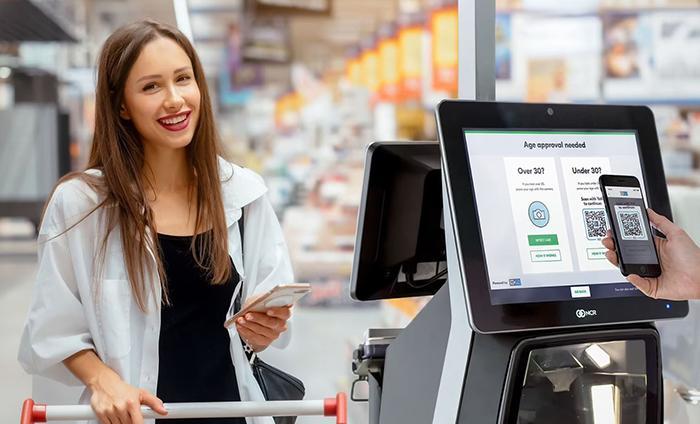
When cashiers are given discretion to judge whether someone “looks” old enough, they make mistakes. Many grocery stores in Buffalo, New York, ID everyone for beer purchases. It doesn’t matter how old you are or how old you look, you have to provide ID. The logic is simple: if you remove the judgment call entirely, you remove the error.
At Walmart, for instance, the policy is to card everyone who looks under 40. The register prompt asks if the customer looks under 40, and if the cashier sees someone they think looks under 40, they will card them. Other major retailers go further with outright universal policies.
Group Purchases: Everyone in the Party May Be Carded
Here is something many people don’t realize. If you’re shopping with friends and one of them appears young, all of you might be asked for ID, even if you’re the one making the purchase.
All persons in a group of two or more must have valid ID or everyone will be refused service (children with parents are exempt). This makes sense when you consider that the buyer might technically be of age but purchasing on behalf of someone underage in the group. Sellers are watching for this pattern, and the law in many states allows (or even encourages) refusal of sale if there’s reasonable suspicion the alcohol will be consumed by a minor.
What Counts as a Valid ID? The Accepted and the Rejected
Not all forms of identification are treated equally. Knowing what to bring, and what not to bother with, can save you a frustrating moment at the register.
Universally Accepted
- State-issued driver’s license (from any U.S. state): the gold standard
- State-issued non-driver ID card: same legal standing as a driver’s license
- U.S. passport or passport card: widely accepted, though some states and businesses are less familiar with them
- U.S. Military ID: accepted at most establishments across the country
- Permanent Resident Card (Green Card): generally accepted for identity and age verification
Government-issued IDs with a photo and date of birth, such as driver’s licenses, state IDs, or passports, are what most establishments require.
Commonly Rejected
| Document | Why It’s Rejected |
|---|---|
| Expired ID | No longer legally valid |
| Work ID or student ID | Not government-issued |
| Birth certificate | No photo |
| Social Security card | No photo |
| Photocopies or phone photos of ID | Lack security features |
| Library cards | Not government-issued |
| Utility bills or bank statements | No photo, no DOB |
| School IDs | Not government-issued |
A person may not combine two unacceptable identifications to create one acceptable identification. You can’t show a birth certificate and a student ID and expect a cashier to accept that combination.
Out-of-State and Foreign IDs
Out-of-state driver’s licenses are generally acceptable across the U.S., though some establishments have stricter policies. For foreign visitors, a valid foreign passport is the safest bet. States like California, New York, and Texas explicitly list passports as valid identification for age verification in liquor stores, bars, and restaurants, and both U.S. passports and foreign passports are typically accepted, provided they are current and unexpired.
One important practical note: some retail locations with barcode-scanning registers require a scannable ID. If your passport doesn’t have the right barcode format recognized by their system, you might be out of luck even with a perfectly valid document.
The Digital ID Question
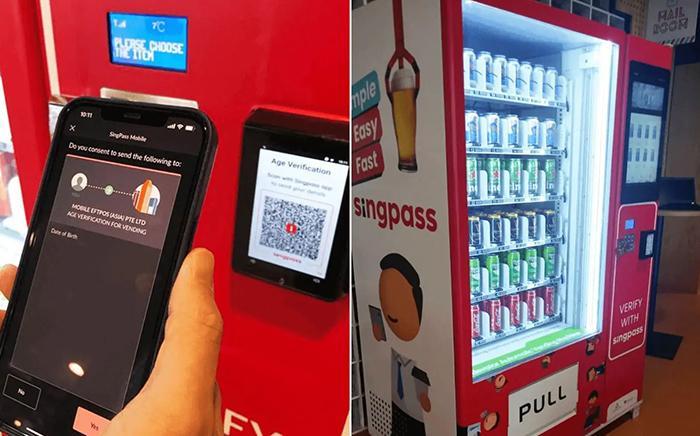
Digital IDs displayed on smartphones are gaining acceptance in some states but are far from universal. If you’re relying on a digital driver’s license on your phone, always have a physical backup. Policies vary not just by state but by individual establishment.
What the Six Components of a Valid ID Actually Are
If you’ve ever wondered what a cashier is actually looking for when they examine your ID, California’s ABC has codified it cleanly. A bona fide (legally acceptable) identification card should contain these six characteristics: issued by a U.S. government agency (federal, state, county, or city), a photo of the person, a physical description of the person, the birthdate of the person, the name of the person, and an expiration date.
This framework is widely used across the country, not just in California. It’s the baseline for what makes an ID real and useful for age verification purposes.
The Fake ID Problem: Why Strict Carding Actually Matters
You might find it slightly ridiculous to be carded at 55. But the fake ID problem in the United States is far more serious than most casual drinkers realize, and it explains much of the aggressive carding behavior you’ll encounter.
According to a 2007 study by the National Library of Medicine, 1 in 3 college sophomores and 1 in 8 high school seniors possess a fake ID. The likelihood of owning a fake ID peaks during a student’s third year of college, typically age 20, at which time 39% of college students admit to owning a fake.
A study by the National Library of Medicine found that 40.1% of underage college students owned or had owned a fake ID. A 2024 report found that nearly half (45%) of U.S. young adults aged 18 to 25 know someone who has successfully used a fake ID to access age-restricted products or venues.
The technology behind fake IDs has become genuinely alarming. AI-generated IDs leverage artificial intelligence to create realistic holograms, watermarks, and even digital data that syncs with scanning systems, making traditional detection methods less effective. These aren’t the flimsy laminated cards of the 1990s. Modern fakes can fool casual visual inspection.
Across one customer base, IDScan identified and flagged more than 1,000,000 fake IDs over 12 months when analyzing data for their fake ID report, indicating the pervasive nature of fraudulent documents.
The behavioral correlation is stark. 56% of youths who reported borrowing or using a fake ID also reported weekly use of alcohol, in comparison to just 14% of those who reported not owning fraudulent identification.
The Penalties: What Happens When a Business Gets It Wrong
If you’ve ever wondered why a 22-year-old server seems so nervous about checking your ID, consider what’s at stake for them personally, and for the business.
Penalties for selling alcohol to a minor vary by state but are uniformly serious:
- Illinois: If you serve or sell a minor alcohol, it is a Class A misdemeanor and can include up to one year in jail and a fine not less than $500. A second offense would involve a fine not less than $2,000. If you serve or sell a minor alcohol and great bodily injury or death occurs, it is a Class 4 felony.
- California: Misdemeanor for a first offense, with escalating penalties for repeat violations and potential license revocation.
- Washington State: Bouncers, bartenders, servers, and cashiers are the first line of defense when it comes to selling alcohol responsibly. They must refuse to sell alcohol if someone is apparently intoxicated or under 21, and employees that serve or supervise the sale of alcohol for on-premises consumption must have a current Mandatory Alcohol Server Training (MAST) Permit.
Beyond criminal penalties, businesses also face civil liability. If an underage person consumes alcohol they obtained from your establishment and then causes harm, the business can be sued. Liquor licenses, which can take years and tens of thousands of dollars to obtain, can be suspended or revoked for a single violation in many states.
The Parker’s Kitchen $15 million verdict is an extreme case, but it illustrates the legal exposure that makes businesses extraordinarily cautious, even when it seems excessive to an adult customer buying a bottle of Pinot Grigio on a Wednesday night.
Why You Might Get Carded Even When You’re Obviously Over 21
This is the question that prompts mild outrage from American drinkers: Why is the 50-year-old with gray hair being asked for her driver’s license?
There are several entirely rational explanations.
Policy compliance protects employees personally. A cashier who follows a “card everyone” rule to the letter can never be accused of making a discriminatory judgment call. If you check everyone, you check no one selectively, and that protects both the business and the individual employee from discrimination claims.
The human eye is unreliable. People routinely misestimate ages by years or even decades. Some minors may look or act young and others may look or act older to confuse you about their true age. The safest policy, from a risk management perspective, is to remove guesswork entirely.
Store policies are often more conservative than state law requires. A business that gets caught serving a minor loses its license. A business that cards too many adults loses nothing. The asymmetry of consequences naturally drives conservative ID policies.
Read More : Banana Milk Tea Recipe Updated 10/2026
Sting operations are real. State alcohol control agencies regularly run compliance checks using people who appear to be of legal age but are not. These operations are how many businesses discover (the hard way) that their staff isn’t as diligent as required.
When Can a Business Legally Refuse You Without an ID?
Yes. A business can refuse to sell you alcohol if you cannot produce an acceptable ID, regardless of how old you appear. Licensees have the right to set any parameters of ID checking as they are not required to sell alcohol to anyone except on their terms.
People do not have a legal right to purchase alcohol. The transaction is a privilege extended by the licensed business, and they can legally withdraw it at any moment, for any non-discriminatory reason, including an inability or unwillingness to show ID.
The only protected characteristic here: businesses cannot refuse service based on race, color, sex, religion, national origin, disability, or other protected classes. Age, however, is a valid basis for requiring identification when it comes to alcohol sales. Persons under the age of 21 are not protected by age discrimination laws when it comes to the sale or service of alcoholic beverages.
Special Circumstances: Private Events, Religious Use, and More
The rules above apply to commercial alcohol sales. There are a handful of circumstances where the framework shifts:
- Religious use: Many states have explicit exemptions for alcohol used in religious ceremonies, such as sacramental wine. These exemptions generally don’t require the same age-verification framework.
- Private property: Some states may relax ID rules for private property events, but providing alcohol to minors remains illegal. A private party on your own property is not a commercial transaction, but if you knowingly provide alcohol to someone under 21, you can still face legal consequences.
- Medical purposes: Certain states allow alcohol for medical use under prescription, which operates under a completely different regulatory framework.
- Parents providing alcohol to their own minor children: A handful of states permit parents or legal guardians to provide alcohol to their own underage children in specific circumstances. This is a narrow, controversial exception, and the commercial seller is never covered by it.
Traveling Across States: What to Expect
If you’re road-tripping from, say, California to Utah, you’ll notice a dramatic shift the moment you cross the border. What’s treated as an optional store policy in one state is a strict legal requirement in another.
Some practical tips for travelers:
- Always carry a government-issued photo ID with your date of birth visible. Your passport is the most universally recognized document.
- Don’t rely on a digital ID unless you’ve confirmed the state and specific establishment accept them.
- In Utah specifically, as of January 1, 2026, there are no exceptions for age or appearance. Bring your ID to every restaurant, bar, grocery store, and convenience store.
- Foreign visitors should carry their passport everywhere. A foreign driver’s license alone is often not accepted. In Utah, restaurant owners have raised concerns that the universal ID requirement could be “unintentionally hostile” to tourists, particularly those from other countries who may have left their passport at their hotel.
The Technology of ID Verification: Scanners, Barcodes, and AI
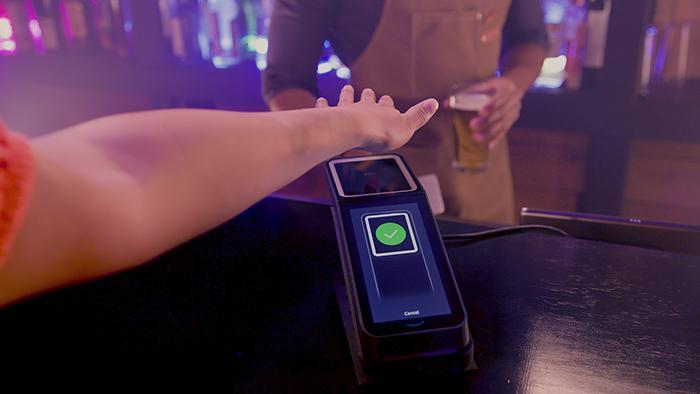
Modern ID checking has moved well beyond squinting at a birthdate. Many establishments now use electronic ID scanners that read the barcode or magnetic stripe on a driver’s license and automatically calculate whether the person is of legal age. This technology has several implications for regular drinkers.
Advantages for consumers: Faster transactions, less room for human error, and a documented record that can protect businesses from false accusations.
Potential concerns: When a cashier scans the barcode on your driver’s license, they can access more than just your birthdate. Name, address, and other encoded data may be captured. Utah law restricts how long businesses can store scanned ID data. Information obtained through electronic verification may only be retained for seven days after the date it was originally obtained. Most states, however, have no such restriction, and the data collection practices of retailers vary widely.
The affirmative defense advantage: In states like Utah, businesses that use compliant electronic ID verification systems have legal protection if charged with selling to a minor or prohibited person, provided they scanned the ID at the time of sale. This creates a strong financial incentive for businesses to adopt scanning technology.
The Broader Trend: Are More States Moving Toward Universal ID Checks?
Utah’s 2026 law is the most dramatic recent example of expanding ID requirements, but it’s worth noting the broader trajectory. Several factors suggest more states may move in this direction:
Underage drinking, while declining, remains a significant public health issue. According to the 2024 National Survey on Drug Use and Health, 10.4 million people ages 12 to 20 (27% in this age group) reported that they drank in the past year. About 5.1 million Americans between the ages of 12 and 20 report current alcohol consumption, representing 13% of this age group.
The fake ID arms race is accelerating. As counterfeit IDs become more sophisticated, businesses face increasing pressure to use technology-assisted verification rather than relying on the human eye. This naturally pushes toward universal scanning.
DUI prevention is creating new ID use cases. Utah’s interdicted-person system, where extreme DUI offenders receive IDs marked with a “No Alcohol Sale” stripe, is a novel approach that could be adopted by other states. This system only works if every purchase requires an ID check, which explains why universal verification became necessary.
The political conversation is ongoing. As Republicans pushed for a national photo voter ID law, they made the familiar argument: if people need an ID for everyday purchases like beer, why not for voting? The political attention this draws to alcohol ID requirements keeps the issue in the public conversation and may prompt additional legislative action.
Practical Tips: Navigating Alcohol ID Requirements in America
If you drink regularly, here is what you actually need to know to avoid unnecessary friction:
Carry your ID, always. Even if you’re 60 years old and haven’t been carded in a decade, certain states and certain store chains will ask. Having your ID on you costs you nothing.
Know your state’s specific rules. Tennessee and Utah have universal requirements. California and New York are more flexible but still highly variable by establishment. Check your state’s Alcoholic Beverage Control website if you’re unsure.
Don’t take carding personally. A cashier asking for your ID at 45 is following policy, protecting their job, and sometimes following a genuine legal requirement. Getting frustrated with the employee accomplishes nothing and can result in your purchase being refused entirely.
If you’re in a group, assume everyone will be carded. Particularly at bars and breweries, if anyone in your group appears young, be prepared for everyone to show their ID before service begins.
Bring a physical ID, not just a digital one. Some states accept digital licenses on your phone, but acceptance is inconsistent. A physical government-issued ID is always safer.
Expired IDs are a no-go. IDs must be current and unexpired. An ID that expired last month is legally no good, even if the photo, birthdate, and every other detail are perfectly accurate.
Foreign visitors: passport is king. While some states accept foreign driver’s licenses, a valid foreign passport is the most universally recognized document for alcohol purchases in the U.S.
Conclusion
There’s something quietly fascinating about the fact that in 2026, a 75-year-old in Utah has to show her driver’s license to buy a glass of Merlot at dinner, while a 30-year-old in Oklahoma might not even be asked. The American approach to alcohol ID verification reflects something deeper than just liquor law: it’s a real-time negotiation between personal freedom, public safety, business liability, and the limits of human judgment.
The next time a cashier asks for your ID when you’ve clearly been legal to drink for two decades, consider that they’re not questioning your age. They’re managing risk in a legal environment where a single mistake can cost them their job, cost their employer hundreds of thousands of dollars, and, in the worst cases, contribute to a tragedy on the road. The system is imperfect, inconsistent, and occasionally maddening. But it is, for the most part, built with genuine purpose.
And honestly? Being carded at 50 is still kind of a compliment.
Sources: https://chesbrewco.com
Category: Drink