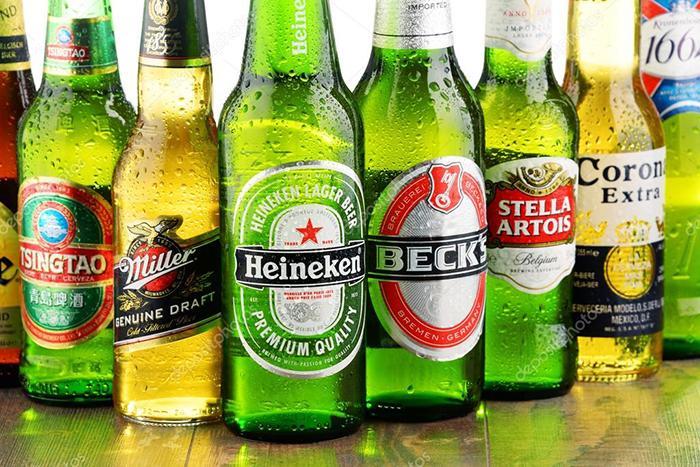
Walk into any bar, liquor store, or stadium concession stand in America, and the green bottle catches your eye before anything else. It glows under fluorescent lighting, it stands apart from the sea of brown and aluminum, and it carries a kind of effortless, worldly cool that brown bottles simply cannot replicate. Whether you are cracking open a Heineken at a backyard cookout or reaching for a Rolling Rock at your local dive bar, the green glass has always signaled something specific: a beer with a story, a heritage, and more often than not, a very devoted fanbase.
But here is what most guys never think about: the color of that bottle is not just a design choice. It is a decision rooted in war, chemistry, marketing psychology, and over a century of global brewing tradition. The green bottle is one of the most studied and debated pieces of packaging in the entire beverage industry, and once you understand why these brands chose it and what it does to the beer inside, you will never look at a six-pack the same way again.
This guide breaks down everything worth knowing: the history of green glass, the science behind it, and a detailed look at every major green bottle beer brand you should know, from the undisputed European giants to the underrated American classics.
Why Beer Comes in Green Bottles in the First Place
Before diving into the brands, you need the backstory, because it fundamentally changes how you appreciate these beers.
The WWII Shortage That Changed Everything
For most of brewing history, brown glass was the gold standard for beer packaging. Brown glass blocks ultraviolet light more effectively than any other color, and UV exposure is the number-one enemy of a well-brewed beer. Then World War II happened.
During and after the war, brown glass became scarce across Europe. Supply chains were shattered, raw materials were rationed, and European breweries turned to whatever glass was available. Green glass was more readily manufactured during this period, and so breweries across Germany, Belgium, the Netherlands, and beyond began filling green bottles with their lagers. The shortage eventually ended, but the green bottle did not disappear. Instead, something unexpected happened: it became a status symbol.
As imported beers grew popular in the United States, many green bottle beers arrived light-struck due to poor storage while shipping from overseas. Without a strong domestic reference point, these off-flavors became recognized as part of these highly sought-after beers’ character. In other words, American drinkers tasted a slightly skunky European import and thought, that’s what a premium imported beer tastes like. The green bottle became inseparable from the idea of quality, sophistication, and European craftsmanship, regardless of what chemistry was actually happening inside.
The Science of Light-Struck Beer (and Why It Actually Matters)
Here is the part that every beer geek brings up and every casual drinker ignores. Only recently (in 2001) did chemists at the University of North Carolina and Ghent University in Belgium figure out exactly how light causes skunkiness. When exposed to light, the alpha acids in hops break down into free radicals that then react with sulfur-containing proteins to make a compound called 3-methyl-2-butene-1-thiol, which is virtually identical to the principal constituent of skunk juice.
That compound is what gives certain imported lagers their signature funky edge. Brown glass blocks the majority of UV rays. Green glass offers moderate UV protection and is associated with premium branding, but it falls short compared to amber bottles in preserving beer flavor. Clear glass is essentially no protection at all.
So why do the biggest green bottle brands keep using green glass? Because for many of them, the slight skunkiness is part of the brand experience, and because modern packaging solutions have improved considerably. Recent developments in UV protection coatings now enable breweries to choose green bottles for both aesthetic and practical purposes while still preserving flavor profiles.
The bottom line: if you are drinking a green bottle beer fresh and cold, stored away from direct light, you are probably getting the beer at its best. If it has been sitting under store fluorescent lights for weeks, you are getting a different experience.
The European Heavyweights
These are the brands that built the green bottle’s global reputation. They are measured in billions of dollars of sales, serve hundreds of millions of drinkers worldwide, and have been fixtures at American bars, restaurants, and sporting events for generations.
Heineken: The King of Green
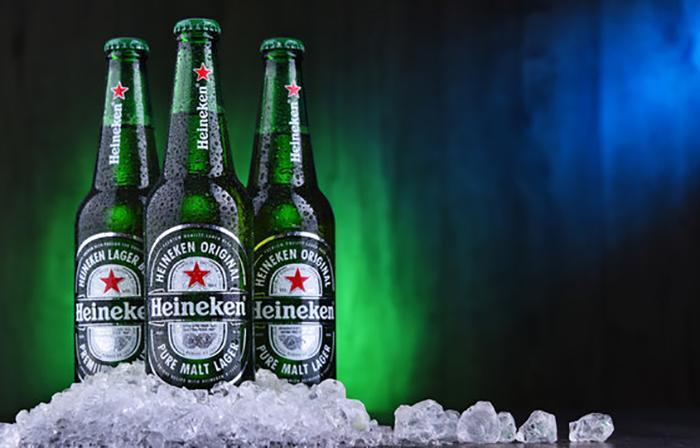
No brand in the world is more synonymous with the green bottle than Heineken. Founded in Amsterdam in 1864 by Gerard Adriaan Heineken, the company spent over 150 years turning a single Dutch lager into one of the planet’s most recognizable consumer brands.
Heineken generated approximately $829 million in sales in the United States in 2022, making it one of the leading brands on the country’s imported beer rankings. That number places it in a category of its own among European imports.
Heineken accounted for 12.9 percent of global beer market share in 2023, making it the second-largest brewing company in the world by volume. The company brought in approximately $30 billion in beer sales globally that year.
The beer itself is a pale lager brewed at 5% ABV with a clean, crisp malt base and a recognizable bitter, slightly skunky finish that its drinkers either love or find comfortably familiar. It is brewed using Heineken’s proprietary A-yeast strain, which has been in continuous use since the 19th century and contributes its distinctive fruity character.
Heineken controls roughly 50% of the beer market in the Netherlands. Globally, it is available in over 190 countries, brewed in more than 85 breweries across the world, making it one of the most physically distributed consumer products in human history.
What to pair it with: Heineken’s crisp bitterness works well with salty snacks, pizza, mild cheeses, grilled chicken, and pub-style burgers. Its clean finish does not compete with food; it resets the palate between bites.
ABV: 5.0% | Style: Dutch Pale Lager | Bottle: Signature dark green, iconic red star
Stella Artois: The Belgian Prestige Play
Stella Artois is technically a Belgian lager, though its reputation in America has been shaped heavily by its positioning as a premium imported choice for upscale occasions. Stella Artois, a Belgian lager, boasts a rich history dating back to 1926. The name “Stella,” which means “star” in Latin, was chosen to pay homage to the holiday season when it was first brewed.
The brand belongs to Anheuser-Busch InBev, the largest brewing conglomerate on earth. AB InBev controlled over a quarter of global beer volume sales in 2023, and its portfolio includes not only Stella Artois but also Beck’s, Corona, Budweiser, Leffe, and Hoegaarden.
As of a recent reporting period, Stella Artois earned approximately $113 million in chain retail sales in the United States, placing it well behind Heineken’s $386 million but significantly ahead of Peroni’s $13 million. It is now brewed domestically in the U.S. for the American market, though Anheuser-Busch maintains it follows the original Belgian recipe.
The flavor profile is notably dry and slightly more bitter than Heineken, with a clean malt backbone, a faint honey note, and a crisp, fast finish. It is sessionable at 5.0% ABV and benefits enormously from its signature chalice glass, which concentrates the aroma and maintains head retention.
What to pair it with: Mussels, steak frites, creamy pasta dishes, sushi, mild seafood. Stella’s dry finish is genuinely excellent with rich, buttery foods.
ABV: 5.0% | Style: Belgian Pale Lager | Bottle: Green with gold and white label
Beck’s: The Original Green Bottle Story
Read More : Where To Buy 40 Oz Beer Updated 10/2026
If any brand owns the origin story of green bottle beer, it is Beck’s. When Beck’s beer started, there wasn’t enough brown glass to make bottles. So the founder, Heinrich Beck, used green glass instead. This made Beck’s one of the first beers in the world to have green bottles.
Founded in 1873 in Bremen, Germany, Beck’s built its reputation on a strict adherence to the Reinheitsgebot, the German beer purity law dating to 1516, which permits only water, hops, barley, and yeast as ingredients. For over a century, Beck’s was the flagship of German lager exports worldwide.
Beck’s is a classic German beer with a long history of over 140 years. Known for its distinct green bottle and iconic logo, Beck’s has become synonymous with quality and craftsmanship. The brewery offers a range of beers, from the classic Beck’s Lager to the more robust Beck’s Pilsner.
Beck’s was acquired by AB InBev in 2002 and has since been brewed in the United States for the American market, a decision that generated considerable controversy among longtime fans. The company has maintained that the recipe is unchanged, but the shift away from German production altered its import cachet with dedicated drinkers.
At 5.0% ABV, Beck’s is a clean, medium-bodied pilsner-style lager with a notable hop character: more assertively bitter than Heineken, drier than Stella, and with a very light malt sweetness. It finishes crisply and is arguably the most “German tasting” of the major green bottle imports.
What to pair it with: Bratwurst, pretzels, grilled pork, schnitzel, aged cheddar. Beck’s hoppier profile stands up well to fatty, savory foods.
ABV: 5.0% | Style: German Pilsner | Bottle: Dark green with silver/gold key logo
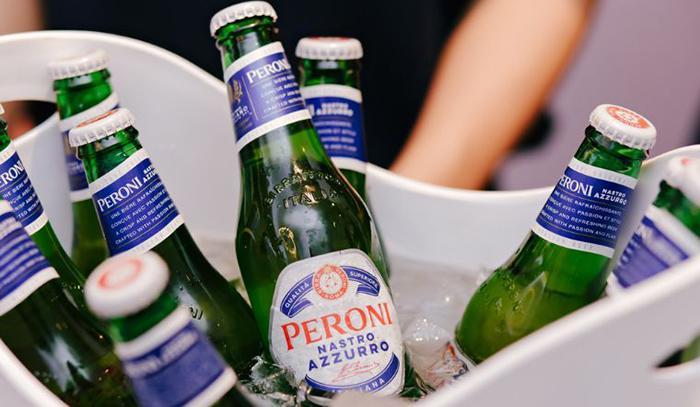
Peroni Nastro Azzurro: The Italian Job
Peroni occupies a unique space in the green bottle universe: it is the Italian entry in a market dominated by German and Dutch brands, and it has been leaning harder into that distinction than any of its competitors.
Peroni is a classic Italian beer brewed since 1846, making it one of the oldest beer brands in Italy. Available in over 70 countries worldwide, its popularity is attributed to its high quality and consistent taste, a testament to the brand’s rich history and Italian brewing heritage.
In terms of flavor, Peroni Nastro Azzurro is perhaps the most refined of the major green bottle imports. It is brewed with Nostrano dell’Isola maize, a heritage corn variety grown in northern Italy, which gives it a slightly lighter, more delicate body than its competitors. The beer is known for its pale golden, refreshing taste, citrus and aromatic notes, and a slightly bitter finish that is well-balanced by its crisp and clean character.
Peroni’s marketing campaign, “Live Every Moment,” leans into an aspirational vision of the Amalfi Coast, positioning the brand around sophistication and luxury Italian living. It is priced competitively with Heineken and Stella Artois, typically around $10.99 for a six-pack.
If you want a green bottle lager that feels a little lighter and more food-forward than the heavier Dutch and German options, Peroni is the move.
What to pair it with: Pizza Margherita, pasta with light sauces, antipasto boards, grilled fish, arancini. Peroni’s Italian roots make it a natural pairing for Italian food.
ABV: 5.1% | Style: Italian Pale Lager | Bottle: Clear glass with blue label (Nastro Azzurro); also available in green
Pilsner Urquell: The Original Pilsner
If you want to trace the entire lineage of pale lager, of Heineken and Beck’s and Stella and every mass-market beer that followed, you end up at one place: Pilsner Urquell.
Pilsner Urquell, a Czech beer brand established in 1842, is renowned as the original Pilsner beer. This pale lager is famous for its distinctive green bottle, which perfectly showcases the golden color of the brew. Pilsner Urquell offers a delightful combination of crispness and malty sweetness, making it a favorite among beer connoisseurs.
The name literally means “Pilsner from the original source” in German. Brewed in Plzeň (Pilsen), Czech Republic, this is the beer that invented the pale lager style in 1842. Every commercial lager in the world traces its lineage to this single brewery.
At 4.4% ABV, Pilsner Urquell is softer, slightly fuller-bodied, and more complex than most of its green-bottle competitors. It has a rich malt sweetness, a floral and spicy Saaz hop character, and a clean, slightly bitter finish. It is brewed using open fermentation and triple decoction mashing, traditional techniques that most modern breweries abandoned decades ago for efficiency.
If you can only upgrade one green bottle beer choice this year, make it Pilsner Urquell.
What to pair it with: Traditional Czech dishes like svíčková, roast pork, bread dumplings, but also perfectly with burgers and light charcuterie.
ABV: 4.4% | Style: Czech Pilsner | Bottle: Green with gold label
Carlsberg: The Danish Contender
Carlsberg is one of the world’s largest brewing companies and a fixture in international markets, though it maintains a somewhat lower profile in the United States than Heineken or Stella. Founded in Copenhagen in 1847 by J.C. Jacobsen, Carlsberg has a scientific heritage that most beer companies cannot match: the brewery’s research laboratory invented the pH scale and isolated the pure yeast strain, Saccharomyces carlsbergensis, that became the foundation of modern lager brewing worldwide.
Popular brands like Heineken, Stella Artois, and Carlsberg are known for their iconic green bottles. The flagship Carlsberg Lager is a 5.0% ABV pale lager with a clean, slightly malty profile and moderate hop bitterness. It is notably less assertive than Beck’s but more structured than Heineken, sitting comfortably in the middle of the flavor spectrum.
ABV: 5.0% | Style: Danish Pale Lager | Bottle: Dark green
Grolsch: The Swing-Top Maverick
Grolsch earns a special mention for one reason: its iconic swing-top bottle. While every other brand on this list uses a standard crown cap, Grolsch keeps its beer sealed with a ceramic and rubber swing-top stopper that has been part of the brand since 1897. It is an engineering curiosity and a conversation starter in equal measure.
Founded in 1615 in Groenlo, Netherlands, Grolsch is one of the oldest continuously operating breweries in Europe. What sets Grolsch apart from others is its unique swing-top bottle design. This iconic feature has become synonymous with the brand and is instantly recognizable around the globe. Not only does it look stylish, but it also keeps your beer fresher for longer.
The beer is a clean, crisp Dutch lager at 5.0% ABV, slightly lighter-bodied than Heineken, with a mild hop character and an easy-drinking profile that benefits from the trademark bottle’s excellent seal.
ABV: 5.0% | Style: Dutch Pilsner | Bottle: Green with ceramic swing-top
Moosehead: The Canadian Wildcard
You may not think of Moosehead as an import, but it qualifies and it deserves serious recognition from American beer drinkers who overlook it.
Moosehead Canadian Lager is a product of New Brunswick. Like Yuengling in America, it is Canada’s oldest operating brewery. Founded in 1867, Moosehead has been family-owned and operated for over 150 years, an unusual distinction in an era of mega-mergers and private equity buyouts.
Read More : What Is Beer Salt Updated 10/2026
The beer is a clean, well-made Canadian lager with a slightly fuller body than most of its green-bottle competitors. It is crisper and less sweet than Molson or Labatt, with a clean hop finish. At 5.0% ABV, it is straightforward, honest, and refreshingly unpretentious.
If you prefer your beer without the European premium price tag but still want the green bottle experience, Moosehead delivers.
ABV: 5.0% | Style: Canadian Lager | Bottle: Green with moose logo
The American Green Bottles
European brands do not have a monopoly on green glass. Two American beers have built their entire identities around the green bottle, and both carry cultural weight that rivals any import.
Rolling Rock: Pennsylvania’s Most Mysterious Beer
Rolling Rock is the quintessential American green bottle beer, and it comes wrapped in one of the great unsolved mysteries in beer history.
Rolling Rock Extra Pale Beer first rolled off the production line in 1939 at the Latrobe Brewing Company in Latrobe, Pennsylvania, a small city 34 miles southeast of Pittsburgh. The brewery chose a distinctive painted green bottle that would become one of the most recognizable beer packages in American history.
That number, “33,” printed on every bottle, has never been officially explained. Theories include: the 33 words in the original bottle pledge, the year Prohibition ended (1933), the number of steps in the brewery, or a brewer’s lucky number. The mystery was deliberate, and it worked. Rolling Rock became one of the most talked-about beers in America not because of any advertising campaign, but because every drinker had a different theory about “33.”
Rolling Rock has appeared in major films including The Deer Hunter (1978), At Close Range (1986), and on HBO’s The Sopranos, as well as in Mare of Easttown, where it serves as the beer of choice for Kate Winslet’s character in suburban Philadelphia. This kind of cultural presence cannot be bought.
Rolling Rock Extra Pale Beer contains 4.4% ABV. Each 12-ounce serving contains approximately 130 calories, 9.8 grams of carbohydrates, and 1.3 grams of protein. The flavor is a clean, dry, slightly crisp American pale lager with a subtle bite that distinguishes it from the blander mass-market alternatives.
In 2006, Anheuser-Busch purchased the Rolling Rock brand from InBev for $82 million and moved brewing operations from Latrobe to Newark, New Jersey. For longtime fans, this is the brand’s original sin, the moment Rolling Rock stopped being a Pennsylvania regional beer and became just another product in a corporate portfolio. Many long-time drinkers insist the taste changed. AB InBev denies altering the recipe.
What to pair it with: Seafood (crawfish, shrimp, fried fish), pizza, burgers, hot dogs, and barbecue. Rolling Rock’s dry finish cuts through grease and works across a wide range of casual American foods.
ABV: 4.4% | Style: American Pale Lager | Bottle: Painted green (no paper label)
Miller High Life: The Champagne of Beers
Miller High Life is one of the oldest continuously produced American beers and a bona fide cultural institution. In 1903, Frederick Miller created Miller High Life because he believed that the good life, the High Life, should be accessible to everyone, not just the upper crust. To this day, Miller High Life continues to be faithfully brewed as a golden pilsner, utilizing light-stable Galena hops from the Pacific Northwest and a select combination of malted barley.
The tagline “Champagne of Beers” refers partly to the beer’s effervescence and partly to its original packaging: it came in a clear bottle with a distinct sparkling wine silhouette, designed to evoke luxury for the everyday working man. The current green bottle version has been part of the brand for decades.
Miller High Life is brewed with a proprietary blend of malted barley, Galena hops from the Pacific Northwest, and Miller yeast, coming in at 4.6% ABV. It delivers a slight sweetness balanced by bitterness and its signature effervescence.
At under $8 for a six-pack in most markets, Miller High Life represents exceptional value. It is cleaner and more consistent than Rolling Rock, with a lighter body and a sweeter malt profile. If Rolling Rock is the working man’s craft beer, Miller High Life is the working man’s session beer.
What to pair it with: Wings, pizza, chips and dip, hot dogs, and anything off the grill. High Life is built for casual drinking, and it does that job better than almost anything at its price point.
ABV: 4.6% | Style: American Adjunct Lager | Bottle: Green
Side-by-Side: How the Major Green Bottle Brands Stack Up
| Brand | Origin | Style | ABV | Flavor Profile | Avg. U.S. Price (6-pack) | Best For |
|---|---|---|---|---|---|---|
| Heineken | Netherlands | Dutch Pale Lager | 5.0% | Crisp, slightly skunky, bitter | ~$10.99 | Bar nights, sports, grilling |
| Stella Artois | Belgium | Belgian Pale Lager | 5.0% | Dry, clean, faint honey | ~$10.99 | Upscale bars, seafood dinners |
| Beck’s | Germany | German Pilsner | 5.0% | Hoppy, assertively bitter, dry | ~$9.99 | German food, heavy pub fare |
| Pilsner Urquell | Czech Republic | Czech Pilsner | 4.4% | Malty-sweet, floral, complex | ~$11.99 | Beer enthusiasts, charcuterie |
| Peroni Nastro Azzurro | Italy | Italian Pale Lager | 5.1% | Light, citrusy, delicate | ~$10.99 | Italian food, summer sessions |
| Carlsberg | Denmark | Danish Pale Lager | 5.0% | Clean, malt-forward, mild | ~$9.99 | Everyday drinking |
| Grolsch | Netherlands | Dutch Pilsner | 5.0% | Light, crisp, refreshing | ~$11.99 | Casual gatherings |
| Moosehead | Canada | Canadian Lager | 5.0% | Clean, slightly fuller body | ~$9.99 | Outdoor drinking, tailgates |
| Rolling Rock | USA (PA) | American Pale Lager | 4.4% | Dry, crisp, subtle bite | ~$7.99 | Dive bars, cookouts |
| Miller High Life | USA | American Adjunct Lager | 4.6% | Sweet, effervescent, light | ~$7.49 | Everyday sessions, wings |
Green Bottle Beer vs. Brown Bottle Beer: Does the Color Actually Matter to You?
Here is an honest answer: it depends on how you drink it.
If you are buying a six-pack and drinking it that day, stored in a cooler or fridge, away from direct light, the green bottle does not meaningfully harm your drinking experience. The beer you get is the beer the brewer intended.
If the beer has been sitting in a window display, under store lights, or in a warm stockroom for weeks, the green bottle accelerates light-strike reactions and you may notice that distinctive skunky edge. For brands like Heineken, that edge is intentional and beloved. For others, it is a quality control issue.
In 2023, the U.S. beer industry sold approximately $135 billion in beer and malt-based beverages to consumers. Packaged beer sold in aluminum cans and glass bottles accounted for 91% of all beer sold, with aluminum cans capturing 60% of total volume while glass bottles held the remainder.
The can is actually the gold standard for light protection. But the green bottle is the gold standard for style, tradition, and the ritual of drinking a cold one straight from the glass. For most guys, that experience is worth the tradeoff.
How to Get the Most Out of Any Green Bottle Beer
A few practical rules from people who take beer seriously:
Store it cold and dark. Heat and light are the two enemies. A beer refrigerator or a temperature-controlled space is ideal. Avoid countertop storage or windowsill decoration for beers you actually plan to drink.
Check the freshness date. Nearly every commercial beer brand prints a “best by” or “born on” date. Green bottle imports are especially sensitive to age; buy the freshest stock you can find and drink within a few weeks of purchase.
Drink from the right glass. Heineken benefits from a tall Pilsner glass. Stella Artois was literally designed to be served in a chalice. Pilsner Urquell shines in a traditional Czech dimpled mug. Rolling Rock and Miller High Life? They were made for the bottle, and no one should tell you otherwise.
Keep it cold. All of these beers are at their best between 38 and 45 degrees Fahrenheit. At room temperature, the off-flavors become more pronounced and the carbonation drops. Cold temp tightens everything up.
The Cultural Weight of the Green Bottle
Beyond chemistry and brand history, the green bottle carries a kind of cultural shorthand that is worth acknowledging. When you see a green bottle on a bar top in a movie, it signals something: the character is worldly, unpretentious, or simply at ease. Rolling Rock means you are in a Pennsylvania dive or a New Jersey neighborhood bar. Heineken means you are somewhere international, somewhere with money, or somewhere with a very long bar list.
In the early 2000s, choosing brands like Beck’s, Löwenbräu, and above all Heineken “bespoke sophistication, worldliness, and appreciation for the finer things,” signaling to other drinkers that you had taste and perspective beyond the domestic mainstream. That halo has faded somewhat with premiumization and the craft beer boom, but it has never fully disappeared.
The green bottle endures because it stands for something beyond the liquid inside it. It stands for history, for a certain kind of craftsmanship that predates aluminum and focus groups, and for the simple pleasure of picking up something with a story behind it.
Whatever brand you reach for, you are holding over 150 years of brewing tradition in your hand. That is worth appreciating, one cold sip at a time.
Sources: https://chesbrewco.com
Category: Beer