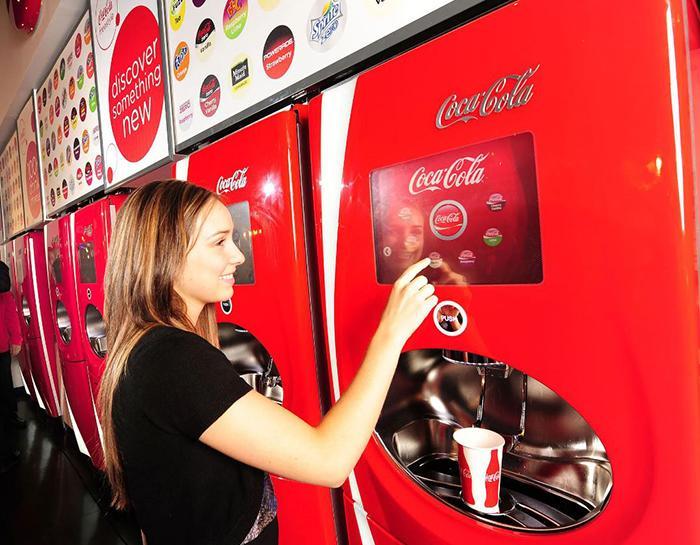
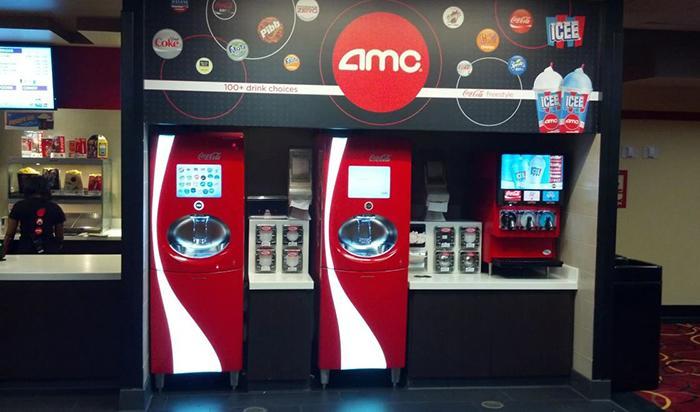
If you have ever walked into a Five Guys, Wendy’s, or AMC Theater and found yourself completely hypnotized by a glowing touchscreen soda fountain offering hundreds of flavor combinations, you have already met the Coke Freestyle machine. You picked Cherry Vanilla Coke Zero. Your friend went raspberry Sprite. Maybe you even mixed a little peach Fanta into something you will never be able to recreate exactly, but somehow it tasted perfect.
For bar owners, restaurant managers, craft cocktail enthusiasts, and even curious homeowners, the question eventually arrives: how much is a Coke Freestyle machine, exactly? The answer is layered, fascinating, and not always straightforward, which is precisely why this guide exists.
You Are Watching: How Much Is A Coke Freestyle Machine Updated 10/2026
Whether you love cold beer after work, a well-made gin and tonic on a Friday night, or a glass of bold Cabernet with dinner, there is a very good chance your favorite bar or restaurant has thought about one of these machines. Understanding the real cost, from the upfront price tag to the monthly operating expenses, is essential before writing any check or signing any lease agreement.
What Exactly Is a Coke Freestyle Machine?
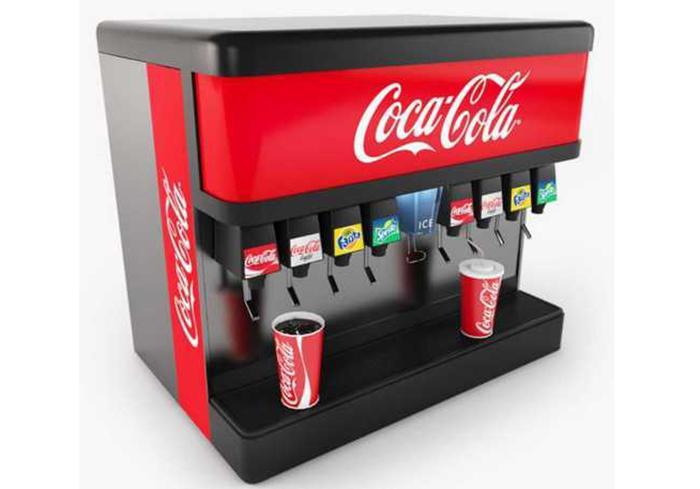
The Coca-Cola Freestyle is not just a soda fountain. It is a touchscreen beverage dispensing system built around micro-dosing technology that gives customers access to over 165 different drink products from a single unit. Instead of pulling a lever on one of six preset flavors, users scroll a digital menu, choose a base drink, pick a flavor shot, and pour something entirely their own.
The machine was first launched in 2009 after extensive testing in Utah, Southern California, and Georgia. By June 2010, Coca-Cola had already expanded it to 500 additional U.S. locations, and it has since spread to chain restaurants, multiplex cinemas, university cafeterias, resorts, and even Royal Caribbean cruise ships. Today you will find Freestyle dispensers at major chains including McDonald’s, Burger King, Chili’s, Cracker Barrel, Raising Cane’s, Captain D’s, Six Flags, and AMC Theatres, among dozens of others.
What makes it so different from a traditional fountain machine? Two words: PurePour technology. Rather than using the conventional 5-gallon bag-in-box syrup systems, Freestyle machines use small 46-ounce concentrated ingredient cartridges equipped with RFID chips. The machine reads each cartridge automatically, blends the precise concentrate with water and sweetener at the point of dispensing, and delivers a perfectly calibrated drink every single time. The RFID system also monitors supply levels and can communicate resupply needs remotely, which is a major operational advantage for busy venues.
The cabinet was designed by the legendary Italian automotive design firm Pininfarina, the same studio behind Ferrari and Alfa Romeo bodies. And the dispensing technology itself was created by Dean Kamen, the inventor of the Segway, as part of a deal with Coca-Cola to help distribute his Slingshot water purification system. In other words, this is not a vending machine. It is precision engineering wrapped in consumer-facing sleekness.
The Origin of the Price Mystery
One of the first things you discover when researching Coke Freestyle machine costs is that Coca-Cola does not publish official retail prices. The company’s commercial website, cokesolutions.com, describes the equipment program in detail but deliberately leaves pricing opaque, directing potential buyers to contact a local Coca-Cola distributor directly. This is intentional: the pricing model is structured around purchasing volume, location type, exclusivity agreements, and contract length, meaning two businesses in the same city could end up paying very different amounts for essentially the same machine.
This opacity frustrates many business owners, especially those comparing options during initial planning. The good news is that enough real-world data has surfaced from restaurant owners, commercial equipment dealers, and pricing analysts to give a reliable picture of what you can actually expect to pay.
How Much Is a Coke Freestyle Machine to Buy Outright?
For businesses that want to own their equipment and avoid long-term lease obligations, outright purchase is an option, though it comes with a meaningful price tag.
According to multiple pricing sources compiled as recently as early 2026, a new Coke Freestyle machine costs approximately $15,000 to $25,000 for a standard commercial unit, with the most commonly quoted single-source figure sitting around $21,000 delivered. This figure covers the machine itself but does not include water line hookup, electrical work, or any cabinetry integration.
At the extreme high end, fully automated industrial-grade dispensing systems designed for large-venue bottling-line operations can reach $56,000 to $60,000, according to commercial equipment marketplace Accio. These are not typical restaurant installs; they serve stadiums, theme parks, and large-scale entertainment complexes with enormous daily pour volumes.
For context on the lower end of the market, refurbished commercial Coke-branded dispensers (not true Freestyle machines, but single-brand cold drink units) from reputable U.S. dealers sell for around $3,195 per unit as of 2025, illustrating how wide the spectrum is once you move away from the Freestyle’s proprietary technology.
It is critical to understand that purchasing a Freestyle machine outright also means taking full responsibility for service, repairs, and software updates. When something breaks, the repair bill lands entirely in your lap unless you have negotiated a service contract.
Leasing a Coke Freestyle Machine: The More Common Route
For the overwhelming majority of restaurants, bars, and entertainment venues, leasing is the standard path to getting a Freestyle machine installed. Coca-Cola and its regional distributors have structured the equipment program around lease agreements because it gives the company ongoing control over supply chains, branding, and data from every pour.
Lease pricing typically runs between $300 and $500 per month, depending on your location, traffic volume, contract length, and the model you select. Some larger accounts with high beverage purchasing volumes have reported paying as little as zero dollars per month for the machine itself, in exchange for committing to a Coca-Cola exclusivity agreement and minimum syrup purchase volumes.
Common lease structures include:
- A low monthly fee (often $320 per month for mid-volume accounts) with consumables billed separately
- A reduced or zero monthly fee tied to exclusivity and minimum syrup purchase commitments
- Short-term event rentals, which are priced significantly higher, generally ranging from $100 to $500 or more per day, including delivery and setup
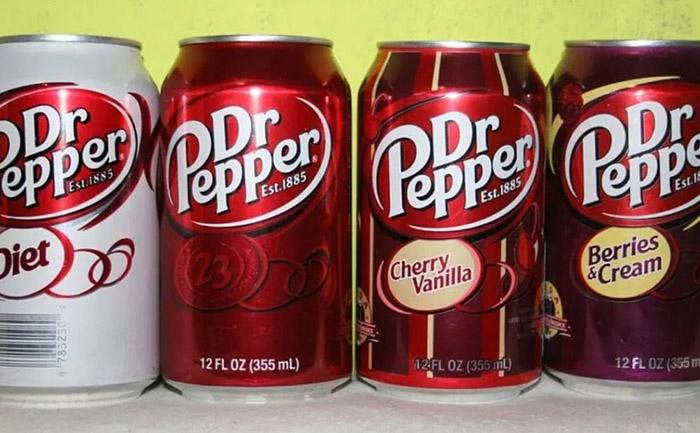
Contract lengths typically run between one and five years. Read the fine print carefully: most Freestyle lease agreements require Coca-Cola product exclusivity across the entire outlet. That means no Pepsi, no Dr Pepper (unless you have specific exceptions for things like a bar gun or drive-thru), and no competing fountain brands anywhere in the venue. For a bar that wants to keep Pepsi products on draft alongside a Freestyle machine, this could be a deal-breaker.
The Full Cost Breakdown: What You Are Really Paying
Read More : Is Bang Or Celsius Better For You Updated 10/2026
The machine price, whether purchased or leased, is only the beginning. The true cost of operating a Coke Freestyle machine involves several layers of ongoing expenses that can add up faster than most first-time buyers anticipate.
Installation and Setup
Getting the machine operational requires more than rolling it through the back door. Installation typically costs between $1,000 and $2,000, covering:
- Water line connection (ambient or cold, unsoftened water required, with pressure ideally between 60 and 120 psi)
- Water filtration system installation (required by Coca-Cola, must meet NSF Standard 42 if provided by the operator)
- Electrical circuit setup (dedicated circuit with sufficient amperage)
- Any cabinetry, counter modifications, or custom integration work
- Initial calibration and operator training
Rural or remote locations may face higher delivery and setup charges. Larger venues with custom cabinetry or extensive plumbing modifications can see installation costs climb significantly above the typical estimate.
Syrup Cartridges
This is where the Freestyle system’s hidden cost becomes very real. Unlike traditional bag-in-box fountain syrups, Freestyle machines use proprietary ingredient cartridges priced and supplied exclusively through Coca-Cola’s distribution network. These cartridges are estimated to cost 15 to 25 percent more per ounce than conventional fountain syrup.
Syrup costs run approximately $0.05 to $0.10 per ounce dispensed, with monthly totals depending entirely on pour volume. High-traffic venues may need cartridge refills daily or every few days. A lower-traffic location might go a week or more between restocks.
Maintenance Contracts and Cleaning
Regular maintenance is not optional; it is contractually expected. Routine cleaning, calibration, filter replacement, and sanitization must happen consistently to maintain drink quality and comply with health regulations. Maintenance contract costs typically run $50 to $200 per month. If maintenance is bundled into a lease, it may be included in the monthly fee, but confirm this in writing before signing.
CO2 and Utilities
The Freestyle machine requires a steady CO2 supply for carbonation. CO2 refill costs vary by supplier and usage volume but are generally bundled into the $100 to $200 monthly estimate for CO2 and syrup combined, depending on pour volume.
Electricity consumption runs approximately 150 to 400 watts per hour depending on the model and whether an integrated ice maker is attached.
The Real Total Monthly Operating Cost
When you add it all together, the realistic monthly cost to run a Coke Freestyle machine in a commercial setting looks like this:
| Expense Category | Estimated Monthly Cost |
|---|---|
| Lease fee (mid-volume account) | $300 – $500 |
| Syrup cartridges (moderate volume) | $100 – $200 |
| CO2 refills | $30 – $80 |
| Maintenance contract | $50 – $200 |
| Electricity | $15 – $40 |
| Water filtration (filter replacements) | $10 – $30 |
| Total Estimated Monthly | $505 – $1,050 |
Note: Businesses with high-volume agreements may have reduced or zero lease fees, which can bring the total down significantly. Purchased units eliminate the lease fee but retain all other costs.
Coke Freestyle Machine Models: Which One Fits Your Venue?
Not all Freestyle machines are the same. Coca-Cola has developed a tiered lineup of dispensers to serve different venue types and volume levels.
| Model | Best For | Key Features | Footprint |
|---|---|---|---|
| Freestyle 9000 | High-traffic chains, stadiums, theme parks | Maximum capacity, full-size freestanding | Largest (approx. 73.75″H x 25.5″W x 35.5″D) |
| Freestyle 8000 | Large restaurants, cinemas | Standard full-size, high volume | Similar to 9000 |
| Freestyle 7000 | Mid-volume restaurants, convenience stores | Countertop, compact, same tech as larger models, saves 40% backroom space vs. traditional bag-in-box | Countertop format |
| Freestyle 7100 | Modern consumer-focused deployments | Updated touchscreen, wireless connectivity, real-time analytics | Compact-freestanding |
| Mini/Countertop Models | Small cafes, offices, lower-volume venues | Smaller footprint, lower capacity | Smallest |
The Freestyle 7000 is particularly noteworthy for small-to-medium businesses. It offers the full Freestyle flavor experience, wireless connectivity for remote marketing and software updates, consumption reporting for inventory management, and product cartridges with fully recyclable paper components, all in a footprint that saves significant backroom storage space compared to traditional bag-in-box fountain equipment. For a craft cocktail bar that wants to add a Freestyle mixer station without gutting a prep area, the 7000 series is the most practical entry point.
The Freestyle 9000 and 8000 are the workhorses of high-volume locations. At Six Flags, AMC Theatres, and major quick-service chains, these machines can handle thousands of pours per day without breaking stride.
Is a Coke Freestyle Machine Right for Bars and Restaurants?
Here is where the conversation gets genuinely interesting for the American drinking crowd.
If you run a bar, a craft cocktail lounge, a full-service restaurant, or even a sports bar, you may be asking: why would I care about a soda machine? The answer is that a Coke Freestyle is not just a soda machine for your beverage program. It is a mixer powerhouse.
Think about it. Cherry Coke is a foundational mixer in many whiskey cocktails. Vanilla Coke pairs beautifully with bourbon. Orange Fanta is a classic mixer for tequila drinks. Raspberry Sprite makes for a surprisingly good vodka cocktail base. A bar with a Freestyle machine instantly has access to hundreds of proprietary mixer variations that a standard soda gun simply cannot replicate.
Some of the most creative mixologists in the country have started using Freestyle-style micro-dosed sodas as craft mixer bases, layering them with house-made syrups, infused spirits, and fresh citrus to create cocktails that cannot be reproduced anywhere else. In a landscape where differentiation is everything, a Freestyle machine can become a legitimate bar program asset.
Beyond the mixology angle, the business data is compelling. Early adopters of the Freestyle 7000 reported a 50% increase in customer interest in fountain drinks. Some venues have documented a 5% increase in total beverage sales and a 3% rise in customer return visits. Approximately two-thirds of customers surveyed said they were more likely to return to a restaurant that had a Coke Freestyle dispenser. Customers are also 1.5 times more likely to recommend a venue that has one.
For a sports bar that serves craft beer, wine, and cocktails alongside its soda program, the Freestyle can be a genuine revenue driver, especially for the designated driver crowd, the lunch rush, and the non-drinkers in a group. Adding a Freestyle station signals that your venue takes the full beverage experience seriously, even for guests who are not drinking alcohol.
The Freestyle App: Digital Mixology for Everyone
One feature that resonates particularly well with younger adult drinkers is the Coca-Cola Freestyle mobile app. Available for both iOS and Android, the app allows users to:
- Create and save custom drink mixes before they even arrive at the machine
- Scan and pour directly from their phone using QR code integration, eliminating touchscreen contact entirely
- Locate nearby Freestyle machines using GPS
- Share custom mixes with friends via social media or direct message
Think of it as the Spotify for soda: a personalized, shareable, on-demand flavor experience. For a bar or restaurant, this translates into free marketing every time a customer shares their “Mango Cherry Sprite hack” with 400 Instagram followers.
Read More : Why Is Coke Served With Lemon? The Full Story Behind This Classic Pairing Updated 10/2026
The app also operates on the RFID cup technology deployed at major theme parks including Universal Orlando, where Freestyle Souvenir Cups are available for $18.99 per person with unlimited same-day refills, dropping to $16.99 each when you buy two, and $14.99 each when buying three or more. This cup program model, while specific to theme parks, demonstrates the kind of revenue structure that full-scale Freestyle installations can support.
Coke Freestyle vs. Pepsi Spire: How the Competition Stacks Up
In 2014, PepsiCo launched its own answer to the Freestyle: the Pepsi Spire. The competition is real, and bar and restaurant owners evaluating both systems should understand the key differences.
| Feature | Coke Freestyle | Pepsi Spire |
|---|---|---|
| Launch Year | 2009 | 2014 |
| Number of Available Drinks | 165+ | 100+ |
| Flavor Cartridge System | Proprietary RFID micro-dosing | Proprietary micro-dosing |
| Mobile App Integration | Yes (Coca-Cola Freestyle app) | Limited |
| Market Presence (U.S.) | Significantly broader | Smaller install base |
| Cabinet Design | Pininfarina (Ferrari designer) | Standard commercial design |
| Exclusivity Requirement | Yes, full Coca-Cola exclusivity | Yes, Pepsi exclusivity |
| Data and Analytics | Real-time cloud-connected reporting | Basic reporting |
| Voice Activation | Available on newer models | Not widely available |
The Freestyle holds a clear advantage in market saturation, brand recognition, mobile app sophistication, and sheer number of flavor options. However, for venues that have an established relationship with Pepsi distributors or serve a Pepsi-loyal market, the Spire may offer a more advantageous supply agreement.
What Businesses Get the Most Value From a Freestyle Machine?
Not every business that wants a Freestyle machine will find that the economics justify the investment. Here is an honest breakdown of who benefits most, and who might be better served by a simpler option.
High-Value Candidates
Quick-service restaurants and fast-casual chains with high daily foot traffic are the natural home for Freestyle machines. The volume of pours per day quickly offsets the per-serving premium cost of proprietary cartridges versus bag-in-box syrup.
Movie theaters and entertainment venues benefit enormously from the experience factor. Customers linger at the machine, experiment with flavors, and associate the fun of customization with the overall entertainment experience. AMC Theatres has even created movie-themed drink combinations tied to major film releases, such as custom mixes for Top Gun: Maverick, Deadpool and Wolverine, and Wicked.
Sports bars that serve a mixed alcohol and non-alcohol clientele can use the Freestyle to serve non-drinkers with the same level of creative customization that the bar provides for cocktail drinkers.
College campus dining halls and university food courts consistently rank among the most successful Freestyle deployments due to high volume and a demographic that deeply values customization and novelty.
Lower-Value Candidates
Small independent restaurants with modest daily beverage volumes may find the ongoing cost of proprietary cartridges higher per serving than traditional fountain syrups, without enough additional revenue to offset the difference.
Home users should know that Coke Freestyle machines are not sold or leased for residential use. Coca-Cola’s equipment program is exclusively commercial. If you want a home version of the Freestyle experience, there are consumer-facing products like the SodaStream and various cocktail soda systems, but the genuine Freestyle is strictly a commercial product.
Key Questions to Ask Before You Sign Anything
If you are seriously considering a Coke Freestyle machine for your business, here are the questions that every smart operator asks before committing:
What is my minimum purchase commitment? Most Coca-Cola deals attach syrup purchase minimums to reduced equipment fees. Understand exactly what volume you are committing to before signing.
What are the exclusivity terms? Full Coca-Cola exclusivity means no Pepsi, no Dr Pepper, no RC Cola anywhere in the outlet. Exceptions sometimes exist for bar guns and drive-thru equipment, but confirm the details.
Who pays for repairs? In lease agreements, service and repairs are typically included. In purchase agreements, you own the machine and the repair bill.
What happens at contract end? Some leases allow you to upgrade to a newer model. Others require equipment return. Know your options.
What is the water quality requirement? Water filtration is mandatory and must meet NSF Standard 42 standards. Factor filter replacement costs into your monthly budget.
Are software updates included? Freestyle machines are internet-connected, and software updates are essential for menu changes, marketing campaigns, and security. Confirm whether updates are covered in your agreement.
The Bottom Line: Is the Coke Freestyle Worth the Price?
Here is the unvarnished truth: a Coke Freestyle machine is a significant investment, but for the right venue, it is one of the better ones you can make in your beverage program.
With a purchase price ranging from $15,000 to $25,000 for a standard unit (or around $21,000 delivered with basic installation), lease costs of $300 to $500 per month, and total monthly operating expenses that can run $500 to $1,000 or more, this is not an impulse buy. You need the volume to justify it, and you need to go in with clear eyes about the ongoing supply costs.
What you get in return is remarkable: over 165 drink options from a single unit, a cloud-connected data platform that tells you exactly which flavors are selling and when, a mobile app ecosystem that drives customer loyalty and social sharing, a machine designed by the same team that shapes Ferrari exteriors, and a technology platform that has genuine value as a creative mixer station for cocktail-forward bars.
For the American drinker, whether your drink of choice is an ice-cold IPA, a perfectly built Old Fashioned, or a bold Malbec, having a Freestyle machine at your local bar means the person in your group who isn’t drinking that night gets an experience just as considered as your cocktail. And on a hot July afternoon, when the bartender’s busy and the Freestyle machine is pouring a perfect raspberry Vanilla Coke Zero in five seconds flat, that feels like its own kind of luxury.
If you are a business owner ready to move forward, contact your local Coca-Cola distributor or visit cokesolutions.com to request a consultation and get current pricing for your specific location and volume needs.
Sources: https://chesbrewco.com
Category: Drink