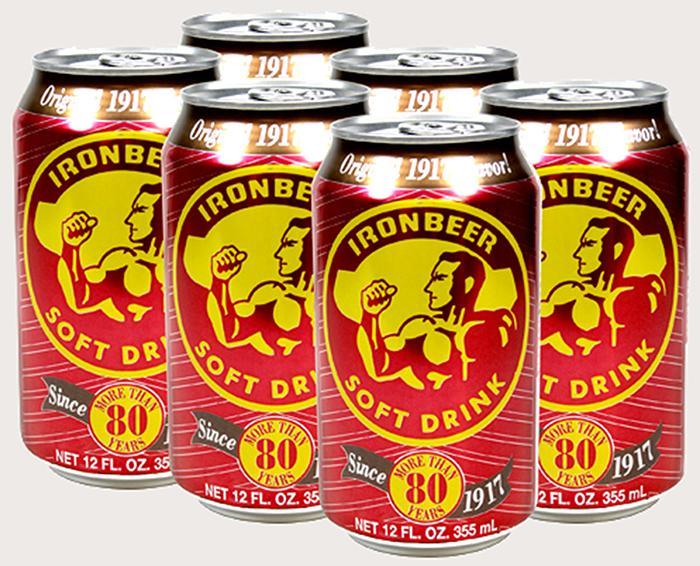
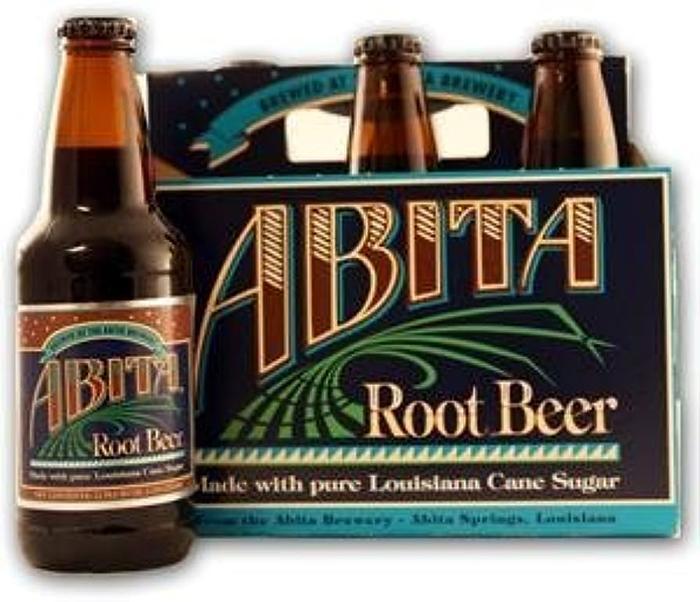
If you’ve ever reached into a gas station cooler and grabbed a cold can of A&W Root Beer, you might have wondered: is this a Coca-Cola thing, or is it Pepsi? It’s a fair question. The American beverage industry is so thoroughly dominated by those two giants that nearly every soda brand seems to fall into one camp or the other. But A&W Root Beer defies that binary entirely. It belongs to neither. And the full story of how it got to where it is today, who actually owns it, why it pops up on Coca-Cola territory in Canada, and why A&W restaurants pour Pepsi from their fountains, is one of the most genuinely interesting tales in the history of American soft drinks.
- Where To Buy Kilkenny Beer In Usa: 7 Best Places To Buy Updated 10/2026
- Best Beer For Sake Bombs Updated 10/2026
- Green Bottle Beer Brands: What’s Inside Matters as Much as What’s Outside Updated 10/2026
- How Long Can You Live Drinking 12 Beers A Day Updated 10/2026
- Is Sam Adams Light Being Discontinued Updated 10/2026
Whether you’re someone who enjoys a cold root beer on a summer afternoon, pairs it with a burger and fries, or uses it as the base for a dark and frothy cocktail, this is the definitive guide to understanding the true identity of A&W Root Beer.
You Are Watching: Is Aw Root Beer A Coke Or Pepsi Product Updated 10/2026
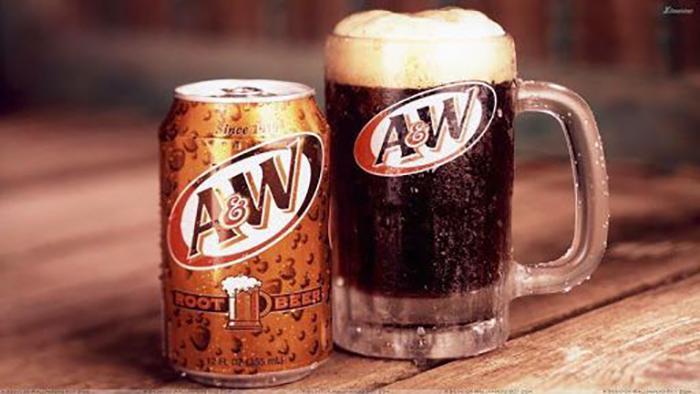
The Short Answer: A&W Root Beer Belongs to Keurig Dr Pepper
Let’s settle the central question immediately. A&W Root Beer is not a Coca-Cola product. It is not a PepsiCo product. In the United States, the rights to the A&W brand are owned by Keurig Dr Pepper (KDP), one of the largest beverage companies in North America. KDP is traded publicly on the Nasdaq Stock Market under the ticker symbol KDP, and its sprawling portfolio includes more than 125 brands across coffee, soda, juice, and other beverages.
Some of the other well-known brands under the Keurig Dr Pepper umbrella include:
| Brand | Category |
|---|---|
| Dr Pepper | Pepper-flavored soda |
| 7UP (U.S. only) | Lemon-lime soda |
| Canada Dry | Ginger ale |
| Snapple | Flavored teas and juices |
| RC Cola | Cola |
| Crush | Fruit-flavored soda |
| Sunkist (soda) | Orange soda |
| Yoo-hoo | Chocolate drinks |
| IBC Root Beer | Root beer |
| Stewart’s | Root beer and cream soda |
| A&W Root Beer | Root beer |
So when you pick up a can of A&W Root Beer at your local grocery store, you’re buying a Keurig Dr Pepper product, full stop. No Coca-Cola involvement. No Pepsi connection. At least, not in the way you’d expect.
How A&W Got Its Name
Before diving into the complex ownership history, it helps to know where the name actually came from. Because there’s a persistent and incorrect rumor that “A&W” stands for Alice and Willard Marriott, the founders of the Marriott hotel empire. That’s simply not true.
“A” stands for Allen. “W” stands for Wright.
On June 20, 1919, a man named Roy W. Allen opened a roadside root beer stand in Lodi, California. He was serving a formula he had purchased from a pharmacist, and he chose that particular date to coincide with a homecoming celebration for World War I veterans. His root beer was an immediate success. By 1920, Allen had partnered with a man named Frank Wright, and the two combined their last initials to create the brand name: A&W.
The Marriott connection comes from the fact that Willard Marriott’s first business venture was an A&W franchise, which he purchased in the 1920s. His success with that franchise gave him the capital and know-how to eventually build the Marriott hospitality empire. But the “A&W” name itself predates Marriott’s involvement entirely.
In 1924, Roy Allen bought out Frank Wright’s share of the business and began an aggressive franchising strategy, making A&W one of the earliest franchise restaurant chains in United States history. By 1960, there were more than 2,000 A&W locations across the country.
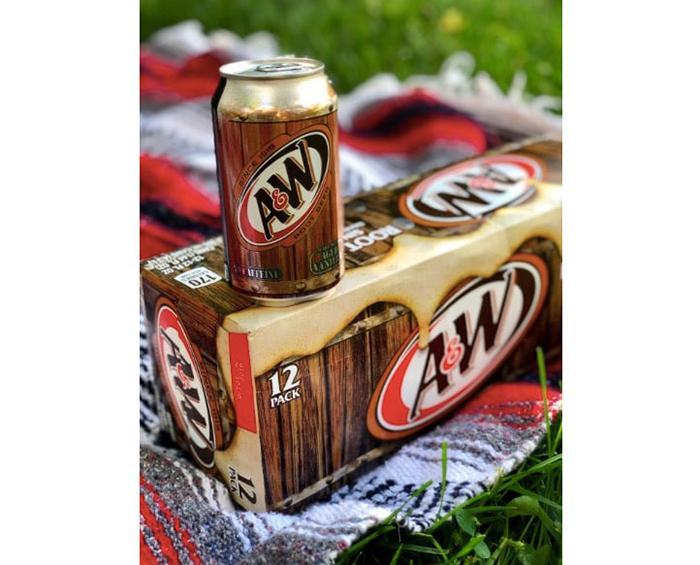
A Century of Ownership Changes: The Full Corporate Timeline
The reason so many people are confused about whether A&W belongs to Coke or Pepsi is that the brand has changed hands so many times over the decades. Here is the ownership history laid out clearly:
The Early Franchise Era (1919 to 1963)
Roy Allen ran the A&W enterprise independently for decades. In 1950, he retired and sold the business to Nebraskan Gene Hurtz, who formed the A&W Root Beer Company. In 1963, the company was sold to the J. Hungerford Smith Company, which had been manufacturing Allen’s concentrate since 1921. That same year, the firm was acquired by the United Fruit Company, later renamed United Brands Company.
United Brands and National Bottled Distribution (1963 to 1983)
Under United Brands, A&W moved into the bottled soda market. In 1971, they formed A&W Distributing Co. as a subsidiary specifically to get root beer onto grocery store shelves nationwide. Before this, A&W was primarily a restaurant product. The national launch included sugar-free, low-sodium, and caffeine-free variants. The brand also introduced “The Great Root Bear” (nicknamed Rooty) as a mascot in 1974, a move that proved enormously successful, particularly in Canada.
Castle and Cooke, Hicks and Haas (1983 to 1993)
In 1983, United Brands sold A&W Root Beer to a group of investors led by Castle and Cooke. The brand changed hands again in 1986, when Hicks and Haas purchased it alongside the management team.
Cadbury Schweppes and the British Era (1993 to 2008)
In October 1993, Cadbury Beverages (the beverage arm of the British confectionery giant Cadbury Schweppes) acquired A&W Beverages. This brought A&W under an international umbrella that also included brands like Canada Dry, Dr Pepper, and Schweppes. This period is notable because it placed A&W alongside Dr Pepper for the first time, which set the stage for everything that followed.
Dr Pepper Snapple Group (2008 to 2018)
Read More : Natural Ice Vs Natural Light Updated 10/2026
In 2008, Cadbury Schweppes spun off its U.S. beverages business as an independent publicly traded company called the Dr Pepper Snapple Group. A&W Root Beer became part of this new entity’s portfolio, alongside 7UP, Canada Dry, Sunkist, Snapple, and of course Dr Pepper itself.
Keurig Dr Pepper (2018 to Present)
In 2018, the Keurig Green Mountain coffee company merged with Dr Pepper Snapple Group, creating the current parent company: Keurig Dr Pepper. This merger was transformative, combining a dominant single-serve coffee brand with a vast non-alcoholic beverage portfolio. A&W Root Beer remains one of KDP’s flagship soda brands today, operating under the tagline “Classic American Refreshment Since 1919.”
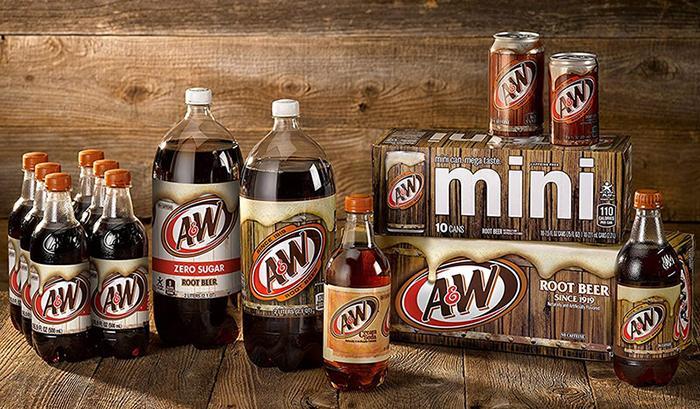
So Why Does A&W Root Beer Show Up on the Coca-Cola Side in Canada?
Here is where the story gets genuinely surprising, and is the primary source of the “A&W is a Coke product” confusion.
In Canada, the situation is completely different from the United States.
A Canadian entity called A&W Food Services of Canada operates independently of both Keurig Dr Pepper and the U.S. A&W Restaurant chain. It manages the restaurants and the marketing of root beer products north of the border. And crucially, the retail products (the canned and bottled root beer you’d buy at a Canadian grocery store) are bottled and distributed by the Coca-Cola Company in Canada.
This means that if you buy a bottle of A&W Root Beer off a shelf in Toronto or Vancouver, that product passed through Coca-Cola’s Canadian distribution network. So the claim “A&W Root Beer is a Coke product” is, in a narrow and geographic sense, partially correct north of the 49th parallel. The first international A&W Restaurant opened in Winnipeg, Manitoba in 1956, and until 1972, Canadian locations were part of the American chain. Since then, they have operated as entirely separate entities.
The Canadian arm made headlines in 2017 when it reformulated its root beer recipe, dropping high-fructose corn syrup entirely and replacing it with natural cane sugar, sarsaparilla root, licorice, birch bark, and anise. To celebrate, A&W Canada declared Free Root Beer Day on July 22, 2017, handing out free root beer at every Canadian location.
And the Pepsi Connection? It’s Actually in the Restaurants
If you walk into an A&W Restaurant in the United States and order something from the fountain, you might notice something unexpected on the fountain panel. A&W Restaurants in the U.S. serve Pepsi products from the fountain, including Pepsi-Cola, Diet Pepsi, Mountain Dew, and other PepsiCo beverages.
This is because the restaurant chain (which operates as a licensee of the A&W brand from Keurig Dr Pepper) has a separate fountain agreement with PepsiCo. The beverage rights (who owns the A&W brand and makes the canned and bottled root beer) and the restaurant fountain contract (which cola brand fills the dispensers) are two entirely different commercial arrangements.
So in summary:
- At the grocery store in the U.S.: A&W Root Beer is a Keurig Dr Pepper product.
- At the grocery store in Canada: A&W Root Beer retail products are distributed by Coca-Cola.
- At the A&W Restaurant fountain in the U.S.: The cups are filled with Pepsi products.
No wonder people are confused.
What Actually Makes A&W Root Beer Taste the Way It Does
For someone who genuinely enjoys beverages, whether that’s a well-hopped IPA, a carefully mixed whiskey sour, or a glass of Pinot Noir, understanding what creates the flavor of a drink is part of the pleasure.
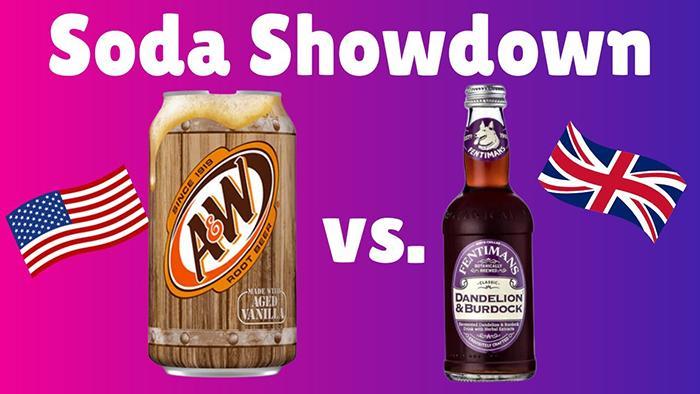
A&W Root Beer is caffeine-free, which sets it apart from most colas and even from Barq’s Root Beer (a Coca-Cola brand that does contain a small amount of caffeine). Its flavor profile is built around a proprietary blend of natural and artificial flavors that the company does not fully disclose.
Historically, root beer was made from the root bark of the sassafras tree, or from the sarsaparilla vine. However, in 1960, the FDA banned safrole, a chemical compound found in sassafras, after studies linked it to liver damage and cancer in laboratory animals. Since then, commercial root beers (including A&W) use safrole-free flavoring systems that mimic the original sassafras-based profile.
The Canadian A&W formula now uses real natural ingredients, declared publicly in 2017:
- Sarsaparilla root delivers notes of vanilla, caramel, and wintergreen.
- Birch bark contributes a subtle earthiness with a delicate, almost minty quality.
- Licorice creates a richness with slightly bitter, sweet, and spicy undertones.
- Anise adds an aromatic quality reminiscent of fennel and tarragon.
The American A&W formula continues to rely on “natural and artificial flavors,” but the perceived taste is widely described as having notes of vanilla, a hint of caramel, and a creamy wintergreen finish. Tasting notes from beverage reviewers have pointed out a subtle chocolate or tootsie roll quality when A&W is compared side-by-side against other root beers, a characteristic that doesn’t appear prominently when drinking it alone.
A&W vs. Other Major Root Beer Brands
| Brand | Owner | Caffeine | Sweetener (US) | Notable Flavor Note |
|---|---|---|---|---|
| A&W Root Beer | Keurig Dr Pepper | None | HFCS / Sugar | Creamy, vanilla, mild wintergreen |
| Barq’s Root Beer | Coca-Cola | Yes (small amount) | HFCS | Sharp, tangy, higher carbonation |
| Mug Root Beer | PepsiCo | None | HFCS | Thick, creamy, heavy vanilla |
| IBC Root Beer | Keurig Dr Pepper | None | Cane sugar | Caramel-heavy, smooth |
| Stewart’s Root Beer | Keurig Dr Pepper | None | Cane sugar | Honey-forward, artisanal |
| Dad’s Root Beer | Dad’s Root Beer Co. | None | HFCS | Classic medicinal, anise-forward |
The Root Beer Float: A&W’s Most Iconic Cultural Legacy
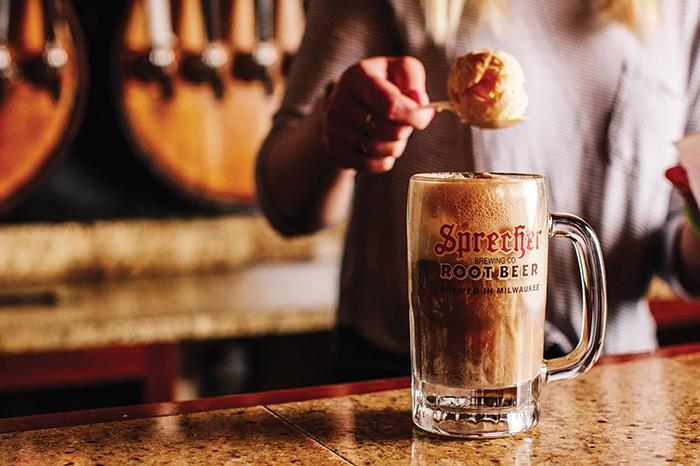
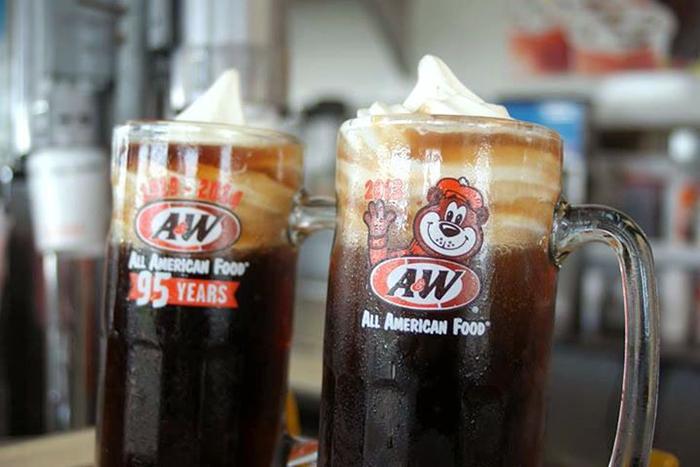
One of the most enduring symbols of A&W’s cultural footprint is the root beer float. A scoop of vanilla ice cream dropped into a frosty mug of A&W Root Beer is not just a dessert, it is a piece of American identity, the kind of thing you order at a drive-in on a hot July evening while classic rock plays from a speaker mounted to your window.
Read More : Is Budweiser Select 55 Still Available Updated 10/2026
Roy Allen himself is often credited with helping popularize the root beer float format, having served his root beer in cold, frosty mugs from the very beginning. The icy mug was not just a gimmick: it kept the drink cold and created a thin layer of frost around the glass that became synonymous with the brand.
In 1999, when A&W Root Beer celebrated its 80th anniversary, the company broke a world record by creating the world’s largest root beer float, using 2,562.5 gallons of A&W root beer. The brand also holds a place in food history as the first restaurant chain to serve a bacon cheeseburger, which happened in 1963.
The root beer float also functions as an unlikely cocktail base. Mixologists have long experimented with spiked root beer floats that add bourbon, dark rum, or even Irish cream alongside the vanilla ice cream. A shot of Bulleit Bourbon in a frosty A&W float, for instance, creates a layered drink that bridges the nostalgic and the sophisticated. The vanilla and caramel notes of the root beer complement bourbon’s oak and caramel profile in a surprisingly seamless way.
The Beverage Landscape: Where Does A&W Stand Against Coke and Pepsi?
Understanding A&W’s market position requires understanding just how different the Keurig Dr Pepper strategy is from that of Coca-Cola and PepsiCo.
Coca-Cola and PepsiCo are fundamentally cola companies that have diversified aggressively into water, energy drinks, juices, and sports beverages. Their core identity, their marketing budgets, and their global infrastructure all orbit around the cola category.
Keurig Dr Pepper is built differently. It owns the third-largest carbonated soft drink brand in the U.S. (Dr Pepper), which is not a cola at all. The FDA classifies Dr Pepper in its own unique “pepper soda” category. Around that anchor, KDP has assembled a portfolio of flavor-forward, non-cola sodas including root beers, ginger ales, cream sodas, and fruit sodas.
This means A&W Root Beer actually has a natural home at KDP in a way it never would at Coca-Cola or PepsiCo, where it would always be a secondary curiosity to the flagship cola brands. Within KDP’s portfolio, root beer is a primary flavor category, not an afterthought.
The root beer market in the United States remains healthy and quietly significant. Root beer is consistently one of the top-selling non-cola soda categories, and A&W is its most recognized name. The brand’s appeal cuts across demographics, from older Americans nostalgic for drive-in culture to younger consumers drawn to craft-style flavors and caffeine-free options.
A&W Root Beer in the Craft Beverage Era
The modern American drinking culture, shaped by the rise of craft beer, artisanal cocktails, and small-batch spirits, has created a renewed interest in root beer as a serious beverage category. The old-fashioned flavor profile of root beer (herbal, spiced, slightly medicinal in the best sense) has a kinship with the flavor complexity that craft beer drinkers and cocktail enthusiasts seek out.
Small-batch root beer producers have emerged to serve this appetite, using actual sassafras-free root extracts, real vanilla beans, raw cane sugar, and locally sourced spices. Brands like Virgil’s, Boylan, and Sioux City have found loyal followings among people who want something more nuanced than the mass-market standard.
A&W’s response has been to lean into its heritage and authenticity credentials. The brand’s current positioning emphasizes its longevity (“Since 1919”), its classic American identity, and the experience of drinking from a frosted mug. In an era where consumers are increasingly skeptical of corporate brands and drawn to authentic stories, A&W has a genuine one to tell.
The A&W Zero Sugar variant (launched as Diet A&W in 1987, reformulated in 2020) also responds to the health-conscious segment of the beverage market, while the A&W Cream Soda line (introduced in 1986) extends the brand into adjacent, equally nostalgic territory.
Why the Coke vs. Pepsi Framework Misses the Point
The impulse to categorize every American soft drink as either a “Coke brand” or a “Pepsi brand” is understandable. For decades, those two companies controlled so much of the beverage landscape that the framework seemed accurate. But the rise of Keurig Dr Pepper as a genuine third force in the industry has changed that equation permanently.
KDP’s 2018 merger created a company with the scale, distribution network, and brand portfolio to compete directly with both Coca-Cola and PepsiCo across most beverage categories. The Keurig side of the business dominates the single-serve home coffee market in a way neither Coke nor Pepsi can match. The Dr Pepper side brings a flavor-forward soda portfolio that fills the gaps left by the cola giants.
A&W Root Beer’s identity is perhaps best understood not through its ownership structure, but through its flavor: distinctly American, rooted in history, without caffeine, without the cola profile, and tied to a specific kind of cultural memory that neither Coke nor Pepsi fully occupies. It is the taste of a summer drive-in, a frosty mug, a root beer float, and a great American road trip.
The Final Verdict: A Complete Ownership Summary
To bring everything together clearly:
| Territory | Who Owns the Brand | Who Distributes/Bottles Retail Products | Fountain Drink at Restaurants |
|---|---|---|---|
| United States | Keurig Dr Pepper | Various KDP bottlers | Pepsi products (at A&W Restaurants) |
| Canada | A&W Food Services of Canada (independent) | Coca-Cola Company | A&W Root Beer (proprietary) |
| Southeast Asia, Italy, Australia | Imported U.S. variant | Various local importers | Varies by market |
A&W Root Beer is definitively neither a Coke product nor a Pepsi product in the United States. It is a Keurig Dr Pepper brand with a 106-year history, a genuinely complex ownership story, and a flavor profile that has remained beloved across generations of American drinkers.
The Takeaway for Anyone Who Loves a Great Drink
Whether you’re someone who treats root beer as a nostalgic soft drink, a mixer for cocktails, or a genuine beverage worth understanding and appreciating, A&W Root Beer earns its reputation as one of America’s most iconic flavors. It was here before either Coca-Cola or PepsiCo had the market dominance they do today. It has outlasted dozens of corporate owners. And it has done all of this without ever being a cola.
The next time someone at the bar or backyard cookout asks you, “Is A&W Coke or Pepsi?” you now have a real answer, one that tells the full story of American beverage history, corporate mergers, international distribution deals, and the enduring appeal of a frosty mug of root beer on a summer day. That, honestly, is a much more interesting story than a simple yes or no.
Sources: https://chesbrewco.com
Category: Beer