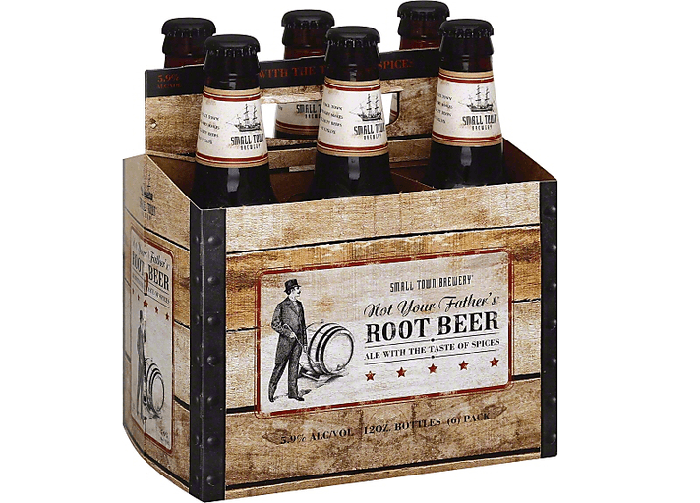
There is something deeply American about root beer. It evokes barefoot summers, drive-in movies, diner counters, and the kind of cold, fizzy sweetness that makes the back of your jaw tingle. For generations, root beer was the drink your grandfather handed you — innocent, alcohol-free, and associated with childhood rather than cocktail hour. Then came Not Your Father’s Root Beer, a crafty, spiced hard ale from a small Illinois brewery that flipped that entire narrative on its head, launched a billion-dollar beverage category, and left the American drinking landscape permanently changed.
Whether you’re a craft beer devotee, a cocktail enthusiast, or someone who normally reaches for wine at the end of a long day, this drink has something interesting to say to you. It is nostalgic and subversive at the same time, sweet yet surprisingly complex, and it raises questions about what we mean when we say something is a “beer” in the first place.
You Are Watching: Not Your Grandfather’S Root Beer: The Bold, Boozy Sip That Rewrote America’s Drinking Playbook Updated 10/2026
The Origin Story: A Brewer, His Son, and a Cancelled Vacation
Every great American story starts with someone trying something in their garage, and this one is no different.
Tim Kovac, a graphic artist and homebrewer from Wauconda, Illinois, roughly 50 miles north of Chicago, had been making beer at home since 1988. When a family vacation was scrapped due to a volcanic eruption in Iceland, Kovac and his son decided to fill the time the only way a passionate homebrewer could: they brewed. Repeatedly. Sometimes multiple batches a day. Among those experiments was a root beer.
The results were apparently so good that a business partner, John Dopak, encouraged Kovac to turn the recipe into a proper commercial product. Together, they founded Small Town Brewery in 2010 in Wauconda. After three years of development, perfecting the recipe, layering spices, and calibrating fermentation, Not Your Father’s Root Beer was released in Illinois in 2012.
Kovac’s marketing instincts were sharp. The backstory he built around the product leaned on family mythology: an ancestor who allegedly won a brewery in a card game and sailed colonists to America in the 17th century. Whether you take that origin story at face value or appreciate it as a very American piece of brand storytelling, the point lands: this drink was positioned as something with heritage, something that connected modern drinking culture to a romanticized, frontier-era past.
From Kegs to National Shelves: The Three ABV Versions
What makes Not Your Father’s Root Beer particularly interesting from a technical standpoint is that it wasn’t released as a single, static product. It evolved across three distinct alcohol-by-volume expressions, each finding a different audience.
The very first version, sold in kegs at Illinois bars and liquor stores, was a staggering 19.5% ABV. This was an extraordinarily high alcohol content for a malt beverage, and it raised eyebrows in the industry immediately. Brewing consultant and Perfect Pint owner Michael Agnew visited the original Wauconda brewery and later wrote that the equipment he saw seemed inconsistent with producing a legitimately fermented product at that strength. Beer podcast host Andrew Gill of Strange Brews even sent samples to a laboratory, speculating the high-ABV version may have contained added neutral grain spirits rather than achieving its strength through fermentation alone. Kovac maintained his process involved extended fermentation and constant attention, though he acknowledged the process was unconventional.
Regardless of the behind-the-scenes debate, the beer found fans. Small Town then did two limited bottling runs of a 10.7% ABV version in 22-ounce bottles, which earned a remarkable 94 out of 100 on Beer Advocate. For a hard soda novelty from a tiny midwest brewery, that rating was almost unheard of.
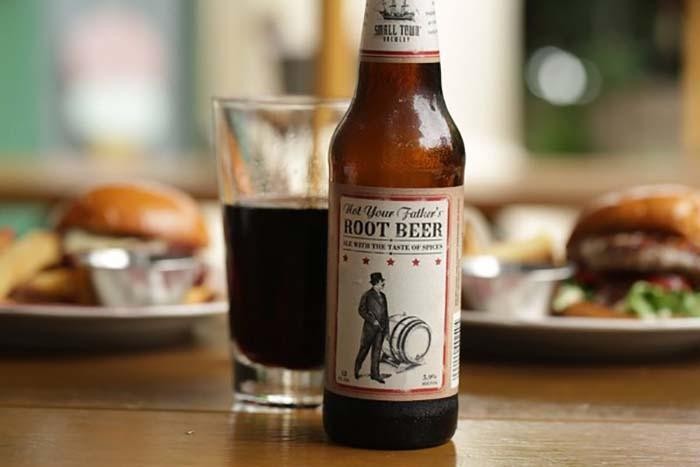
Then, in November 2014, they released the version that would change everything: a 5.9% ABV in standard 12-ounce bottles. Affordable, sessionable, and shelved right alongside your favorite six-packs at the grocery store, this was the format that turned Not Your Father’s Root Beer into a household name.
| Version | ABV | Format | Notes |
|---|---|---|---|
| Original Keg Release | 19.5% | Keg | Local Illinois distribution only; authenticity debated |
| Bottled Reserve | 10.7% | 22 oz. bottles | Beer Advocate score: 94/100 |
| Standard Retail | 5.9% | 12 oz. bottles (6-pack) | National release; mainstream breakthrough |
What’s Actually Inside the Bottle
At its core, Not Your Father’s Root Beer is classified as a dark spiced ale, though its resemblance to conventional beer is minimal at best. It contains no hops, the ingredient most people associate with beer’s bitter backbone. Instead, it is built on a carefully constructed blend of botanical ingredients that have been used in American root beer recipes for centuries.
The confirmed ingredients include sarsaparilla bark, wintergreen, anise, vanilla, honey, cinnamon, birch bark, licorice, ginger, and hints of citrus. Madagascar vanilla and oak aging have also been cited as contributing to the depth of flavor. The exact recipe remains proprietary, but the combination produces a profile that is immediately recognizable as root beer while carrying layers that reveal themselves over the course of a full pour.
When you pop open a 12-ounce bottle of the 5.9% version and pour it into a glass, here is what you get:
Appearance: Dark cola brown with red highlights. A low, fizzy head forms quickly and dissipates like soda rather than lingering like beer foam. The liquid is brilliant and clear.
Aroma: Intensely aromatic. Wintergreen rushes forward first, reminiscent of wintergreen Lifesavers candy. High vanilla follows, alongside caramel and a faint low clove-like spice. It smells exactly like root beer from an old-fashioned soda fountain.
Flavor: The sweetness is high, there is no getting around that. Caramel and vanilla are the twin pillars, with wintergreen asserting itself on the finish alongside a hint of anise. There is low but detectable alcohol warmth, though the 5.9% ABV is remarkably well-hidden beneath the sweetness. The finish is sticky-sweet and lingers on caramel, wintergreen, and vanilla long after the last sip.
Mouthfeel: Smoother and slightly less fizzy than a traditional root beer. Described by multiple reviewers as silky, which is unusual for a beer of any style.
Read More : Can Beer Give You A Yeast Infection Updated 10/2026
For those wondering about caloric content, a 12-ounce bottle at 5.9% ABV runs approximately 190-210 calories, comparable to a craft beer of similar strength.
The Pabst Deal and the Rocket Ship to Fame
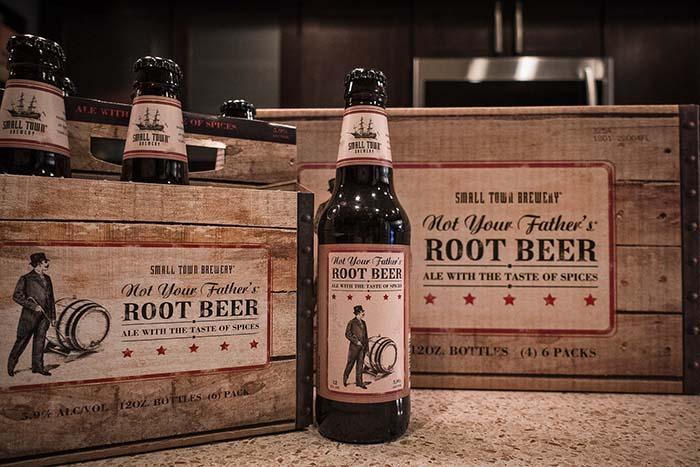
In March 2015, Small Town Brewery entered into a distribution partnership with Pabst Brewing Company, one of the most well-known names in American beer. Kovac described the decision practically: “I still own the brewery and pretty much get to operate it the way I was before. The advantage was, I wanted to get my beer out to the East Coast and the West Coast. Pabst made that possible.”
What followed was extraordinary. Not Your Father’s Root Beer rocketed to national prominence seemingly overnight, becoming one of the most talked-about alcoholic beverages of 2015. Pabst owners, including CEO Eugene Kashper, subsequently acquired a stake in the brand and the company itself. Production was moved to La Crosse, Wisconsin, the same facility that produced Smirnoff Ice and Mike’s Hard Lemonade, a detail that would later fuel ongoing debate about whether the product could legitimately claim the “craft” label.
The cultural impact was significant. Not Your Father’s Root Beer broke into demographics that traditional beer brands had long struggled to reach: women who didn’t typically drink beer, drinkers who found conventional beer too bitter, and a generation of younger adults who craved nostalgia wrapped in something new. According to data cited by the Hype Group, the beer’s success in these non-traditional beer demographics opened the entire industry’s eyes to the commercial potential of hard sodas.
By 2016, hard soda root beer had become the largest single flavor category in the hard soda market, with sales reaching approximately $126.73 million in the United States. Total hard soda retail sales hit $146.9 billion in 2016, up from $1.98 billion in 2015, an increase that was almost entirely driven by the segment Not Your Father’s Root Beer had created.
The Hard Soda Category It Built (and the Competition That Followed)
Small Town Brewery didn’t just make a successful product. It invented a category. Before Not Your Father’s Root Beer, the term “hard soda” barely existed in the American marketplace. The concept of a flavored malt beverage that tasted exactly like a mainstream soda, right down to the carbonation and sweetness, was genuinely novel at scale.
The market responded with an avalanche of competitors almost immediately. Major breweries and beverage conglomerates saw the numbers and started developing their own hard sodas at a pace that was flattering but also commercially dangerous for a small brewery trying to hold its turf.
Today, the hard soda segment that Not Your Father’s Root Beer pioneered is part of a broader market projected to grow from $23.86 billion in 2024 to $44.3 billion by 2032, expanding at a compound annual growth rate of 8.05%. Within the root beer category specifically, the alcoholic segment is expanding at a 9.22% CAGR through 2030, making it the fastest-growing subsegment in the entire root beer market.
For context, here is how Not Your Father’s Root Beer stacks up against some of its closest competitors in the hard root beer and hard soda space:
| Brand | ABV | Style | Key Flavor Notes | Approx. Price (6-pack) |
|---|---|---|---|---|
| Not Your Father’s Root Beer | 5.9% | Dark spiced ale | Vanilla, wintergreen, sarsaparilla, anise | $9-$12 |
| Coney Island Hard Root Beer | 5.8% | Flavored malt beverage | Vanilla, caramel, light spice | $8-$10 |
| Best Damn Root Beer | 5.5% | Hard root beer | Light vanilla, mild sweetness | $8-$10 |
| Sprecher Hard Root Beer | 5% | Hard root beer (Wisconsin craft) | Honey, vanilla, smoky caramel | $10-$13 |
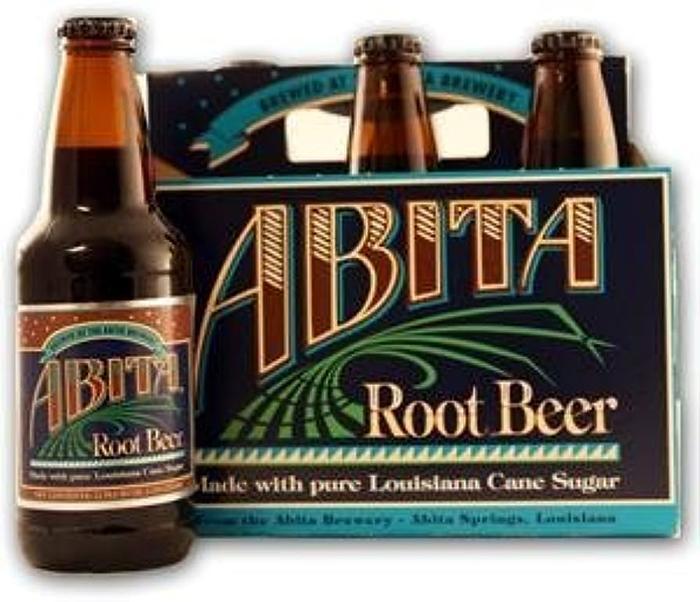
| Abita Root Beer Hard Soda | 5.9% | Flavored malt beverage | Sweet cream, light vanilla | $9-$11 |
Of these competitors, Not Your Father’s remains the category originator and continues to carry the most brand recognition, even as the hard soda market has matured and consolidated.
How to Drink It: Serving Suggestions and Cocktail Pairings
One of the most compelling things about Not Your Father’s Root Beer is how versatile it is as a drinking experience. You don’t have to be a beer drinker to enjoy it, and if you are a cocktail enthusiast or wine drinker, it opens up some genuinely interesting territory.
Straight From the Bottle (or Glass)
The most straightforward approach is simply drinking it chilled, ideally around 38-42°F, over a large cube of ice in a tall glass. The ice slows the carbonation slightly and amplifies the caramel and vanilla notes as the drink warms incrementally. Reviewers on Beer Advocate have repeatedly noted that it invites the question of whether it would make a spectacular root beer float, and the answer is: yes, it absolutely does.
The Adult Root Beer Float
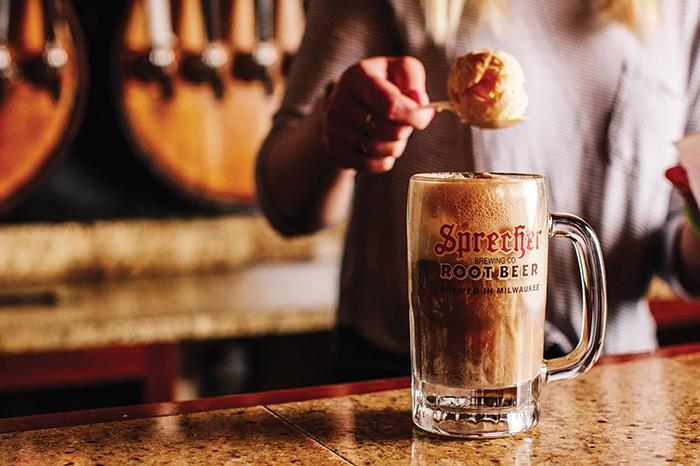
Scoop one to two generous portions of French vanilla ice cream into a tall glass, then slowly pour the chilled beer over the top. The result is a dessert-worthy experience that evokes every drive-in memory imaginable while carrying a very grown-up 5.9% kick. Some bartenders substitute salted caramel ice cream for a more sophisticated sweet-savory balance.
Root Beer Old Fashioned
For bourbon drinkers, this is the crossover that makes the most sense.
- 1.5 oz bourbon whiskey
- 1 oz root beer syrup (reduce your favorite root beer in a small saucepan until syrupy)
- 2-3 dashes orange bitters
- Stir over ice for 10-15 seconds
- Strain over a single large ice cube
- Optional: splash of Not Your Father’s Root Beer as a float on top
The complementary vanilla and caramel notes between a good bourbon and the root beer base create a drink that feels like it was always meant to exist. A small amount of water introduced through stirring softens the whiskey’s bite and lets the spice notes bloom.
Root Beer Mule
Replace the ginger beer in a classic Moscow Mule with Not Your Father’s Root Beer, keep the lime and vodka, and you get a cocktail that is simultaneously familiar and completely unexpected. The wintergreen in the root beer creates an almost mint-like freshness that works brilliantly with the citrus.
- 2 oz vodka
- Not Your Father’s Root Beer (to top)
- Squeeze of fresh lime
- Serve in a copper mug over crushed ice
The Frothy Root Beer Flip
For those who enjoy adventurous bartending at home, the Frothy Root Beer Flip is worth the extra step:
- 2 oz rye whiskey
- 6 oz Not Your Father’s Root Beer (the 10.7% version if available)
- 1 egg white
- Dry shake (no ice) first to froth the egg white, then shake again with ice
- Strain into a chilled coupe glass
The egg white creates a velvety, cream-like texture that mimics the ice cream component of a float without actually adding any dairy. The result is silky, aromatic, and surprisingly sophisticated.
The Honest Debate: Is It Really a Beer?
Read More : Is There Formaldehyde In Budweiser Beer Updated 10/2026
This is the question that has hovered over Not Your Father’s Root Beer since its earliest days, and it deserves a serious answer rather than a dismissive one.
From a regulatory standpoint, the product is classified and taxed as a flavored malt beverage in most contexts, similar to Mike’s Hard Lemonade or Smirnoff Ice. Critics, including beer industry veterans and podcasters who sent samples to laboratories, have suggested that at higher ABV versions, the alcohol may have been achieved through the addition of neutral grain spirits rather than pure fermentation of sugars. This is a legally significant distinction, though it matters far more to industry insiders than to the person enjoying a cold one on a summer Saturday.
What it definitely is not is a conventional beer. It contains no hops. Its flavor profile bears no resemblance to an IPA, a stout, or a lager. But it is also not an alcopop in the traditional sense, since its flavor is built from a genuinely complex botanical blend rather than just sweetened fermented liquid.
The pragmatic answer is this: Not Your Father’s Root Beer is its own thing. It sits at the intersection of beer, craft soda, and dessert drink, and the category it created, hard soda, is now the accepted vocabulary for that intersection. The authenticity debates are interesting background context, but they do not change what you experience when you open a bottle.
The Rise, the Stumble, and the Staying Power
The story of Not Your Father’s Root Beer is, in many ways, a story about the brutal speed of American consumer markets.
After its explosive 2015 rise, the brand ran headlong into two forces that neither Kovac nor Pabst could fully control. The first was market saturation: the hard soda category that Not Your Father’s Root Beer created attracted so many competitors that the shelves quickly crowded with alternatives at every price point. The second, more powerful force was hard seltzer.
When White Claw and Truly arrived and took off with the health-conscious crowd, they offered something fundamentally different from hard sodas: low-calorie, low-sugar, low-carb alcohol that still delivered a buzz. Hard seltzers now represent a market valued at $18.5 billion in 2024, projected to reach $72.1 billion by 2034. The calorie-conscious consumer who might once have picked up Not Your Father’s Root Beer as a novelty migrated toward seltzer almost en masse.
Small Town Brewery contracted. The ambitious product line expansions, including Not Your Father’s Vanilla Cream Ale, Not Your Father’s Ginger Ale, and a line of flavors released under “Not Your Mom’s” branding (apple pie, among others), were largely scaled back as sales volume declined. Attempts at international expansion, particularly in the United Kingdom, saw limited traction despite the U.K.’s established history with products like Scotland’s Crabbie’s alcoholic ginger beer.
And yet. Not Your Father’s Root Beer is still on shelves at Total Wine, Kroger, Albertsons, and liquor stores across the country. Beer Advocate reviewers are still filing ratings in 2025 and 2026. The most recent review calls it “very creamy, velvety,” and suggests pairing it with vanilla ice cream for a float. The product found its equilibrium: no longer a viral sensation, but a legitimate niche product with a loyal base and clear identity.
The hard root beer segment is, in fact, growing, not shrinking, at a 9.22% CAGR through 2030. The category is maturing past the flash-in-the-pan novelty phase and settling into the same kind of stable niche that hard cider has occupied for decades.
Where to Buy It and What to Pay
Not Your Father’s Root Beer is widely available across the United States through:
- Grocery chains: Kroger, Albertsons, Safeway, Publix, and similar retailers typically stock the 6-pack of 12 oz. bottles year-round in the beer aisle or specialty craft section.
- Liquor and specialty stores: Total Wine and More, BevMo, and independent bottle shops carry both the 5.9% six-pack and, occasionally, the higher-ABV 22-oz. bottles.
- Online delivery services: Instacart, Drizly (where active), and various local delivery platforms carry it in markets where alcohol delivery is legal.
- Bars and taprooms: Availability varies, but it is frequently found on tap or in bottles at American craft beer bars and restaurants with broad beer lists.
Pricing for the standard 6-pack of 5.9% bottles typically runs $9 to $12, depending on your region and retailer, putting it squarely in the craft beer price range rather than the budget beer tier. The 22 oz. bottles of the higher-ABV expressions, when found, generally run $5 to $8 per bottle.
The Broader Cultural Moment It Represents
It would be easy to reduce Not Your Father’s Root Beer to a punchline about sugar-sweet beer that had its 15 minutes and moved on. That reading misses the larger story.
This was a drink that, at the peak of its popularity, legitimately expanded who considered themselves a beer drinker. It walked into bars and handed a cold bottle to people who had always ordered wine or mixed drinks and said, this is also for you. It proved, with actual sales data, that the traditional gender and taste assumptions baked into American beer marketing were wrong. It showed that nostalgia, when bottled correctly, is one of the most powerful flavors in any beverage.
The root beer market as a whole was valued at $832.8 million in 2024 and is projected to reach $1.09 billion by 2030. North America controls 63.29% of global root beer consumption. Within that broader market, the premium and artisanal tier, the segment that Not Your Father’s Root Beer helped establish as commercially viable, is growing at a rate that outpaces conventional root beer by several percentage points.
Craft brewers are now experimenting with Madagascar vanilla, birch bark, and regional botanicals in their root beers, commanding price premiums of 20-40% over mass-market products. The Brewers Association counted 9,612 craft breweries in operation in 2024, many of them looking for the next beverage category crossover moment. The groundwork for all of that was laid, at least in part, by one homebrewer in Wauconda, Illinois, who couldn’t go on vacation.
Conclusion
Root beer was always a little bit rebellious. Long before the modern temperance movement sanitized it into a children’s drink, early American root beer was often slightly fermented, a low-alcohol beverage made from real roots, bark, and herbs that straddled the line between tonic and tonic water. Not Your Father’s Root Beer didn’t invent that duality. It remembered it.
There is a version of this story where the brand is a cautionary tale about hype cycles and the merciless efficiency of American consumer culture. But there is a more interesting version: a story about what happens when someone respects the history inside a flavor and trusts that Americans are ready to revisit it with fresh eyes, and a bottle with a little more kick. The drink changed the industry. The industry moved on. And the drink is still there, cold in the fridge, waiting for you to decide whether tonight is a hard seltzer night or a night for something that tastes like summer 1987 with a grown-up twist.
Your grandfather’s root beer was never quite like this. That was always the point.
Sources: https://chesbrewco.com
Category: Beer