If you’ve ever followed a Black Forest cake recipe, thumbed through a vintage cocktail book, or eaten cheese fondue at a half-decent European restaurant, you’ve probably seen the word kirsch staring back at you. And if you’re like most American guys, you probably skipped it, grabbed the nearest bottle of brandy, and figured it was close enough. It wasn’t. Here’s everything you need to understand about this misunderstood, underrated, and genuinely excellent spirit: what it is, where it comes from, how it’s made, and exactly why it deserves a permanent spot on your home bar shelf.
What Kirsch Actually Is
Kirsch, also called kirschwasser (pronounced KEERSH-vah-ser), is a clear, colorless, completely unsweetened fruit brandy made from the double distillation of morello cherries. The word comes directly from German: Kirsch means cherry, and Wasser means water, so you’re essentially drinking “cherry water,” which wildly undersells what’s in the glass.
You Are Watching: What Is Kirsch? The Clear Cherry Brandy Every Serious Drinker Needs in His Cabinet Updated 10/2026
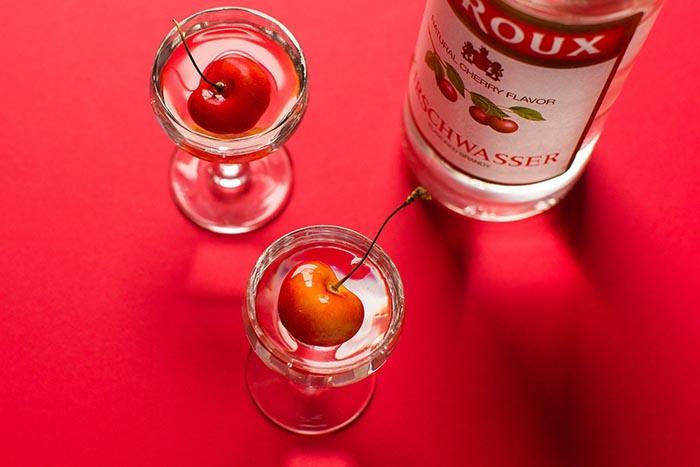
It is a clear, colourless brandy from Germany, Switzerland, and France, traditionally made from double distillation of morello cherries. The most important thing to understand upfront is what kirsch is not: it is not the red, syrupy cherry liqueur you pour over ice cream. It is not cherry schnapps. It is not a flavored vodka. Not to be confused with red, sugary cherry liqueur, kirsch is a clear, unsweetened fruit brandy also known as eau de vie (“water of life”) that has been made for centuries in Germany, Alsace, and Switzerland.
This distinction matters enormously. The sweetness, or rather the complete absence of it, is what defines kirsch and separates it from every other cherry-flavored spirit on the shelf. Unlike other fruit liqueurs, kirsch is not sweetened, making it a dry and potent spirit with an alcohol content typically ranging between 37% and 50% ABV. At 80 to 100 proof, this is not a casual pour. It’s a real spirit with real complexity, and it rewards the drinker who takes it seriously.
The History Behind the Bottle
Kirsch has roots going back centuries, and the story of how it ended up in your local liquor store is genuinely interesting.
Originating in the Black Forest (Schwarzwald) region of Germany, kirsch production dates back to at least the 16th century, when local farmers and distillers began fermenting and distilling the abundant sour cherries to create a potent spirit for medicinal and celebratory purposes. The Black Forest wasn’t just a marketing backdrop; it was the birthplace of the morello cherry cultivation that made this spirit possible. Early versions of kirsch served a dual purpose: folk medicine used it as a digestive remedy, and it featured prominently at harvest celebrations, weddings, and seasonal gatherings as a symbol of communal abundance.
The tradition’s early documentation includes a 1726 decree regulating cherry distillation in the Strasbourg area (now Alsace), facilitating cross-border development. By the 19th century, the tradition had expanded well beyond Germany. In Switzerland, the canton of Zug emerged as a key center, where cherry cultivation around Lake Zug supported the establishment of distilleries by the mid-1800s; by 1870, local producers formed the Kirschwasser-Gesellschaft to promote and export authentic Zuger Kirsch worldwide.
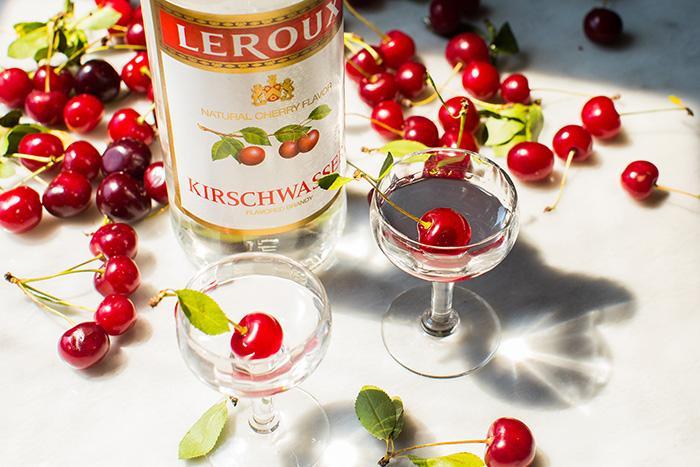
Today, the three primary production regions remain Germany’s Black Forest, Alsace in northeastern France, and the German-speaking cantons of Switzerland. The name Schwarzwälder Kirschwasser holds protected geographical indication (GI) status under EU regulations, meaning that if a bottle says “Black Forest Kirschwasser,” the cherries and distillation have to originate in that specific region, similar to how Champagne can only come from Champagne.
There’s also a claim worth mentioning over a drink: the Romans planted the first cherry trees in France around 100 BCE and flavored their wines with cherry juice. When the Romans colonized France, they brought cherry trees to continue enjoying wines flavored with cherry juice, bringing plum trees, apricot trees, almond trees, and many others as well. Whether or not that lineage connects cleanly to modern kirsch, it’s a fun piece of trivia for your next bar conversation.
How Kirsch Is Made: The Real Process
The production of authentic, high-quality kirsch is significantly more labor-intensive than making most spirits, and understanding the process explains both the price and the flavor.
It starts with morello cherries, a dark, tart variety of sour cherry prized for its intensity. It takes about 20 to 30 pounds to make a bottle of kirsch, which are a notoriously difficult variety to cultivate. Morello cherries have a relatively short season and labor-intensive harvest requirements adding costs. To put that in concrete terms: it takes about 22 pounds of cherries to make one bottle of kirsch, which makes its typical $40 price tag seem like a bargain.
Once harvested, the entire cherry, including flesh, skins, and most importantly, the pits, goes into fermentation. This is the step that defines the flavor profile of kirsch more than anything else. In all cases the fruit is fermented with its stones. A subtle bitterness should be noticeable as the stones or pits are fermented with the cherry flesh and skins.
Those pits are not an afterthought. They release benzaldehyde during fermentation, which is the compound responsible for the distinctive almond-like undertone that separates kirsch from every other fruit brandy. The pits contributed an almond-like flavor through the release of benzaldehyde during fermentation, a characteristic that distinguished Kirsch from other fruit eaux-de-vie.
After fermentation, the mash is double-distilled, typically in traditional copper pot stills. This kirschwasser begins with whole red cherries from Flathead Lake, fermented (pits, skins, and all) in an open environment for about two weeks. The open fermentation allows natural yeasts and airborne influences to add subtle complexity. After fermentation, the mash is double-distilled in a copper pot still and bottled without any added sugar or flavorings.
Here’s where kirsch diverges sharply from aged spirits like cognac or bourbon. Kirschwasser is colorless because it is either not aged in wood, or aged in barrels made of ash. It may have been aged in paraffin-lined wood barrels or earthenware vessels. That’s why it comes out of the bottle crystal clear: there’s no barrel to give it color or vanilla-oak flavor. The spirit is purely the expression of the cherry itself, amplified and concentrated through distillation.
The chemistry of kirsch is also uniquely interesting. Compared with brandy or whisky, the characteristic features of kirsch are that it contains relatively large quantities of higher alcohols and compound ethers, and the presence in this spirit of small quantities of hydrogen cyanide, partly as such and partly in combination as benzaldehyde-cyanohydrin, to which the distinctive flavour of kirsch is largely due. Don’t let “hydrogen cyanide” alarm you; the quantities are minuscule and completely safe, but they’re exactly what gives kirsch that uniquely sharp, almost electric nose that you won’t find in any other spirit.
What Kirsch Tastes Like
If you’ve ever poured yourself a glass expecting something fruity and sweet, your first sip of kirsch will surprise you. Good surprise, but a surprise nonetheless.
Read More : White Claw Alcohol Content Vs Beer Updated 10/2026
The most common taste descriptors of kirsch include an intense cherry flavor with subtle almond notes and a slight herbal complexity. The unaged spirit is colorless and often described as a clean and crisp liquor.
A quality kirsch like Schladerer Schwarzwalder leads with an intense cherry perfume on the nose, vivid, almost electric. The bouquet is a wonderful prelude to the actual taste. This kirschwasser seems to have captured the very essence of the morello cherry, with a dryish long finish with a wonderful afterglow. On the palate, it’s dry, full of stone fruit, and finishes with that signature bitter-almond note from the fermented pits. The higher alcohol content (40-50% ABV) gives it genuine warmth and presence, but a well-made kirsch is surprisingly smooth given the proof.
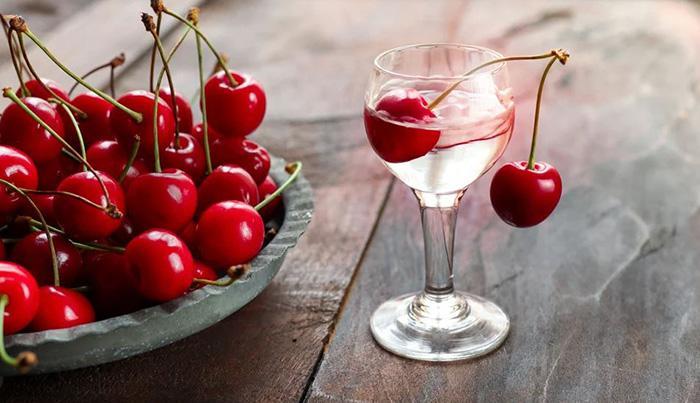
What kirsch is not is sweet. If you’re used to cherry liqueurs, maraschino, or flavored brandies, the dryness of real kirsch will catch you off-guard. That austerity is the point: it’s a spirit built for enhancing and amplifying other flavors, not competing with them.
Kirsch vs. Cherry Brandy vs. Cherry Liqueur: What’s the Difference?
This confusion trips up even experienced drinkers. Here’s the quick breakdown:
Kirsch / Kirschwasser is a dry, unsweetened, clear fruit spirit distilled directly from fermented cherries (pits included). No sugar added. No aging in color-imparting barrels.
Cherry brandy (like Cherry Heering) is typically sweetened and often darker in color. It’s made from cherries but has added sugar and sometimes other flavorings. Think of it as kirsch’s dressed-up, less austere cousin.
Cherry liqueur (like Luxardo Maraschino) is a liqueur, meaning it has significant added sugar, a lower ABV, and a sweetness-forward profile. Maraschino is derived from Marasca cherries and has its own distinct nutty-floral character.
It’s similar to Maraschino in that they both use the full cherry and pick up interesting nuttiness from the pits. But kirsch isn’t sweetened at all, which makes it much more particular in cocktails. That’s probably why you’ve encountered kirsch in baking recipes and Maraschino in cocktails.
In cocktail terms, substituting one for the other will completely change your drink. Cherry liqueur in a recipe calling for kirsch will make things cloying and unbalanced. Kirsch where a recipe wants cherry liqueur will create something unexpectedly dry and boozy. They are not interchangeable.
How to Drink Kirsch Neat
Before you start mixing, you should drink kirsch the traditional way at least once, and pay attention.
High-quality kirschwasser should be served around 16°C (61°F), warmed by the hands as with brandy. Kirschwasser is usually drunk neat. It is traditionally served cold in a very small glass and is taken as an apéritif. People in the German-speaking region where it originated usually serve it after dinner, as a digestif.
A small pour of about 1 to 1.5 oz in a short, tulip-shaped glass is the move. Chill the bottle slightly, pour it cold, and then cup the glass in your hands to warm it gently as you drink. The aromatics will open up noticeably. If you’re a gin drinker who enjoys botanicals neat, or you’ve ever sipped a quality pisco straight, you’ll find a similar pleasurable intensity in a good kirsch.
The folks drinking kirsch the longest drink it on its own, chilled, after dinner as a digestif. If you generally enjoy a bracing sip with a good burn and a subtle fruitiness, you should try it this way. If you enjoy drinking gin neat, you’ll enjoy a good kirsch neat.
Kirsch in Cocktails: Where It Gets Interesting
Here’s where American drinkers, especially those with a craft cocktail sensibility, will find the most value in a bottle of kirsch. Despite being underrepresented on most modern cocktail menus, kirsch has a legitimate place in classic mixology.
The Rose is arguably the oldest and most famous kirsch cocktail. It originated at Harry’s Bar in Paris, the same legendary venue associated with Hemingway, Fitzgerald, and half the Lost Generation. It combines kirsch with dry vermouth and strawberry or raspberry syrup. Think of it as a reverse martini with a dry cherry spirit at its center instead of gin.
The Acacia is a close second in terms of classic pedigree. The Acacia cocktail is almost as old as the Rose, but it drinks much more modern, largely because of Benedictine’s inclusion and its recent comeback. What you have here is a more standard martini with the vermouth subbed out for a combination of gin and Benedictine.
A Farewell to Hemingway was invented in 1937 by Charles Henry Baker — a friend of Ernest Hemingway — in Coconut Grove, Florida. Knowing that Hemingway was particularly fond of kirschwasser, the mix-master made kirsch a star ingredient in the new cocktail. He wound up with a refreshing drink that’s sort of like a Kirsch Collins. The recipe calls for kirschwasser, fresh lime juice, raspberry syrup, and sparkling water served long over ice. It’s the kind of drink that makes hot summer afternoons bearable.
The Blood and Sand is a Scotch-based classic that calls for kirsch as one of its four ingredients alongside Scotch whisky, sweet vermouth, and orange juice. The kirsch plays a supporting role here, adding a dry cherry undercurrent that prevents the drink from going too sweet.
The Kirsch Sour is a modern contender: it combines kirsch with fresh lemon juice, cherry syrup, and an egg white, shaken and strained for a frothy texture. If you like a Whiskey Sour or a Pisco Sour, this format will translate perfectly.
Read More : What Is Guarana Soda Updated 10/2026
The Black Forest Martini takes its name from the famous German cake: it blends kirsch with chocolate liqueur, vodka, and cream to mimic the iconic German cake’s flavors, often garnished with a cherry. Indulgent, but excellent as a dessert cocktail.
One practical tip from experienced kirsch bartenders: quality matters more here than with almost any other spirit. Because the flavor of kirsch dominates many cocktails, it’s important to use one that’s good quality. Avoid any kirsch that costs under $20 (or really under $30); it probably won’t taste very good. The cheap, chemically-flavored versions sold in grocery stores will make your cocktails taste like cough syrup. Buy once, buy right.
Kirsch in Food: A Secret Weapon in the Kitchen
Even if you never pour it into a cocktail glass, a bottle of kirsch earns its cabinet space through cooking alone.
Tossing a few teaspoons on fresh berries is like plugging in an amplifier. A small splash on a strawberry-rhubarb crisp before baking will accentuate its sweet baked-fruit character. Kirsch can often take the place of vanilla when baking and gives a subtly boozy, fruity punch-up to whipped cream.
The science behind this is worth understanding. Alcohol enhances the flavor in food in two ways: because it’s volatile, it carries food aromas to our nose more quickly. Second, alcohol can bond with both fat molecules and water molecules, thus uniting smell and taste and essentially making our experience of food richer and more exciting.
In savory applications, kirsch is most famous in Swiss cheese fondue, where a tablespoon or two goes directly into the melted cheese mixture. It cuts through the fat of the cheese and adds a subtle fruity brightness that keeps the whole thing from feeling heavy. It is an important ingredient in fondue, and it is also sometimes used in the dessert cherries jubilee.
Kirsch is used in some cakes, notably traditional German Schwarzwälder Kirschtorte (Black Forest gateau) and Gugelhupf. It’s also a key component of cherries jubilee, the flambéed dessert with a history stretching back to Queen Victoria’s court. Kirsch is excellent for flambéing dishes, as its high alcohol content allows it to catch fire easily.
The Best Kirsch Brands to Buy in the United States
The American market for kirsch is smaller than in Europe, but there are legitimately excellent options available at well-stocked liquor stores and online retailers.
Schladerer Schwarzwälder Kirschwasser (Germany) is one of the most widely available and best-reviewed imports in the U.S. It is one of the best Kirschwassers available in the U.S. at present. It does not use bulk ethanol and chemical flavors like some of its competitors. It uses a much more traditional and expensive process requiring about 22 pounds of cherries for each bottle, and is from a traditional area of production. Expect to pay around $40 to $50 for a 750ml bottle. It’s worth every dollar. By law, only cherry brandies distilled from cherries in the Black Forest are entitled to be named “Schwarzwälder Kirschwasser.”
F.E. Trimbach Grande Réserve Kirsch (Alsace, France) is another top-tier import, made by one of Alsace’s most respected wine and spirits families. The Trimbachs have a purist vision; for three centuries and across 13 generations, the family has personally looked after each operation, from planting to harvests and from vinification to bottling. Available around $50 to $60, and frequently sold at Total Wine & More locations across the country.
G.E. Massenez Kirsch Vieux (Alsace, France) earns an 87/100 from Wine-Searcher critics and runs about $40 to $45. Made in the classic Alsatian eau-de-vie tradition, it’s a solid choice for both sipping and cocktail work.
Clear Creek Distillery Kirschwasser (Portland, Oregon) is the American craft option worth seeking out. It earns an 88/100 from critics and is priced around $55. Made in the Pacific Northwest tradition of small-batch fruit distilling, it’s proof that American craft distillers can hold their own against European heritage producers. If you want to support domestic production while drinking quality spirits, this is your bottle.
Glacier Distilling Kirschwasser (Flathead Lake, Montana) is another American artisan producer worth tracking down. Made from whole red cherries from Flathead Lake, fermented with pits, skins, and all, double-distilled in a copper pot still, with no added sugars or flavorings. The result is a crisp, aromatic spirit with notes of cooked pie cherries, delicate hints of maraschino, and a gentle vanilla flavor from the cherry pits.
For budget options, De Kuyper Kirschwasser runs under $15 and works reasonably well in recipes where kirsch is a background ingredient — a fondue, for example, or baked goods. But if you’re making cocktails where kirsch is the star, don’t use it. The flavor is noticeably thinner and less complex than the real-deal imported versions.
How to Store Kirsch
Kirsch is a type of brandy, and it can essentially last indefinitely if stored appropriately. Once opened, it doesn’t rush towards spoiling but could lose some of its flavor after a year or two. This makes it a practical shelf ingredient even if you’re not using it weekly.
Store unopened kirsch in a cool, dark area where the temperature remains relatively constant. Tighten the cap or cork firmly after each use to prevent oxygen from making its way into the bottle, as this can hasten the degradation of flavors. While refrigeration isn’t necessary for kirsch, it can help preserve the flavor for even longer. If you have a small amount left in a large bottle, consider transferring it to a smaller one to limit its exposure to air.
The warning sign that kirsch has turned is an off-smell or a noticeably cloudy appearance. Otherwise, you’ve got a shelf-stable spirit that will reward you every time you reach for it.
The Bottom Line
Kirsch is the kind of spirit that rewards curiosity. It’s old enough to have serious history behind it, technical enough to respect, and versatile enough to earn a permanent spot in your rotation. A quality bottle costs about the same as a decent bourbon, takes up less shelf space, and unlocks both cocktail territory and kitchen territory that few other spirits can access.
The next time you’re at the liquor store and you spot a bottle of Schladerer or Trimbach, don’t walk past it. Pick it up. Chill it down, pour a small glass, hold it in your hands, and take a sip. You’ll taste 500 years of European tradition in a clear, dry, cherry-forward spirit that has no business being as underrated as it is in America.
That’s kirsch. And now you know exactly what to do with it.
Sources: https://chesbrewco.com
Category: Beer