If you’ve ever stood in the soda aisle and reached for something other than your usual six-pack, you probably understand the thrill of finding something unexpected. For those who love the ritual of cracking open a cold drink at the end of a long day, whether it’s a craft IPA, a glass of Pinot Noir, or something spiked with bitters and lime, the appeal of the rare and limited edition runs deep. Mountain Dew, that neon-green juggernaut of American beverage culture, has spent decades feeding that same collector’s instinct, releasing flavors so obscure, so regionally locked, and so aggressively limited that tracking them down has become a full-on hobby for thousands of Americans.
But which Mountain Dew is truly the rarest of them all? That question is deceptively complicated. Rarity, in the Dew universe, comes in several distinct forms: discontinued flavors you’ll never taste again, giveaway-only releases with a cap of 18,000 packs nationwide, international exclusives that require a trip to South Korea, and store-specific variants locked behind the doors of a single gas station chain. This guide covers all of it, with real flavor profiles, the history behind each release, and everything you need to know to understand why certain bottles of Mountain Dew command absurd prices on eBay.
You Are Watching: What Is The Rarest Mountain Dew Updated 10/2026
The Origins of Mountain Dew and Why Rarity Became Part of Its Identity
To understand why rare Mountain Dew matters, you first need to understand what Mountain Dew actually is. The original formula was invented in 1940 by Tennessee beverage bottlers Barney and Ally Hartman. At the time, it was created as a mixer for whiskey, which is why the name “Mountain Dew” resonated so deeply. That phrase had been American slang for moonshine since at least the 1800s, especially in Appalachian communities.
A revised formula was developed by Bill Bridgforth in 1958. The rights were later acquired by the Tip Corporation of Marion, Virginia, and William H. “Bill” Jones further refined the formula. In August 1964, Pepsi-Cola acquired the brand, and distribution expanded nationally. For decades after, there was only one variety of Mountain Dew: a citrus-flavored, caffeinated soft drink. Diet Mountain Dew arrived in 1988, and the era of flavor proliferation officially began.
By 2001, Code Red debuted and became a cultural phenomenon. From that point forward, PepsiCo leaned hard into the idea that Mountain Dew was not just a soda but a platform. Limited editions, franchise exclusives, fan-voted campaigns, and mystery flavors followed in rapid succession. According to Statista, Mountain Dew was the second most popular soda flavor under PepsiCo in 2024, a position built in large part on the culture of limited availability and consumer excitement.
That strategy, built on scarcity and novelty, is exactly why some Mountain Dew flavors become legendary while others vanish almost overnight.
What Makes a Mountain Dew “Rare”?
Not all rare Mountain Dew flavors are rare for the same reason. Understanding the categories helps when hunting these drinks down or simply appreciating why they’ve achieved cult status.
Discontinued flavors are those that once had broad national distribution but were pulled from shelves, often due to low sales, ingredient changes, legal disputes, or shifting brand strategy. These are genuinely gone, though sealed cans and bottles sometimes appear on resale platforms at highly inflated prices.
Regional and store exclusives are flavors that exist in the present tense but are locked behind geographic or retail walls. If your town doesn’t have a Dollar General, a Circle K, or a Food Lion, certain flavors are simply inaccessible to you without a road trip or a third-party purchase.
Giveaway-only and event-exclusive releases represent the most extreme end of rarity. These bottles were never placed on a retail shelf. They were distributed through sweepstakes, promotional codes, or limited online drops, meaning the vast majority of Mountain Dew drinkers never had any realistic chance of obtaining them.
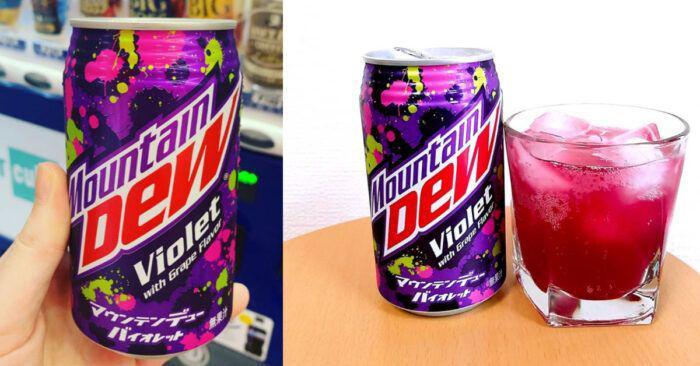
International exclusives round out the picture. PepsiCo licenses Mountain Dew production to manufacturers in other countries, and some of those markets get flavors that never cross into the United States.
The Rarest Mountain Dew Flavors Ever Made
Dewshine: The Moonshine That Never Was
Of all the discontinued Mountain Dew flavors, Dewshine holds a special place for those who love a drink with a story. Released on March 23, 2015, Dewshine was marketed with a deliberately retro aesthetic, drawing directly on the brand’s Appalachian moonshine roots. PepsiCo filed a trademark for “MTN DEW DEW SHINE” as early as July 7, 2014, suggesting the concept had been brewing for years.
What made Dewshine physically different from any other Mountain Dew at the time was its packaging: glass bottles and glass jugs, available only at select Circle K stores in limited quantities. It contained no orange juice, a standard ingredient in regular Mountain Dew, and was sweetened with real cane sugar rather than high fructose corn syrup. Each 12-ounce glass bottle held 42 grams of real sugar. It was also completely clear in color, becoming the first clear Mountain Dew flavor ever produced.
The campaign leaned into a fictional moonshine origin story, with promotional NASCAR tie-ins featuring Dale Earnhardt Jr.’s Mountain Dew Dewshine No. 88 paint scheme at the 2015 Food City 500. The tagline read “Clear Citrus Flavored DEW. Naturally & Artificially Flavored,” but the real tagline, implied through every design choice, was “available legally for the first time.”
That framing drew significant controversy. Alcohol Justice, an advocacy group, alleged that the glass bottle packaging intentionally blurred the line between alcoholic and non-alcoholic beverages. Their director of public affairs, Michael Scippa, argued the design was engineered to attract younger consumers. PepsiCo denied the claim. Meanwhile, a separate legal dispute was brewing with Ole Smoky Distillery in Gatlinburg, Tennessee, which had attempted to trademark “Ole Smoky Mountain Dew Moonshine.” PepsiCo opposed the trademark, and the distillery ultimately dropped its rights in 2019, two years after Dewshine had already been discontinued.
Dewshine was pulled from shelves around February 2017, making it one of the most talked-about flavors in Mountain Dew history, and today one of the most sought after. For those who appreciate spirits and craft beverages, Dewshine represented something genuinely interesting: a mainstream soda using heritage packaging, premium sweeteners, and cultural mythology to create a drink that felt like something more.
Baja Deep Dive: The Sweepstakes Bottle
Read More : Do French Drink Soda? The Surprising Truth Behind France’s Beverage Culture Updated 10/2026
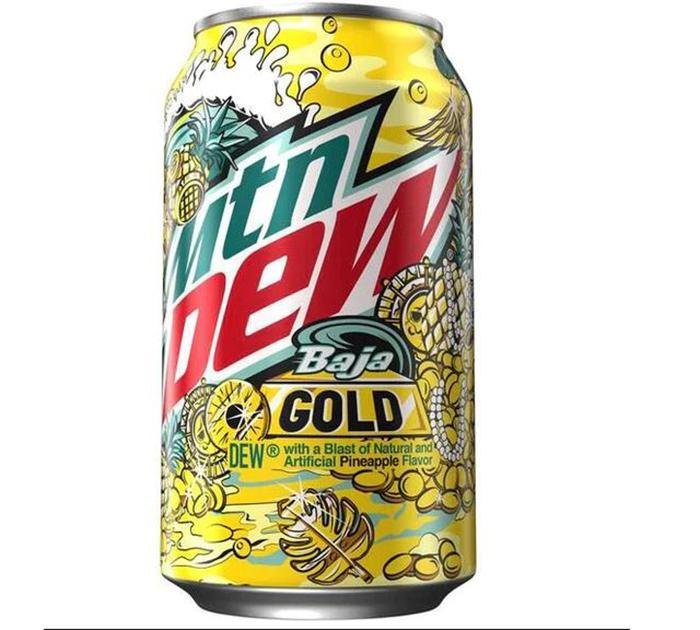
If exclusivity is the measure of rarity, then Baja Deep Dive may be the most rarefied Mountain Dew of the modern era. In 2022, PepsiCo ran a promotion where consumers could submit codes found under the caps of that summer’s Baja variant bottles for a chance to win a 6-pack of Baja Deep Dive, a flavor that was never sold at retail. Reports suggest the sweepstakes yielded approximately 18,000 winning 6-packs, which sounds like a lot until you consider the scale of Mountain Dew’s consumer base. The promotion was part of the “Lost Treasures of Baja Island” campaign.
To put that in perspective: the United States has roughly 330 million people. If every 6-pack went to a different household, fewer than 0.006 percent of Americans got to taste this drink. It has never been available for purchase.
Mountain Dew Supernova: The People’s Champion That Keeps Coming Back
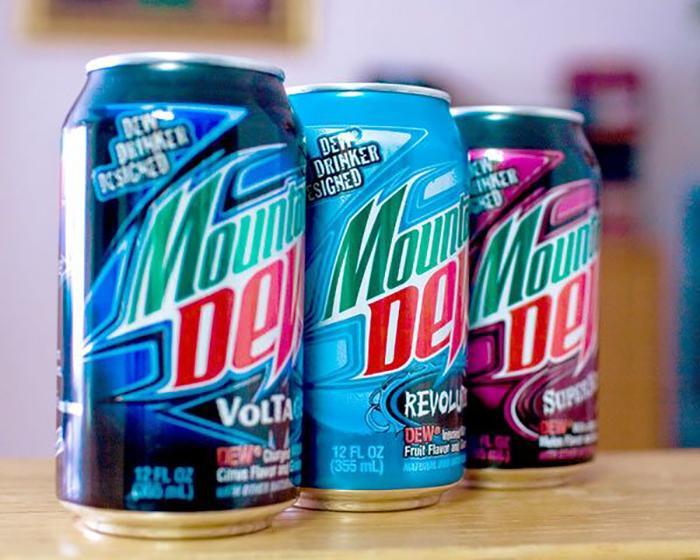
Supernova is perhaps the most emotionally charged flavor in Mountain Dew’s history. A strawberry-melon Dew with a bright magenta hue, it debuted during the 2008 DEWmocracy campaign, PepsiCo’s remarkable experiment in consumer democracy. DEWmocracy invited fans to design, name, and vote on the next permanent Mountain Dew flavor. Three finalists emerged: Voltage (berry citrus with ginseng), Supernova (strawberry melon), and Revolution (wild berry ginseng). Voltage won. Supernova finished second.
The loss didn’t kill Supernova’s popularity. Fans campaigned relentlessly for its return. It received temporary revivals, including a limited re-release during the “Back by Popular DEWmand” promotion in 2011. It last appeared on American shelves in 2011, but has resurfaced in Canada multiple times. As recently as 2023, Supernova appeared as a Slurpee in Canada, reigniting demand among U.S. fans who had waited over a decade.
The flavor’s devoted fan base maintains active social media campaigns under tags like #BringBackSupernova to this day. Its scarcity, combined with the bittersweet story of a fan favorite that should have won, makes Supernova a genuinely legendary bottle.
VooDEW: Annual Mystery and Manufactured Scarcity
Starting in 2019, Mountain Dew began releasing an annual Halloween-themed mystery flavor under the VooDEW label. Each year’s white-colored drink comes with deliberately obscured flavor identity, no ingredient hints on the packaging, and an elaborate social media puzzle campaign designed to let fans guess the taste over weeks of speculation.
Here’s every VooDEW flavor officially confirmed:
| Year | VooDEW Version | Revealed Flavor |
|---|---|---|
| 2019 | VooDEW 1.0 | Candy Corn |
| 2020 | VooDEW 2.0 | Fruit Candy Explosion |
| 2021 | VooDEW 3.0 | Fruit Candy Chews |
| 2022 | VooDEW 4.0 | Sour Candy |
| 2023 | VooDEW 5.0 | Airheads (Cherry) |
| 2024 | VooDEW 6.0 | Pink Fruit Candy (Pink Starburst) |
In 2022, the first three VooDEW flavors were re-released as a variety pack available exclusively at Spirit Halloween stores. That makes them double-exclusive: limited by time and by retail location.
Reports from late 2024 suggested PepsiCo may discontinue the mystery format for Halloween 2025, replacing it with the Trolli Cherry-Lemon Zero Sugar collaboration. If true, any remaining VooDEW stock becomes instantly more collectible. The VooDEW series captures what Mountain Dew does best: turn a soda release into a participatory cultural event, where the drink itself is almost secondary to the experience of hunting it down and cracking the code.
Mountain Dew Zero Sugar Blue: Imported Rarity
For American collectors, Mountain Dew Zero Sugar Blue is practically unobtainable. Manufactured by Lotte Chilsung Beverage Co., this flavor is sold exclusively in South Korea in can form only, never in bottles or at soda fountains. Its flavor is described as evoking a sensation of riding waves through space, with reviewers noting a light lemon profile up front, followed by distinct berry notes.
Zero Sugar Blue was first launched in 2024 as an online exclusive and sold out immediately. Lotte Chilsung then expanded distribution to convenience stores and shopping malls across South Korea. For Americans, the only way to obtain it is through resale or auction sites like eBay, where pricing can reach absurd heights. It represents a category of Dew rarity tied entirely to geography rather than time.
Mountain Dew Revolution: The Rarest Glass Bottles in Dew History
Revolution placed third in the original DEWmocracy campaign in 2008, behind Voltage and Supernova. A sky-blue wild berry ginseng flavor, it was discontinued after DEWmocracy wrapped up. In 2011, Mountain Dew launched a “Throwback Shack” website offering fans a chance to win various Mountain Dew collectibles. One of the prizes was described as a “secret stash” of 12 brand-new glass bottles of Revolution, a discontinued flavor that had already been off shelves for three years.
Only one person won this prize. Which means exactly 12 glass bottles of Revolution were produced and distributed in this manner. No other format. No retail release. If those bottles still exist somewhere, sealed and intact, they represent among the rarest physical Mountain Dew in existence.
Mountain Dew Solar Flare: The Vanished 7-Eleven Ghost
Solar Flare began as a 7-Eleven exclusive in 2014, available only at participating American locations. By around 2015, most American 7-Elevens and virtually all Canadian locations had pulled the flavor entirely, making it functionally impossible to find without extraordinary effort. It briefly appeared on some shelves and slurpee machines before its disappearance.
Solar Flare is considered one of the hardest fountain-exclusive Mountain Dew flavors to locate. Because it was never sold in cans or bottles for home consumption, there is no secondary market for sealed product. It simply ceased to exist in most markets.
Game Fuel (Halo 3): The Collaboration That Started a Tradition
In 2007, Mountain Dew introduced a citrus-cherry Game Fuel flavor tied to the launch of Halo 3 for Xbox 360. The packaging was almost entirely image-based, featuring Master Chief prominently. The flavor lasted exactly 12 weeks and was then discontinued. It returned in 2009 with World of Warcraft packaging, lasted another 12 weeks, and was discontinued again.
This cycle repeated multiple times throughout the 2010s, with Game Fuel linked to Call of Duty: Modern Warfare 3, Halo 4, Dead Rising 3, and other titles. Each release was strictly time-limited. Because these flavors coincided with major gaming milestones, sealed cans from the original Halo 3 run are now collectibles, representing a specific cultural moment in American gaming history.
Franchise and Regional Exclusives Worth Knowing
Beyond the legendary discontinued flavors, Mountain Dew operates an extensive system of store and restaurant exclusives that are permanently rare by design. These are the flavors that require you to live in or visit a very specific part of the country.
| Flavor | Exclusive Outlet | Flavor Profile | Status |
|---|---|---|---|
| Baja Blast | Taco Bell (original) | Tropical lime | Ongoing, widely available |
| Sweet Lightning | KFC | Sweet peach and honey | Ongoing |
| Legend | Buffalo Wild Wings | Blackberry citrus | Ongoing |
| Dark Berry | Applebee’s | Blue raspberry and blackberry | Ongoing |
| Maui Burst | Dollar General | Pineapple | Ongoing |
| Overdrive | Casey’s / Regional | Orange citrus | Limited |
| Uproar | Food Lion | Strawberry kiwi | Discontinued (2021-2023) |
| Frost Bite | Walmart | Cool melon | Ongoing |
| Atomic Blue | Kum & Go / Sheetz | Citrus blue | Discontinued |
| Purple Thunder | Circle K (U.S.) | Blackberry plum | Discontinued |
| Goji Citrus Strawberry | Jackson’s, Sheetz, Maverik | Goji berry citrus | Regional |
| Honeydew (Canadian) | Canadian retailers | Honeydew melon | Canada only |
| Solar Flare | 7-Eleven | Undisclosed citrus | Discontinued |
| Berry Monsoon | Sam’s Club | Berry lime (turquoise) | Discontinued |
| Southern Shock | Bojangles | Tropical citrus guava | Regional |
Buffalo Wild Wings even created a signature cocktail called the Legendary Long Island, mixing Mountain Dew Legend with vodka, gin, rum, triple sec, lemon sour, and a lemon wedge. For anyone who enjoys a well-built cocktail, that drink represents the rare intersection of craft bar culture and Mountain Dew’s flavor identity.
Dewshine’s Spiritual Cousins: Hard Mtn Dew and the Booze Connection
Read More : Why Is Diet Coke Worse Than Regular Coke Updated 10/2026
It would be impossible to talk about rare and unusual Mountain Dew without acknowledging the brand’s ongoing flirtation with the world of alcoholic beverages. In 2022, PepsiCo partnered with the Boston Beer Company to produce Hard Mtn Dew, an alcohol-infused line available in four flavors. The drinks launched initially in Florida, Iowa, and Tennessee before expanding to additional states. Availability remains limited compared to standard Mountain Dew and, like any regional or state-limited alcoholic beverage, is effectively rare by default to most of the country.
The connection runs deeper than marketing. The original Mountain Dew was literally a whiskey mixer, its flavor profile engineered to make moonshine go down smoother. Dewshine capitalized on that heritage with glass bottles and a non-alcoholic but unmistakably spirits-adjacent presentation. For people who typically reach for a cold beer or a handcrafted cocktail, the history of Mountain Dew is more interesting than its neon-green branding suggests.
Why People Hunt Rare Mountain Dew: The Collector Culture
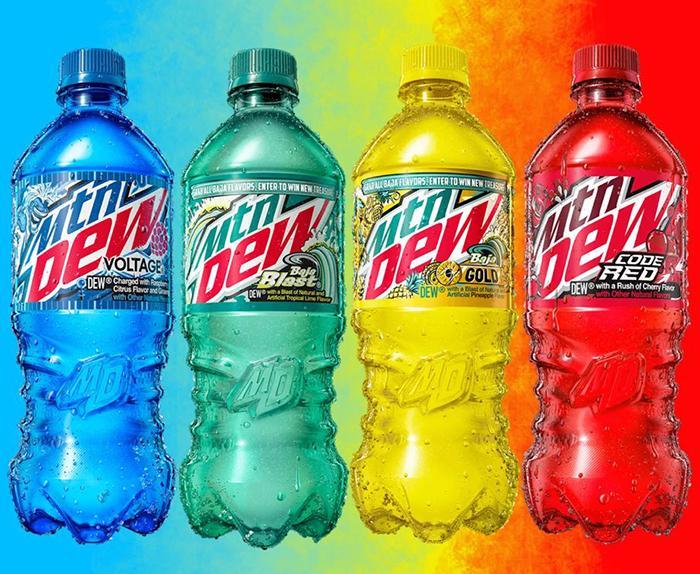
Mountain Dew has cultivated one of the most dedicated fan bases in American beverage history. Online communities on Reddit, Discord, and dedicated fan wikis like the Mountain Dew Fandom Wiki catalog every release with meticulous detail, tracking regional availability, photographing rare cans, and debating the relative merit of each flavor with genuine passion.
The DEWmocracy campaigns of 2008 and 2010 were genuinely unprecedented in consumer product marketing. PepsiCo essentially handed the keys to a billion-dollar brand to its drinkers, letting them design the flavor, name it, choose the color, and vote for the winner. The resulting emotional investment meant that when flavors like Supernova lost or were discontinued, fans didn’t just shrug. They lobbied, petitioned, and posted.
That culture of participation is exactly why rare Mountain Dew commands real money on secondary markets. Sealed cans of discontinued flavors, giveaway-exclusive bottles, and foreign market releases regularly appear on eBay at prices that would seem absurd for any other soda. A single can of a rare variant can sell for anywhere from $10 to several hundred dollars depending on the flavor and condition.
For those accustomed to hunting allocated bourbon releases or rare wine vintages, the Mountain Dew collector world operates on strikingly similar logic: limited production, passionate community, and the knowledge that once it’s gone, it’s truly gone.
How to Find Rare Mountain Dew Today
If any of these flavors have piqued your interest, here’s how to actually track them down.
For regional store exclusives: Check the Mountain Dew Fandom Wiki’s current release tracking pages. The community updates flavor availability in near real time, often noting which gas station chains carry specific flavors in which states.
For discontinued flavors: eBay remains the primary marketplace, though prices vary wildly. Sealed product commands a premium; expired product should be approached with caution. Most soda experts note that while carbonation diminishes over time, sealed cans often remain safe longer than printed dates suggest, though drinking expired soda is done at one’s own discretion.
For international exclusives: Specialty import shops, particularly those in cities with large Korean American communities, occasionally stock international Mountain Dew variants. Online import services also operate in this space.
For seasonal releases like VooDEW: Early September is typically when stock begins appearing at major retailers ahead of Halloween. Buying multiple packs on release helps, as certain iterations sell out quickly in some markets.
For giveaway-only releases: The honest answer is that these are almost entirely luck-dependent at the time of release. After the fact, eBay is your only real option.
The Single Rarest Mountain Dew: A Verdict
Defining a single “rarest” Mountain Dew requires picking a category. In terms of total units produced and distributed, the prize goes to Baja Deep Dive, with only 18,000 six-packs ever made, none of which were sold at retail. It was never on a shelf. You could not simply walk into a store and buy one. Its existence depends entirely on whether someone entered a promotional code during a specific summer and happened to win.
In terms of discontinued flavors with the strongest cultural legacy, Dewshine and Supernova lead the conversation. Dewshine combined a genuinely distinct product with striking packaging and a rich narrative about Mountain Dew’s Appalachian origins, while Supernova carries the emotional weight of a fan campaign that refuses to die.
In terms of physical rarity of existing bottles, the 12 glass bottles of Revolution awarded as a contest prize in 2011 may be the single most scarce tangible Mountain Dew product ever produced.
And in terms of ongoing, institutionalized mystery, the VooDEW series has no equal. Every fall, for several years running, it transformed a gas station soda into a national guessing game.
The answer, ultimately, depends on what you value: the story, the scarcity, or the experience of drinking something that almost nobody else has ever tasted.
The Dew You’ll Never Find at a Bar, But Might Collect Anyway
Mountain Dew is not a craft cocktail. It is not a barrel-aged stout or a single-vineyard Cabernet. But it operates on the same principles that make those things compelling to the people who love them: limited availability, community investment, and the particular pleasure of drinking something that requires some effort to find.
For a brand that started as a moonshine mixer in the Tennessee hills in 1940, that feels exactly right. The rarest Mountain Dew is not just a drink. It is a timestamp, a trophy, and sometimes, a mystery that outlasts the soda itself.
Sources: https://chesbrewco.com
Category: Drink