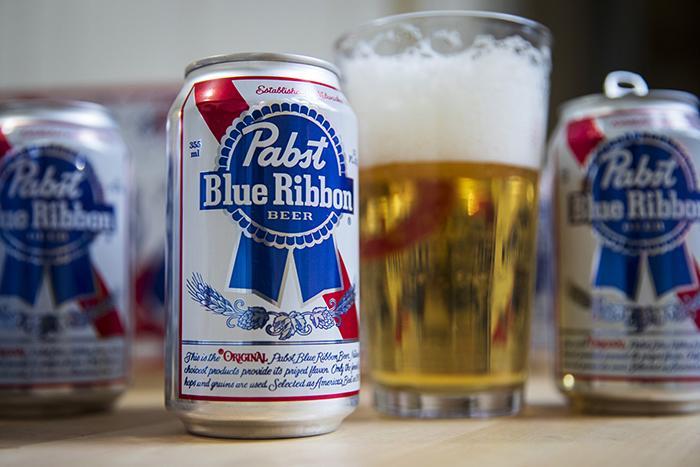
Every beer drinker in America has a PBR story. Maybe it was your first cheap can at a dive bar in college, a cold one cracked open after a long weekend project, or the only beer in the cooler at a buddy’s backyard cookout. Pabst Blue Ribbon is one of those rare brands that has somehow managed to be everywhere and yet remain curiously mysterious, especially when it comes to the question of who actually owns it.
The answer is more layered, more dramatic, and frankly more interesting than you’d expect from a $1.99 six-pack. Behind that simple blue-and-red can is a story of immigrant ambition, corporate battles, a hipster rebellion, a billion-dollar brand makeover in China, and one of the most convoluted ownership sagas in American beer history.
You Are Watching: Who Owns Pabst Blue Ribbon? The Full Story Behind America’s Most Iconic Beer Updated 10/2026
Pull up a barstool. This one’s worth knowing.
The Short Answer: Who Owns Pabst Blue Ribbon Today
Pabst Blue Ribbon is currently owned by Blue Ribbon Partners, an investment platform led by American beer and beverage entrepreneur Eugene Kashper. Since 2021, Kashper’s Blue Ribbon Partners has held full ownership of the Pabst Brewing Company, the corporate parent of the PBR brand and dozens of other legacy American beer labels.
The company itself is headquartered in San Antonio, Texas, and operates as a brand management and marketing firm rather than a traditional brewer. It doesn’t own a single major brewing facility. Instead, it contracts production out to third-party brewers, most notably City Brewing Company (under a 20-year agreement running through 2040) and, as of early 2025, Anheuser-Busch InBev (AB InBev).
So while you might assume the can of PBR you’re holding came from some gritty Milwaukee factory, it was almost certainly brewed by one of those contract partners, following Pabst’s proprietary recipe and quality standards.
From Milwaukee to the World: The Origins of Pabst Blue Ribbon
To understand who owns PBR today, you have to start at the very beginning, because this company has centuries of American history baked into its DNA.
Jacob Best and the Empire Brewery (1844)
In 1844, a German immigrant named Jacob Best Sr. established what he called the Empire Brewery on Chestnut Street Hill in Milwaukee, Wisconsin. His four sons worked alongside him, and that first year the small operation produced just 300 barrels of beer. The company was known simply as Best and Company, and it made solid, sturdy German-style lagers suited to the taste of Milwaukee’s growing immigrant population.
By 1872, Best and Company had grown to become the second-largest brewery in the United States, producing 100,000 barrels annually. Something was clearly working.
Enter Captain Frederick Pabst
The real transformation came when Frederick Pabst, a steamship captain who had worked the Great Lakes, married Maria Best, the daughter of Phillip Best, in 1862. By 1863, he was a brewer at his father-in-law’s facility. When Phillip Best retired, Frederick and his brother-in-law Emil Schandein took over operations and expanded the brewery aggressively.
After Schandein’s death in 1889, Frederick Pabst became the sole leader. In 1890, the company officially became the Pabst Brewing Company, and Frederick’s name was on the sign for good.
The Blue Ribbon That Changed Everything
The brand’s most famous marketing move came almost by accident. Starting in 1882, Pabst began tying small pieces of blue silk ribbon around the necks of its Best Select bottles, which had been winning awards at beer competitions throughout the decade. It was an extravagant gesture: by 1892, Pabst was purchasing nearly one million feet of ribbon to be tied by hand around every bottle.
Customers started asking their bartenders for “the blue-ribbon beer.” The name stuck. “Blue Ribbon” was officially added to the beer’s name in 1895, and by 1899, it had become Pabst Blue Ribbon as we know it today.
The company also claimed its beer was named “America’s Best” at the 1893 World’s Columbian Exposition in Chicago, a claim that appears on every label to this day. Whether the brand technically won that designation has been disputed by historians, but one thing is certain: Captain Pabst was a marketing genius long before modern advertising existed. He adopted artificial ice machines in 1880, lit his facilities with incandescent lights in 1882, and was among the first brewers to offer public brewery tours.
By the turn of the 20th century, Pabst was one of the largest and most celebrated breweries in the United States.
The Long Decline: From Peak to Near-Collapse
What goes up must come down, and for Pabst, the second half of the 20th century was a long, painful slide.
Sales of PBR peaked at an extraordinary 18 million barrels in 1977, making it one of the top-selling beers in America. But between 1980 and 1981, the company had four different CEOs. By 1982, it had slipped from third to fifth in national sales. The brand was losing relevance, losing shelf space, and hemorrhaging customers to Budweiser and Miller.
In 1985, real estate and beer baron Paul Kalmanovitz acquired the Pabst Brewing Company for just $63 million in a hostile takeover. Kalmanovitz was known for purchasing struggling breweries and implementing ruthless cost-cutting measures. He had no interest in growth or marketing. He trimmed expenses and focused on keeping the product alive through volume sales at the lowest possible cost. When Kalmanovitz died in 1987, ownership passed to the Kalmanovitz Charitable Trust, a nonprofit that continued operating the company with the same bare-bones philosophy.
By the time the Kalmanovitz Trust began divesting its assets in 1999, Pabst was a shell of its former self, continuing only through a contract brewing agreement with the Stroh Brewery Company that soon transitioned to MillerCoors. The landmark Milwaukee brewery had already shuttered in 1996 after 152 years of operation.
Then, in 2001, annual sales dropped to fewer than one million barrels, a staggering 90 percent below its 1975 peak. The brand was widely considered dead in the water.
The Hipster Miracle: How PBR Came Back from the Dead
What happened next is one of the most unlikely comeback stories in American consumer culture.
Portland and the Birth of the PBR Revival
Read More : Quebec Beer Prices 60 Pack Updated 10/2026
In the early 2000s, a Pabst marketing manager named Neal Stewart noticed something odd: sales were ticking up in Portland, Oregon, without any advertising campaign driving them. When he flew out to investigate, he discovered that young, creative, aggressively anti-corporate urbanites had adopted PBR as their beer of choice.
They gave Stewart three reasons: PBR was retro. PBR was cheap. And, crucially, PBR wasn’t trying to be cool.
This last point was the paradox that made everything work. At a moment when Budweiser was spending millions on flashy Super Bowl ads, PBR sat quietly on the shelf with no TV commercials, no bikini-clad spokesmodels, and no celebrity endorsements. It had working-class cachet and a genuine history. For a generation of consumers who prided themselves on rejecting mainstream corporate manipulation, that made PBR irresistibly authentic.
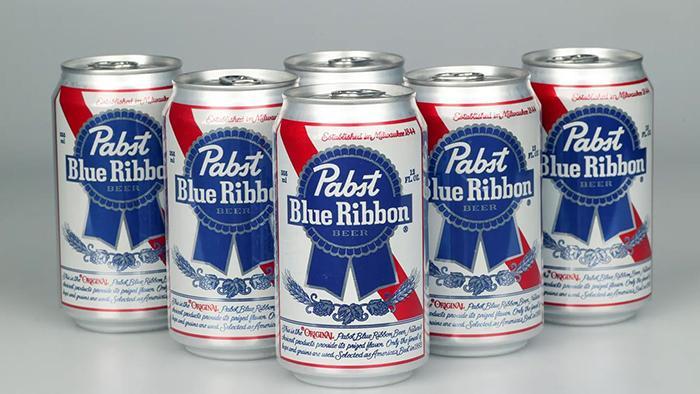
Pabst didn’t overreact. They didn’t rebrand or create a hip new logo. Instead, they built on the organic momentum by sponsoring indie music festivals, dive bars, facial hair competitions, and amateur sports events. They embraced user-submitted photography on their website. They kept the can exactly the same. The strategy was essentially: do nothing overt, and let the culture do the work.
It was marketing genius disguised as a non-marketing strategy.
The Numbers Don’t Lie
The results were staggering. Sales jumped by 20.3 percent in 2009, then by nearly 18 percent in 2010, and roughly 14 percent in 2011, according to Beer Marketer’s Insights. By 2012, Americans drank over 350 million liters (roughly 92 million gallons) of PBR, nearly 200 percent more than they had consumed in 2003, according to data from Euromonitor.
PBR overtook Coors in volume sales in 2006 and overtook Sam Adams in 2010. Between 2005 and 2010, PBR’s operating profit increased by 81 percent. The brand had gone from near-irrelevance to a billion-dollar cultural institution.
The Ownership Timeline: Every Hand That Held PBR
Here is a complete breakdown of every major ownership transition in Pabst’s history:
| Year | Owner/Event | Key Details |
|---|---|---|
| 1844 | Jacob Best Sr. | Founded Empire Brewery in Milwaukee |
| 1863 | Frederick Pabst (partial) | Married into the Best family, became co-owner |
| 1890 | Frederick Pabst (full) | Company officially renamed Pabst Brewing Company |
| 1985 | Paul Kalmanovitz / S&P Co. | Hostile takeover for $63 million |
| 1987 | Kalmanovitz Charitable Trust | Inherited after Kalmanovitz’s death |
| 1999 | C. Dean Metropoulos (acquisition process begins) | Trust begins divesting assets |
| 2010 | C. Dean Metropoulos | Purchased for a reported $250 million |
| 2014 | Blue Ribbon Intermediate Holdings (Eugene Kashper + TSG Consumer Partners) | Acquired for a reported $700–750 million |
| 2021 | Blue Ribbon Partners (Eugene Kashper, sole control) | TSG Consumer Partners exits; Kashper assumes full ownership |
Eugene Kashper: The Man Behind the Brand
Eugene Kashper is the central figure in the modern story of Pabst Blue Ribbon, and his background is as American as the brand itself, even if his origins are not.
Kashper was born in Leningrad (now St. Petersburg), Russia in 1969 to Jewish parents. When he was just six years old, his family immigrated to the United States as political refugees from the Soviet Union, eventually settling in Arizona and New Jersey. He attended the prestigious Lawrenceville School in New Jersey before earning a degree in East Asian Studies from Columbia University in 1992.
After graduating, he briefly worked for Ernst & Young, where his Russian language skills sent him to Moscow. He then pivoted entirely into the beer world, beginning his career in 1994 with the Stroh Brewery Company of Detroit, selling many of the very brands, including Old Milwaukee, Schaefer, Schlitz, and Stroh’s, that Pabst would eventually own.
By 2014, Kashper had two decades of beer industry experience behind him when he and San Francisco-based private equity firm TSG Consumer Partners acquired Pabst Brewing Company. The deal valued the company at approximately $700 to $750 million, a dramatic increase from the $250 million Metropoulos had paid just four years earlier.
Kashper was named Chairman and CEO of Pabst and relocated with his family from New York to Los Angeles, where Pabst was headquartered at the time.
In 2021, TSG Consumer Partners exited the investment, leaving Kashper as the sole controlling owner through his vehicle Blue Ribbon Partners. The company subsequently moved its headquarters to San Antonio, Texas.
His philosophy toward the brand has been clear from the start. As he put it when the 2014 acquisition was announced: “Pabst Blue Ribbon is the quintessential American brand. It represents individualism, egalitarianism, and freedom of expression.”
The MillerCoors War: When PBR Almost Died (Again)
Owning a beer brand and actually brewing that beer are two very different things, and the separation between those functions nearly destroyed Pabst in the late 2010s.
Since the closure of its Milwaukee brewery in 1996, Pabst had relied entirely on contract brewing. In 1999, the company signed an agreement with MillerCoors (later Molson Coors) to produce its beers for the next two decades. The deal was simple: Pabst paid MillerCoors to brew PBR and its other brands using Pabst’s recipes. MillerCoors made somewhere between $70 million and $80 million annually from this arrangement.
The contract included options for renewal, but in 2015, MillerCoors notified Pabst that it would not have sufficient brewing capacity to extend the agreement through 2025. Pabst accused MillerCoors of attempting to sabotage its ability to compete, and in 2018, the lawsuit went to trial in Milwaukee County Circuit Court. Pabst argued it could have been forced entirely out of business.
After a nine-day courtroom battle, both companies reached an undisclosed settlement in November 2018. The terms were never made public, but the result was clear: Pabst survived.
That near-death experience accelerated Pabst’s pivot to a new brewing partner. In 2019, the company signed a 20-year contract with City Brewing Company based in La Crosse, Wisconsin, running all the way to 2040. The transition of production volumes from Molson Coors to City Brewing was substantially completed by December 2024.
Then, in early 2025, Pabst added a second major production partner: Anheuser-Busch InBev, the world’s largest brewer. According to Pabst CEO Paul Chibe, the AB InBev agreement was designed to “strengthen the company’s supply chain” and better serve the needs of retailers and distributors across the country.
In an ironic twist of the beer industry, PBR, once defined by its scrappy independence from Big Beer, now has Budweiser’s parent company filling some of its cans.
Pabst’s Brand Portfolio: It’s Not Just PBR
One of the most surprising things about Pabst Brewing Company is just how many beloved American beer brands fall under its umbrella. Most casual drinkers don’t realize they’ve been drinking a Pabst product for years.
Here is a sample of the 30+ brands in the Pabst portfolio:
| Brand | Known For |
|---|---|
| Pabst Blue Ribbon (PBR) | The flagship; the classic American lager |
| Schlitz | “The Beer That Made Milwaukee Famous” |
| Old Milwaukee | Longtime working-class staple |
| Lone Star | “The National Beer of Texas” |
| Rainier | Pacific Northwest icon |
| Colt 45 Malt Liquor | Classic malt liquor brand |
| Ballantine IPA | Historic East Coast IPA, now revived |
| Stroh’s | Detroit-born lager with deep Midwestern roots |
| National Bohemian (Natty Boh) | Baltimore’s beloved hometown beer |
| Old Style | Chicago institution |
| Olympia | “It’s the Water” from the Pacific Northwest |
Read More : How Much Gluten Is In Beer Updated 10/2026
These brands represent a kind of living museum of American brewing history. Most were once regional powerhouses before being acquired, consolidated, and folded into the Pabst portfolio over decades of industry mergers.
The China Paradox: PBR as a Luxury Product
If the American PBR story is about authenticity and anti-elitism, the Chinese chapter of the story is something else entirely.
Pabst Blue Ribbon has a separate licensing agreement and joint venture with China Pabst Blue Ribbon, produced and marketed by CBR Brewing Company (a British Virgin Islands-registered entity) in partnership with Guangdong Blue Ribbon Group. The Chinese venture operates largely independently from the American parent company.
For Chinese consumers, Pabst Blue Ribbon 1844 is not a $2 tallboy from a gas station. It’s a $44-per-bottle luxury spirit, sold in elegant dark glass bottles with champagne-flute-style glassware, and marketed alongside comparisons to Scotch whisky, French brandy, and Bordeaux wine.
The product itself is actually different from the American version. Blue Ribbon 1844 is a specially crafted, reddish-brown strong ale, aged in uncharred American whiskey barrels, brewed to approximately 15.7 Plato and dry-hopped with Cascade hops at 38 IBUs. It’s far more complex and craft-oriented than the American lager.
The logic here is elegant: in China, where foreign American brands carry enormous aspirational weight, a brand associated with American heritage dating to 1844 can be repositioned as something prestigious. The same beer’s history that made it an underdog symbol in Portland made it a status symbol in Shanghai.
As one PBR executive overseeing the Asian market explained candidly: “There’s the nouveau riche, and in China, perception is everything.”
This dual identity, cheap and rebellious in America, expensive and prestigious in China, is one of the most fascinating brand positioning stories in modern consumer goods.
PBR’s Product Line Today: More Than Just the Classic Can
Under current ownership, Pabst has expanded well beyond its original 4.7% ABV lager. The modern PBR lineup includes:
- Pabst Blue Ribbon Original (4.7% ABV): The classic American adjunct lager, crisp and light with mild hop character.
- Pabst Extra (6.5% ABV): A stronger lager for drinkers who want more kick with the same PBR identity.
- Pabst Easy (3.8% ABV): A low-calorie light beer for health-conscious drinkers who don’t want to sacrifice the brand.
- Pabst Non-Alc (less than 0.5% ABV): A non-alcoholic option for dry months, designated drivers, or those cutting back.
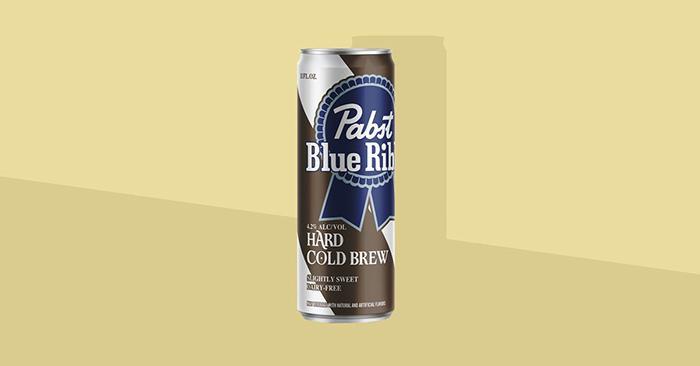
- PBR Hard Coffee: First launched in 2019, this malt beverage extension tapped into the hard coffee trend.
- PBR Hard Tea and Hard Seltzers: Further extensions into the ready-to-drink market.
- PBR Whiskey: A branded spirits extension that put PBR’s name on distilled spirits.
The brand has also made memorable cultural appearances in films including Blue Velvet, Gran Torino, and Everything Must Go, as well as TV shows including Breaking Bad and South Park, cementing its status as a shorthand for a certain kind of unpretentious American authenticity.
What “Contract Brewing” Actually Means for Your Beer
Since Pabst doesn’t own its own large-scale brewing facility, a reasonable question arises: does that affect the quality of what’s in your can?
The honest answer is no, not in any meaningful way. Contract brewing simply means that Pabst owns the brand, the recipe, and the quality specifications, while a licensed third-party brewer (City Brewing, AB InBev) operates the physical equipment that actually makes the beer. The recipe is Pabst’s, the standards are Pabst’s, and the final product must meet Pabst’s specifications before it can bear the PBR label.
This model is actually common among mid-size beer companies. It allows Pabst to maintain a lean corporate structure, minimize capital investment in expensive brewing infrastructure, keep costs low (which is how PBR stays affordable), and distribute production strategically across the country to reduce shipping distances and keep the beer fresh.
Think of it less like outsourcing and more like licensed manufacturing, the same model used across food, beverage, and consumer goods industries worldwide.
Why PBR Still Matters in 2025 and Beyond
The beer landscape has changed dramatically since PBR’s hipster revival peaked. Craft beer exploded, then matured. Hard seltzers arrived and carved out their own segment. Non-alcoholic options have surged in popularity among younger Americans. And yet PBR persists, adjusting without abandoning its identity.
Its current challenges are real: off-premise dollar sales showed a decline of about 6.2 percent in recent years, a reflection of the broader softness in the value lager segment. But the brand retains enormous name recognition, deep cultural capital, and a price point that remains uniquely compelling during periods of economic pressure.
When inflation squeezes household budgets, when consumers look for ways to socialize without overspending, PBR’s fundamental appeal, an honest, uncomplicated American beer at an honest American price, remains as relevant as it ever was.
And under Eugene Kashper’s Blue Ribbon Partners, the brand is positioned as something more than just a cheap drink. It’s a portfolio of American brewing heritage, from Lone Star down in Texas to National Bohemian in Baltimore, from Rainier in the Pacific Northwest to Old Style on Chicago’s North Side. These aren’t just beer brands. They’re regional identities.
The Verdict on PBR’s Ownership: American Through and Through
There is a persistent rumor, occasionally still floating around the internet, that PBR is owned by a Russian company, or that it’s secretly a foreign-controlled brand. This stems partly from Eugene Kashper’s Russian immigrant background and his early affiliation with Oasis Beverages, a Russian beverage company, before the 2014 Pabst acquisition.
The reality is unambiguous. Eugene Kashper is an American citizen who immigrated from the Soviet Union as a child refugee, grew up in Arizona and New Jersey, and graduated from Columbia University. His ownership vehicle, Blue Ribbon Partners, is an American investment platform. Pabst Brewing Company is headquartered in San Antonio, Texas. Its major production partners, City Brewing and AB InBev, both operate American facilities.
The only non-American element of the Pabst universe is the China Pabst Blue Ribbon joint venture, which operates under a sub-licensing agreement and is handled through a British Virgin Islands entity jointly controlled with Guangdong Blue Ribbon Group. That operation is functionally separate from the American brand you’re drinking.
PBR is as American as the bar stool it’s ordered from.
The Can Keeps Going
There’s something quietly extraordinary about a beer brand that was founded when James K. Polk was president, survived Prohibition by pivoting to cheese-making (the Pabst-ett cheese brand was eventually sold to Kraft), nearly collapsed twice, got reinvented by people who hated advertising, and sold as a $44 luxury product in China, all while keeping the same blue-and-red can design that’s been on American shelves for generations.
Pabst Blue Ribbon doesn’t need you to think it’s special. It never did. That, more than any ownership structure, any marketing strategy, or any corporate deal, is why it’s still here. Some things just belong on the shelf.
Sources: https://chesbrewco.com
Category: Beer