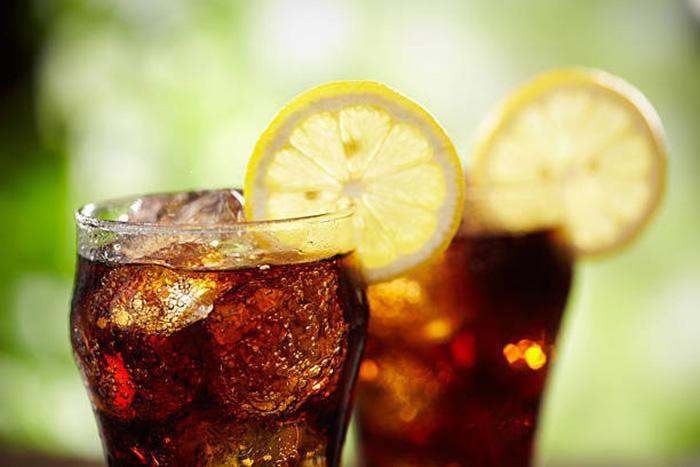
There is a moment, familiar to anyone who has ever sat down at a restaurant in Europe or Brazil, when the server brings your Coca-Cola and there, perched on the rim of the glass, is a bright wedge of lemon. It looks natural, almost inevitable. Yet for most Americans, that same moment lands like a small surprise, a citrus curveball that was never part of the deal. Whether you are a beer drinker who orders a Coke as a chaser, a cocktail enthusiast who sometimes wants something without the alcohol, or a wine lover who keeps a soda on the side, that lemon wedge raises a legitimate question: why is it there?
The answer turns out to be more layered than a simple garnish choice. It involves flavor science, cultural history, the Coca-Cola Company’s own product decisions, the biology of the human tongue, and, in a twist no one asked for, a fair amount of bacteria. If you have ever wondered whether the lemon actually makes your Coke taste better, or whether you should be dropping that wedge into your glass at all, this guide covers every angle.
You Are Watching: Why Is Coke Served With Lemon? The Full Story Behind This Classic Pairing Updated 10/2026
From Soda Fountains to Restaurant Tables: A Brief History of Lemon in Your Coke
To understand why lemon and Coke are paired today, it helps to go back to the very roots of the American soft drink tradition. In the late 1800s and early 1900s, soda fountains in drug stores and corner shops were the original customization stations. You did not just order a cola; you ordered a lemon cola, a vanilla cola, or a cherry cola, and the soda jerk behind the counter would mix it to your preference. Flavored sodas were a craft product long before they were a factory product.
The practice of adding lemon to cola is not new at all. People could once get just about any flavor of soda they wanted from a soda shop, including vanilla cola and cherry cola, and these were entirely common long before pre-flavored cans existed. When mass production standardized cola into a single, shelf-stable recipe, that customization culture did not disappear; it just moved to the table. The lemon wedge became a way for bartenders, servers, and drinkers themselves to reclaim a bit of that old soda-fountain creativity.
The Coca-Cola Company eventually took official notice. Diet Coke with Lemon was introduced in the United States in 2001, and in April 2005, Coca-Cola announced a lemon version based on regular Coca-Cola as well. The fact that the world’s most powerful beverage brand saw fit to create an entire product line around this pairing tells you something important: the combination is not a quirk. It is genuinely popular, and it has been for a long time.
People were quick to point out in recent viral debates that pairing lemon slices with Coke is far from a new thing, and that Diet Coke commonly comes with a slice of lemon in restaurants and bars. As one commenter put it, “this has been a thing since at least the 70’s.”
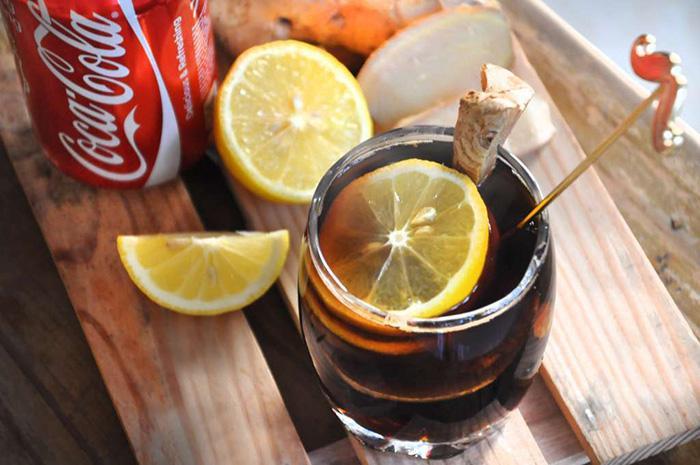
The Science Behind the Squeeze: Why Lemon Makes Coke Taste Better
If you want to understand the lemon-Coke relationship at its most fundamental level, you need to think about what Coca-Cola actually is from a flavor standpoint. Coca-Cola’s proprietary formula, known internally as “Merchandise 7X,” contains citrus oils including orange, lemon, and lime, combined with spices like cinnamon and nutmeg, with vanilla providing the subtle background note that rounds out the entire experience. In other words, lemon is already in there. Adding a fresh lemon wedge is not introducing a foreign element into Coke; it is amplifying an ingredient that was always part of the formula.
This is the first and most important piece of the flavor puzzle. When you squeeze a lemon into your Coke, you are not creating a new drink. You are turning up the volume on one of the drink’s existing notes.
How Lemon Changes the Chemistry of Your Glass
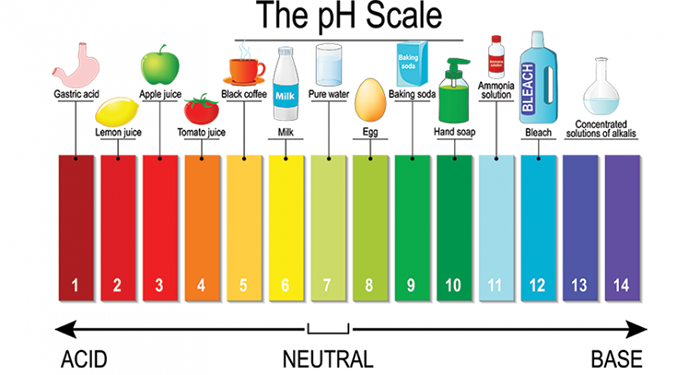
From a purely chemical standpoint, adding lemon to Coke produces several immediate effects. Lemon juice has a pH of roughly 2 to 3, which slightly lowers the overall pH of the drink. Coke is already acidic at a pH of around 2.4 to 2.6, so the change is modest but detectable. Introducing the juice also changes local surface tension, causing extra CO₂ nucleation and a short-lived increase in bubbling and foam. On the flavor side, citric acid and volatile citrus aroma compounds including limonene and citral interact with Coke’s flavor matrix, enhancing perceived brightness and suppressing the perception of sweetness.
That last point is crucial for anyone who finds Coke slightly too sweet. The crisp acidity of lemon can cut through the cloying sweetness of the soda for a more balanced sip, while also imparting another layer of complexity and enhancing the other flavors already present. It is the same principle at work when a bartender adds a citrus twist to a spirit-forward cocktail or a squeeze of lemon to a glass of iced tea. Acidity lifts and brightens the entire flavor profile.
Citrus peel oils and aroma volatiles also add a pleasant fragrance that alters perceived flavor without changing ingredients, and lemon can even mask metallic, flat, or stale notes that sometimes appear in older or warmer soda. If you have ever had a Coke from a fountain machine that tasted slightly off, a squeeze of lemon is actually a legitimate corrective measure, not just a garnish.
Why Your Tongue Is Wired to Love Citrus
There is an evolutionary dimension to this preference that goes deeper than personal taste. The human tongue is remarkably sensitive to citrus and citric acids. We have taste buds specifically attuned to citric compounds. One likely reason is that early human diets consisted of a great deal of fruit, and over time humans evolved a particular sensitivity to citrus so they could better tell when fruits were ripe and prime for consumption.
Research in flavor perception supports this further. Studies have found that lemon and peppermint are among the most refreshing aromas for food and beverages, while sweetness and thickness are actually associated with decreased freshness perception. This means that from a purely neurological standpoint, adding a citrus element to a sweet drink like Coke makes it feel more refreshing, not just taste more interesting. The lemon is doing sensory work on multiple levels simultaneously.
A World Divided: Who Actually Serves Coke With Lemon
The geographic divide on this question is real and fascinating. Walk into any sit-down restaurant in Italy, Brazil, or much of continental Europe and order a Coke, and a lemon wedge will arrive almost automatically. Do the same in the average American diner and you will get a glass with ice and nothing else.
Read More : Why Does Sprite Help When Sick Updated 10/2026
In Brazil, drinking regular Coke with lemon is more or less the norm. If you go to a restaurant in Brazil and order a Coke, the server will probably bring you a few fresh lemon slices to go with it.
Italians are big fans of serving Coke with lemon, so much so that The Coca-Cola Company developed a product called Coca-Cola Gusto Limone specifically for the Italian market. The TikTok video that went viral in 2023 and showed an American woman demonstrating the Italian habit of squeezing lemon into Coke received over 13.7 million views, almost entirely because so many Americans had genuinely never encountered the practice.
Adding a slice of lemon to Coca-Cola is a popular practice in many European countries, especially during the summer months. Unlike in the United States, where Coke is typically served plain without any fruit garnishes, European consumers often enjoy the added zest and subtle tartness that lemon provides.
Why the difference? Part of it is cultural preferences around flavor. It is worth noting that adding lemon to Coca-Cola might have something to do with the Italian preference for bitter flavors. A splash of sour and mouth-puckering citrus is the perfect way to customize the soda’s level of sweetness, allowing for increased desired astringency to shine through. American palates, historically shaped by sweeter flavor profiles across both food and drink, may simply be less inclined toward that added tartness by default.
In the United States, the lemon-with-Coke tradition does have a foothold, but it tends to be concentrated in specific contexts: Diet Coke orders at bars and casual dining restaurants, and fountain Coke ordered alongside alcohol-heavy meals where the sweetness needs balancing.
Diet Coke and the American Lemon Tradition
If there is one place in America where the lemon-and-Coke pairing has genuinely stuck, it is with Diet Coke. Walk into almost any American bar and order a Diet Coke, and there is a reasonable chance it arrives with a lemon wedge, even if you did not ask for one. This is not an accident.
Diet Coke has a lighter flavor than regular Coke, so people like the extra lemon to add a bit of tart acidity to the drink and make the taste more pronounced. The sweeteners used in diet sodas can leave a faint artificial aftertaste that many drinkers find distracting, and the citrus element masks that effectively. The lemon is doing compensatory work, filling in the flavor gap left by the absence of sugar.
This is also why the bar and restaurant world adopted the practice so widely. Bartenders understand instinctively what food scientists have confirmed in labs: a citrus garnish transforms the perception of a drink. It signals freshness, adds aromatic complexity, and makes even a simple non-alcoholic soda feel intentional and composed rather than like an afterthought.
The Cocktail World’s Influence on How We Garnish Soda
If you spend time around craft cocktail bars, you quickly notice that citrus is treated almost like a fifth spirit. It goes into nearly everything, from a simple squeeze of lime in a rum and Coke (the classic Cuba Libre) to elaborate lemon twists that perfume the surface of a martini. That culture has absolutely shaped how Americans in bar settings think about garnishing non-alcoholic drinks as well.
The Cuba Libre is worth pausing on here. This classic concoction began during the early 20th century in Cuba after the Spanish-American War and is now recognized as a contemporary classic by the International Bartenders Association, traditionally garnished with a lime wedge. The formula: cola, rum, citrus. The citrus element is not decoration. It is structural. It is what makes the drink taste like a drink rather than just rum poured into soda.
When drinkers who are familiar with that cocktail tradition order a Coke on its own, they often reach for a lemon wedge out of the same instinct. The garnish is not a fussiness. It is a calibration.
| Citrus Garnish | Flavor Profile in Coke | Best Used With | Cocktail Parallel |
|---|---|---|---|
| Lemon wedge | Bright, tart, floral | Regular Coke, Diet Coke | Tom Collins, Whiskey Sour |
| Lime wedge | Sharp, punchy, tropical | Regular Coke, dark rum drinks | Cuba Libre, Margarita |
| Orange slice | Sweet, mild, soft | Coke Zero, Cherry Coke | Aperol Spritz, Old Fashioned |
| Lemon twist (peel only) | Aromatic, subtle, bitter | Diet Coke, Coke Zero | Martini, Negroni |
For drinkers coming from a wine or beer background, the comparison also holds. A crisp lager pairs with citrus because the acids align. A dry white wine has the same kind of bright, fruit-forward acidity that a Coke-with-lemon achieves. The palates that appreciate those drinks are often the same palates that, consciously or not, appreciate what lemon does to a soda.
What Coca-Cola’s Own Product History Tells Us
The Coca-Cola Company’s commercial decisions are as instructive as any flavor science study. When a company with the market research budget of Coca-Cola commits to an entire sub-brand, it is because real consumer behavior is pointing in that direction.
Coca-Cola Lemon was launched to compete directly with Pepsi Twist, indicating how seriously both major cola companies viewed the lemon-flavored cola market in the early 2000s.
Stateside, the Coca-Cola with Lemon drink had been discontinued back in 2005, but in a throwback to the early 2000s cola flavor wars, Coca-Cola revived its lemon-flavored Coca-Cola in both original taste and zero-sugar variants. The re-release confirms what the initial launch suggested: the appetite for this combination does not go away. It simply goes dormant and waits.
Diet Coke with Lemon was introduced in the U.S. in 2001 and is still available in Coca-Cola Freestyle machines. Those Freestyle machines, increasingly common in fast food restaurants and casual dining chains across the country, quietly keep the tradition alive for anyone who wants it.
The Bacteria Problem: What Nobody Talks About at the Bar
Here is where the story takes a turn that no one who loves a lemon wedge in their drink particularly wants to hear, but that anyone making informed decisions about what goes into their glass probably should.
A study published in the Journal of Environmental Health tested 76 lemons from 21 restaurants during 43 visits. Of those, 53 lemon slices, representing 69.7 percent, produced microbial growth. A total of 25 different microbial species were recovered from the samples.
Read More : Is Malt Liquor Bad For You Updated 10/2026
The study noted that “the microbes found on the lemon samples in our investigation all have the potential to cause infectious diseases at various body sites.” However, the study in itself does not demonstrate that restaurant patrons are at high risk for contracting serious illnesses, and it could not definitively identify the origins of the microbial contaminants.
One of the biggest reasons for this contamination could be improper cleaning. Restaurants often rinse lemons rather than scrub them thoroughly. An undercover report commissioned by ABC News in 2012 revealed that employees were using bare hands to pick up lemon wedges, and bartenders not using tongs or gloves when garnishing drinks may explain the presence of bacteria. Philip Tierno, a clinical professor at New York University School of Medicine, has conducted several studies on the lemon wedges served at restaurants and the results are consistently similar.
Research at Clemson University found that “When hands were contaminated with E. coli, the bacteria were transferred to wet lemons and ice 100% of the time.” When lemons were dry, the transfer rate dropped to 30 percent.
This is genuinely alarming data. It is also important context. Philip Tierno notes that his research has turned up similar organisms all over restaurants, from ketchup bottles and salt and pepper shakers to menus and table surfaces. “Microbes are ubiquitous,” he says. “You’re not going to escape unscathed forever. You do your best to prevent unnecessary illness.”
The practical takeaway is not necessarily to abandon the lemon wedge entirely, but to be thoughtful about it. If you can’t live without it, try squeezing in the juice and then setting the wedge aside. Even though the juice has bacteria, at least you won’t have germs from the rind floating in your glass. Choosing restaurants with visibly clean bar stations and asking for lemon on the side rather than pre-dropped in your drink are also reasonable precautions.
Lemon vs. Other Ways to Upgrade Your Coke
The lemon wedge is the most classic move, but drinkers have been experimenting with variations for decades. Here is how the most common options compare across the key dimensions that matter to someone who takes their drinks seriously:
| Upgrade | Flavor Impact | Sweetness Reduction | Aromatic Effect | Hygiene Consideration |
|---|---|---|---|---|
| Fresh lemon wedge | High, bright citrus | Significant | Strong, fresh | Moderate risk (see bacteria section) |
| Bottled lemon juice | Medium, slightly flat | Moderate | Weak | Low risk |
| Lemon zest (just the peel) | Subtle, aromatic | Minimal | Very strong | Low risk if handled cleanly |
| Lime wedge | High, sharper than lemon | Significant | Different character (more herbal) | Same as lemon wedge |
| Dash of citrus bitters | Low, complex | Minimal | Nuanced, layered | Very low risk |
| Splash of fresh lemonade | High, sweet-tart | Low (adds more sweetness) | Moderate | Low risk |
For the beer drinker who occasionally reaches for a Coke, the simplest upgrade is a fresh squeeze of lemon directly from a wedge that you hold over the glass and then discard rather than dropping it in. For the cocktail enthusiast, cutting a small piece of peel and rubbing it around the rim before dropping it in delivers that aromatics-forward experience without any of the flesh-contact contamination risk. For the wine lover who appreciates subtlety, a single drop of fresh lemon juice, literally just a drop, can do the work without overwhelming the drink’s existing profile.
How to Actually Do It Right
If the science and the cultural history have convinced you to try the lemon wedge, or to refine how you use it, a few practical guidelines make a real difference.
Temperature matters more than most people realize. At refrigerator temperature, Coke’s carbonation feels sharper and the sweetness is less pronounced. When served slightly warmer, the full complexity of the spice notes becomes more apparent. This means that if you are drinking an ice-cold Coke, the lemon will feel more like a sharp contrast. If your Coke is slightly less cold, the lemon integrates more smoothly into the flavor profile.
The amount of lemon is everything. A generous squeeze from a large wedge transforms the drink almost into a lemon soda. A modest squeeze, roughly a teaspoon of juice, is what brightens without overpowering. Most bartenders and experienced Coke-with-lemon drinkers use considerably less than they think they do; the effect is amplified by carbonation.
Do not stir aggressively. Adding lemon to a carbonated drink and then stirring vigorously causes rapid CO₂ release and flattens the soda faster than normal. A light stir, or simply letting the juice sink naturally, preserves the carbonation that makes the whole experience work.
If you are at a bar, ask for the lemon on the side. This both reduces your bacteria exposure and gives you control over how much citrus enters your drink, which is something no pre-garnished glass can offer.
The Deeper Question: Is Coke Designed to Be Modified?
There is a philosophical angle to this that gets overlooked in most conversations about the lemon wedge. Coca-Cola is one of the most rigorously standardized products in human history. The company has famously protected its formula for over a century. Yet in practice, the drink has always been modified. Mexican Coke uses cane sugar. Different countries receive different formulas. And from the very beginning, in those soda fountain counters of the 1880s and beyond, customers have been adding things to it.
Coca-Cola’s proprietary blend contains citrus oils as a core ingredient, and the flavor’s success lies in its balance: sweet enough to crave, acidic enough to refresh, and spiced for complexity. It is a cultural staple tied to American nostalgia, diners, baseball games, and road trips.
What the lemon wedge does is lean into one dimension of that existing complexity. It is not a correction. It is a collaboration, a negotiation between the drinker’s palate and the drink’s built-in architecture.
For Americans who have grown up with straight Coke, the lemon wedge will always feel like an addition. For Italians, Brazilians, and much of the rest of the world, it is closer to completion, the final touch that makes the drink feel finished. Neither perspective is wrong. Both are grounded in something real: the genuine flavor logic of a drink that was always, at its core, partially citrus to begin with.
Conclusion
The next time you sit down at a bar with a Coke and someone slides a lemon wedge your way, consider what you are actually being offered. Not a garnish. Not a European affectation. Not a viral TikTok trick. You are being offered a live demonstration of how flavor memory works, a tiny sensory experiment that connects the original soda fountain counters of 1880s America to cocktail culture, food science, microbiology, and the evolutionary wiring of the human tongue.
Squeeze it. Set the rind aside. Take a sip and notice what happens to your perception of sweetness, carbonation, and freshness in real time. That moment, somewhere between science and pleasure, is exactly why the practice has survived for over a century and will almost certainly survive for a century more.
Sources: https://chesbrewco.com
Category: Drink