There’s a vodka on the shelf that looks like it belongs at a penthouse party, tastes unlike anything distilled from grain or potato, and has somehow become a cultural institution since its American debut in 2003. That bottle is Cîroc (pronounced see-rock), and whether you’re a cocktail enthusiast, a casual weekend drinker, or someone who genuinely cares about what’s in their glass, this review will tell you everything you need to know before you crack one open.
- How To Make A Beer Poster That Looks Like a Real Ad (Complete Design Guide) Updated 09/2026
- How Big Is A Pitcher Of Beer? Every Size, Price, and Pour You Need to Know Updated 09/2026
- How To Tornado A Beer Updated 09/2026
- Best Beer For Beer Cheese Updated 09/2026
- Can You Put Beer In A Checked Bag Updated 09/2026
From its origins in the sun-drenched vineyards of southern France, to its staggering celebrity-fueled rise, to exactly how it tastes when you sip it neat versus shake it into a cocktail, this is the deep-dive Cîroc review you’ve been looking for.
You Are Watching: Ciroc Vodka Review: Is This French Grape Vodka Really Worth the Hype? Updated 09/2026

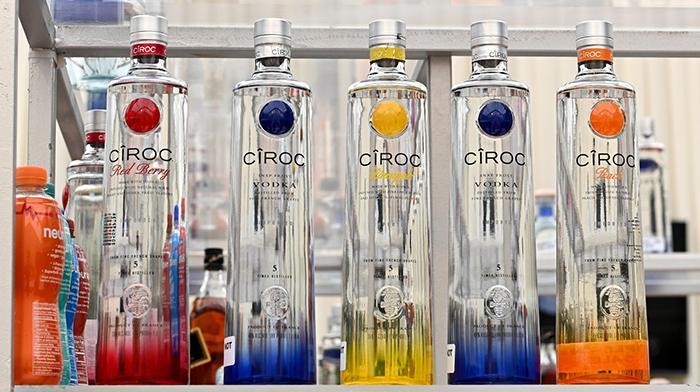
What Makes Cîroc Different From Every Other Vodka on the Shelf
The most important thing to understand about Cîroc is its fundamental difference from virtually every other vodka you’ve ever tried: it is made entirely from grapes, not grain, potato, or corn. This single fact defines everything about the spirit, from its flavor architecture to its cultural positioning.
Most of the vodkas you know, from Tito’s to Absolut to Ketel One, are built on a base of wheat, rye, or corn. These grains are fermented, distilled, and filtered until a spirit of high purity is achieved. Cîroc takes a dramatically different path.
Cîroc’s vodka is distinguished from nearly all other vodkas by being derived from grapes, rather than using grain, potatoes, or maize. It is distilled to a very high level of alcohol by volume concentration, approximately 96%, and is not aged or flavored before being diluted with water to 40% ABV (80 U.S. proof) for bottling.
The name “Cîroc” is a portmanteau of the French word cime, meaning peak or summit-top, and roche, meaning rock, a reference to the high-altitude vineyards of the Gaillac region where Mauzac grapes are grown. Even the name is steeped in French terroir.
This isn’t gimmick marketing. The grape base genuinely changes the chemistry and flavor of the final spirit. Grapes carry natural fruit esters, sugars, and aromatic compounds that grain simply does not. The result is a vodka that carries a lightness, a subtle sweetness, and a faintly floral, citrus-forward character that grain-based spirits never quite achieve.
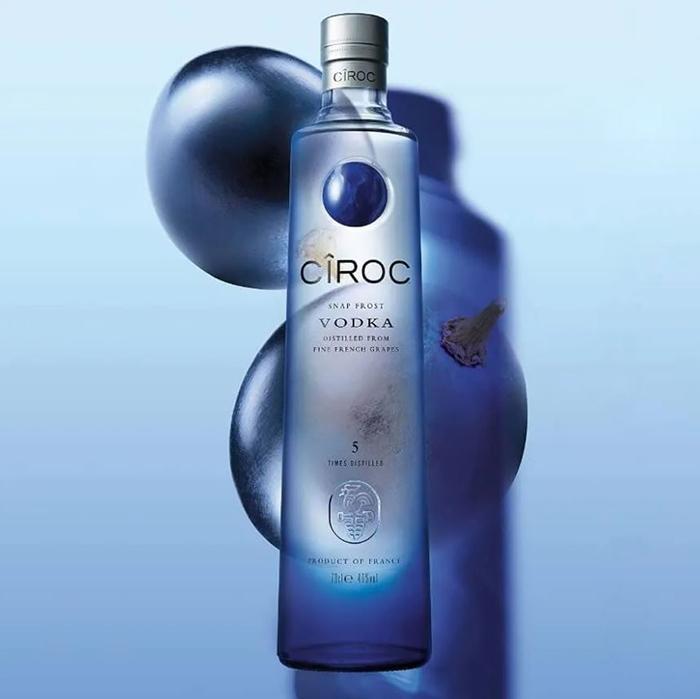
The Story Behind the Bottle: History, Founders, and the Diageo Partnership
From Bordeaux Winemaking to an Unlikely Vodka
Cîroc was founded in France by Jean-Sébastien Robicquet, whose family is from the wine-growing region of Bordeaux. Robicquet, whose family has been in the wine and spirits business since the early 17th century, had studied winemaking in university before moving into spirits production. Having worked for French cognac-maker Hennessy for ten years, he was approached by the British-based Diageo to produce a vodka made from grapes as opposed to grain or potato.
Jean-Sébastien earned his Oenology diploma in 1988, and a Masters in Law, Economics and Management of the Wine Industry in 1990. He combined his distilling expertise and his skill as an oenologist to create Cîroc Vodka in 2003. Jean-Sébastien has been recognized by the Great Council of Bordeaux Wines as ‘Commandeur de Bordeaux,’ in acknowledgement of his resolve for high quality, superior and honest products.
This isn’t a brand built by a marketing firm. It’s a spirit born from centuries of French winemaking heritage, refashioned into something the vodka world had never seen before.
The Sean Combs Effect: From 40,000 Cases to 2 Million
The brand’s commercial story took a pivotal turn in 2007 when it was teetering on the edge of irrelevance.
In 2007, rapper Sean Combs became a brand ambassador for the vodka brand, which had been struggling to sell 40,000 cases in its first few years on the market. Combs’s brand evangelism improved sales substantially; by 2014, the brand was selling more than two million cases per year.
Combs rejected Diageo’s standard endorsement offer in 2007, negotiating instead an unprecedented equal-share venture with 50% profit-sharing. He demanded the titles of brand manager and chief marketing officer. This wasn’t just a celebrity slapping their face on a bottle. Combs functioned as a genuine business partner and marketing architect, embedding Cîroc into the fabric of hip-hop culture, VIP nightlife, and aspirational luxury.
The brand’s association with Black culture, entertainment, and celebration turned it into something bottles of Grey Goose never quite managed: a cultural statement. Ordering Cîroc at a club said something about who you were and what you valued.
Other artists such as DJ Khaled (added in 2016) and rapper French Montana (starting in 2017) have also been involved in the brand’s development and marketing.
In 2025, Diageo owns Cîroc fully. The Combs partnership ended in controversy following a lawsuit filed in 2023 alleging racial discrimination in marketing investment, a story that added complexity to the brand’s cultural legacy without diminishing the quality of what’s in the bottle.
How Cîroc Is Made: The Production Process in Detail
Understanding how Cîroc is produced helps explain why it tastes the way it does. This is not a standard vodka production line.
The Grapes
To manufacture Cîroc vodka, Mauzac Blanc, or snap frost grapes from the Gaillac area of France are commonly used, along with Ugni Blanc grapes from the Cognac region.
Mauzac Blanc is one of the oldest grape varieties grown in France, cultivated in the high-altitude vineyards of the Gaillac region. Ugni Blanc is the same grape used to produce Cognac and Armagnac. Both varieties bring brightness, delicate acidity, and an inherent fruitiness that grain simply cannot replicate.
Cold Fermentation: The Wine World’s Secret, Applied to Vodka
Unlike grain, grapes don’t need heat to release their sugars, so Cîroc uses cold maceration, cold fermentation, and cold storage processes. Until now, only top fine wine producers practiced this process. This technique further preserves its distinctive freshness and extracts a more flavorful combination of the fruit character.
This is an important technical detail that separates Cîroc from most spirits. Cold fermentation slows the fermentation process, allowing the natural fruit flavors and esters to develop more fully without being destroyed by heat. The result is a more aromatic, nuanced base spirit before distillation even begins.
Read More : Is It Legal To Drink A Beer On Lunch Break Updated 09/2026
The Cîroc fermentation process lasts for two weeks to ensure the best possible flavor.
Five Distillations, Including a Final Copper Pot Run
The vodka must be distilled five times. The beginning four distillations of the Ugni Blanc grapes proceed through stainless steel column stills, while Mauzac Blanc is distilled via copper continuous stills. The distillation of the end product ranges from 96.5% for Ugni and 93.5% for Mauzac. It is at this time that the two grape mixtures are combined to make one resulting drink, with a composition of 95% Ugni and 5% Mauzac.
The fifth and final distillation takes place in a beautiful, family-owned distillery deep in the Cognac countryside. It is here that Cîroc is truly created, in a traditional, custom-made, Armagnac-style copper pot, just like they’ve done from the beginning. The pot distillation lends Cîroc Ultra-Premium its amazingly smooth texture.
The copper pot still is key. Unlike column stills that strip out nearly all congeners and character in pursuit of neutrality, a copper pot still allows some of the grape’s natural character to carry through into the final spirit. This is exactly why Cîroc tastes different from other vodkas, because it is different at a chemical and production level.
Tasting Notes: What Does Cîroc Actually Taste Like?
The Original (Unflavored) Cîroc Ultra-Premium
Appearance: Crystal clear with no visible sediment. When chilled, the liquid develops a slightly viscous, almost silky quality in the glass.
Nose: Herbal aromas and flavors of white chocolate mint, lemon Ricola lozenge, hint of spiced cherry, and citrus. There’s a brightness here that grain-based vodkas rarely deliver, almost like the faintest memory of white wine before the alcohol takes over.
Palate: Cîroc has a zesty character which ‘zings’ around the palate, culminating in a smooth and silky finish with a hint of sweetness. Long-time vodka drinkers will immediately notice what’s missing: the sharp, biting grain character that you’d get from a wheat or rye vodka. In its place is something rounder and more forgiving.
It has a noticeable Sprite vibe mingled with some sweet graininess and minty, peppery notes in the background. Grape is also apparent, with a strong, gin-like presence on the arrival.
Finish: Over ice, Cîroc vodka is truly a delight. The five distillations allow for the vodka to go down extremely smooth, and the taste is light and fresh. The finish is sweet with a very noticeable grape taste. It’s not like drinking wine or anything, but this unique grape finish does an exceptional job covering the traditional vodka burn or rubbing alcohol-like aftertaste most of us expect when drinking vodka on the rocks.
Verdict on the original: Noticeably different from grain vodka. If you’re looking for total neutrality, Cîroc may surprise you with its character. If you appreciate a smooth spirit with genuine fruit personality, you’ll find it genuinely enjoyable, especially neat over ice or in lighter cocktails where its subtlety can shine.
Honest Assessment: Who It Won’t Please
It’s worth being direct. Cîroc divides opinion, and no honest review should pretend otherwise. A segment of vodka drinkers, particularly those who prefer the ultra-neutral profile of Russian-style vodkas, find Cîroc too fruity or too much like a flavored spirit even in its unflavored form. The gin-like quality some reviewers note can feel out of place in a classic vodka martini or vodka soda where total neutrality is the goal.
That said, for mixed drinks, celebration pours, and occasions where the bottle matters as much as the spirit, Cîroc consistently delivers.
The Full Cîroc Flavor Lineup
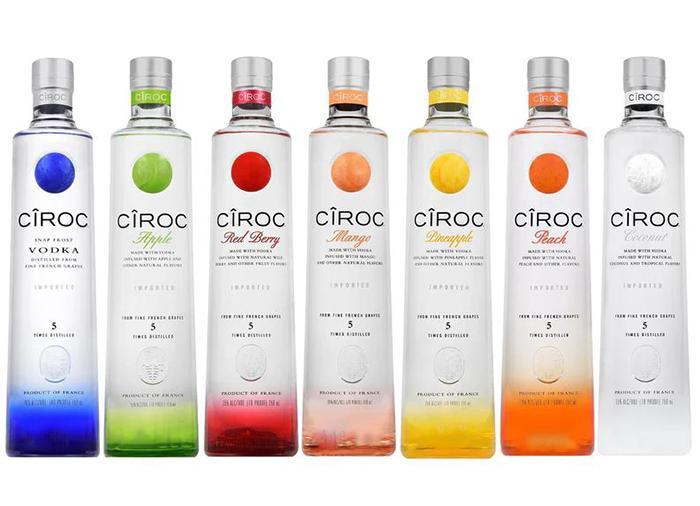
Since 2010, Cîroc has expanded into an extensive family of flavored expressions. Note: The flavored variants are bottled at 70 proof (35% ABV) in the U.S. rather than the original’s 80 proof, and are labeled “made with vodka” rather than simply “vodka.”
| Flavor | Tasting Profile | Best Served |
|---|---|---|
| Ultra-Premium (Original) | Crisp, citrus, subtle grape, silky | Neat, on the rocks, classic cocktails |
| Red Berry | Strawberry and raspberry, bright sweetness | Berry spritz, mixed with lemonade |
| Coconut | Creamy, tropical, coconut-forward | Tropical cocktails, pineapple juice |
| Peach | Juicy ripe peach, smooth and sweet | Cranberry juice, Bellini, over ice |
| Apple | Crisp green apple, light tartness | Cranberry juice, ginger beer |
| Mango | Tropical mango, vibrant and ripe | Club soda, pineapple juice |
| Pineapple | Sweet pineapple, tropical punch | Coconut water, rum cocktails |
| Amaretto | Almond, vanilla, rich and warm | Orange juice, dessert cocktails |
| Watermelon | Refreshing, juicy, summer-forward | Club soda, lemonade |
| Limonata | Lemon-forward, Italian citrus, Mediterranean-inspired | Spritz, tonic water |
Cîroc Limonata features strong, lemon-forward tasting accents that perfectly balance sweetness with a recognizable zest. The harmonious blend of bold, sun-ripened lemon flavors instantly calls to mind the citrus groves that blanket the Italian coast. It was launched in February 2024 at a suggested retail price of $29.99 and has since become a permanent addition to the lineup.
In 2025, Cîroc Limonata won the Gold Medal at the Bartender Spirits Awards, with 91 points. That’s a meaningful accolade from an industry that doesn’t hand out gold medals for marketing appeal.
Of all the flavors, Peach consistently earns the highest praise from everyday drinkers. The packaging of Cîroc is popular, and Peach Cîroc pairs very well with anything with a fruity undertone. It is a popular choice among vodka enthusiasts for its unique twist on traditional vodka.
Cîroc vs. the Competition: How It Stacks Up
You’re shopping the premium vodka shelf, and Cîroc is sitting alongside its rivals. Here’s how they compare on the metrics that actually matter to someone deciding what to buy.
| Cîroc | Grey Goose | Belvedere | Tito’s | |
|---|---|---|---|---|
| Origin | France | France | Poland | USA |
| Base ingredient | Grapes (Mauzac Blanc, Ugni Blanc) | Winter wheat (Picardy) | Dankowskie rye | Corn |
| Distillations | 5 times | 1 time | 4 times | 6 times |
| ABV (original) | 40% (80 proof) | 40% (80 proof) | 40% (80 proof) | 40% (80 proof) |
| Flavor profile | Fruity, citrus, slightly sweet, silky | Neutral, clean, slightly creamy | Dry, peppery, structured | Neutral, approachable, mild |
| Approx. price (750ml) | $30–$36 | $35–$42 | $35–$45 | $22–$27 |
| Gluten-free | Yes | Yes | No (rye) | Yes |
| Best for | Mixed drinks, celebration occasions | Classic cocktails, martinis | Purists, neat sipping | Everyday mixing, value |
While other popular vodkas like Smirnoff cost under 20 dollars for a 1.75-liter bottle, the same quantities of Cîroc and Grey Goose are priced upwards of 45 dollars.
Grey Goose leans more classic and neutral, with a slightly breadier note. If you want a traditional-tasting, very smooth vodka, Grey Goose is a strong rival. Cîroc feels more modern and a touch fruitier. Belvedere, a Polish rye vodka, tends to appeal to purists who like a drier, more structured finish. Cîroc is softer, rounder, and more crowd-pleasing for mixed drinks. Tito’s wins on price-to-performance, but Cîroc wins on image and distinctiveness.
The honest bottom line: if you want the most neutral vodka for a dry martini, Grey Goose or Belvedere are better choices. If you want something with personality, a story to tell, and a flavor profile that elevates a cocktail rather than disappearing into it, Cîroc earns its place at the top shelf.
How to Drink Cîroc: Serving Suggestions and Cocktail Recipes
Cîroc’s grape-forward profile gives it remarkable versatility across serving styles. Here’s how to get the most out of every bottle.
Neat or On the Rocks
This product cannot be served at room temperature. When served chilled, the liquid thickens, caresses the palate softly, goes down subtle and smooth with little or no bite, and the slight hint of grape hits the back of the throat. Store your bottle in the freezer if you plan to sip it straight. The cold temperature transforms the texture into something noticeably silkier and mutes any harshness.
Cîroc and Sprite (The Classic Simple Mix)
As delicious as Cîroc is to sip on the rocks, it is even more wonderful with a little Sprite. The mixed drink tastes like a slightly sweeter variation of the soda with an extremely pleasant and light grape aftertaste. Use a 2:1 ratio of Sprite to Cîroc in a highball glass over plenty of ice with a lime wedge. This is the drink that converts casual vodka drinkers into Cîroc loyalists.
The Champagne Cosmo (For Celebrations)
This is one of Cîroc’s signature cocktail concepts, designed for occasions where you want your drink to arrive looking as good as it tastes.
- 1.5 oz Cîroc Ultra-Premium
- 0.75 oz triple sec
- 0.5 oz fresh lime juice
- 0.5 oz cranberry juice
- Splash of Champagne to top
Combine Cîroc, triple sec, lime juice, and cranberry in a shaker with ice. Shake hard, strain into a chilled coupe glass, and finish with a splash of Champagne. Garnish with a lime twist. The grape notes in the vodka amplify the effervescence of the Champagne in a way that wheat-based vodka never quite achieves.
The Pomegranate Royale
- 1.5 oz Cîroc Ultra-Premium
- 1.5 oz pomegranate juice
- 0.25 oz elderflower liqueur
- Splash of Champagne
Read More : Does Beer Go Bad In Heat Updated 09/2026
Combine the Cîroc, pomegranate juice, and elderflower liqueur in a shaker with ice. Shake and strain into a flute. Top with Champagne and garnish with a twist or fresh pomegranate seeds. This drink showcases why Cîroc’s natural fruit character makes it an ideal companion to sparkling wine.
Cîroc Peach Bellini
- 1.5 oz Cîroc Peach
- Top with Prosecco
- Splash of peach nectar
Build directly in a flute. No shaking required. This is a classic Bellini recipe created with Cîroc Peach and Champagne. It’s low-effort and genuinely elegant, the kind of drink that works at a Sunday brunch or a rooftop evening equally well.
Cîroc Apple and Cranberry
- 1.5 oz Cîroc Apple
- 3 oz cranberry juice
- 0.25 oz fresh lime juice
Build in a rocks glass over ice, stir gently, and garnish with apple slices and fresh cranberries. The green apple tartness of the vodka cuts through the sweetness of the cranberry in a way that balances beautifully. This is a crowd-pleasing party drink that requires almost no bartending skill and looks far more impressive than the effort involved.
The Mediterranean Limonata Spritz (Summer Showstopper)
- 1.5 oz Cîroc Limonata
- 0.5 oz elderflower liqueur
- Top with Prosecco and club soda
- Garnish with fresh lemon slices
Fill a wine glass with ice. Add Cîroc Limonata Vodka and elderflower liqueur. Top with Prosecco and club soda. Gently stir to combine. Garnish with fresh lemon slices. Serve and enjoy this light and bubbly cocktail, perfect for a sunny afternoon. This drink captures exactly what Cîroc Limonata was designed for: the feeling of sitting on a terrace somewhere on the Italian coast with a drink in hand and nothing urgent on the agenda.
Price, Value, and Where to Buy
Cîroc Ultra-Premium (750ml) retails for approximately $30–$36 at most American liquor stores and online retailers. You’ll find it at Total Wine, BevMo, Specs, state-run liquor stores, and major chains like Walmart and Target in markets that allow spirits sales.
The flavored 750ml expressions typically run $28–$33, with the Limonata positioned at $29.99 as a permanent addition. Larger 1.75-liter formats are available and bring the per-ounce cost down noticeably.
Is it worth the price? Compared to budget vodkas in the $15–$20 range, the gap in quality is real and noticeable, especially when sipping neat or in simple cocktails where the spirit carries the drink. Compared to Grey Goose or Belvedere at similar or slightly higher price points, the choice becomes more about style preference: do you want a classically neutral premium vodka, or one with a point of view?
The ultra-premium vodka shelf is crowded. If you care about smoothness, presentation, and a hint of personality in your vodka, Cîroc lands well above average. If you want absolute neutrality at the lowest possible price, it may feel like overkill.
Awards, Recognition, and Expert Scores
Cîroc has accumulated meaningful critical recognition over its two decades on the market. These aren’t participation trophies.
- In 2025, Cîroc Limonata won the Gold Medal at the Bartender Spirits Awards, with 91 points, validated by professionals who taste spirits for a living.
- The original Cîroc has been consistently rated in the 88–92 point range across major spirits scoring publications including Tastings.com and Distiller.
- Cîroc Limonata Flavored Vodka was rated 86 points out of 100 by Tastings.com in early 2025.
What Real Drinkers Say: Honest Consumer Takes
Beyond the professional reviewers and marketing materials, the most useful signal comes from the people who actually buy the bottle and take it home.
The picture is mixed in the most interesting way. On one end, you have enthusiastic loyalists who describe Cîroc as “the smoothest vodka I’ve ever tasted” and reach for it as their default. On the other end, committed vodka traditionalists find its grape character too pronounced, its flavored lineup too sweet, and its premium price tag hard to justify when they prefer neutral spirits.
The consensus among casual drinkers tilts positive, with specific consistent themes across hundreds of reviews:
What people love: The smoothness is widely praised. It doesn’t punish you with harsh burns. The bottle looks premium and photographs well, which matters in the social media era. The flavored variants make it genuinely easy to drink for people who don’t ordinarily enjoy spirits. The Peach and Apple expressions in particular earn repeatedly high marks from everyday drinkers.
What divides opinion: People who drink vodka for its neutrality often find Cîroc has too much going on. The gin-like quality some note can feel jarring in simple vodka soda applications. And for a segment of drinkers, the Diddy association, regardless of the legal controversies, remains a barrier.
What critics consistently say: The price-to-quality ratio is competitive at the $30–$36 range. It’s not overpriced for what it delivers.
Is Cîroc Gluten-Free?
Yes. Because Cîroc is made entirely from grapes with no grain involvement at any stage of production, it is completely gluten-free. This matters significantly for the approximately 3 million Americans living with celiac disease and the larger population of gluten-sensitive drinkers who want to enjoy spirits without anxiety about cross-contamination. It’s one of the few premium vodkas where you can confirm the gluten-free status without reservation, because the production method makes it structurally impossible to contain gluten.
Cîroc’s Cultural Legacy and What It Means Today
Whatever your opinion of celebrity endorsements and hip-hop marketing, it’s impossible to discuss Cîroc without acknowledging what it did culturally. It didn’t just sell vodka. It helped reshape American drinking culture’s relationship with premium spirits, demonstrating that luxury liquor could be aspirational and joyful rather than stuffy and exclusive.
It introduced a generation of younger drinkers, particularly Black American consumers who had historically been underserved by premium spirits marketing, to ultra-premium vodka as a celebration staple. The brand’s visibility at New Year’s parties, music videos, awards events, and birthday celebrations gave it a cultural currency that advertising dollars alone couldn’t buy.
The vodka category has shifted. People aren’t just downing shots anymore; they’re curating bar carts, experimenting with home mixology, and looking for spirits that say something about their taste. Premiumization, trading up to better bottles, is one of the strongest trends in spirits. Consumers are more willing to buy fewer bottles, but better ones. Cîroc is built for this moment: it gives you a recognizable name, strong design, and a genuine point of difference (the grape base) in a category where many products feel interchangeable.
Final Verdict
| Category | Score |
|---|---|
| Taste (Neat) | 8/10 |
| Mixability | 9/10 |
| Smoothness | 9/10 |
| Value for Price | 7.5/10 |
| Flavor Variety | 9/10 |
| Label and Presentation | 9/10 |
| Overall | 8.5/10 |
Who should buy Cîroc: Anyone who enjoys cocktails and wants a premium base spirit with genuine character. Home bartenders building a bar that looks as good as it drinks. Gluten-free drinkers who want a top-shelf spirit without compromise. Anyone who entertains and wants a bottle that communicates taste and occasion without explanation.
Who might prefer something else: Vodka purists who demand total neutrality in a dry martini. Drinkers on a tighter budget who prioritize value over branding. Those who dislike any fruit character in their spirits.
Conclusion
Here’s the thing about Cîroc that no other piece of marketing will tell you: the bottle has already earned its reputation. It doesn’t need another celebrity to vouch for it or another limited-edition flavor to stay relevant. The grape-based distillation process is genuinely distinctive, the five-distillation production is legitimately meticulous, and the flavor is unlike anything else sitting at that price point on the American shelf.
What Cîroc ultimately offers isn’t just a good vodka. It’s a choice, a deliberate decision to step off the grain-vodka conveyor belt and try something that approaches the spirit category from a different angle entirely. Whether you’re building a home cocktail program, looking for a reliable celebration bottle, or simply curious about what vodka tastes like when it starts with French grapes instead of winter wheat, there’s a very real argument that one evening with Cîroc over ice will tell you more about this category than a thousand tasting notes ever could.
Pour it cold. Sip it slowly. And let the vineyards of southern France make their case.
Sources: https://chesbrewco.com
Category: Beer