Miller High Life Vs Miller Lite: The Ultimate Beer Battle Every American Drinker Needs to Know
There are two beers that have shaped the American drinking experience more than almost anything else on the shelf: Miller High Life and Miller Lite. They come from the same Milwaukee-born brewery, they share the same founding yeast strain carried over from Germany by Frederick Miller in the 1850s, and yet they represent two completely different philosophies of what beer should be and what it should say about the person drinking it. One is the self-proclaimed Champagne of Beers, a classic lager with over 120 years of history. The other is the original light beer, a product so revolutionary it created an entire new category. Whether you’re cracking one open at a tailgate, pouring one for a backyard cookout, or just standing at the fridge at the end of a long Tuesday, the choice between these two tells a story.
- How Long After Taking Ibuprofen Can You Drink Alcohol? The Real Answer (Backed by Science) Updated 10/2026
- How Long Can You Live Drinking 12 Beers A Day Updated 10/2026
- Is Sol Beer Gluten Free Updated 10/2026
- Is There Formaldehyde In Budweiser Beer Updated 10/2026
- Does Beer Go Bad In Heat Updated 10/2026
This breakdown goes deep. Flavor, history, calories, carbs, ABV, price, culture, food pairings, and the very soul of each beer. By the time you finish reading, you’ll never look at either can the same way.
You Are Watching: Miller High Life Vs Miller Lite Updated 10/2026
The Origins: Two Very Different Births
Miller High Life: Born on New Year’s Eve, 1903
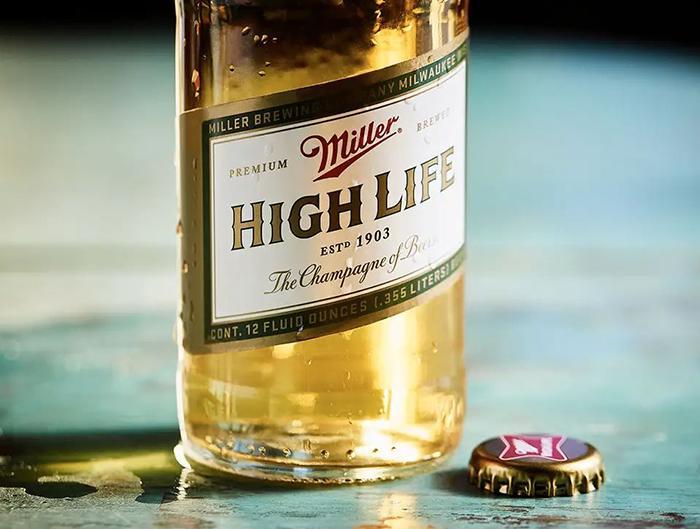
Miller High Life didn’t just arrive. It made an entrance. On December 30, 1903, the Miller Brewing Company introduced the world to High Life, a beer that was deliberately positioned as a luxury product. Bottled beer itself was a novelty at the time, and most Americans got their beer straight from tavern taps. High Life came in clear glass bottles with elongated necks modeled directly after Champagne bottles, complete with ornate foil wrapped around the neck and cap, mimicking the look of fine French sparkling wine. The message was unmistakable: this is not ordinary beer.
The slogan “The Champagne of Bottled Beers” was adopted as early as 1906, reportedly after a contest to name the brand officially captured the spirit of what Miller was aiming for. High Life debuted during the era when a case cost $1.80, the modern equivalent of roughly $62 today, placing it firmly in premium territory. The iconic “Girl in the Moon” mascot followed in 1907, when advertising manager A.C. Paul, reportedly lost in the northwoods of Wisconsin, was struck by a vision of a woman perched on a crescent moon. Illustrator Thomas Holmes translated that vision into an image that has graced High Life labels for over a century, becoming one of the longest-running advertising mascots in American history.
The brand soared through the mid-20th century, becoming so popular around 1950 that Miller president Fred C. Miller reportedly said if they could produce 5 million barrels, he could sell every single drop. In fact, Miller had to ration supplies to distributors during peak demand, with some thirsty customers reportedly driving across state lines to Wisconsin just to bring back cases of High Life.
The pivotal transformation came in the early 1970s when Philip Morris acquired the brewery and McCann-Erickson became the new advertising agency. The brand was repositioned: out went the country club imagery, in came oil workers and longshoremen celebrating the end of a shift. The “Miller Time” campaign was born, and from 1970 to 1978, Miller High Life sales quadrupled. The phrase “Miller Time” became so embedded in American culture that it remains recognizable today, even though it now lives primarily under the Miller Lite banner.
Miller Lite: The Beer That Changed Everything in 1975
Miller Lite‘s origin story is messier, more litigious, and more interesting than its marketing has ever let on. The science behind low-calorie beer traces back to the 1960s, involving a Chicago brewer called Meister Brau and an enzyme called amyloglucosidase, which converts unfermented starch into fermentable sugar, dramatically reducing calories and carbohydrates in the final product. Miller Brewing acquired the bankrupt Meister Brau brewery in 1972, getting the Lite brand in the deal. The recipe was reformulated, the name was cleaned up, and test marketing launched in 1973 in Springfield, Illinois; Providence, Rhode Island; Knoxville, Tennessee; and San Diego, California.
The challenge was cultural, not chemical. Light beer was seen as a women’s drink, a diet product, something no self-respecting man would order at a bar. Miller’s solution was audacious: hire the manliest men in America to argue passionately about it. Football legends like Dick Butkus, Ray Nitschke, Bubba Smith, and John Madden appeared in commercials debating whether Miller Lite’s greatest virtue was that it “Tastes Great” or is “Less Filling.” The debate was often staged as a mock Wild West saloon brawl, voices rising, everyone taking sides. It was absurd, charismatic, and completely effective.
When Miller Lite launched nationally in 1975, it was an immediate phenomenon. Advertising Age magazine would later rank the “Tastes Great, Less Filling” campaign as the eighth best advertising campaign in the entire history of American advertising. Production surged from 12.8 million barrels to 24.2 million barrels by 1977. Miller went from the seventh-largest U.S. brewery in 1970 to the second-largest by 1977. Anheuser-Busch was so rattled it launched Natural Light in 1977 and Bud Light in 1982 directly in response. An entire industry category, the American light beer, was born because of Miller Lite, a fact Molson Coors celebrates every year.
In 2025, Miller Lite turned 50, and the brand celebrated with throwback packaging, nostalgic campaigns featuring a new generation of celebrity all-stars including J.J. Watt, Mia Hamm, and David Ortiz, and a renewed “Tastes Great, Less Filling” campaign designed to reach a new generation while honoring the original debate. The original recipe, they say, was developed in Fort Worth, Texas, at a Miller brewery off Interstate 35W that has been running for half a century.
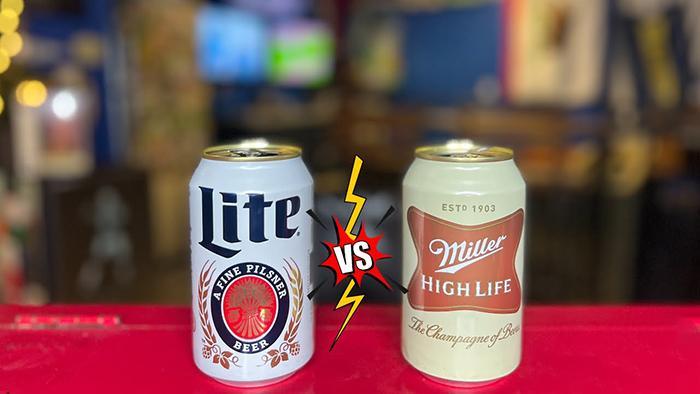
Flavor Profile: What Each Beer Actually Tastes Like
This is where opinions get loud. And both sides have legitimate points.
Miller High Life’s Taste
Miller High Life is an American-style adjunct lager brewed with water, malted barley, corn syrup (used in fermentation, not as a sweetener in the final product), and hops. The yeast, notably, is the same strain that Frederick Miller carried in his pocket when he immigrated from Germany and founded the brewery in the 1850s. That’s not marketing copy. That’s documented history confirmed by Molson Coors archivists.
The flavor profile is distinctly malty and slightly sweet. Reviewers and beer enthusiasts consistently describe notes of grain, cornbread, and caramel malt, with a bready, slightly sweet finish that lingers pleasantly. The IBU (International Bitterness Units) rating hovers around 7, making it among the least bitter mainstream beers in America. Its carbonation level is notably high, which is part of what earned it the Champagne comparison in the first place. That carbonation gives it an effervescent, lively mouthfeel.
The body is light-to-medium, meaning it doesn’t feel heavy or syrupy, but there’s something there. Bartenders, including genuinely skilled craft-focused ones, have long admitted a fondness for High Life. It’s the kind of beer that makes sense after a long shift. Clean, simple, slightly sweet, and easy to drink without demanding anything from you.
One characteristic worth noting: Miller High Life comes in clear glass bottles, which normally would make a beer susceptible to “skunking” (a chemical reaction triggered by UV light that ruins a beer’s flavor). Miller solved this by using a modified hop extract that prevents the reaction, meaning the beer is stable in that distinctive clear bottle regardless of light exposure.
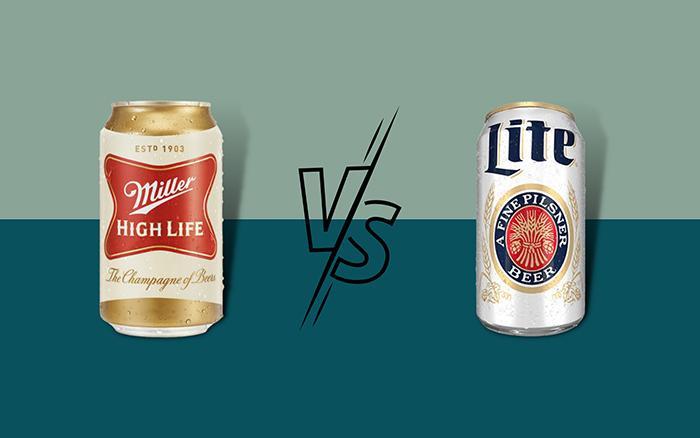
Miller Lite’s Taste
Miller Lite is brewed with Galena hops from the Pacific Northwest and Saaz hops, a noble variety used in traditional Czech and German pilsners, alongside two-row malted barley and a small amount of corn syrup used solely for fermentation. The enzyme-based brewing process that originally defined Lite beer reduces carbohydrate content by converting starches into fermentable sugars, resulting in a cleaner, crisper, lighter body.
Read More : How Long Will Beer Last In Growler? Updated 10/2026
The taste profile is hop-forward for a light American lager, which sets it apart from High Life. There’s a mild bitterness (approximately 10 IBU), a clean finish with almost no aftertaste, and a subtle maltiness that keeps it from tasting like water. Many drinkers describe it as refreshing, approachable, and endlessly sessionable. It won gold medals in American light lager competition in both 1996 and 1998, so the quality claim isn’t just marketing.
The honest comparison is this: High Life has more character, more body, and a more memorable flavor. Miller Lite is more neutral, more drinkable across an entire afternoon, and less likely to feel like it’s weighing you down. Neither is wrong. They’re designed for different moments.
The Numbers: Calories, Carbs, ABV, and IBU Side by Side
Before we go any further, here is every key metric compared in one place:
| Metric | Miller High Life | Miller Lite |
|---|---|---|
| ABV | 4.6% | 4.2% |
| Calories (12 oz) | 141 | 96 |
| Carbohydrates | 13.1g | 3.2g |
| Protein | 0.5g | 0.5g |
| Sodium | 10mg | 5mg |
| Fat | 0g | 0g |
| IBU | ~7 | ~10 |
| Style | American Adjunct Lager | American Light Pilsner |
| Color | Pale golden | Pale golden |
The 45-calorie gap between the two is more significant than it sounds. If you drink three beers, that’s a 135-calorie difference, roughly equivalent to swapping out one entire additional beer. Over a summer of cookouts, tailgates, and Friday evenings on the porch, those numbers accumulate. For anyone tracking macros or watching carbohydrate intake, the difference in carbs is even more striking: 13.1 grams vs. 3.2 grams per 12-ounce serving. High Life carries roughly four times the carbs of Lite.
On the alcohol side, High Life’s 4.6% ABV gives it a measurable edge. The 0.4% difference may seem negligible, but it translates to approximately 10% more alcohol per serving compared to Lite. At $9.99 for a 12-pack of High Life vs. roughly $12.99 for Miller Lite, the value calculation per unit of alcohol decisively favors High Life.
Packaging and Brand Identity: Clear Bottles vs. Classic Cans
There are two very different visual languages at work here, and they signal very different brand identities to anyone who picks one up.
Miller High Life arrives in its iconic clear glass long-neck bottle, shaped like a champagne bottle, adorned with the Girl in the Moon logo and a gold-and-red label. The packaging hasn’t changed dramatically in over a century. It communicates nostalgia, craftsmanship, and a certain working-class elegance. The clear bottle is a deliberate statement of confidence: look at how clear and beautiful this beer is. It’s also available in cans with matching gold labeling.
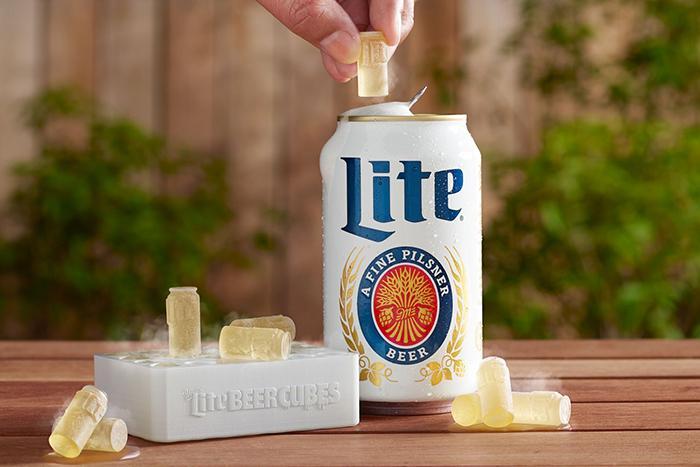
Miller Lite typically comes in its white-and-blue packaging, a look the brand returned to in 2014 after years in blue-only cans that consumers kept confusing with soda. The original 1975 can design, white with bold “Lite” lettering and red-and-blue details, remains one of the most recognized pieces of American beer packaging in history. In 2025, for the 50th anniversary, Miller Lite leaned heavily into throwback packaging featuring the original design to reconnect consumers with the brand’s heritage.
Both styles are available in 12-ounce cans, 16-ounce tallboys, and bottles, as well as 6-packs, 12-packs, 24-packs, and 30-packs.
Price: What Your Dollar Actually Buys
American beer has always been, in part, an economic statement. Both of these beers live in the “value” and “below-premium” segments of the market, but they’re not priced identically.
Miller High Life 6-pack: typically $6.49–$7.49, depending on retailer and market. Miller Lite 6-pack: typically around $8.99 at most retailers.
At the 12-pack level, High Life often runs around $9.99 while Lite can reach $12.99. That’s a consistent $3–$4 difference that becomes very real over the course of a summer. This price gap isn’t accidental. High Life has positioned itself as the premium value beer, while Lite commands a slight premium based on its broader popularity and market recognition.
According to market observations from 2024, the “below-premium category,” which includes High Life, has been growing as inflation pushes consumers to reconsider premium light beer pricing. Miller Lite, now ranking among the top five selling beers in the United States, holds its price point through sheer brand recognition and loyalty. High Life, meanwhile, is quietly becoming the savvy drinker’s choice: more alcohol, more flavor, and a lower price tag.
Marketing Culture: The Everyman vs. The Athlete
The cultural identity of each beer has been shaped almost entirely by advertising, and the contrast is fascinating.
Miller High Life was born luxury, reborn everyman. The “Miller Time” campaign, launched in the early 1970s by McCann-Erickson, repositioned High Life from a country club beer to the beer you drink after honest work. Oil workers, construction crews, longshoremen, people who had earned their beer, became the face of the brand. The message was democratic and affirming: you’ve worked hard, you deserve this, it’s Miller Time. Sales quadrupled in eight years.
The brand also carries one of beer’s most legally contested slogans. In 2023, Belgian customs authorities destroyed a shipment of 2,352 cans of Miller High Life destined for Germany, after France’s Comité Champagne argued the “Champagne of Beers” slogan violated European protected designation of origin laws. Molson Coors, which owns the Miller brand today, responded by noting that High Life has proudly worn that nickname for nearly 120 years. The slogan remains untouchable in the United States.
Miller Lite, by contrast, built its identity around masculine sports credibility. The original gamble, putting NFL legends in bar arguments about a diet beer, remains one of the most brilliant marketing pivots in American consumer goods history. It didn’t just sell Miller Lite. It changed what it meant to drink a light beer. By 2024, Miller Lite brought back the “Tastes Great, Less Filling” debate with a modern all-star cast including J.J. Watt, Mia Hamm, David Ortiz, Reggie Miller, and Jorge Posada, airing the new campaign during March Madness, a fitting venue for a beer that has always been intertwined with American sports culture.
In 2025, celebrating its 50th anniversary, Miller Lite called itself “the beer that created an entire category”, a claim that holds up to scrutiny. Light beer, by 2002, accounted for 44 percent of total U.S. beer sales, a market that was essentially zero before 1973.
Food Pairings: What to Eat With Each Beer
The different flavor profiles of these two beers point them toward slightly different meals, though both play well in casual American settings.
Pair Miller High Life With:
The maltier, slightly sweeter profile of Miller High Life makes it a natural companion for rich, savory American food. Its carbonation cuts through fat, its malt sweetness balances salt and spice, and its caramel notes complement anything with Maillard browning.
- Pizza (especially pepperoni or sausage): the carbonation lifts the grease, and the malty sweetness balances acidic tomato sauce
- Hot dogs and brats: the classic stadium pairing that never fails
- Deep-fried appetizers like cheese curds or fried pickles
- Spinach artichoke dip and similar creamy, cheesy dishes
- Buffalo wings: the sweetness offsets the heat
Pair Miller Lite With:
Read More : What Is The Healthiest Beer To Drink Updated 10/2026
Miller Lite‘s lighter body and clean hop bitterness make it more versatile as a palate cleanser, cutting through richer dishes and refreshing the palate between bites.
- Grilled chicken and fish: the light body doesn’t overwhelm delicate proteins
- Bacon cheeseburgers: the mild bitterness cuts through the fat
- Tacos and Mexican-inspired food: refreshes between spicy bites
- Salads with grilled protein: a rare beer-salad pairing that actually works
- Lighter appetizers: shrimp cocktail, bruschetta, fresh salsas
Who Drinks Each Beer, and Why
The fan bases of these two beers overlap more than marketers might suggest, but each has a core identity.
Miller High Life drinkers tend to skew toward those who appreciate the history and character of traditional American lager. Bartenders love it, craft beer drinkers who want something uncomplicated love it, and budget-conscious drinkers appreciate its pricing. It has a cult following among people who see it as honest, unfussy, and underrated. The clear bottle, the Girl in the Moon, the gold label: it all says something confident and slightly retro about the person holding it.
Miller Lite drinkers are often drawn by convenience and familiarity. It’s the beer that older sports fans grew up watching athletes drink on television, the beer that defined “light” for an entire generation. Younger consumers encounter it through the ongoing “Tastes Great, Less Filling” nostalgia campaigns. Health-conscious drinkers appreciate the 96-calorie profile. And social drinkers value the ability to have several over a long afternoon without feeling too full or too buzzed. It’s the sessionable, reliable, ever-present option.
The Champagne Controversy: A Legal Battle Worth Knowing
One of the most remarkable stories attached to Miller High Life has nothing to do with beer flavor and everything to do with branding. In early 2023, Belgian customs authorities intercepted a shipment of 2,352 cans of Miller High Life en route to Germany from the United States. The Comité Champagne, the official trade body that protects the Champagne designation in France, requested the destruction of the entire shipment on the grounds that the “Champagne of Beers” slogan infringes the European Union’s protected designation of origin for Champagne. Belgian customs complied. Every single can was crushed.
Molson Coors pointed out that the slogan has been used for nearly 120 years, that Miller High Life is not exported to the EU under normal circumstances, and that the situation was highly unusual. But it underscores a fascinating reality: a slogan created in early-20th-century Milwaukee, meant to convey aspirational quality in the American market, is considered legally threatening enough by French wine producers to warrant destroying thousands of cans of beer in a Belgian port in 2023.
In the United States, “The Champagne of Beers” remains fully protected and deeply beloved. It continues to appear on every bottle and can of Miller High Life sold in America.
Miller Lite Turns 50: What the Anniversary Means
In 2025, Miller Lite officially celebrated its 50th anniversary, a milestone that the brand used to reinforce its claim to having invented the light beer category. The celebration included limited-edition throwback packaging, new commercials featuring the revived “Tastes Great, Less Filling” debate, and, perhaps most memorably, a campaign that leaned into the beer’s Texas connection. The recipe for Miller Lite was developed at the Fort Worth brewery off Interstate 35W, and the 50th anniversary campaign made that origin a central part of the storytelling.
For the 2024 Super Bowl, Miller Lite took a completely different approach: rather than buying expensive TV ad time, the brand invited 1,000 fans to become “running ads” by wearing Miller Lite jerseys with QR codes. Every scan of that code earned the wearer $100. The campaign, fronted by comedian Rob Riggle, was widely praised for its creativity and community-building approach, a long way from the original athlete-driven bar arguments of 1975 but very much in the same spirit of connecting real people to the beer.
How They Compare in the Broader Beer Market
Both beers exist within a beer industry that has changed dramatically since either was introduced. Craft beer, hard seltzers, non-alcoholic beer, and RTD cocktails have all taken share from traditional American lagers. Yet both High Life and Lite have survived, and in some ways thrived, precisely because they represent something dependable in a market full of novelty.
Miller Lite consistently ranks among the top three to five best-selling beers in the United States, a position it maintains through brand loyalty, sports sponsorships, and that enduring cultural identity built over five decades.
Miller High Life holds a firm position in the “below-premium” segment, a category that has been gaining momentum since 2021 as inflation has prompted American drinkers to reconsider whether premium-priced light beers are worth the extra cost. Sales data from 2024 indicate that value-oriented beers like High Life have been outperforming their premium counterparts precisely because inflation has made cost-consciousness fashionable again.
Both beers are owned today by Molson Coors Beverage Company, which inherited them through a complex series of acquisitions and mergers involving Philip Morris, SABMiller, and Miller Brewing Company over the decades.
The Verdict: Which One Should You Drink?
This is the question, and the answer depends entirely on who you are and what the moment calls for.
Choose Miller High Life if:
- You want more flavor for your money
- You’re pairing the beer with food and want something that holds its own
- You’re watching your budget and want the better ABV-per-dollar ratio
- You appreciate history, character, and a beer with an actual story behind it
- You want something a little more interesting than a standard light lager without paying craft beer prices
Choose Miller Lite if:
- You’re counting calories and 96 is a real factor in your decision
- You want a sessionable beer for a long afternoon with friends
- You need the lowest-carb option (3.2g is genuinely impressive for a flavorful lager)
- You’re pairing it with lighter food and don’t want the beer to overpower the meal
- You grew up on it and there’s a familiar, comfortable rightness to cracking one open
The truth is that most Americans who drink one of these regularly have probably tried both, and many keep both in the fridge depending on the occasion. That’s not indecision. That’s actually the correct answer.
A Note on Miller High Life Light: The Third Option
For completeness, it’s worth mentioning that a third option briefly complicates the comparison. Miller High Life Light, introduced in 1994, was discontinued in 2021 and brought back in late 2024, currently distributed in the Great Lakes region. It sits at 107 calories, 4.1% ABV, and lands between the two flagship beers on virtually every metric. It’s less filling than regular High Life, slightly more flavorful than Lite, and carries the distinctive gold-and-blue High Life packaging in a lighter format. If you’re in a region where it’s available, it’s worth trying as a literal middle ground between the two.
Conclusion
Here is what both of these beers have in common that no chart or calorie count captures: they are American. Not in the shallow flag-waving sense, but in the deeper sense that they emerged from a specific kind of American ambition, the drive to make something simple into something aspirational, to argue passionately about small things, to believe that the beer in your hand at the end of a hard week means something. Miller High Life dared to call itself the Champagne of Beers in 1903 and has been proving that audacity right ever since. Miller Lite dared to tell men it was okay to drink a lighter beer in 1975 and changed what an entire industry looked like. You’re not just choosing between 141 calories and 96, between 4.6% and 4.2%. You’re choosing between two different versions of the same story: what it means to enjoy yourself, honestly, without pretense, among people you like.
That’s worth raising a glass to, whichever one you choose.
Sources: https://chesbrewco.com
Category: Beer