If you’ve ever cracked open one of those dark, embossed glass bottles at a backyard barbecue, tipped it back, and felt that rush of creamy, fizzy sweetness hit your palate, you already know what IBC Root Beer is all about. But chances are, you’ve never stopped to ask: what exactly does “IBC” stand for? The answer reaches back over a century, winding through Prohibition-era St. Louis, the collapse of a brewing empire, multiple corporate sell-offs, and ultimately a revival that made IBC a household name from coast to coast. For beer lovers, cocktail enthusiasts, and anyone who appreciates a great American beverage story, the history behind those three letters is far more fascinating than the label lets on.
What IBC Actually Stands For
Let’s get right to it. IBC stands for Independent Breweries Company. Not “International Beverage Company,” not “Indiana Bottling Corporation.” The name carries its original meaning from the early 20th century, when a consortium of St. Louis breweries banded together under a single umbrella in hopes of surviving one of the most disruptive periods in American history.
The Independent Breweries Company was a defunct syndicate founded in St. Louis, Missouri, by the combination of Griesediecks’ National Brewery, Columbia (Alpen Brau), the Gast brewery in Baden, A.B.C., and Wagner Brewing Company. These were not small-time operations. Several of these breweries had deep roots in the German-immigrant brewing culture that made St. Louis one of the most important beer cities in the United States. The Griesedieck family, in particular, were legendary in local brewing circles. Their decision to merge these breweries into a single entity was born not out of ambition alone, but out of sheer survival instinct.
The year was 1919, and the federal government had just done the unthinkable: it banned the production, sale, and consumption of alcohol across the entire country.
Born During Prohibition: The Survival Story That Created a Legend
To understand why IBC Root Beer exists at all, you need to understand what Prohibition meant for American brewers. When the Eighteenth Amendment took effect in January 1920, it didn’t just inconvenience the brewing industry. It obliterated it. Overnight, the infrastructure, the equipment, the supply chains, and the skilled labor force built by generations of immigrant brewers became illegal liabilities.
The Griesedieck family invented IBC Root Beer in St. Louis during 1919, when Prohibition banned brewers from making alcoholic beverages. The law forced them to make alternative products or beverages. Independent Breweries Company united several established breweries: National Brewery (owned by the Griesediecks), Columbia (makers of Alpen Brau), Gast, A.B.C., and Wagner. Via this consolidation, the Griesediecks adapted to survive in an era without alcohol.
Think about that for a moment. A family of master brewers, facing complete economic ruin, repurposed their entire operation to make root beer. It wasn’t a casual pivot. It was a calculated, creative act of reinvention. And it worked remarkably well, at least for a while.
During Prohibition, when federal law banned alcohol sales and consumption, Americans turned to root beer as a wholesome alternative. The Griesedieck family seized this opportunity, producing a root beer that satisfied the public in both taste and quality. IBC Root Beer’s rich, creamy flavor gained widespread appeal, attracting customers across social classes during this period of enforced sobriety.
Root beer wasn’t an entirely new concept. Historically, root beer is part of a category of “small beers”: low-alcohol beers which were popular in Colonial North America, based on a variety of herbs, barks and roots, including ginger, sarsaparilla, birch, and sassafras. With an increase in the temperance movement, as well as an improvement in the quality of drinking water, the demand for soft drinks increased and, as a result, the number of non-alcoholic versions of small beers such as ginger and root beer increased. The Griesediecks were stepping into an already-familiar tradition, but they were doing so with the fermentation expertise and quality-control mindset of professional brewers. That background gave IBC an edge that casual soda makers simply couldn’t replicate.
The Rise and Fall of the Independent Breweries Company
Despite the quality of their root beer, the Independent Breweries Company itself was a troubled enterprise almost from the start.
This combination was ill fated due to high overhead with too many executives and low profits, forcing IBC into receivership. The IBC Root Beer was the main survivor of the syndicate.
It’s a remarkably familiar corporate story: too many cooks, not enough cash flow. Merging multiple mid-sized companies creates administrative bloat and conflicting organizational cultures. The individual breweries that formed the IBC each had their own management structures, their own supplier relationships, their own loyalties. Unifying them under one corporate roof was administratively chaotic, and when the profits didn’t materialize fast enough, the whole structure collapsed.
The Great Depression forced IBC to close its doors. The Northwestern Bottling Company, owned by the Kranzberg family, acquired the IBC trademark. The brand continued to struggle. By the late 1930s, the Kranzbergs sold IBC to the Shucart family’s National Bottling Company.
And yet, the root beer survived. That’s the remarkable part. Everything else about the Independent Breweries Company eventually disintegrated. The brand name, the recipe, the formula for that creamy, distinctly American soft drink, those elements kept changing hands, kept finding new stewards who believed in their value. The root beer outlived the company that created it, outlived Prohibition itself, and outlived every subsequent owner’s attempt to diminish or eliminate it.
A Century of Ownership Changes: Who Has Held the Bottle
The corporate history of IBC Root Beer reads like a game of hot potato spanning a hundred years. Understanding this chain of ownership helps explain why IBC tastes the way it does today, and why it went through some controversial reformulations along the way.
| Era | Owner | Key Development |
|---|---|---|
| 1919 | Independent Breweries Company (Griesedieck Family) | IBC Root Beer created |
| Early 1930s | Northwestern Bottling Co. (Kranzberg Family) | Acquired after IBC collapsed |
| Late 1930s | National Bottling Co. (Shucart Family) | Another ownership shift |
| 1976 | Taylor Beverages | Brand repositioned |
| 1980 | Seven-Up Company | National distribution expanded |
| 1986 | Dr Pepper/Seven-Up merger | Truly nationwide reach achieved |
| 1995 | Cadbury Schweppes | Acquires Dr Pepper/Seven-Up |
| 2008 | Dr Pepper Snapple Group | Modern era begins |
| Present | Keurig Dr Pepper | Current owner |
When Dr Pepper and 7 Up joined together in 1986, IBC Root Beer became available all across the United States. That nationwide reach was the turning point. Before that merger, IBC had always been something of a regional or specialty product. Afterward, it could compete shelf-to-shelf with A&W and Barq’s at grocery stores from Maine to California.
In July 2016, IBC changed how they made their drinks. They started using real cane sugar instead of high-fructose corn syrup. This was perhaps the single most significant quality decision in IBC’s recent history, and it was driven almost entirely by consumer demand. Craft beverage enthusiasts and longtime IBC fans had been vocal for years about their preference for cane sugar over HFCS, and eventually, the brand listened.
What’s Actually Inside the Bottle: Ingredients and Flavor Profile
One of the reasons IBC has maintained such a devoted following is its flavor profile, which sits in a distinctive zone that veteran root beer drinkers recognize immediately.
Read More : Why Does Beer Taste Bad Updated 10/2026
IBC is caffeine-free but made with Cane Sugar for a superior sweet taste that you can enjoy any time of day. The current ingredient list confirms this commitment to quality: carbonated water, cane sugar, caramel color, sodium benzoate (preservative), natural and artificial flavors, modified corn starch, citric acid, and quillaia extract.
That quillaia extract is worth noting. Derived from the bark of the quillaia tree (also called soapbark), it serves as a natural foaming agent, contributing to IBC’s characteristic head and creamy mouthfeel. It’s part of why the foam on a freshly poured IBC sits so beautifully in a frosty mug.
IBC Root Beer has a creamy taste, boosted in your mouth by the presence of a slight vanilla flavor and a pinch of cardamom and nutmeg. Experienced tasters also pick up on wintergreen, licorice (from the natural flavors that echo sarsaparilla), and a subtle herbal complexity that sets it apart from blander national brands. IBC has a stout and very traditional flavor, with a lot of licorice in the flavor with vanilla adding smoothness.
The carbonation level in IBC is notably higher than many competitors. IBC has a higher level of carbonation than most and you can feel it as soon as it hits the tongue. This gives the brew great bite but also masks some of the flavor. The head is tall and very foamy.
Nutritionally, a standard 12-ounce serving of IBC Root Beer delivers 160 calories, primarily from approximately 40 grams of sugar sourced entirely from cane sugar. There is no caffeine, no fat, no protein. It’s an indulgent treat in the cleanest possible sense.
IBC Root Beer vs. Diet IBC Root Beer: A Quick Comparison
| Feature | IBC Root Beer | IBC Diet Root Beer |
|---|---|---|
| Sweetener | Cane Sugar | Aspartame, Sodium Saccharin |
| Calories (12 oz) | 160 | 0 |
| Caffeine | None | None |
| Flavor Profile | Rich, creamy, full-bodied | Lighter, same herbal notes |
| Best Use | Classic float, straight drinking | Low-calorie alternative |
The Iconic Glass Bottle: More Than Just Packaging
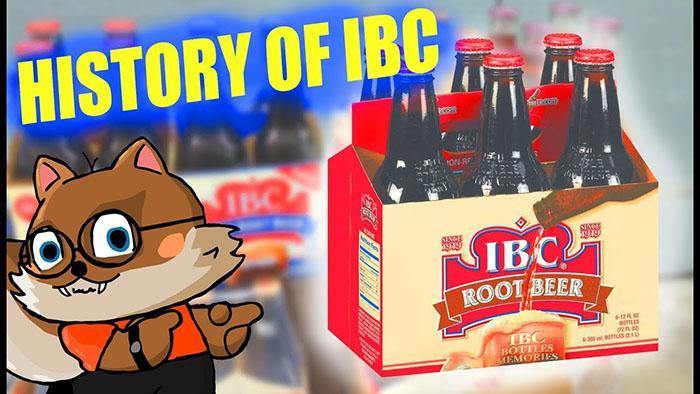
Ask any IBC fan what they love most about the brand and there’s a solid chance the bottle comes up before the taste does. IBC Root Beer came in the typical dark brown embossed bottle. On one hand, the bottle gives IBC some serious legitimacy. It looks like it came straight out of an 1850’s saloon, before color label technology was available on glass bottles.
IBC markets their brew in a most traditional sense. In fact, it almost looks like a real, old, alcoholic beverage. The bottle is the label, and by that I mean the IBC engravings, design, and so forth, is cast right out of glass. The only thing that isn’t part of this design is the attached bar code sticker. It’s a heavy bottle, too. Nutritional information and everything else is part of the bottle cap. This design definitely nods to the classic root beer aesthetic.
For beer drinkers especially, the IBC bottle carries an intuitive appeal. It looks like a proper beverage. The brown glass, the embossed lettering, the thick walls, these cues communicate quality and tradition in a way that a plastic bottle or a can simply cannot. There’s a reason bartenders and craft beverage enthusiasts consistently reach for IBC when they want a non-alcoholic option that still looks and feels premium.
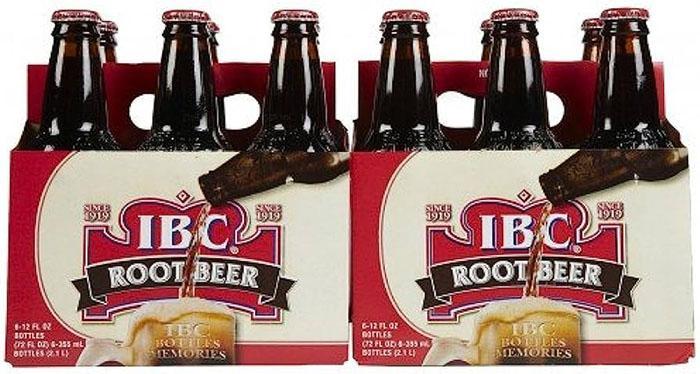
The bottles now come in packs of four instead of six. The IBC logo is no longer molded into the glass bottle. Instead, it is printed on a plain brown bottle. These changes also made the price of each bottle go up a little. This packaging evolution has been somewhat controversial among purists, but the shift to cane sugar that accompanied these changes helped soften the blow.
IBC vs. The Competition: How It Stacks Up Against Other Root Beers
The American root beer market is more crowded than many people realize. IBC competes against giants, craft upstarts, and regional legends. Here’s how it honestly measures up.
| Brand | Founded | Sweetener | Flavor Notes | Caffeine | Key Identity |
|---|---|---|---|---|---|
| IBC | 1919 | Cane Sugar | Vanilla, wintergreen, licorice | No | Premium classic, glass bottle heritage |
| A&W | 1919 | HFCS (standard) | Smooth, vanilla-forward, mild | No | Most widely distributed, very approachable |
| Barq’s | 1898 | HFCS | Bold, slightly bitter, unique bite | Yes | “It’s got bite” (the only major caffeinated RB) |
| Mug | 1940s | HFCS | Light, mild, sweet | No | Budget-friendly, widely available |
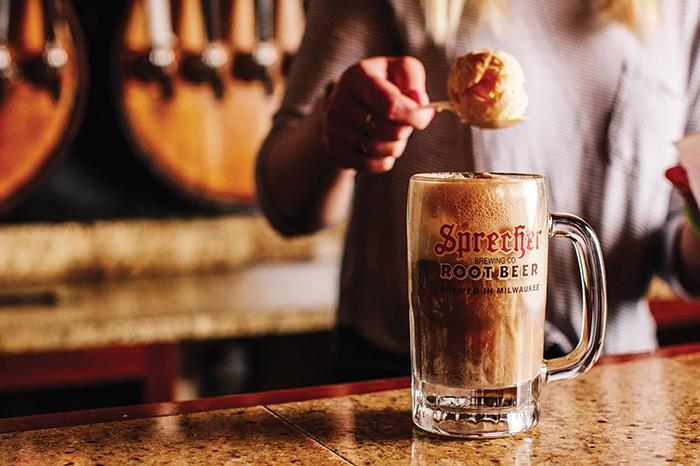
| Sprecher | 1985 | Honey/Sugar | Rich, complex, artisanal | No | Craft micro-brewery, fire-brewed |
| Stewart’s | 1924 | Cane Sugar | Creamy, anise, vanilla | No | Boutique brand, regional heritage |
Some popular root beer brands include A&W, Barq’s, IBC, and Sprecher. Each brand has its unique flavor profile. A&W is known for its smooth and creamy flavor, while Barq’s has a bolder and spicier taste. IBC is a classic brand with a well-balanced flavor, and Sprecher is known for its handcrafted, small-batch root beer.
IBC sits in an interesting position in this landscape. It’s not a craft root beer in the artisanal, small-batch sense. It’s a national brand distributed by one of the world’s largest beverage companies. But its cane sugar formula, glass bottle presentation, and century-old heritage give it credibility that most mass-market sodas simply lack. There’s a reason you can find IBC Root Beer all over the place. It’s a brew that’s easy to like. It has a flavor that puts it on the high end of mainstream root beers. It’s definitely better and more refined than an A&W or Barq’s, but it’s not quite good enough to break into the top ranks. That said, it’s a great root beer to enjoy with food or as a float.
The Root Beer Float: IBC’s Greatest Calling
For adults who grew up drinking IBC, the root beer float is the ultimate expression of the brand. And for those who want to take that childhood classic somewhere more sophisticated, IBC serves as the premium base that holds up under any creative addition.
The classic non-alcoholic float is simple: two or three scoops of high-quality vanilla ice cream in a tall, chilled mug, then a slow pour of IBC Root Beer at an angle to minimize overflow. The foam builds dramatically, the ice cream begins to melt at the edges, and the resulting drink sits somewhere between dessert and beverage. It’s a seriously satisfying experience, especially on a hot summer afternoon.
IBC’s strong carbonation and pronounced flavor profile make it particularly ideal for this application. The strong flavor makes sure that whatever you are eating it with does not overpower the root beer. If you ever need a root beer that will be a sure crowd pleaser, IBC Root Beer should definitely be on your short list.
IBC Root Beer in the Cocktail World: Adult Applications
Here’s where things get genuinely exciting for beer and cocktail lovers. IBC’s complex flavor profile, premium sweetness from cane sugar, and bold carbonation make it one of the most versatile mixers in a serious home bartender’s arsenal. The craft cocktail community has embraced root beer as a legitimate ingredient, and IBC is consistently the brand recommended by name.
The Adult Root Beer Float (The Classic Upgrade)
When summer is in full swing, root beer floats are one of the most refreshing cocktail options. Vanilla vodka pairs beautifully with the sweetness of IBC. Place 2-3 scoops of vanilla ice cream into a tall glass, fill halfway up with root beer, pour 1 shot of vanilla vodka, and then top with root beer to fill to the top of the glass. Try changing up the alcohol by swapping in whipped cream-flavored vodka, dark rum, Bailey’s, or Kahlua.
Root Beer and Bourbon (The Sophisticated Sipper)
Bourbon and root beer is arguably the most grown-up pairing you can make with IBC. The vanilla and caramel notes in American bourbon meet the wintergreen and licorice complexity of IBC Root Beer, and the result is a highball that feels both nostalgic and refined. In an old-fashioned glass, combine bourbon and bitters. Add ice and top with root beer. Garnish with an orange peel. The orange peel brightens everything up and keeps the drink from becoming too heavy.
Root Beer and Dark Rum (The Island Twist)
For a straightforward and tasty cocktail, combine root beer and dark rum. Start by pouring 2 ounces of your preferred dark rum into a glass. Slowly add 6 ounces of root beer, allowing the foam to settle before filling the glass. You can add a maraschino cherry for a touch of flair or a splash of heavy cream or vanilla ice cream for a root beer float cocktail variation.
The Dirty Root Beer Float (The Dessert Cocktail)
The Dirty Root Beer Float is the adult version of the popular summertime treat, made with RumChata for an alcoholic kick. RumChata Cream Liqueur is made with rum, cinnamon, and vanilla. It gives the treat a little more sweetness and adds some creaminess to it. You can make the root beer float with no-churn vanilla ice cream and homemade whipped topping.
Layered Root Beer Float Cocktail (The Showstopper)
For entertaining purposes, a layered IBC cocktail makes a serious visual impression. Begin with 1 tablespoon of RumChata in the bottom of your glass, then pour vanilla syrup on top. Using your drink layering tool, slowly pour cold root beer over that syrup layer. After the root beer has settled, pour over your whipped cream flavored vodka, then 1 teaspoon of RumChata. Top with whipped cream and sprinkles if desired.
The key to successful layering is using the densest liquid first and pouring slowly over the back of a spoon. IBC’s strong carbonation means it naturally wants to rise, so adding it in the middle layers creates dramatic visual separation.
Why IBC Endures: The Cultural Resonance of a Century-Old Brand
Read More : Natural Ice Vs Natural Light Updated 10/2026
There’s a reason that IBC shows up at Southern cookouts, baseball tailgates, Midwestern family reunions, and upscale burger bars simultaneously. The brand has a cultural fluency that very few non-alcoholic beverages achieve. It sits comfortably next to a craft beer without apology. It looks at home in a dive bar and equally at home at a restaurant with a Michelin star.
IBC stands as a celebrated purveyor of flavored soft drinks, with a heritage tracing back to the Griesedieck lineage in St. Louis, Missouri, since 1919. Birthed as a Prohibition-era refreshment alternative, its signature concoctions, particularly the acclaimed root beer, are encased in nostalgic glass bottles, evoking the essence of Americana. This brand’s acclaim stems not from hops or barley, but from a velvety brew that harkens back to the artisanal soda-fountain era.
For people who don’t drink alcohol, IBC offers something most sodas don’t: a beverage with gravitas. You can hold an IBC bottle in a social setting and it reads as a deliberate choice, not a consolation prize. For people who do drink alcohol, IBC serves double duty, it works beautifully on its own, and it works beautifully mixed with spirits in ways that most sodas simply can’t match.
IBC quickly became renowned for its premium quality and satisfying richness, and it was often imitated but never equaled. That’s not just marketing copy. It’s a claim that more than a century of consumer loyalty and brand survival seems to substantiate.
The Full IBC Product Line: Beyond the Original
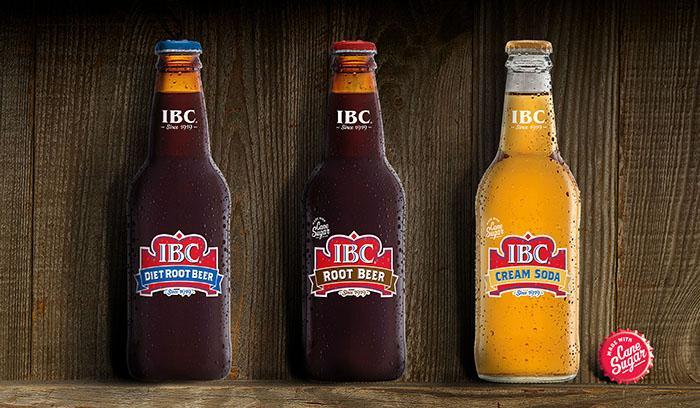
Most people know IBC for its root beer, but the brand has expanded its lineup over the decades. The current product range under Keurig Dr Pepper includes several distinct offerings:
IBC Root Beer remains the flagship, made with real cane sugar and that signature creamy, wintergreen-forward flavor that has defined the brand since 1919.
Diet IBC Root Beer offers the same aromatic profile using artificial sweeteners (aspartame and sodium saccharin) for zero calories, targeting health-conscious consumers who still want the IBC experience.
IBC Cream Soda is a vanilla-forward, amber-hued soft drink with a smooth, almost dessert-like richness. It pairs particularly well with whiskey or can be enjoyed straight as a more subtly flavored alternative to root beer.
IBC Black Cherry brings a tart, fruity intensity that works well as a standalone soda and as a mixer in cocktails calling for a bold, slightly tannic fruit note.
IBC Cherry Limeade represents the brand’s more modern, lighter direction, with a bright citrus-and-cherry profile suited for warm-weather drinking.
Each product maintains IBC’s commitment to glass bottle packaging (in select formats) and its heritage of premium positioning within the Keurig Dr Pepper portfolio.
The Griesedieck Legacy: Brewing Families and American Beverage History
It’s worth pausing to appreciate just how deeply the Griesedieck family is embedded in American brewing history. Their story represents a broader narrative about immigrant entrepreneurship, adaptation, and the enduring human desire to create beverages that bring people together.
The Independent Breweries Company was established through the merger of nine St. Louis breweries, as a non-alcoholic soft drink operation during the early days of Prohibition, when breweries sought alternatives to alcoholic beverages. The original recipe emphasized a creamy texture and vanilla-forward profile balanced by subtle herbal and spice notes, distinguishing it as a premium root beer option.
The Griesediecks didn’t invent root beer. But they brought a brewer’s sensibility to its production, a commitment to fermentation-based quality, ingredient sourcing, and flavor balance that set the original IBC product apart from the commercial sodas of the era. That foundational philosophy, encoded in the original recipe, has survived every subsequent ownership change and reformulation.
How to Drink IBC Root Beer Like You Mean It
For newcomers and longtime fans alike, here are a few ways to get the most out of IBC.
Serve it cold, in the bottle. The glass bottle retains temperature beautifully, and drinking directly from the bottle preserves the carbonation longer than pouring into a glass. If you’re in a social setting, crack the cap, take that first sip, and let the carbonation hit before you say anything.
Use a frosted mug for the float. Put your mug in the freezer for at least 30 minutes before building a root beer float. The frost on the glass keeps the drink colder longer and dramatically improves the foam behavior when you pour IBC over ice cream.
Pour on an angle for mixed drinks. When using IBC as a cocktail mixer, pouring at a 45-degree angle into a glass that already contains your spirit and ice minimizes foam and helps integrate the flavors more cleanly.
Pair it with food. IBC’s robust flavor holds up beautifully against rich, savory foods. Burgers, pulled pork, smoked brisket, fried chicken, these are all natural partners. The sweetness and carbonation cut through fat and complement smoky, charred flavors in ways that cola-based sodas often can’t match.
Conclusion: A Toast to Three Letters with a Hundred Years of Story
A century is a long time for any brand to survive, let alone thrive. The story behind what IBC stands for is really the story of American resilience in a glass bottle. A family of brewers faced with economic annihilation didn’t give up. They pivoted, created something new, and gave the country a taste of something genuinely good at a moment when good things were hard to find.
Next time you reach for an IBC, you’re not just grabbing a root beer. You’re holding the legacy of the Independent Breweries Company, a syndicate of St. Louis brewers who turned Prohibition from a death sentence into an opportunity. Those three letters contain multitudes: immigrant ingenuity, Depression-era grit, corporate reinvention, and ultimately the kind of enduring quality that keeps people coming back generation after generation.
So crack one open. Pour it slow. Let the foam settle. And drink it with the kind of quiet appreciation it actually deserves.
Sources: https://chesbrewco.com
Category: Beer