If you’ve ever cracked open a cold Bud Light at a tailgate, a backyard barbecue, or a Friday night bar crawl, you’ve probably wondered at some point: just how much alcohol am I actually drinking? It sounds like a simple question, but the answer opens a fascinating window into brewing science, nutrition, responsible consumption, and the surprisingly complex world of light lager. Whether you’re a casual weekend sipper or someone who takes their beer knowledge seriously, this guide gives you everything you need to understand the alcohol content in Bud Light, how it compares to the competition, and what it means for your body.
The Straight Answer: Bud Light ABV
The alcohol by volume (ABV) of Bud Light is 4.2%. This means that for every 100 milliliters of Bud Light, there are 4.2 milliliters of pure alcohol.
To put that in more practical terms: the 4.2% ABV translates to about 0.42 ounces of pure alcohol per 12-ounce serving. For comparison, most “regular” beers range between 4% and 6% ABV, meaning Bud Light fits comfortably at the lower end.
This is one number worth memorizing. It’s the anchor for every calculation about calories, intoxication, and drink planning covered throughout this article.
Where Bud Light Came From: A Quick Bite of History
Understanding why Bud Light has 4.2% ABV means understanding why it was created in the first place. When Miller Lite was introduced to the market in 1975, it was a massive hit due to a successful marketing campaign taking advantage of America’s burgeoning diet culture craze with the slogan “Great Taste. Less Filling.” To get its own cut of the pie, Budweiser launched Budweiser Light in 1982, shortening the name to Bud Light two years later.
Bud Light was less a turnaround gambit than a response to Miller Lite’s rise. Before the end of the decade, A-B’s domestic market share would grow to nearly half the beer sold in the U.S. And Bud Light? That would become the best-selling beer brand in the country, and one of the biggest sellers worldwide.
From its humble beginnings in 1982 to becoming one of America’s favorite beers, Bud Light has a rich history. It’s brewed with a blend of barley, rice, water, hops, and yeast, creating that crisp, refreshing taste.
The 4.2% ABV was a deliberate formula: just enough alcohol to deliver a satisfying buzz, but light enough to position itself as the beer you could drink all afternoon without feeling hammered by halftime.
What’s Actually Inside: Ingredients and Brewing
Bud Light is brewed with a blend of barley malts, rice, and premium aroma hops. It delivers a clean, crisp taste with delicate malt sweetness and a smooth, crisp finish. It contains no preservatives or artificial flavors.
Bud Light contains more malt and hops by ratio of ingredients than Budweiser, which gives the brew a distinctively clean and crisp taste. That’s a detail that surprises most people, including die-hard Bud fans.
One of the brand’s most talked-about points of pride is the use of rice instead of corn syrup. Bud Light uses rice, which contains glucose, a form of sugar. But this sugar is only used to aid in fermentation and is consumed by the yeast during the brewing process and converted into alcohol. None of it is left in the resulting product.
Bud Light became the first beer in the United States to add a comprehensive on-pack serving facts and ingredient label. Bud Light brewmasters take pride in using four essential ingredients to brew the light lager: hops, barley, water, and rice. That label transparency was a major move in a historically opaque industry, and it set a new standard for consumer trust.
The Full Nutritional Breakdown: Every Number That Matters
Knowing the ABV is just the start. If you’re keeping tabs on your diet, your performance, or simply your hangover risk, the complete nutrition profile of a standard 12-ounce Bud Light is worth understanding in full.
| Nutrient | Amount (per 12 oz / 355 mL) |
|---|---|
| Calories | 110 |
| Alcohol (ABV) | 4.2% |
| Carbohydrates | 6.6 grams |
| Protein | 1 gram |
| Fat | 0 grams |
| Sugar | 0 grams |
| Pure Alcohol | ~11.8 grams |
Traditional American light lagers like Bud Light have 6.6g carbs, 110 calories, and 4.2% ABV. Compared to, say, a glass of wine or a craft IPA, those numbers are genuinely modest. A typical 5-oz glass of red wine sits at around 125 calories and 12-15% ABV. A 12-oz craft IPA can easily carry 200 or more calories and push 7-8% ABV.
Is a Bud Light Considered a “Standard Drink”?
This is a question that carries real practical weight. According to the NIAAA’s guidelines, a standard drink contains 14 grams of alcohol. A 355 ml / 12 ounce bottle of Bud Light with an ABV of 4.2% typically contains 11.8 grams of alcohol, so it is just 0.8 of a standard drink.
In other words, a single Bud Light is slightly less than one standard drink. This matters when you’re tracking your intake or following guidance from health authorities. Many people assume one beer equals one drink, but with Bud Light, it’s technically a fraction less. That might not sound significant, but across a night of drinking it can add up in the right direction.
Bud Light vs. the Competition: How Does It Stack Up?
One of the most useful things you can know is how Bud Light’s alcohol content compares to other popular beers. Below is a side-by-side breakdown of America’s most consumed beers.
| Beer | ABV | Calories (12 oz) | Carbs (g) |
|---|---|---|---|
| Bud Light | 4.2% | 110 | 6.6 |
| Miller Lite | 4.2% | 96 | 3.2 |
| Coors Light | 4.2% | 102 | 5.0 |
| Budweiser (regular) | 5.0% | 145 | 10.6 |
| Michelob Ultra | 4.2% | 95 | 2.6 |
| Busch Light | 4.1% | 95 | 3.2 |
| Corona Extra | 4.6% | 148 | 13.9 |
| Heineken | 5.0% | 142 | 11.4 |
The alcohol content of Bud Light is actually higher than the alcohol content of Busch Light, coming in at 4.2% for Bud Light and 4.1% for Busch Light. That surprises people who assume all light beers are interchangeable.
Bud Light is 4.2 percent alcohol as opposed to the 5 percent alcohol content of a regular Budweiser. Five percent is the standard alcohol content for commercially manufactured beers in the United States, though some contain slightly more or less.
Read More : How Much Is A Beer At A Bar Updated 10/2026
The calorie gap between Bud Light and regular Budweiser (110 vs. 145) is a direct result of that lower ABV. Alcohol itself is calorie-dense, contributing roughly 7 calories per gram, compared to 4 calories per gram for carbohydrates. Lower alcohol means fewer calories, which is the foundational logic behind the entire light beer category.
Every Bud Light Variant and Its Alcohol Content
Bud Light isn’t just one product anymore. The brand has expanded aggressively into a family of variants with meaningfully different ABV levels. Here’s the full breakdown.
| Bud Light Variant | ABV | Calories (12 oz) | Carbs (g) | Notes |
|---|---|---|---|---|
| Bud Light (Original) | 4.2% | 110 | 6.6 | The classic |
| Bud Light Platinum | 6.0% | 137–139 | 5.1 | Introduced 2012, triple-filtered |
| Bud Light Next | 4.0% | 80 | 0 | Zero-carb, launched Super Bowl 2022 |
| Bud Light Lime | 4.2% | 116 | 8.0 | Released 2008 |
| Bud Light Orange | 4.2% | 142 | 11.0 | Released April 2018 |
| Bud Light Lemonade | 4.2% | 149 | 12.0 | Released May 2020 |
| Bud Light Seltzer | 5.0% | 100 | 2.0 | Launched January 2020 |
| Bud Light Platinum Seltzer | 8.0% | 170 | Varies | Highest ABV in the lineup |
Bud Light Platinum: The Powerhouse in the Blue Bottle
Bud Light Platinum has a higher alcohol by volume than most American beers, with a concentration of 6%. In terms of percentage, the Bud Light contains only 4.2 percent, while the regular Bud contains 5 percent. Platinum is triple-filtered, brewed with golden malts and cereal grains, and has a noticeably sweeter flavor profile. At 6% ABV, it hits considerably harder than the original, and treating it like a standard Bud Light in terms of quantity consumed is a mistake many first-timers make.
Bud Light Next: The Zero-Carb Breakthrough
Bud Light Next is the result of a “brewing breakthrough” and nearly 10 years of R&D. The light beer has 80 calories and 4% alcohol by volume per 12-ounce can with zero carbs. The company developed around 130 prototypes before landing on the winning recipe, in an internal program they called “Project Impossible.” It positions itself squarely at the health-conscious drinker who wants beer with the nutritional profile of hard seltzer.
Bud Light Seltzer and Platinum Seltzer
The seltzer boom prompted Anheuser-Busch to launch Bud Light Seltzer in January 2020. At 5% ABV, it sits slightly higher than the original Bud Light. The Bud Light Platinum Seltzer pushes even further, landing at 8% ABV with 170 calories per can. That’s nearly double the alcohol content of standard Bud Light, and significantly more than most casual drinkers realize when they crack one open.
How Bud Light Affects Your Body: The Real Science
How Alcohol Is Absorbed
When you drink a beverage that contains alcohol, your stomach and small intestines rapidly absorb the alcohol and enter it into your bloodstream. If you’re drinking faster than your liver can process the alcohol, your BAC increases and you may feel the effects of drunkenness. In general, your liver processes roughly one standard drink per hour.
Alcohol starts entering your bloodstream faster than most people expect. Alcohol typically enters your bloodstream within about 10 to 30 minutes, so you’ll start feeling the effects fairly quickly after drinking Bud Light.
Blood Alcohol Concentration and What It Means
Blood alcohol concentration (BAC) is a commonly used measure of alcohol intoxication. In the United States, a BAC of 0.08 would translate to 0.08 grams of alcohol per 100 mL of blood. The legal limit for BAC when driving is 0.08%.
The higher the ABV, the more quickly the drinker’s Blood Alcohol Content (BAC) will rise. And a high BAC is when things can get dangerous, like driving drunk.
Here’s how BAC levels generally translate to physical effects, according to the National Highway Traffic Safety Administration:
| BAC Level | Typical Effects |
|---|---|
| 0.02% | Slight relaxation, mild mood lift |
| 0.05% | Reduced inhibitions, some motor impairment |
| 0.08% | Legal driving limit in most U.S. states |
| 0.10% | Slurred speech, slower reaction times |
| 0.15% | Significant balance and coordination issues |
| 0.20% | Nausea, disorientation |
| 0.30%+ | Risk of blackout, potential alcohol poisoning |
How Many Bud Lights Does It Take to Get Drunk?
This is one of the most searched questions about the beer, and the honest answer is: it depends on who’s drinking. But here are the practical estimates.
For the average adult male (around 160-180 lbs), it typically takes about 4-5 Bud Lights in a short time to reach a blood alcohol concentration (BAC) of 0.08%, the legal driving limit in most U.S. states. For women or people with lower body weight, it might only take 2-4 Bud Lights to reach this level.
An average 80kg / 176lb man may feel drunk (defined as 0.08% BAC or more) after around 5 bottles of Bud Light. An average 70kg / 154 lb woman might feel drunk and reach 0.08% BAC after about 4 bottles of Bud Light.
These numbers shift dramatically based on several factors: body weight, whether you’ve eaten, how quickly you’re drinking, your individual metabolism, any medications you’re taking, and your overall alcohol tolerance. A 130-pound person who hasn’t eaten will feel two Bud Lights very differently than a 220-pound person who just finished a steak dinner.
One practical note worth internalizing: according to conventional wisdom, your BAC level will remain within safe limits if you consume only one standard drink per hour. Since a single 12-oz Bud Light is approximately 0.8 standard drinks, you’re actually in slightly better shape than that rule suggests with each can. Still, the safest approach is never to guess.
The Gender Difference Is Real
Women metabolize alcohol differently than men, not just because of body weight but due to differences in body water content and enzyme activity. The Widmark factor, a gender-specific constant for body water, is typically 0.68 for males and 0.55 for females. That lower ratio in women means alcohol becomes more concentrated in their bloodstream with fewer drinks. It’s biology, not tolerance.
Bud Light’s Place in American Culture
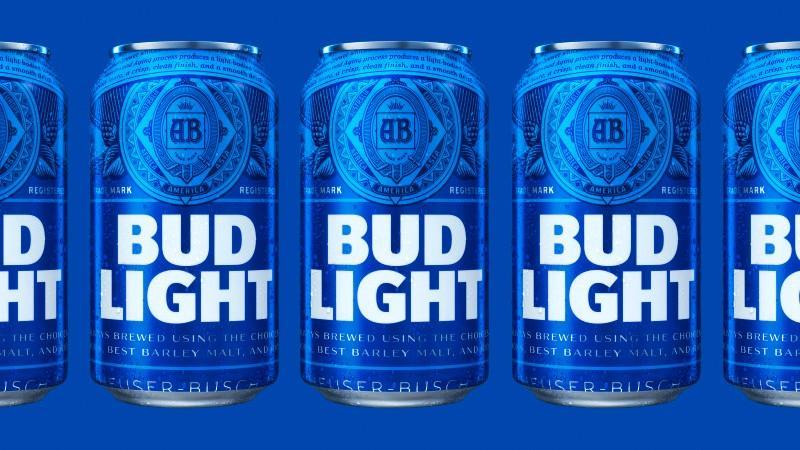
Bud Light is a true American classic, the cobalt blue label can be seen everywhere from ballparks to summer barbecues, ice rinks, golf courses, boat rides, and frat parties.
A study conducted by Statista found that 87% of respondents recognized Bud Light and Corona, while 85% were aware of Budweiser. That’s the kind of brand penetration that makes Bud Light more than a beverage. It’s a cultural shorthand for casual, relaxed American drinking.
In 2010, the brand made a record-breaking $1 billion deal with the NFL to become the league’s official beer sponsor, around double what MillerCoors had been paying beforehand. In December 2021, Bud Light was renewed as the NFL’s official beer sponsor until the 2026-27 season.
The “Dilly Dilly” campaign of 2017, the Spuds MacKenzie era, the Bud Knight, the endless Super Bowl spots. Bud Light has spent decades embedding itself in the sports-and-entertainment fabric of American life in a way no other beer brand has quite matched.
The Corn Syrup Controversy
Read More : How Long Does Cider Take To Ship Updated 10/2026
In 2019, Bud Light was caught up in scandal (or #corntroversy) after running a Super Bowl ad that claimed that other light beer brands used corn syrup in their brewing. Miller Lite and Coors Light were specifically targeted. MillerCoors sued Anheuser-Busch for slander, claiming the campaign was “false and misleading.” The legal battle eventually settled, but it cemented Bud Light’s image as a beer that does not use corn syrup, whether that distinction meaningfully matters to your body or not.
Drinking Responsibly: What You Need to Know
Bud Light’s 4.2% ABV positions it as one of the more sessionable beers available, meaning you can drink it over an extended period without escalating your BAC as rapidly as you would with stronger options. But sessionable doesn’t mean consequence-free.
A few ground rules every drinker should keep front of mind:
Eating matters significantly. Food, especially protein and fat, slows alcohol absorption in the stomach and intestines. Drinking on an empty stomach sends alcohol to your bloodstream faster and makes you feel effects sooner with fewer drinks.
Hydration is your ally. Alternating a Bud Light with a glass of water slows your overall consumption, keeps you hydrated, and reduces the severity of next-morning headaches. Alcohol is a diuretic; it makes you urinate more than you take in, which drives dehydration.
Never assume you’re fine to drive. It’s not safe to drive after drinking any amount of alcohol. Even one or two Bud Lights can impair judgment and slow reaction time; always arrange a ride if you’ve been drinking. The legal limit of 0.08% BAC is not a “safe” threshold. Studies consistently show measurable impairment beginning at levels as low as 0.02%.
The Platinum Seltzer trap. Many drinkers reach for Bud Light Platinum Seltzer thinking it’s essentially the same as regular Bud Light. It is not. At 8% ABV, it contains nearly double the alcohol. Three of those in an evening is roughly equivalent to five or six standard Bud Lights in terms of alcohol load.
Know the NIAAA guidelines. The National Institute on Alcohol Abuse and Alcoholism defines moderate drinking as up to one drink per day for women and up to two drinks per day for men. Given that a 12-oz Bud Light is 0.8 standard drinks, those guidelines translate to roughly one to two cans for women and two to three cans for men per day in a moderate consumption pattern.
The Calories Question: Is Bud Light Actually “Diet-Friendly”?
Bud Light markets itself heavily on the health-conscious angle, and the 110-calorie count does hold up reasonably well compared to the broader beverage landscape. But “light” is a relative term.
Comparing Bud Light to other popular drinks, a Vodka Soda often comes in around 97 calories, and a Gin and Tonic can be closer to 130 calories. This comparison often highlights why Bud Light is a go-to for those mindful of their calorie consumption, especially given its low carb and fat profile.
Where Bud Light wins on paper is its zero fat, zero sugar profile. The 6.6 grams of carbohydrates come entirely from the brewing process rather than added sugars, making it a cleaner option than many flavored malt beverages or cocktails. Where it loses is volume: most people don’t drink one beer. If you’re having four Bud Lights at a game, that’s 440 calories before you’ve touched a hot dog.
The Bud Light Next variant is the most diet-aligned option in the lineup: it has only 80 calories and 4% ABV per 12-ounce can, with zero carbs, compared to the original Bud Light’s six grams of carbs, 110 calories, and 4.2% ABV.
What Makes Bud Light Different From Regular Budweiser?
The question comes up constantly at bars and backyard parties. Here’s the concise breakdown:
Bud Light is 4.2 percent alcohol as opposed to the 5 percent alcohol content of a regular Budweiser. Regular Budweiser also carries around 145 calories and approximately 10.6 grams of carbohydrates per 12-ounce serving, compared to Bud Light’s 110 calories and 6.6 grams.
The brewing method is similar, but Bud Light uses a lower ratio of fermentable grains to water, producing a thinner body, lighter mouthfeel, and that characteristic crisp finish. It also carries a lower IBU (International Bitterness Unit) rating of about 10, compared to Budweiser’s range of 5-13, which contributes to its milder, subtler hop character.
For drinkers who find regular Budweiser a touch heavy or filling, Bud Light’s lighter profile is the answer. For those who want more complexity and alcohol punch, Bud Light Platinum or a full-strength lager is the upgrade.
Bud Light Around the World: A Small Footnote
While Bud Light dominates American shelves and sports venues, it has had a more mixed reception internationally. An attempt to appeal to the tastes of beer drinkers in the United Kingdom, this specially brewed beer contained 4.2% alcohol by volume. It was discontinued in 2006 after it failed to meet sales expectations. European beer culture, generally accustomed to richer malt-forward lagers and ales, has never fully embraced the American light lager style. That cultural specificity is part of what makes Bud Light so distinctly, irreducibly American.
The Bottom Line on Bud Light’s Alcohol Content
Bud Light’s moderate ABV makes it a popular choice for those who want to enjoy a refreshing beer without the higher alcohol content found in some craft or import beers. Its 4.2% ABV is the foundation of everything the brand stands for: accessible, approachable, and built for social occasions that last longer than a single drink.
The numbers are consistent and clear. A standard 12-oz can delivers 4.2% alcohol, roughly 11.8 grams of pure alcohol, 110 calories, and 6.6 grams of carbs. It’s not a standard drink by NIAAA definition (that would require 14 grams of alcohol), but it’s close enough that most practical drinking guidance applies in near-equal measure.
The variants complicate the picture considerably. Bud Light Platinum doubles down on alcohol at 6%. Bud Light Platinum Seltzer nearly doubles it again at 8%. Bud Light Next cuts both calories and carbs while trimming ABV to 4%. If you’re reaching for anything with a Bud Light label, the first thing to check is which specific product you’re holding, because the range is broader than most drinkers realize.
Sources: https://chesbrewco.com
Category: Beer